
Why Understanding Withdrawal Is Your First Step to Safety
Substance withdrawal management is the medical and psychological care for people experiencing withdrawal when they stop or reduce their use of drugs or alcohol. If you’re seeking information on this topic, here’s what you need to know.
Key Facts About Substance Withdrawal Management:
- What it is: Medical supervision and support to safely manage physical and psychological symptoms when stopping substance use
- Why it matters: Some withdrawal syndromes (especially alcohol and benzodiazepines) can be life-threatening without proper care
- Where it happens: Inpatient detox facilities, hospitals, or in some cases, outpatient settings with medical monitoring
- How long it lasts: Typically 3-10 days for acute symptoms, depending on the substance, though some symptoms may persist longer
- What comes next: Detox is just the first step—ongoing treatment and therapy are essential for lasting recovery
Withdrawal occurs because your brain and body have adapted to a substance. When you stop, your system must readjust—a process that can be uncomfortable and even dangerous. Many people who use substances will eventually face withdrawal. Symptoms vary based on the substance, duration of use, and individual health.
The good news is you don’t have to face it alone. Medically supervised withdrawal management keeps you safe, reduces discomfort, and provides the best start for your recovery.
In Miami, Florida, specialized detox centers offer comprehensive withdrawal management with 24/7 medical monitoring and compassionate care. Understanding withdrawal and the importance of professional support can help you take the first step toward sobriety with confidence.
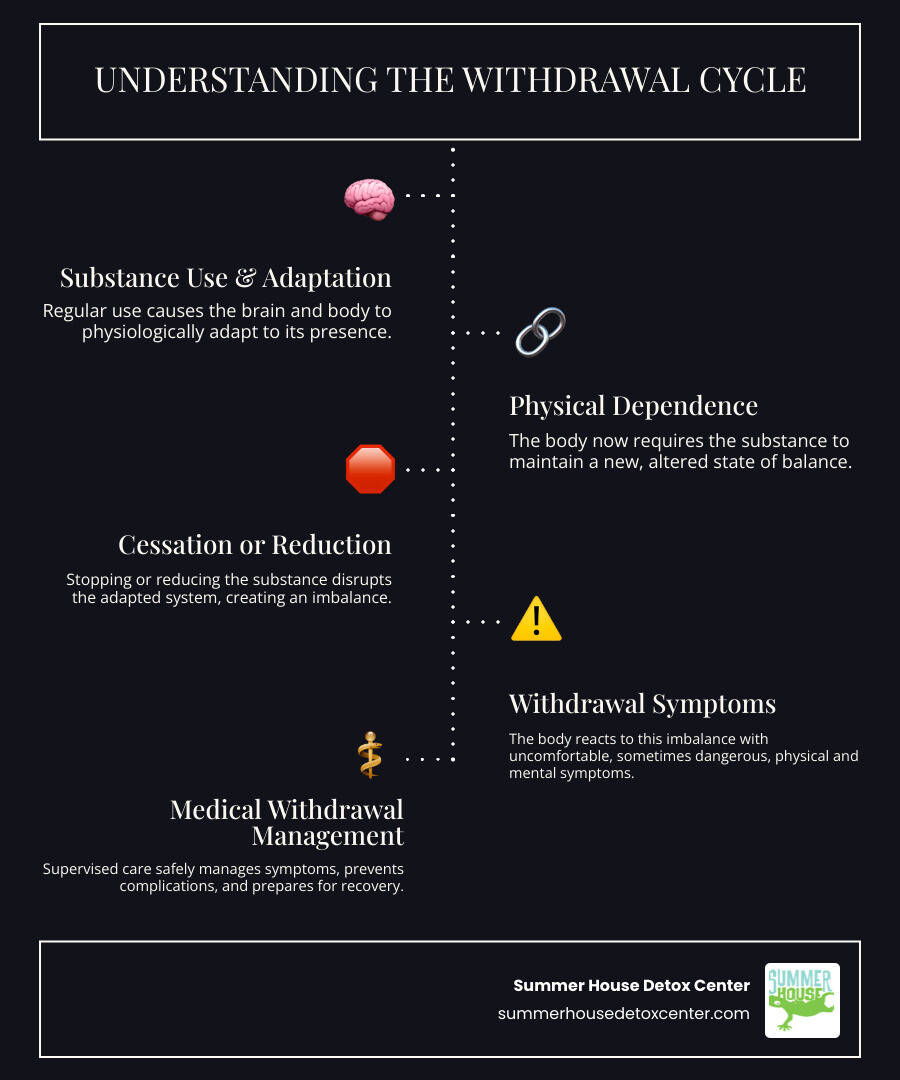
The Science Behind Withdrawal: Why It Happens
To understand substance withdrawal management, it helps to know why withdrawal occurs. It’s not a lack of willpower but a powerful physical reaction. Your body gets used to a substance, and when it’s gone, the system goes into shock trying to readjust. This is called physical dependence.
When you use a substance regularly, your brain works to maintain balance. For example, alcohol, a central nervous system (CNS) depressant, slows brain function by boosting the calming chemical GABA and suppressing the exciting one, glutamate.
With consistent heavy drinking, your brain counteracts this by becoming less sensitive to GABA and increasing glutamate. This builds tolerance, meaning you need more alcohol for the same effect. When you stop, your brain is left in an overstimulated state, causing uncomfortable and sometimes dangerous alcohol withdrawal symptoms. You can learn more in our article on How Does Alcohol Abuse Affect the Brain?.
The same adaptation happens with other substances. CNS stimulants like cocaine and methamphetamine flood the brain with dopamine, the feel-good chemical. They block the brain from clearing dopamine away. In response, your brain may produce less dopamine or become less sensitive to it. When the stimulant is removed, you experience a “dopamine crash,” leading to severe depression, fatigue, and intense cravings.
This complex interaction between a substance and your brain chemistry is why withdrawal happens. Your body has adapted to function with the substance, and it struggles to find its natural rhythm without it. This difficult recalibration process highlights why professional support is so crucial.
Common Withdrawal Profiles: Symptoms and Timelines
Your withdrawal experience is unique, depending on the substance used, duration and amount of use, and your overall health. However, predictable patterns exist for different substances, which can help you know what to expect.

Alcohol Withdrawal
Alcohol withdrawal can be a medical emergency. Symptoms typically begin 6-24 hours after the last drink and include anxiety, tremors, nausea, and insomnia.
As withdrawal progresses, symptoms can escalate to a rapid heart rate, high blood pressure, and hallucinations. In the most severe cases, a condition called Delirium Tremens (DTs) can develop, causing profound confusion, high fever, and life-threatening seizures.
The peak intensity usually hits between 24-72 hours. While milder symptoms may fade in 2-10 days, DTs can last for 3-8 days. This is why supervised substance withdrawal management is critical for alcohol dependence. Learn more from our Alcohol Detox Timeline and guide on How Your Body Reacts to Alcohol Withdrawal.
Opioid Withdrawal
Opioid withdrawal feels like a severe case of the flu but is generally not life-threatening on its own. For short-acting opioids like heroin, symptoms start in 8-24 hours and last 4-10 days. For long-acting opioids like methadone, symptoms may be delayed for 2-4 days but can persist for 10-20 days.
Expect intense muscle aches, powerful cravings, nausea, vomiting, diarrhea, and insomnia. The combination of physical discomfort and psychological distress creates a high risk of relapse. You can find more details in our articles on What Are the Symptoms of Opiate Withdrawal? and How Long Does It Take to Withdraw From Opiates?.
Benzodiazepine Withdrawal
Like alcohol, benzodiazepine withdrawal can be life-threatening due to the risk of seizures. It should never be attempted alone. The timeline depends on the specific drug. For short-acting benzos (e.g., Xanax), withdrawal begins in 1-2 days and can last 2-4 weeks. For long-acting benzos (e.g., Valium), symptoms may not start for 2-7 days but can last for several weeks or more.
Withdrawal is often marked by rebound anxiety, where the original symptoms return with greater intensity. Other symptoms include severe insomnia, panic attacks, muscle pain, and heightened sensitivity to light and sound. Without proper treatment, some people experience protracted withdrawal symptoms for months or years. This underscores why medical supervision is essential, as explored in The Dark Side of Benzos and Xanax Addiction Withdrawal Treatment.
Stimulant Withdrawal
Withdrawal from stimulants like cocaine, methamphetamine, or prescription amphetamines is primarily psychological. Known as “the crash,” symptoms usually begin within 24 hours and last 3-5 days, though psychological effects can linger.
The most prominent symptoms are severe depression, extreme fatigue, increased appetite, agitation, and intense cravings. While not physically dangerous like alcohol or benzo withdrawal, the severe depression and cravings make relapse highly likely without professional support. Detox centers in Miami are equipped to manage these unique challenges.
The Dangers of Going It Alone: When Withdrawal Is Life-Threatening
Attempting withdrawal at home without medical supervision is dangerous. While the desire for privacy is understandable, when it comes to substance withdrawal management, going “cold turkey” isn’t brave—it’s a significant risk.

During withdrawal, your body is in a state of crisis. The “cold turkey” approach can lead to severe dehydration from vomiting and diarrhea, dangerous electrolyte imbalances, and wild swings in heart rate and blood pressure. These are not theoretical risks; they happen to real people in Miami and across Florida daily.
Potentially Fatal Withdrawal Syndromes
Withdrawal from alcohol and benzodiazepines can be fatal. This isn’t to scare you, but to protect you.
Alcohol withdrawal can progress to Delirium Tremens (DTs), a medical emergency characterized by confusion, seizures, and dangerously high blood pressure. While DTs affect fewer than 5% of people in alcohol withdrawal, the mortality rate for those who develop it without treatment is about 15%. We discuss this frankly in Can You Die From Alcohol Abuse?.
Benzodiazepine withdrawal carries a similar risk. Abruptly stopping benzos can cause the brain to become dangerously overactive, leading to fatal seizures that can strike without warning.
Complications and Relapse Risk
Even when withdrawal isn’t directly fatal, its complications can be.
Opioid withdrawal is miserable, often driving people to relapse within days. The danger lies in reduced tolerance. After a short period of abstinence, using the same pre-detox amount can easily cause a fatal overdose. We explain in Is Opiate Withdrawal Deadly? that while the process itself isn’t lethal, the path it leads to can be.
Mental health crises are another serious concern. The severe depression from stimulant withdrawal or the hopelessness of any withdrawal can become unbearable, sometimes leading to self-harm without professional support.
Unsupervised withdrawal can also trigger unexpected medical emergencies like irregular heart rhythms, stroke-level blood pressure, or kidney failure from dehydration. If you’re in South Florida, understanding the Signs You Might Need a Detox Program could save your life. Professional help isn’t a luxury; it’s a necessity.
The Gold Standard: Medically Supervised Substance Withdrawal Management
Understanding the risks makes it clear: medically supervised substance withdrawal management is essential. At Summer House Detox Center in Miami, our approach is built on providing personalized care that ensures safety, minimizes suffering, and treats every individual with dignity.
South Florida, particularly Miami, has become a leader in compassionate and effective addiction treatment. This commitment to excellence is Why South Florida Is Leading the Way in Effective Detox Programs.
The Role of Medical Detox in Substance Withdrawal Management
Medical detox is where healing begins. It provides 24/7 monitoring in a safe, controlled environment where a clinical team manages symptoms with medication and prevents life-threatening complications before they start. Your only job is to rest and heal. Evidence-based inpatient withdrawal services consistently show better outcomes, as we explore in The Importance of Medically Supervised Detox: Why DIY Detox Can Be Dangerous. Our Detox Centers in Miami are ready to provide this level of care.
A Comprehensive Approach to Substance Withdrawal Management
Effective substance withdrawal management must treat the whole person. Our approach at Summer House Detox Center includes:
- Thorough Medical Evaluation: We assess your physical health, substance use history, and any co-occurring mental health conditions to create a truly custom treatment plan.
- Psychological Support: We provide compassionate counseling in a calm environment to help you manage the anxiety and emotional turbulence of withdrawal. Our Dual Diagnosis Rehab approach ensures co-occurring disorders are addressed from day one.
- Nutritional Therapy: A balanced diet helps restore essential nutrients depleted by substance abuse, supporting your body’s healing process. Learn more about The Role of Nutrition in Detox: How a Balanced Diet Supports Recovery.
- Holistic Care: Practices like mindfulness and gentle massage complement medical care, reduce stress, and help you adjust to a life without substances.
Medications Used for a Safer Detox
Medication-Assisted Treatment (MAT) uses FDA-approved medications to make withdrawal safer and more comfortable. For alcohol and benzodiazepine withdrawal, medications are used to calm the overactive nervous system and prevent seizures. For opioid withdrawal, medications like buprenorphine (Suboxone) and methadone reduce cravings and symptoms without producing a high. Other supportive medications like clonidine and gabapentin can also increase comfort. Our medical team carefully prescribes and monitors all medications for your safety. Learn more by reading Understanding Medication-Assisted Treatment and Which Medications Are Used in Opiate Detox?.
Inpatient vs. Outpatient Settings
The right setting for detox depends on your specific needs. Inpatient detox, which we provide at Summer House Detox Center, is the recommended standard for alcohol, benzodiazepine, and severe opioid withdrawal. It offers 24/7 medical supervision in a structured, trigger-free environment, which is crucial for a safe and successful detox.
Ambulatory (outpatient) detox may be an option for those with mild dependence and strong home support, but it is generally not appropriate for substances with life-threatening withdrawal symptoms. The choice is about what is safest and most effective for you. We explore this in our guide to Inpatient vs. Outpatient Programs at Miami Alcohol Treatment Centers.
Beyond Detox: Building a Foundation for Lasting Recovery
Substance withdrawal management through detox is an essential first step, but it’s only the beginning. Detox addresses the immediate physical crisis, but addiction is a chronic disease that affects your brain, behaviors, and life. True recovery means addressing all these layers.
Think of detox as pouring the foundation for a house. It’s critical, but the real work of building a life in recovery comes next. This is explored in our article, How Detox Is the First Step to Long-Term Sobriety: Building a Strong Foundation for Recovery.
Addiction requires ongoing management, which is why a continuum of care—a seamless transition from detox to further treatment—is so important for success.
The Importance of Aftercare and Follow-Up
The period immediately following detox is vulnerable. Cravings can be intense, and the risk of relapse is high. A comprehensive aftercare plan is the bridge to a stable recovery.
At Summer House Detox Center in Miami, we work with you to create a personalized aftercare plan. Key components often include:
- Transitioning to a Rehabilitation Program: Residential or outpatient programs provide a structured environment to address the root causes of addiction.
- Therapy: Modalities like Cognitive Behavioral Therapy (CBT) and Dialectical Behavioral Therapy (DBT) help you rewire negative thought patterns and build practical coping skills.
- Support Groups: Peer groups like Alcoholics Anonymous (AA) or Narcotics Anonymous (NA) offer the healing power of shared experience and accountability.
- Relapse Prevention Planning: Working with a treatment team to identify personal triggers, develop strategies for managing cravings, and build a strong support network.
South Florida’s robust recovery community provides an ideal environment for healing. Our resources on Aftercare Drug Rehab and Life After Detox: 3 Steps to a Beginning a Successful Recovery offer practical guidance for these crucial next steps. Detox opens the door to recovery; aftercare helps you walk through it.
Frequently Asked Questions about Withdrawal Management
Deciding to seek help for substance withdrawal management can be overwhelming. Here are answers to some of the most common questions we hear.
How long does withdrawal last?
The timeline is highly individual. It depends on the substance, duration of use, and your personal health. Acute withdrawal typically lasts from a few days to a couple of weeks. However, some people experience lingering issues like mood changes or sleep problems, known as protracted withdrawal symptoms, which can persist for months.
Can I manage withdrawal safely at home?
For your safety, no. For alcohol and benzodiazepines, home detox can be fatal due to the risk of seizures and other complications. For opioids, withdrawal is uncomfortable and carries a very high risk of relapse, which can lead to a fatal overdose due to lowered tolerance. Medical supervision is always the safest choice. Our article Are At-Home Opiate Detox Kits Safe? explains why DIY approaches are so risky.
Even with stimulants, the severe depression during withdrawal can lead to a mental health crisis. Professional support in a facility like ours in Miami can be life-saving.
What is the difference between detox and rehab?
This is a crucial distinction. Detox is about the body. It’s the short-term medical process of managing acute physical withdrawal symptoms, usually lasting 5-14 days. It stabilizes you so you can begin the real work of recovery.
Rehab is about the mind and a new way of life. It’s the longer-term therapeutic process that addresses the underlying psychological and behavioral causes of addiction. Rehab provides the tools and strategies for lasting sobriety.
Detox is the necessary first step, but it is not a cure. Rehab is the essential follow-up. Our guide on How Long Is Alcohol Treatment After Detox? explains this continuum of care in more detail.
Your Path to a New Beginning Starts in Miami
Understanding substance withdrawal management is a powerful first step. You now know that withdrawal is a real, manageable process that you don’t have to face alone. Safe withdrawal is achievable, and recovery is a journey that begins with a medically supervised detox.
At Summer House Detox Center, we know that reaching out takes courage. You may feel scared or worried about the process. We get it—many of our staff members are in recovery themselves, and that lived experience shapes our compassionate approach.
When you come to our Miami facility, you are a person deserving of dignity and personalized care. Our team of addiction specialists, physicians, and nurses provides 24/7 medical supervision in a warm, supportive environment. We treat the whole person, because your physical safety and emotional well-being are equally important.
South Florida is a hub for effective addiction treatment, making it an ideal place to begin your healing journey. Whether you’re struggling with alcohol, opioids, benzodiazepines, or another substance, we have the expertise to guide you safely through withdrawal. We will create a plan just for you, using evidence-based medications and constant monitoring to ensure your safety and comfort.
Your new beginning is waiting. You don’t have to figure this out on your own anymore. Reach out today and let us show you what personalized, medically supervised detox can look like. Find more info about our detox services and take that first brave step toward the life you deserve.
