The Ultimate Guide to Your Liver’s Post-Alcohol Recovery Timeline
Your Liver Can Heal — Here’s How Long It Actually Takes
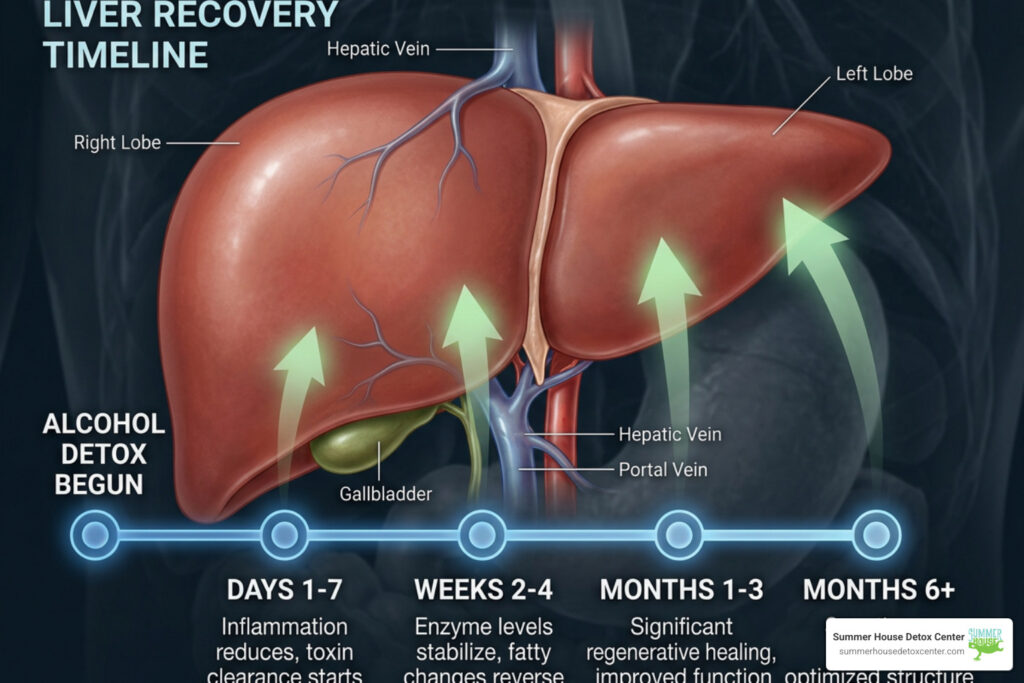
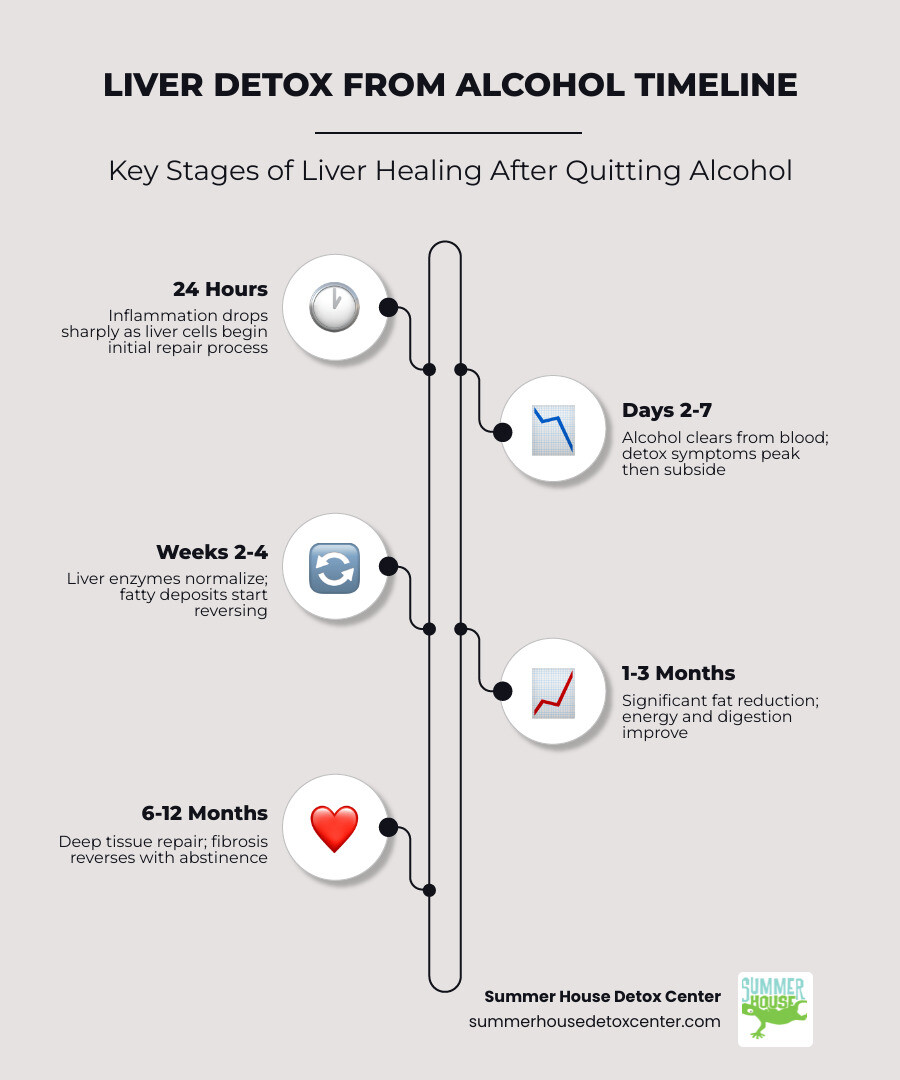
The liver detox from alcohol timeline is one of the most important things to understand when you stop drinking. Here’s a quick look at what to expect:
| Timeframe | What Happens in Your Liver |
|---|---|
| First 24 hours | Inflammation markers begin to drop; liver cells start repairing |
| Days 2–7 | Alcohol fully clears from the blood; early detox symptoms peak then ease |
| Weeks 2–4 | Liver enzymes begin normalizing; fatty liver starts to reverse |
| 1–3 months | Significant reduction in liver fat; energy and digestion improve |
| 3–6 months | Deeper tissue repair; fibrosis (scarring) can begin to reverse |
| 6–12 months | Major healing milestones for moderate damage; sustained abstinence drives continued recovery |
The short answer: Most people with mild to moderate liver damage see meaningful improvement within 4–8 weeks of stopping alcohol. Severe damage, like cirrhosis, takes much longer — and requires lifelong abstinence.
Of all your organs, your liver takes the hardest hit from alcohol. Every drink you take passes through it. Over time, that load builds up — causing inflammation, fat accumulation, and eventually scarring.
But here’s what makes the liver remarkable: it’s the only organ in your body capable of full regeneration. Even with significant damage, stopping alcohol gives your liver a real chance to heal.
That said, the road isn’t the same for everyone. How fast your liver recovers depends on how much and how long you drank, your age, your overall health, and whether you get proper support during detox.
If you’re in Florida and wondering where to start — you’re not alone, and you don’t have to figure this out by yourself.
Explore more about liver detox from alcohol timeline:
Understanding Alcohol-Related Liver Disease (ARLD) Stages
To understand the liver detox from alcohol timeline, we first have to look at how alcohol causes damage. The liver is a powerhouse, responsible for filtering toxins, but it can only process about one standard drink per hour. When we exceed that, the liver becomes overwhelmed.
The primary culprit is acetaldehyde, a highly toxic byproduct created when the liver breaks down ethanol. Acetaldehyde triggers inflammation and destroys liver cells. This damage typically progresses through four distinct stages:
- Steatosis (Fatty Liver): This is the earliest stage, occurring in about 90% of people who drink more than 4-5 drinks a day. The liver becomes enlarged as it struggles to export fat.
- Alcoholic Hepatitis: This involves acute inflammation of the liver. It can be mild, but severe cases have a mortality rate as high as 50% if drinking continues.
- Liver Fibrosis: Chronic inflammation leads to the buildup of protein and scar tissue. Think of it like a callous forming over a wound; the tissue becomes stiff and less functional.
- Cirrhosis: This is the final, most severe stage. The liver is heavily scarred and begins to shrink. While some functions can be managed, the scarring itself is generally permanent.
It is important to understand how your body reacts to alcohol withdrawal because the internal healing starts the moment the “poison” stops entering the system. In Florida, where social drinking is a major part of the lifestyle from Miami Beach to the Keys, many people don’t realize they have reached the fatty liver stage until they decide to detox.
The Comprehensive Liver Detox From Alcohol Timeline
The liver detox from alcohol timeline isn’t just about the first few days of “feeling better.” It is a biological marathon that happens in phases.
Phase 1: The Initial 72 Hours
Within the first 24 hours of your last drink, inflammation markers in the blood begin to drop. However, this is also when the brain and body go into shock. As the liver works frantically to clear the remaining ethanol, you may experience nausea, anxiety, and tremors. This is the alcohol detox timeline at its most intense.
By the 72-hour mark, physical withdrawal symptoms usually peak. This is a critical window for medical safety, as risks like seizures are highest during this time. You can learn more about alcohol-detox-how-long-does-it-take to prepare for this initial hurdle.
Phase 2: Weeks 2 to 4
This is where the magic happens for the liver. Research shows that just two to four weeks of abstinence can significantly reduce liver inflammation. For those with simple fatty liver disease, the condition can resolve almost completely in as little as 2 to 6 weeks.
Phase 3: The One-Month Milestone
By the end of 30 days, liver enzyme levels (AST and ALT) typically begin to normalize. Patients often report “the fog lifting.”
| Liver Function Marker | 1 Week of Abstinence | 6 Months of Abstinence |
|---|---|---|
| ALT/AST Enzymes | Elevated (Signaling stress) | Often fully normalized |
| Liver Fat Content | High (Steatosis) | Significantly reduced or gone |
| Inflammation | Active and acute | Minimal to none |
| Regeneration | Just beginning | Deep tissue repair underway |
Phase 4: 6 Months to 1 Year
For those with more advanced damage, like early-stage fibrosis, significant improvement is often seen between 6 and 12 months. The liver is a resilient organ; it can regenerate to its full size even if only 25% of healthy mass remains, provided the alcohol stops entirely.
Early and Long-Term Signs Your Liver is Healing
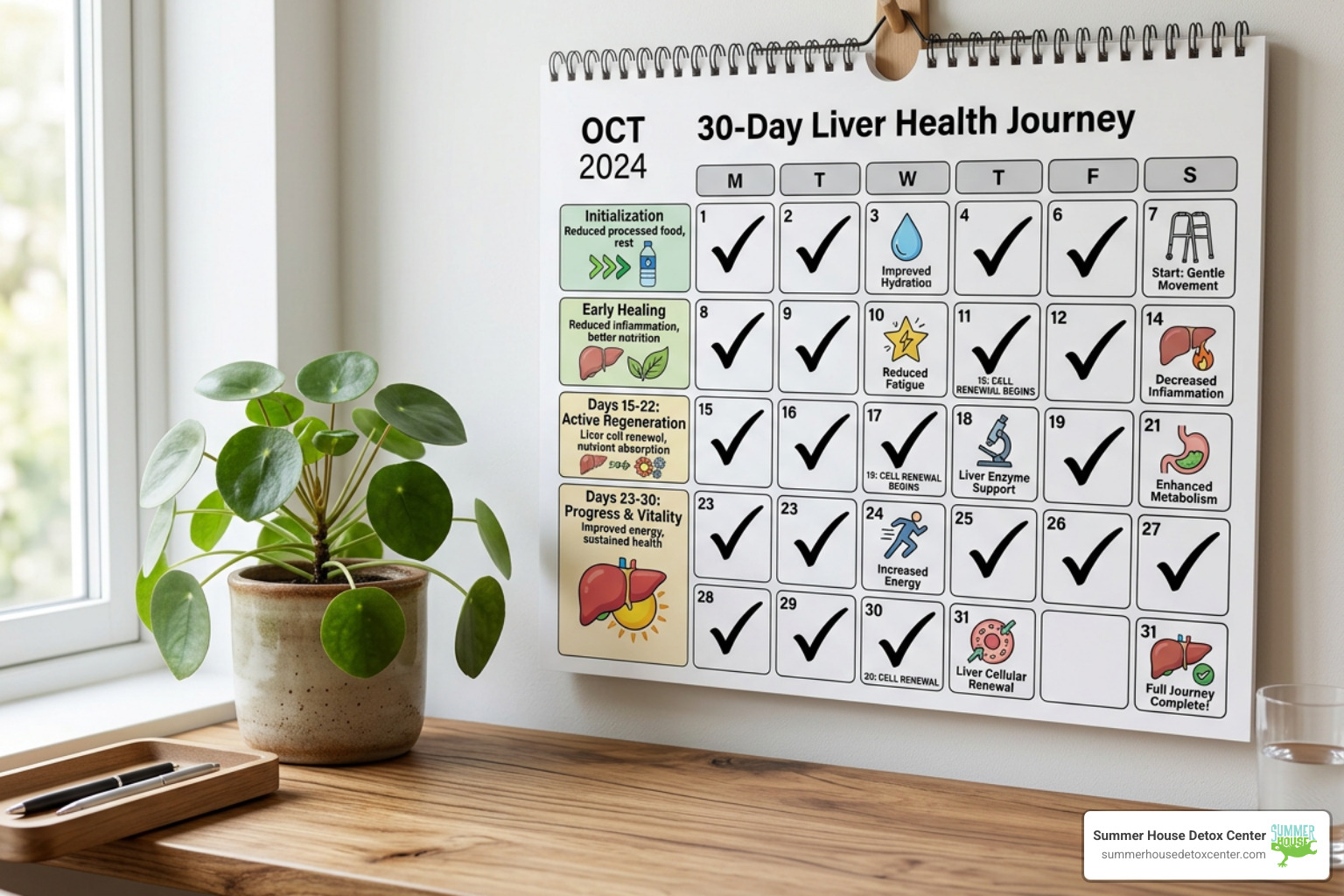
How do you know the liver detox from alcohol timeline is working for you? While blood tests provide the “data,” your body provides the “feeling.”
One of the most visible early signs is the reduction of jaundice—the yellowing of the skin and eyes caused by high bilirubin levels. As the liver regains its ability to process bilirubin and produce albumin (a protein essential for fluid balance), you’ll notice less abdominal swelling and “puffiness.”
Understanding what happens after alcohol detox helps you stay motivated when the initial “pink cloud” of early sobriety fades.
Early Indicators of a Liver Detox From Alcohol Timeline
During the first few weeks, you may notice:
- Normalized Digestion: Less bloating, better appetite, and more regular bowel movements as the liver produces bile more effectively.
- Energy Surge: The liver is responsible for storing glucose. When it isn’t busy fighting alcohol, it can finally manage your energy levels properly.
- Improved Sleep: While the first few nights are rough, sleep patterns usually normalize within a month.
Knowing the first 72 hours of detox: what to expect and how to prepare can help you navigate the transition from feeling “sick” to feeling “healed.”
Long-Term Milestones in the Liver Detox From Alcohol Timeline
After several months, the changes become profound:
- Clearer Skin: The “alcoholic flush” or spider angiomas (small spider-like veins) may fade.
- Mental Clarity: Reduced levels of ammonia in the blood (which the liver usually filters) lead to better focus and less “brain fog.”
- Weight Stabilization: As the liver processes fats and sugars correctly, many people lose significant “belly fat” associated with heavy drinking.
Following an alcohol abstinence timeline is the only way to reach these deep-tissue repair milestones.
Navigating Withdrawal and Medical Detox in Florida
In Miami and throughout Florida, the heat and humidity can exacerbate dehydration during detox, making professional supervision even more vital. When you stop drinking, your brain experiences a “glutamate surge” because the inhibitory GABA receptors, which were suppressed by alcohol, suddenly over-fire.
This neurochemical imbalance is what causes the most dangerous aspect of the liver detox from alcohol timeline: Delirium Tremens (DTs). DTs can occur 48 to 96 hours after the last drink and can be fatal without medical intervention.
Knowing alcohol withdrawal signs: how to know you need professional alcohol detox treatment is a matter of life and death. At a professional facility like ours, we use medications like benzodiazepines to prevent seizures and manage heart rate, ensuring your liver doesn’t have to fight a systemic crisis while it’s trying to heal.
The Jellinek curve alcohol detox shows that while the descent into addiction is a downward spiral, the road back up is a structured, manageable process when you have the right medical team behind you.
Supporting Liver Regeneration Through Lifestyle and Nutrition
Once you’ve cleared the acute liver detox from alcohol timeline, your diet becomes your best medicine. Nutrition optimization is the most evidence-based intervention for liver recovery after abstinence.
- The Mediterranean Diet: Focus on lean proteins, healthy fats (like olive oil), and plenty of fiber. This reduces the workload on the liver.
- Cruciferous Vegetables: Broccoli, kale, and cauliflower contain phytonutrients that support Phase II liver detoxification.
- Hydration: Aim for 8-10 glasses of water daily. In the Florida sun, this is non-negotiable to help flush toxins.
- Avoid Acetaminophen: Tylenol and other medications can be hepatotoxic (liver-toxic). Always consult a doctor before taking over-the-counter meds during recovery.
- Antioxidant Support: Foods rich in Vitamin E and B-vitamins help repair cellular damage.
Our alcohol detox treatment includes nutritional guidance because a healing liver needs the right building blocks to regenerate tissue.
Frequently Asked Questions about Liver Recovery
Can liver damage from alcohol be fully reversed?
It depends on the stage. Fatty liver (Steatosis) is almost always fully reversible within 2-6 weeks of total abstinence. Alcoholic Hepatitis can often be reversed, though it may leave some scarring. Cirrhosis is generally not reversible, but stopping alcohol can halt its progression, prevent liver failure, and significantly extend your life expectancy.
How long does it take for liver enzymes to normalize?
For most people with mild to moderate damage, ALT and AST levels begin to drop within 7 to 14 days. A full return to “normal” ranges typically takes 4 to 8 weeks. However, if you have been a heavy drinker for decades, this window may be longer, and some elevation may persist if permanent scarring has occurred.
What is the difference between withdrawal and liver detox?
Withdrawal is a neurochemical process involving the brain and nervous system (shaking, sweating, seizures). Liver detox is a biological repair process where the organ clears toxins and regenerates cells. While withdrawal usually ends within 7-10 days, the liver’s healing process continues for months or even years.
Conclusion
The liver detox from alcohol timeline is a journey of remarkable resilience. Your body wants to heal; it just needs you to stop the damage and provide the right environment for recovery.
At Summer House Detox Center, we provide that environment. Located in the heart of Miami, FL, our facility offers a sanctuary where you can detox with dignity. Our experienced staff understands the complexities of the Florida recovery landscape and provides the personalized, medically supervised care necessary to navigate the first—and most important—steps of your journey.
If you’re ready to give your liver the chance to heal, don’t wait for “tomorrow.” Understanding what to expect during alcohol detox: a step-by-step guide to the process can take the fear out of the unknown.
Start your journey at Summer House Detox Center today and witness your body’s incredible ability to renew itself.
