
How to Detox From Alcohol Safely at Home Without the Hospital Bill
Is It Safe to Detox From Alcohol at Home? Here’s What You Need to Know First
How to detox from alcohol safely at home is possible for some people — but only under the right conditions. Here’s a quick answer:
You may be able to detox at home safely if you:
- Have mild alcohol dependence (not drinking heavily every day for years)
- Have no history of seizures, delirium tremens, or severe withdrawal
- Have a trusted person who can stay with you and monitor your symptoms
- Have spoken to a doctor before you start
- Have no serious co-occurring medical or mental health conditions
You should NOT attempt home detox if you:
- Drink more than 15+ drinks per week (men) or 8+ drinks per week (women) regularly
- Have previously experienced seizures or hallucinations during withdrawal
- Are dealing with serious liver disease, heart problems, or mental illness
- Use other substances alongside alcohol
- Live alone with no support system
Deciding to stop drinking is one of the hardest — and bravest — things a person can do. But how you stop matters enormously.
Unlike quitting many other substances, stopping alcohol suddenly can be genuinely dangerous. In fact, alcohol withdrawal carries more life-threatening risk than withdrawal from heroin. Severe complications like seizures and delirium tremens (DTs) can appear within hours of your last drink — and without the right preparation, they can turn fatal.
That said, research shows the majority of people with alcohol dependence can complete detox safely outside a hospital — as long as they have medical guidance, a solid support system, and a clear plan.
This guide walks you through exactly what that plan looks like, including the warning signs that mean it’s time to get professional help fast. If you’re in the Miami or South Florida area, local resources — including medically supervised programs — are also available if home detox turns out not to be the right fit for you.
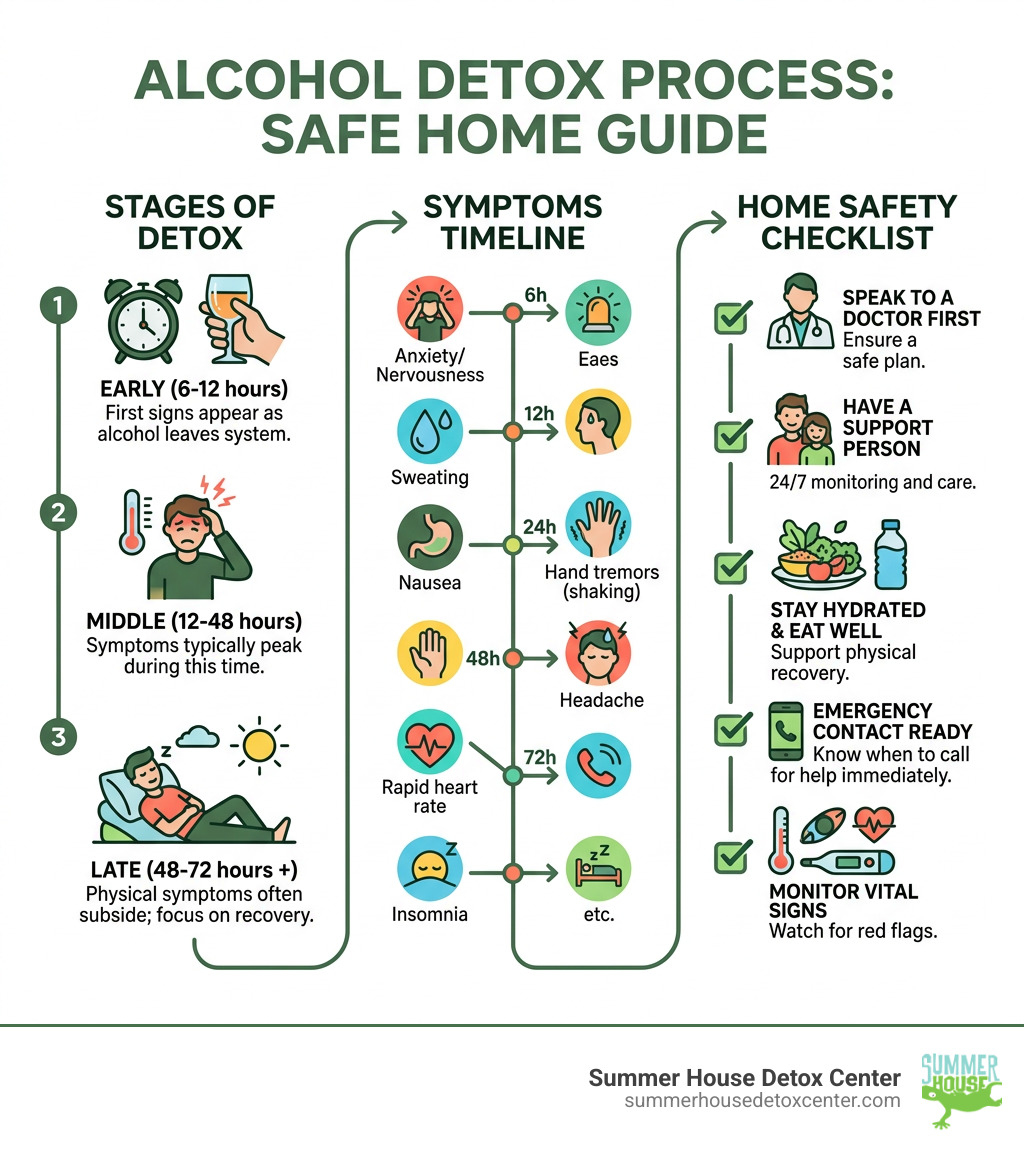
Simple guide to how to detox from alcohol safely at home terms:
Understanding the Risks: How to Detox From Alcohol Safely at Home
When we talk about alcohol, we often focus on the hangover. But for someone with a physical dependence, the real danger begins when the alcohol leaves the system. Chronic alcohol use effectively “depresses” your central nervous system (CNS). Your brain compensates by amping up stimulating chemicals like serotonin and norepinephrine just to stay level. When you suddenly stop drinking, that “brake” is removed, but your brain is still stuck in overdrive.
This overexcitation is what causes withdrawal. While many people experience “the shakes” or anxiety, there are much darker possibilities. Understanding can-you-die-from-alcohol-abuse is vital because, unlike many other drugs, alcohol withdrawal can be fatal.
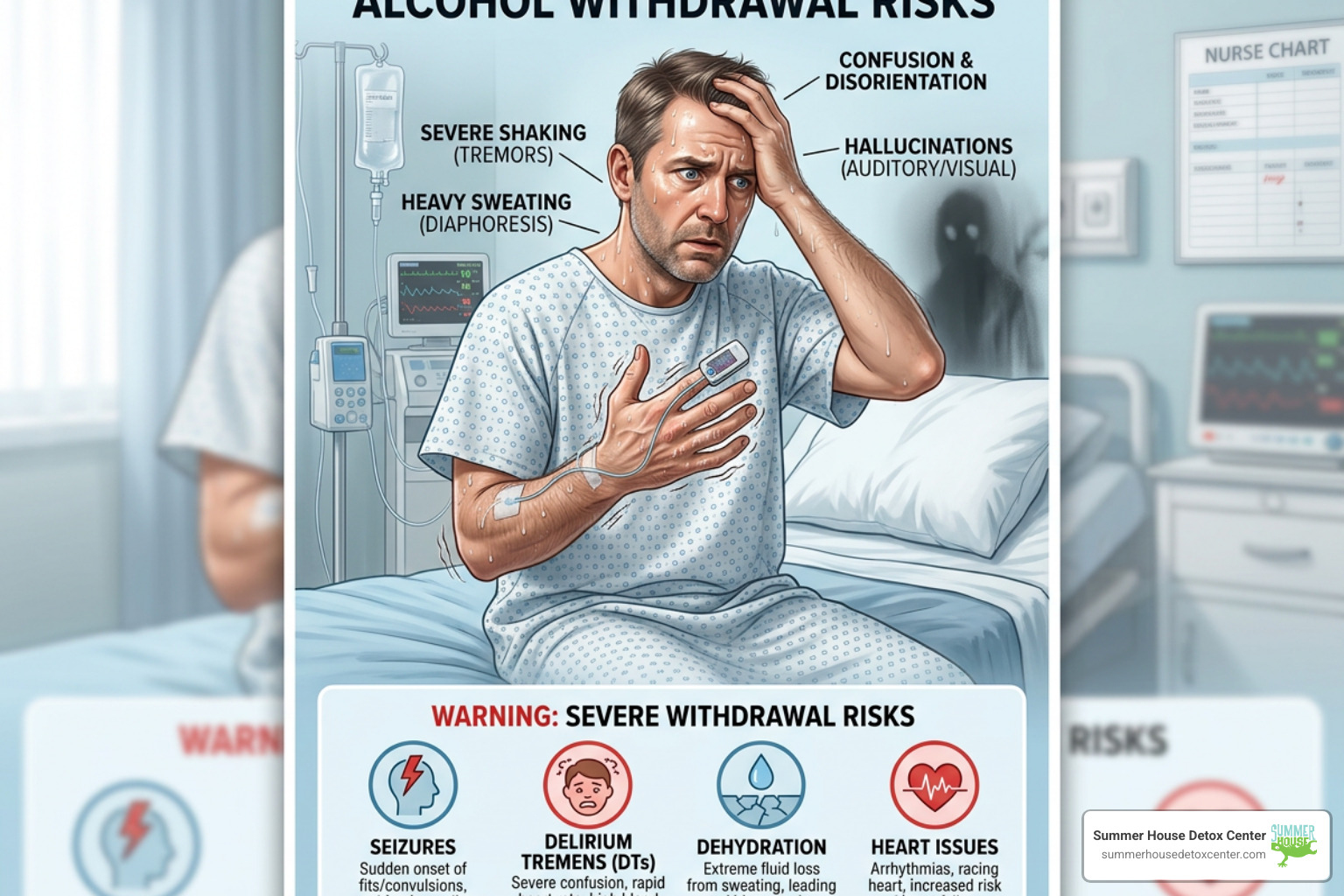
The most severe risks include:
- Delirium Tremens (DTs): This is a medical emergency characterized by extreme confusion, agitation, fever, and hallucinations. It typically occurs 48 to 72 hours after the last drink and can be fatal if untreated.
- Grand Mal Seizures: These can occur within 24 to 48 hours of your last drink, even in people with no history of epilepsy.
- Electrolyte Imbalance and Dehydration: Vomiting and sweating can lead to dangerous shifts in potassium and magnesium, potentially causing heart failure.
- Wernicke’s Encephalopathy: Chronic alcohol use depletes thiamine (B1). During detox, this deficiency can lead to permanent brain damage if not addressed.
It is important to recognize the alcohol-vs-drug-detox-key-differences-and-what-you-need-to-know. While opioid withdrawal feels miserable, alcohol withdrawal is the one that most frequently requires emergency medical intervention.
When At-Home Detox is Appropriate
We want you to be successful, and for some, that means staying in the comfort of your own home in Miami or elsewhere in Florida. However, at-home detox is only appropriate for mild dependence.
How do you know if you fall into this category? You might consider home detox if you haven’t been drinking heavily for a long period and don’t experience severe “shakes” when you miss a drink. You should review these alcohol-withdrawal-signs-how-to-know-you-need-professional-alcohol-detox-treatment to see where you land.
Crucially, you need a strong social support system. You cannot do this alone. You need someone to monitor you 24/7 for the first three to four days. Additionally, the absence of co-occurring disorders (like severe depression, bipolar disorder, or liver disease) is a must. If you notice any of the top-8-signs-you-need-alcohol-withdrawal-treatment, such as a history of DTs or previous failed home attempts, professional help is the only safe route.
The Alcohol Withdrawal Timeline and Symptom Progression
Withdrawal isn’t a single event; it’s a process that unfolds in stages. Knowing the alcohol-detox-timeline helps you and your support person know what to expect and when to worry.
| Time Since Last Drink | Severity | Common Symptoms |
|---|---|---|
| 6–12 Hours | Mild | Anxiety, shaky hands (tremors), headache, nausea, insomnia. |
| 12–24 Hours | Moderate | Visual, auditory, or tactile hallucinations (seeing or feeling things that aren’t there). |
| 24–48 Hours | Peak Risk | Withdrawal seizures are most likely in this window. |
| 48–72 Hours | Severe | Delirium Tremens (DTs), high blood pressure, fever, heavy sweating, extreme confusion. |
| 3–7 Days | Subsiding | Most physical symptoms begin to fade, though psychological symptoms may linger. |
The 72-hour window is the most critical. This is when symptoms usually peak. Seeing how-your-body-reacts-to-alcohol-withdrawal can be frightening, but for many, the physical symptoms will greatly reduce after the first week. However, the alcohol-abstinence-timeline reminds us that things like sleep disturbances and mood swings can last for weeks or even months as the brain recalibrates.
A Step-by-Step Guide to At-Home Recovery
If you and your doctor have decided that you are a candidate for home detox, you need a rigorous plan. You wouldn’t hike the Everglades without a map and water; don’t start a detox without a strategy.
Step 1: Preparing to Detox From Alcohol Safely at Home
Preparation is 90% of the battle. You cannot simply decide to stop on a whim and hope for the best.
- Consult a Doctor: This is non-negotiable. A GP can perform blood tests to check your liver function and nutrient levels. They may also provide a tapering schedule or prescribe a short course of medication (like diazepam) to prevent seizures.
- Assign a Support Person: This person must stay with you 24/7 for at least the first 72 hours. They need to know the emergency signs and be ready to call 911.
- Remove Triggers: Clear every drop of alcohol out of the house. This isn’t just about willpower; it’s about removing the “easy out” when cravings hit.
- Stock Your “Detox Station”: You’ll need plenty of water, electrolyte drinks (like Gatorade or Pedialyte), and easy-to-digest foods (the BRAT diet: bananas, rice, applesauce, toast).
- Create a Treatment Contract: Write down your goals and the rules (e.g., “I will not drive,” “I will take my vitamins”). Have your support person sign it. This helps prevent the signs-of-enabling-a-drug-addict by setting clear boundaries from day one.
Understanding the-key-to-experiencing-a-safe-alcohol-detox is having this structure in place before the first symptom appears. For more detail, check out this what-to-expect-during-alcohol-detox-a-step-by-step-guide-to-the-process.
Step 2: Managing Symptoms While You Detox From Alcohol Safely at Home
Once you begin, your focus shifts to comfort and safety.
- Hydration Protocols: Aim for at least 3 liters of fluid a day. Avoid caffeine, as it can worsen anxiety and tremors.
- Thiamine and B-Complex Vitamins: Alcohol prevents your body from absorbing these. Taking 200mg of Thiamine (B1) and a high-quality B-complex can protect your brain during the transition. This is a staple in alcohol-detox-treatment.
- Nutrition: Even if you aren’t hungry, try to eat small, protein-rich meals. Your body needs fuel to repair the damage.
- Grounding Techniques: When anxiety peaks or cravings hit, use mindfulness. Focus on five things you can see, four things you can touch, three things you can hear, two things you can smell, and one thing you can taste. This keeps you in the present moment.
- Rest and Low Stress: Take a week off work. Keep the lights low, listen to calming music, and avoid stressful conversations. Your CNS is already on high alert; don’t give it more reasons to panic.
Managing the physical and mental toll is the essence of alcohol-detox-and-recovery.
Comparing At-Home Detox to Professional Medical Supervision in Florida
While the idea of how to detox from alcohol safely at home is appealing because it’s “free” and private, there is a reason professional facilities exist. In a place like Miami, where the heat can worsen dehydration, having a controlled environment is a major advantage.
When comparing the two, consider these factors:
- Safety: In a facility like Summer House Detox Center, you have 24/7 monitoring. If a seizure starts, medical professionals are there in seconds. At home, you’re relying on a friend to call an ambulance and hoping it arrives in time.
- Medication Management: We can provide “symptom-triggered” medication. This means we adjust your dose based on real-time assessments (using tools like the CIWA-Ar scale), which is much more effective than a fixed home dose.
- Success Rates: Many people find that the “pain” of withdrawal at home leads to a quick relapse. Professional detox offers a “buffer” where you can’t simply walk to the fridge for a drink.
- Addressing the Root Cause: Detox is just the beginning. Professional programs help you transition into therapy and support groups immediately.
We often hear about the-importance-of-medically-supervised-detox-why-diy-detox-can-be-dangerous. It isn’t just about the physical risk; it’s about the psychological support. For many, why-you-should-choose-alcohol-detox-at-rehab-vs-at-home-detox comes down to the peace of mind that you are doing it the right way, once and for all.
Furthermore, knowing what-is-an-alcohol-overdose-and-how-can-alcohol-detox-help is important for those who might “slip” during a home attempt, as their tolerance may have already started to drop, making a relapse drink much more dangerous.
Frequently Asked Questions
How long does it take to detox from alcohol at home?
On average, the acute phase of detox takes 5 to 7 days. However, the answer to alcohol-detox-how-long-does-it-take varies based on your history. While the worst physical symptoms usually subside within a week, you may experience “post-acute withdrawal syndrome” (PAWS), which includes irritability and sleep issues, for several weeks. Knowing what-happens-after-alcohol-detox is key to maintaining your sobriety long-term.
What medications are used for home alcohol detox?
If a doctor supervises your home detox, they may prescribe benzodiazepines like Chlordiazepoxide (Librium) or Diazepam (Valium). These medications mimic the effects of alcohol on the brain, allowing for a “soft landing” rather than a crash. They are essential for preventing seizures. You might also be given anti-nausea medication or sleep aids. Never use these medications without a prescription, as they can be addictive and dangerous if mixed with alcohol.
When should I go to the emergency room during detox?
If your support person notices any of the following, they should call 911 or take you to the nearest Miami emergency room immediately:
- Hallucinations: Seeing, hearing, or feeling things that aren’t there.
- Seizures: Even a “minor” tremor that seems to take over the body.
- Fever over 101°F: This can indicate the onset of Delirium Tremens.
- Extreme Confusion: Not knowing where you are or what day it is.
- Rapid or Irregular Heartbeat: If your pulse is racing while you are resting.
Conclusion
Learning how to detox from alcohol safely at home is a journey that requires honesty, preparation, and support. While many people can successfully navigate mild withdrawal at home, the risks of severe complications like seizures and DTs are real and unpredictable.
At Summer House Detox Center in Miami, we believe that every person deserves to reclaim their life with dignity. Our personalized, medically supervised programs are designed to take the fear out of detox. We provide the 24/7 medical care, nutritional support, and emotional guidance that home environments often lack.
Whether you choose to detox at home or join us in our comfortable Florida facility, the most important step is the one you are taking right now: choosing a life without alcohol. If you find that home detox is too overwhelming or you want the highest level of safety, we are here to help. Explore our detox-services/alcohol-detox to see how we can support your first steps toward a brighter, sober future.
