
What to Know About a Heroin Detox Program Before You Begin
A heroin detox program is a medically supervised process that helps your body safely clear heroin while managing the withdrawal symptoms that follow. Here’s a quick overview of what to expect:
At a glance:
- What it is: Medical support to manage heroin withdrawal safely
- How long it takes: Typically 5-10 days for the acute phase
- When symptoms start: Within 6-12 hours of your last dose
- When symptoms peak: Between 24-72 hours
- Key medications used: Buprenorphine, methadone, clonidine, lofexidine
- Setting options: Inpatient (recommended) or outpatient
- What comes after: Ongoing treatment, therapy, and aftercare support
Heroin is a short-acting opioid. When you stop using it, your brain — which has adapted to its presence — goes into a kind of shock. The result is withdrawal: a painful, disorienting set of physical and psychological symptoms that make quitting feel nearly impossible without help.
That fear is real. And it stops many people from ever taking the first step.
But here’s what matters: withdrawal is temporary, and it is manageable with the right support. A structured detox program does not just help you get through the physical symptoms — it gives you a safe foundation to start rebuilding your life.
Whether you’re considering detox for yourself or someone you love, understanding what the process actually looks like can make it feel far less overwhelming.
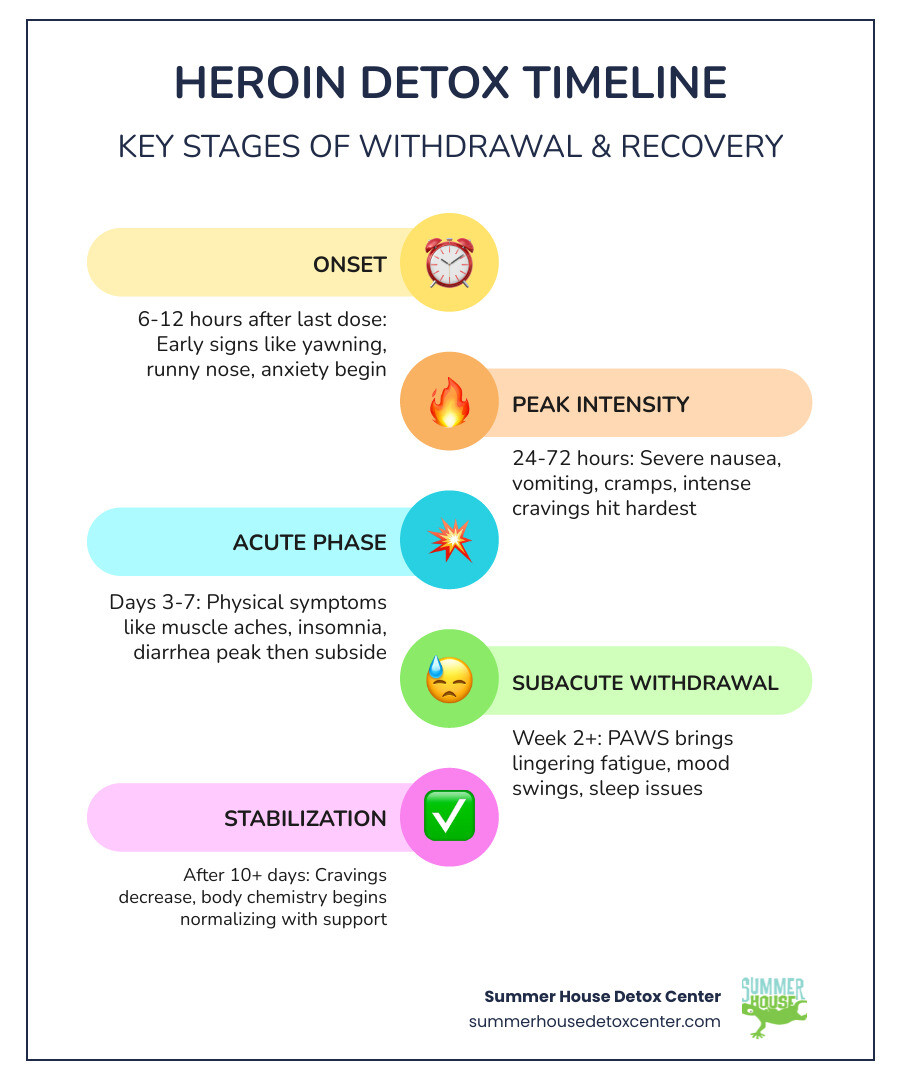
Simple guide to heroin detox program:
Understanding the Heroin Detox Program and Withdrawal Timeline
When we talk about heroin, we are dealing with a “short-acting” opioid. This means it enters and leaves the bloodstream very quickly. While this creates the intense “rush” users seek, it also means that withdrawal symptoms strike much faster than they would with long-acting painkillers.
The question of how long does it take to withdraw from opiates is one of the most common things we hear. Generally, the acute phase of a heroin detox program lasts between five and seven days. However, the experience isn’t a flat line; it’s more like a mountain range with a sharp peak.
The timeline usually breaks down like this:
- 6–12 Hours: The first signs of “sickness” begin.
- 24–72 Hours: Symptoms reach their absolute peak (the hardest part).
- Days 5–7: Physical symptoms begin to subside significantly.
Even after the physical “flu-like” symptoms fade, some people experience Post-Acute Withdrawal Syndrome (PAWS). These are lingering psychological symptoms like anxiety, depression, or sleep disturbances that can last for weeks or months. Understanding what are the symptoms of opiate withdrawal helps us prepare you for both the sprint of the first week and the marathon of long-term recovery.
Early Signs and Symptoms of Heroin Withdrawal
The beginning of withdrawal often feels like a cold you can’t shake. You might notice excessive yawning, a runny nose, and your eyes might start watering (lacrimation). These are the body’s early warning signals that the opioid receptors are empty.
As we look for signs of opiate addiction, these early withdrawal markers are often the most telling. If you are wondering how do i know my loved one is addicted to opiates, watch for sudden bouts of agitation, anxiety, and deep muscle aches that seem to disappear miraculously after they’ve had “time alone.” During the first 12 hours of a heroin detox program, these symptoms are uncomfortable but manageable with the right clinical oversight.
Peak Physical and Psychological Challenges
Once you hit the 24-to-72-hour mark, the “peak” arrives. This is where the body truly rebels. You may experience intense nausea, vomiting, and diarrhea, which can lead to dangerous dehydration if not monitored. Abdominal cramps can be severe, and the psychological weight of intense cravings can feel crushing.
A common concern is: is opiate withdrawal deadly? While the withdrawal itself is rarely fatal for healthy adults, the complications—like dehydration or heart stress—can be. Furthermore, the insomnia after opiate detox can lead to a state of exhaustion that makes relapse feel like the only “cure.” This is why a professional heroin detox program focuses so heavily on comfort during these peak hours.

Medical Protocols in a Heroin Detox Program
At Summer House Detox Center, we don’t believe in “toughing it out.” Modern medicine has provided us with incredible tools to make the detox process dignified and relatively comfortable. We use the Clinical Opiate Withdrawal Scale (COWS) to measure your symptoms objectively. This scale looks at your pulse, sweating, pupil size, and bone aches to determine exactly how much medication you need.
When considering which medications are used in opiate detox, we look at a combination of FDA-approved MOUDs (Medications for Opioid Use Disorder) and comfort meds. For instance, some patients ask does gabapentin help with opiate withdrawal symptoms; while it isn’t a primary treatment, it can be an excellent secondary tool for nerve pain and anxiety.
FDA-Approved Medications: Buprenorphine (Suboxone)
Buprenorphine is a cornerstone of any modern heroin detox program. As a partial opioid agonist, it fits into the brain’s opioid receptors just enough to stop the “sickness” and cravings, but it doesn’t produce the high associated with heroin.
Many people ask, does suboxone help with opiate withdrawal symptoms? The answer is a resounding yes. Because it has a “ceiling effect,” it is much safer than methadone regarding respiratory depression. However, timing is everything. If taken too early, it can cause “precipitated withdrawal,” which is why medical supervision is non-negotiable. Our team follows strict tapering protocols to ensure you transition off the medication smoothly as your body stabilizes.
Adjunctive Treatments for Patient Comfort
Beyond the heavy hitters like Suboxone, we use a variety of “adjunctive” treatments to target specific symptoms:
- Clonidine & Lofexidine: These alpha-2 agonists help lower blood pressure and reduce the “fight or flight” feeling of anxiety and sweating.
- Anti-emetics: Medications to stop nausea and vomiting in their tracks.
- Non-opioid Pain Management: Specialized care for those whose pain medication gateway heroin journey started with chronic physical pain.
- Hydration & Nutrition: IV fluids and nutrient-dense meals to repair the damage caused by long-term use.
Choosing the Right Setting for Heroin Detoxification
Deciding where to detox is just as important as the decision to quit. While some people consider outpatient options, an opiate detox center that offers 24/7 inpatient care is statistically the safest and most effective choice.
In an inpatient heroin detox program, you are removed from the triggers of your daily life. You don’t have to worry about “running into” a dealer or being tempted by the places where you used to get high. More importantly, if a medical complication arises at 3:00 AM, you have a nurse right there to help you. We often caution against the risks of quitting opiates cold turkey, as the lack of support often leads to a quick return to use.
The Benefits of Inpatient Care in Miami, Florida
There is a reason people travel from all over the country to South Florida for recovery. When you choose florida for opiate detox, you aren’t just getting a medical facility; you’re getting an environment designed for healing.
For those who need opiate detox in florida, our Miami-based facility offers a unique blend of privacy and professional expertise. The South Florida recovery community is one of the strongest in the world, providing a wealth of resources for aftercare once your opiate detox treatment is complete. At Summer House, our staff understands the local landscape—many are in recovery themselves—and they bring that empathy into every interaction.
The Dangers of Unsupervised Detox and Quitting Cold Turkey
We cannot stress this enough: quitting heroin “cold turkey” is not just miserable; it can be dangerous. Without medical supervision, you run the risk of severe dehydration from vomiting and diarrhea, which can lead to electrolyte imbalances and cardiac complications.
Furthermore, the risks of quitting opiates cold turkey include a much higher rate of “kindling.” This is a phenomenon where each subsequent withdrawal becomes more severe and harder on the brain than the last. Professional supervision ensures that we manage your symptoms from the start, preventing the trauma that often drives people back to the drug just to make the pain stop.
Screening, Assessment, and Long-Term Recovery
Your journey through a heroin detox program begins with a thorough assessment. We don’t just look at your drug use; we look at the whole person. This includes a biomedical screening to check your liver and heart health, as well as a psychosocial screening to identify co-occurring mental health issues like depression or PTSD (Dual Diagnosis).
Because heroin detox is often the first step in a longer journey, we also look at your history. Did you start with prescriptions? Our understanding of the pain medication gateway heroin helps us tailor your pain management during and after detox. We use trauma-informed care to ensure that your time in opiate detox feels safe and supportive, not clinical and cold.
Transitioning from a Heroin Detox Program to Maintenance
Detox is the foundation, but it isn’t the whole house. Once you are physically stable, the real work of recovery begins. We help you figure out how someone can come off heroin for good by creating a bridge to the next stage of care.
This often involves:
- Behavioral Therapy: Learning the triggers that led to use.
- Support Groups: Connecting with others who have walked the same path.
- Maintenance Medications: Discussing long-term options like Vivitrol (naltrexone) or continued Suboxone.
- Aftercare Planning: Helping you find the right residential rehab or outpatient program in Miami to keep your momentum going.
While scientists are working on a heroin treatment vaccine, the most effective treatment we have today is a combination of medically supervised detox and long-term behavioral therapy.
Frequently Asked Questions about Heroin Detox
How long does the acute phase of heroin withdrawal last?
For most people, the acute phase of a heroin detox program lasts between 5 and 7 days. The symptoms usually start within 12 hours of the last dose and reach their maximum intensity between the second and third day. Factors like your metabolism, how long you’ve been using, and whether you are using other substances (like alcohol or benzos) can influence this timeline.
Is it safe to detox from heroin at home?
While heroin withdrawal is rarely life-threatening on its own, the risks of quitting opiates cold turkey at home are high. Without medical intervention, the risk of relapse is nearly 80-90% because the physical pain becomes unbearable. Additionally, severe dehydration and cardiac stress are real medical concerns that require professional monitoring.
What happens to babies exposed to heroin in the womb?
This is a heartbreaking reality for many families. When we look at what happens to babies exposed to heroin in the womb, the primary concern is Neonatal Abstinence Syndrome (NAS). These infants experience their own withdrawal process after birth and require specialized pediatric care to manage symptoms like tremors, poor feeding, and seizures. If you are pregnant and struggling, seeking a professional heroin detox program is the best thing you can do for both yourself and your baby.
Conclusion
Deciding to enter a heroin detox program is one of the bravest things you will ever do. At Summer House Detox Center, we are here to ensure that your courage is met with the highest level of care. Our Miami facility is designed to be a sanctuary—a place where you are treated with the dignity and respect you deserve.
With a staff that includes people who have been exactly where you are, we offer a level of empathy you won’t find in a standard hospital setting. We don’t just want to help you quit heroin; we want to help you start a life where you no longer feel the need to use it.
Your recovery doesn’t have to be a nightmare. It can be the beginning of your new life. Start your journey at our heroin detox program today and let us help you find your way back to yourself.
