
Everything You Need to Know About the Alcohol Detox Timeline
What to Know Before You Start: Understanding the Alcohol Detox Timeline
How long to fully detox from alcohol depends on where you are in your drinking history — but here is a clear breakdown most people can use as a starting point:
| Phase | Timeframe | What Happens |
|---|---|---|
| Early withdrawal | 6-12 hours after last drink | Mild symptoms: anxiety, nausea, tremors |
| Peak symptoms | 48-72 hours | Worst physical symptoms; seizure and DT risk |
| Physical stabilization | 4-10 days | Symptoms ease for most people |
| Internal organ recovery | 2-3 weeks to 6+ months | Liver and other organs begin healing |
| Post-acute withdrawal (PAWS) | Up to 2 years | Psychological symptoms like anxiety and mood swings |
For most people, the acute physical detox takes 4 to 10 days. But full internal recovery — especially for the liver and brain — takes significantly longer.
If you or someone you love is considering stopping alcohol after heavy or long-term use, it’s completely normal to feel scared. Withdrawal can be unpredictable. Some people get through it with mild discomfort. Others face life-threatening complications like seizures or delirium tremens (DTs).
That uncertainty is exactly why understanding the detox process matters before you take the first step.
This guide walks you through everything: the hour-by-hour timeline, the factors that shape how hard detox hits, the real risks of going it alone, and what full recovery actually looks like — from your first sober day through the months ahead.
Whether you’re in Miami or anywhere in Florida, knowing what to expect can make the difference between a dangerous attempt and a safe, supported recovery.
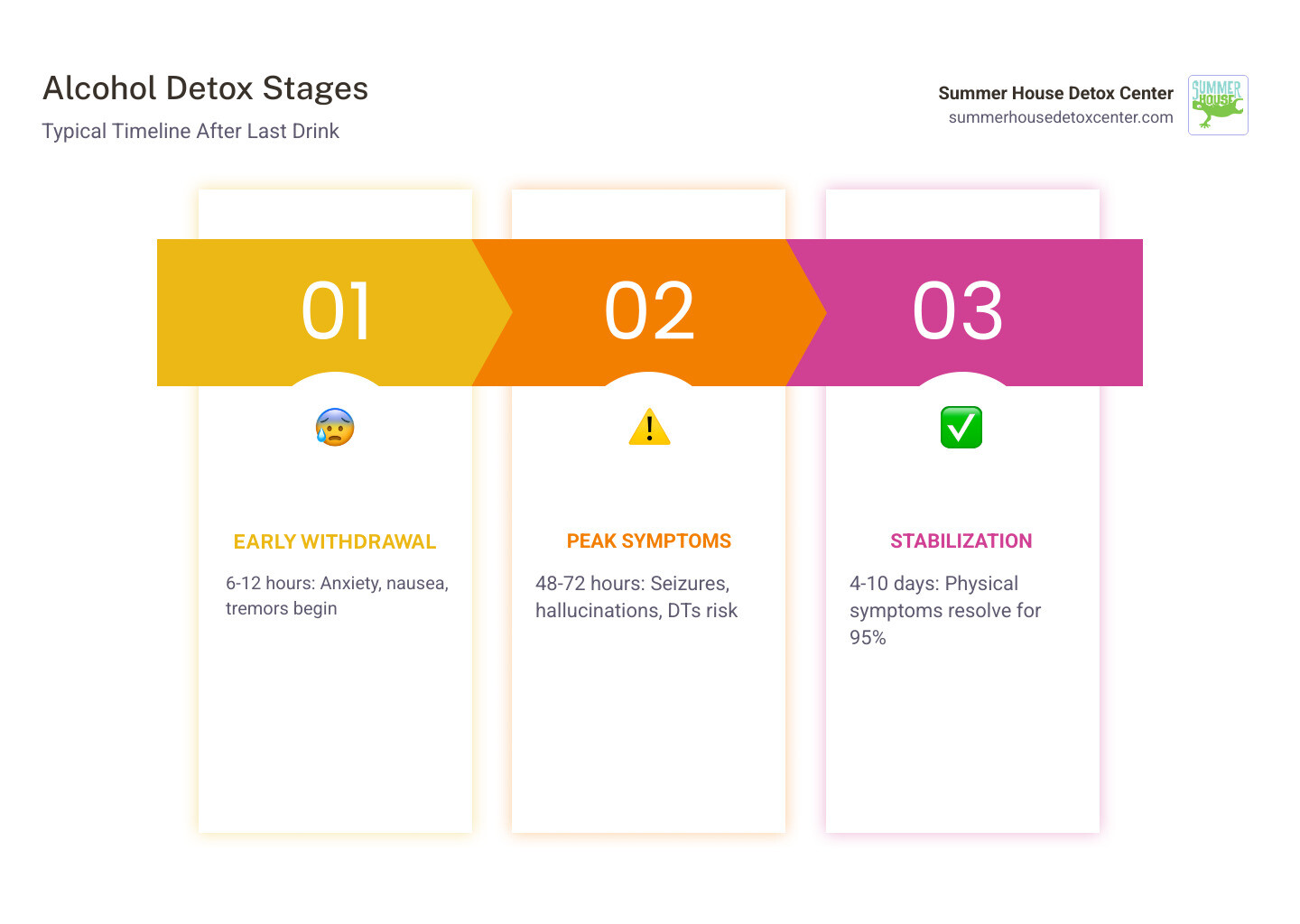
The Stages of Withdrawal: How Long to Fully Detox From Alcohol?
When we talk about detoxification, we are describing the process where the body clears alcohol from its system. For someone who has developed a physiological dependence, this isn’t just a matter of “sleeping it off.” The brain has physically changed its chemistry to compensate for the presence of alcohol, which is a central nervous system depressant. When that depressant is suddenly removed, the brain goes into a state of hyperexcitability.
As of April 2026, medical standards emphasize that there is no “one-size-fits-all” answer to how long to fully detox from alcohol, but most clinical cases follow a predictable Alcohol Detox Timeline. Understanding these stages helps you or your loved one prepare for the road ahead.

The First 24 Hours: Onset and Early Symptoms
The journey begins sooner than many expect. Within 6 to 12 hours after the last drink, the first signs of withdrawal typically emerge. These are often referred to as “minor” symptoms, though they certainly don’t feel minor to the person experiencing them.
Common early symptoms include:
- Persistent anxiety or “the jitters”
- Nausea and abdominal discomfort
- Insomnia or restless sleep
- Clear tremors (shaky hands)
- Increased heart rate and sweating
It is during this initial window that many people realize they are facing more than just a hangover. Recognizing these Alcohol Withdrawal Signs is the first step in deciding to seek professional help before symptoms escalate.
48 to 72 Hours: The Peak of Physical Withdrawal
This is widely considered the most dangerous window in the detox process. Between two and three days after the last drink, the body’s reaction reaches its crescendo. For those with significant dependence, this is when The First 72 Hours Of Detox become a critical medical event.
During this peak, several severe complications can occur:
- Hallucinations: Roughly 2% to 8% of people experience visual, auditory, or tactile hallucinations. Unlike the “pink elephants” portrayed in old movies, these can be terrifying and disorienting.
- Seizures: The risk for withdrawal seizures is highest within the 24-to-48-hour window. These are often grand mal seizures and can occur even in people with no prior history of epilepsy.
- Delirium Tremens (DTs): Affecting about 3% to 5% of patients, DTs are a medical emergency involving extreme confusion, fever, high blood pressure, and terrifying hallucinations. Without treatment, DTs can be fatal.
Understanding How Your Body Reacts To Alcohol Withdrawal during this peak is vital for safety, as medical intervention can often prevent these symptoms from becoming life-threatening.
Days 4 to 10: Stabilization and Resolution
By the fourth or fifth day, most people begin to see the light at the end of the tunnel. Research involving over 2,000 adults found that the average duration for acute withdrawal symptoms is approximately 4.83 days. In fact, 95% of people find that their physical symptoms resolve within a 2-to-8-day range.
During this phase, the focus shifts from crisis management to stabilization. The “shakes” subside, appetite returns, and sleep patterns begin to normalize. However, while the physical storm may have passed, the brain is still recalibrating. Learning What To Expect During Alcohol Detox helps patients understand that feeling “better” physically is just the end of the first chapter.
Factors Influencing the Detox Timeline and Severity
Every person’s body processes alcohol differently. While we use a general timeline as a guide, several variables can stretch or compress the duration of detox. We often look at the Jellinek Curve to understand the progression of addiction and how it relates to the difficulty of the “way back up” during recovery.
Individual Health and Biological Factors
Your unique biology plays a massive role in how long to fully detox from alcohol.
- Metabolic Rate and Body Mass: A person’s weight and metabolism affect how quickly the liver processes toxins.
- Liver Function: If the liver is already damaged (fatty liver or cirrhosis), it will take longer to filter the blood and begin the healing process.
- Nutritional Status: Chronic drinkers are often deficient in B vitamins, particularly thiamine. These deficiencies can worsen neurological symptoms.
- Florida Climate Risks: In Miami and the surrounding areas, the heat and humidity can lead to rapid dehydration. During detox, sweating and vomiting already deplete fluids; the Florida sun makes staying hydrated even more challenging and critical.
History of Substance Use and Kindling
The longer and more heavily you have used alcohol, the more “entrenched” the brain’s changes become.
- Consumption Volume: Those who drink high volumes daily will face a more intense withdrawal than social drinkers.
- Polydrug Use: Using alcohol alongside benzodiazepines or other substances complicates the detox timeline significantly.
- The Kindling Effect: This is a phenomenon where each subsequent withdrawal attempt becomes more severe than the last. If you have detoxed three times before, the fourth time is statistically likely to involve more dangerous symptoms, such as seizures.
These factors are why we emphasize that Alcohol Detox: How Long Does It Take is a highly personalized question that requires a professional assessment.
Medical Supervision vs. The Risks of Detoxing at Home
The phrase “cold turkey” sounds brave, but in alcohol recovery, it can be a death sentence. Alcohol is one of the few substances from which withdrawal can be directly fatal.
Without medical supervision, the risk of Delirium Tremens carries a 5% to 15% fatality rate. Even mild cases can spiral into seizures without warning. This is why Why Medical Detox Is A Vital First Step—it transforms a dangerous ordeal into a managed clinical process.
Medications and Clinical Interventions
In a professional setting, we use several tools to ensure A Safe Alcohol Detox:
- Benzodiazepines: These are the gold standard for preventing seizures and managing the “over-excitation” of the brain.
- Beta-Blockers: These help stabilize heart rate and blood pressure, reducing the strain on the cardiovascular system.
- Nutritional Support: High-dose thiamine (Vitamin B1) and electrolyte replacements prevent long-term brain damage like Wernicke-Korsakoff syndrome.
- 24/7 Monitoring: Constant checks on vital signs allow medical staff to catch a spike in blood pressure or the early signs of a seizure before they become emergencies.
When to Seek Immediate Emergency Help
If you are attempting to stop drinking and experience any of the following, stop what you are doing and call 911 or head to the nearest Miami emergency room immediately.
| Symptom | Why It’s an Emergency |
|---|---|
| Seizures | Can lead to brain damage or death; requires immediate IV medication. |
| Extreme Confusion | A primary sign of Delirium Tremens (DTs). |
| Fever over 101°F | Indicates the body is losing the ability to regulate temperature. |
| Chest Pain | High blood pressure during detox can trigger heart attacks. |
| Hallucinations | Signifies severe neurological distress. |
Knowing the Top 8 Signs You Need Treatment can save your life.
Long-Term Recovery and Internal Healing
Once the first 10 days are over, the “detox” isn’t technically finished. While the alcohol is out of your blood, your body is still in a state of construction.
Beyond the First Week: How Long to Fully Detox From Alcohol Internally?
The brain takes a long time to return to its natural baseline. Many people experience Post-Acute Withdrawal Syndrome (PAWS). These are psychological symptoms that can come and go in “waves” for up to two years.
- Symptoms: Anxiety, irritability, “brain fog,” and sleep disturbances.
- Why it happens: The brain is slowly regrowing receptors and rebalancing dopamine and GABA levels.
Following an Alcohol Abstinence Timeline helps you stay patient with yourself as your mental health stabilizes.
Long-Term Healing: How Long to Fully Detox From Alcohol for the Liver?
The liver is incredibly resilient, but it needs time.
- 2-3 Weeks: Liver inflammation and “fatty liver” begin to reverse.
- 6 Months: Most people see a significant normalization of liver enzymes and function.
- The Catch: For severe damage like cirrhosis, the liver may never “fully” recover, but stopping alcohol prevents further life-threatening progression.
Frequently Asked Questions
How long does the average alcohol detox last?
The acute physical phase usually lasts between 5 and 10 days, with symptoms peaking around the 48-to-72-hour mark. However, psychological cravings and brain recalibration can continue for several months.
Is it safe to detox from alcohol at home?
For heavy, chronic drinkers, the answer is generally no. Because symptoms like seizures and DTs can appear suddenly and are potentially fatal, medical supervision is the only way to ensure safety.
What are the most dangerous symptoms of alcohol withdrawal?
The most dangerous symptoms are grand mal seizures and Delirium Tremens (DTs). DTs involve a combination of hallucinations, extreme high blood pressure, and fever that can lead to cardiovascular collapse.
Conclusion
The question of how long to fully detox from alcohol is the start of a much larger journey. At Summer House Detox Center, we believe that those first few days shouldn’t just be about “getting through it”—they should be about starting your new life with dignity and comfort.
Based in Miami, our facility provides a sanctuary where you are monitored by experts who understand exactly what your body is going through. We don’t just watch the clock; we provide personalized, medically supervised care that addresses your specific health needs and history.
Detox is the vital first step, but What Happens After Alcohol Detox is where the real transformation lives. Our team is here to guide you through the physical storm and help you prepare for the bright, sober future waiting for you in the Florida sunshine.
Contact our Miami experts for safe alcohol detox services today and take the first step toward the life you deserve.
