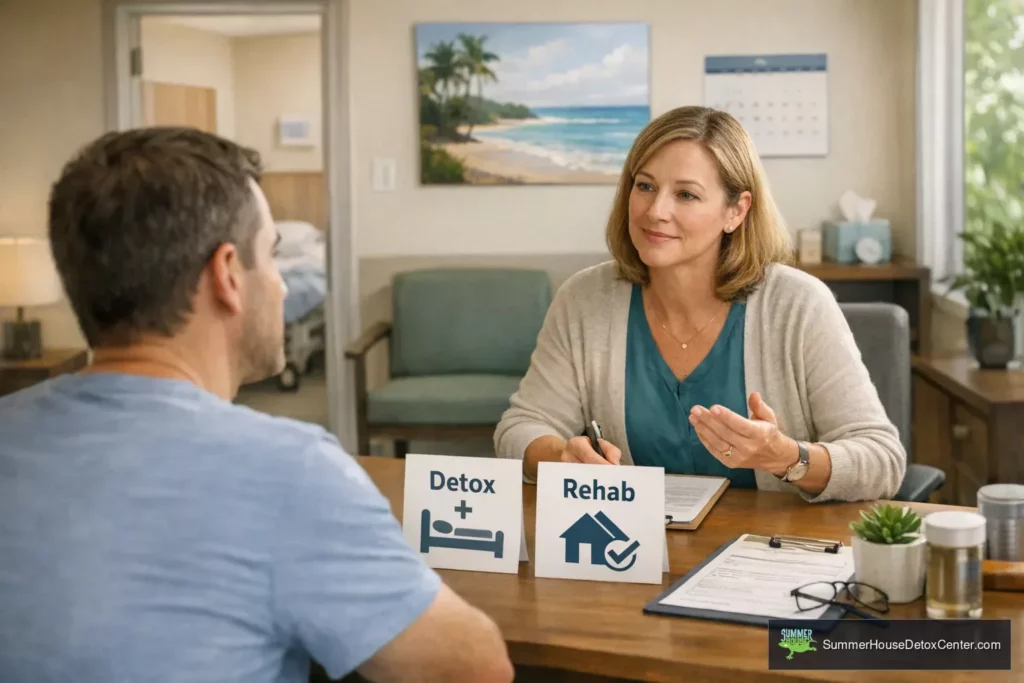
Do You Need Detox Before Rehab in Pompano Beach?
If you are looking into addiction treatment in Pompano Beach, one of the most common questions is whether detox comes first or whether someone can go straight into rehab. The short answer is that it depends on the substance involved, how much and how often a person has been using, whether withdrawal symptoms are already happening, and what level of care is safest.
For some people, detox before rehab in Pompano Beach is the right first step because withdrawal can be uncomfortable, medically risky, or hard to manage without supervision. For others, a clinical assessment may show that detox is not needed and that treatment can begin at another level of care. The important point is not to guess. A safe plan starts with screening, medical history, and an honest review of recent substance use.
This guide explains detox vs rehab in plain language, covers when detox is necessary, and helps adults and families in South Florida understand what usually happens next.
What detox does and how it differs from rehab
Detox and rehab are related, but they are not the same service.
What detox is
Detox is the early phase of care focused on withdrawal management and physical stabilization after a person stops or reduces alcohol or drugs. In a licensed setting with medical supervision during detox, the goal is to monitor symptoms, support safety, and help the body adjust as substances leave the system.
People often search for medical detox Pompano Beach because they are worried about what happens in the first hours or days after stopping use. That concern is understandable. Depending on the substance, withdrawal may range from uncomfortable to serious. Alcohol, benzodiazepines, and some other substances can involve higher-risk withdrawal patterns that should be evaluated by qualified professionals rather than handled alone at home.
What rehab is
Rehab focuses on the treatment work that follows stabilization. That can include counseling, structured daily programming, recovery planning, relapse prevention, education about substance use patterns, coping skills, and support for mental and behavioral health needs that may be tied into addiction.
Inpatient rehab gives people a structured environment away from triggers, access to clinical support, and a clear daily schedule centered on recovery. It is different from detox because rehab is not mainly about getting through acute withdrawal. It is about building the foundation for ongoing recovery after the immediate medical concerns have been addressed.
Why the difference matters in Pompano Beach
In South Florida, many people looking for addiction treatment in Pompano Beach are trying to make decisions quickly. A family may be calling after a frightening weekend. A person may be trying to enter treatment before changing their mind. Someone living in Pompano Beach may be commuting, working irregular hours, or trying to leave a local environment that has become part of the problem.
That urgency can make it tempting to ask only one question: “What rehab can take me right now?” But the safer question is: “Do I need detox before rehab?” If a person is likely to experience withdrawal, skipping that step can create avoidable medical risk and may also make it harder to engage in treatment right away.
A simple way to think about it is this:
- Detox helps a person get medically and physically stable.
- Rehab helps a person begin the deeper treatment and recovery process.
Some people move from detox directly into inpatient rehab. Others are assessed for a different next step, depending on symptoms, substance use, home support, and safety needs. If you want a broader overview of medically supervised withdrawal and treatment settings, The Ultimate Guide to Inpatient Detox and Treatment Centers is a useful starting point.
Signs you may need detox before entering rehab
Many people ask how to tell whether detox is necessary before treatment starts. A checklist alone is not enough to make that decision, but there are common signs that suggest detox should be considered first.
Withdrawal has already started when you try to stop
If a person becomes shaky, sweaty, nauseated, anxious, restless, or unable to sleep after stopping alcohol or drugs, that may point to withdrawal. Some people also notice rapid heartbeat, tremors, agitation, body aches, vomiting, chills, or strong cravings. These symptoms do not automatically reveal how severe withdrawal will become, but they are a sign that professional screening is important.
You need a substance just to feel “normal”
If a person drinks or uses in the morning to steady themselves, avoid feeling sick, or function through the day, that can be a warning sign that the body has become physically dependent. In those situations, alcohol detox before rehab or drug detox before treatment may be the safest route.
There is a history of serious withdrawal
Anyone who has had severe withdrawal symptoms in the past should be especially careful. Prior withdrawal episodes can matter because a person’s history helps admissions and clinical teams evaluate risk. If someone previously had intense confusion, seizures, extreme agitation, or needed urgent medical support after stopping a substance, that history should be shared immediately during intake.
Use has been frequent, heavy, or long-term
Not everyone who uses a substance heavily will need detox, but the longer and more consistently someone has been using, the more likely physical withdrawal may be part of the picture. This is one reason why two people seeking addiction treatment in Pompano Beach may not start at the same level of care. One might be appropriate for direct admission into rehab, while the other may need monitored detox first.

Multiple substances are involved
Polysubstance use can complicate withdrawal. For example, a person may be using alcohol along with benzodiazepines, opioids, cocaine, or other drugs. The combination can affect what symptoms appear, when they appear, and how safely they can be managed. In these cases, guessing can be dangerous. A medically supervised evaluation is the better next step.
There are mental health or medical concerns in the background
People entering treatment may also be dealing with panic symptoms, depression, past trauma, high blood pressure, heart concerns, sleep problems, chronic pain, or other medical issues. Those factors do not automatically mean detox is required, but they can affect what setting is most appropriate. A person withdrawing while also managing other health issues may need closer observation.
It feels impossible to focus on therapy while physically unstable
Another practical sign is this: if someone is so sick, anxious, shaky, exhausted, or uncomfortable that they cannot sit through counseling or structured programming, detox may need to happen before rehab can be effective. Treatment works better when a person is medically stable enough to participate.
That is why “inpatient rehab vs detox” is not really a competition. They serve different purposes. Detox helps the person become stable enough to benefit from rehab. Rehab helps the person build the tools needed after that first stage.
Substances and situations that often require medical detox
Not every substance has the same withdrawal profile, and not every person experiences withdrawal the same way. Still, some substances and situations are more commonly associated with the need for medical detox.
Alcohol
Alcohol is one of the clearest examples of why people ask whether they need detox before rehab in Pompano Beach. Alcohol withdrawal can become serious in some cases, especially when a person has been drinking heavily, drinking daily, or has a history of difficult withdrawal. Symptoms may begin within hours of the last drink and can change over time.
People and families often underestimate alcohol withdrawal because alcohol is legal and familiar. But the question is not whether alcohol is common. The question is whether stopping it suddenly could create medical risk for that individual. That is why alcohol detox before rehab is often recommended when there is clear physical dependence or prior withdrawal history.
For a more detailed breakdown of stages and expectations, see Everything You Need to Know About the Alcohol Detox Timeline.
Benzodiazepines
Medications such as Xanax, Ativan, Klonopin, or Valium can involve significant withdrawal concerns, especially after ongoing use, high doses, or use outside prescribing guidance. Abruptly stopping benzodiazepines can be risky. A medically supervised setting may be necessary to monitor symptoms and manage the process more safely.
Opioids
Opioid withdrawal is often described as intensely uncomfortable and difficult to complete without support. While it may be less likely than alcohol or benzodiazepine withdrawal to involve certain life-threatening complications, it can still be severe enough to interfere with safety, hydration, sleep, and the ability to remain engaged in treatment. Cravings can also be very strong during this period, increasing the risk of returning to use before rehab really begins.
Stimulants
Cocaine and methamphetamine withdrawal may not always look the same as alcohol or opioid withdrawal, but they can still require structured care. People may experience exhaustion, depression, agitation, sleep disruption, cravings, or emotional instability. In some cases, the issue is less about a classic medical withdrawal emergency and more about the need for monitoring, psychiatric support, and a safe environment in the first phase of treatment.
Multiple substances at once
Drug detox before treatment is especially important to assess when someone has been using more than one category of substance. A person in Pompano Beach might be drinking heavily at night, taking pills to sleep, and using stimulants during the day. The resulting withdrawal picture is not something a person or family should try to sort out alone.
Situations that raise concern even more
Regardless of the specific substance, detox is more likely to be needed first when any of the following are true:
- There is a history of withdrawal symptoms after stopping.
- Use has been daily or nearly daily.
- The person is using large amounts.
- They have tried to quit before but returned to use quickly because symptoms were too difficult.
- There is a history of seizures, blackouts, severe agitation, or confusion.
- There are co-occurring medical or mental health concerns.
- The home environment is unstable or full of triggers.
These are not reasons to panic, but they are reasons to slow down and choose the safest setting. The goal of medical detox Pompano Beach discussions is not to frighten people. It is to keep them from underestimating withdrawal and to make sure treatment starts in a way that supports real stabilization.
When inpatient rehab can start after detox
One of the most common concerns from families is timing. They want to know how long detox takes and when a person can begin inpatient rehab.
There is no single timeline for everyone
The length of detox depends on several factors, including the substance, duration of use, amount used, physical health, age, prior withdrawal history, and whether multiple substances are involved. Some people stabilize relatively quickly. Others need a longer period of monitoring before they are ready to participate in a rehab schedule.

This is why broad promises about exact timelines are not reliable. A safe answer comes from assessment, observation, and clinical judgment. The focus is not on rushing someone through withdrawal. The focus is on making sure they are stable enough for the next level of care.
Rehab usually begins once the person is stable enough to participate
In practical terms, inpatient rehab can often begin after acute withdrawal symptoms are brought under control and the person can safely engage in treatment activities. That usually means they are able to sleep more normally, eat and hydrate, hold a conversation, tolerate a daily schedule, and participate in therapy without being overwhelmed by unmanaged withdrawal.
The transition may be immediate or close to immediate when detox and rehab are coordinated well. Many adults seeking addiction treatment in Pompano Beach want continuity rather than a gap between levels of care, because delays can create opportunities to leave treatment early or return to substance use. A streamlined transition from detox into inpatient rehab can help maintain momentum.
Detox is not the whole treatment plan
It is important to understand that feeling physically better after detox does not mean treatment is finished. Detox addresses immediate stabilization, but it does not by itself resolve the underlying patterns, triggers, stressors, emotional drivers, or recovery skills needed for long-term change. That is why moving into a rehab program after detox is so often recommended.
If you are comparing options in the area, the pompano beach drug rehab page offers additional context on local inpatient and detox pathways.
Why one person may go right into inpatient rehab while another does not
This is where individualized assessment matters. Two people may both ask about detox before rehab Pompano Beach, but their paths can be different:
- One person may need a medically supervised detox first and then step into inpatient rehab.
- Another may be medically stable enough to start residential treatment without a formal detox stay.
- Another may need more specialized medical evaluation before either level of care is chosen.
That does not mean the process is inconsistent. It means treatment planning is based on safety and fit, not a one-size-fits-all rule.
When outpatient care may or may not be enough
People often compare inpatient rehab vs detox vs outpatient because they want the least disruptive option. That is understandable, especially for adults in South Florida balancing work, children, finances, or legal stress. But outpatient treatment is not automatically the right first step just because it is more convenient.
When outpatient may be enough
Outpatient care may be considered when a person is medically stable, not expected to have dangerous withdrawal, has a supportive and substance-free home environment, can attend consistently, and does not need 24-hour structure to avoid immediate relapse. In those cases, outpatient treatment can play an important role in recovery planning and ongoing care.
For example, someone who is not physically dependent, has already passed the withdrawal period safely, or has lower-intensity clinical needs may be a stronger candidate for outpatient than for detox or inpatient rehab.
When outpatient may not be enough
Outpatient may not be enough when:
- Withdrawal risk is unclear or likely significant.
- The person has already tried to stop on their own and could not get through it safely.
- There is ongoing heavy alcohol or drug use.
- The home environment includes active substance use, instability, or easy access to triggers.
- The person is at high risk of leaving treatment or returning to use right away.
- There are mental health or medical concerns needing closer support.
Why “least restrictive” still has to be safe
Families sometimes hear that the least restrictive level of care is preferred when appropriate. That is true in principle, but “when appropriate” is the key phrase. A lower level of care only works when it can still safely meet the person’s needs. If someone needs detox, sending them straight to outpatient can set them up for a difficult and potentially risky start.
On the other hand, assuming everyone needs detox or residential treatment can also be unhelpful. The safest approach is not to choose the most intensive setting automatically. It is to choose the right setting based on symptoms, substance use history, current condition, and recovery environment.
A South Florida example
Consider two adults in Pompano Beach:
One has been drinking heavily every day, wakes up shaky, and starts drinking in the morning to feel steady. That person may need alcohol detox before rehab because withdrawal risk is a serious concern.
Another stopped using several days ago, is medically stable, has no history of severe withdrawal, and has strong support at home. That person may not need detox and might be assessed for another treatment level.

Both need help. They just may not need the same first step.
For readers also comparing nearby treatment access across South Florida, the west palm beach detox page can be helpful for understanding how detox services are framed in the region.
What to expect from admissions, assessment, and timing
When people call a treatment center, they often worry they will be pressured into a program before anyone understands what is really going on. A good admissions process should do the opposite. It should gather enough information to help determine whether detox, inpatient rehab, or another level of care may be appropriate.
What admissions teams usually ask
When you call about addiction treatment in Pompano Beach, admissions may ask questions such as:
- What substances are being used?
- How often and how much is being used?
- When was the last use?
- Has the person had withdrawal symptoms before?
- Have they ever had seizures, hallucinations, blackouts, or severe agitation while stopping?
- Are there any current medical concerns?
- Are there mental health concerns that should be considered?
- Has the person been in treatment before?
- Is the person safe right now?
- What kind of support is available at home?
These questions are not just administrative. They help screen for whether detox may be needed before rehab and how urgent the situation is.
Why honesty matters
Many people minimize substance use on the first call because they are embarrassed or worried they will be judged. Families may also underreport what they have seen because they are unsure what matters. But accurate information can make the difference between being placed in a setting that fits and one that does not.
If someone drinks more than they want to admit, uses multiple substances, or had a frightening withdrawal episode in the past, sharing that information helps the team plan more safely. The purpose is not to shame anyone. It is to understand what level of support is likely to be needed.
Insurance and payment questions
Another common FAQ is whether insurance will help cover detox and rehab. Coverage varies by policy, benefits, network details, medical necessity criteria, and the services being considered. Because of that, the most practical answer is that admissions can often help verify benefits and explain what may apply to detox, inpatient rehab, or related addiction treatment services.
Instead of assuming coverage or assuming there is none, it is worth asking for a case-specific review. Families in Pompano Beach often delay the first call because they are worried about logistics. In reality, clarifying insurance and timing early can reduce stress and help the next step happen faster.
How fast someone can usually be assessed
Assessment timing can depend on current availability, urgency, and the information gathered during the first conversation. If withdrawal is already underway or serious symptoms are possible, the need for prompt evaluation becomes more important. A person who is medically unstable should not wait around trying to self-manage because they are hoping to enter rehab later in the week.
What happens after assessment
After the initial screening, the next step may be one of several paths:
- Admission to detox first, followed by rehab when stable.
- Direct admission to inpatient rehab if detox is not clinically needed.
- Guidance toward another level of care if that appears to fit better.
- Recommendation for urgent medical evaluation if symptoms suggest immediate risk.
This is why not every patient starts at the same level of care. Treatment planning is supposed to match the person, not force the person into a preset path.
How to choose a safe treatment option near Pompano Beach
If you are comparing providers in or near Pompano Beach, it helps to focus on practical safety questions rather than marketing language.
Look for licensed, medically supervised care when withdrawal may be involved
If there is any realistic concern about withdrawal, ask whether the setting provides licensed care and medical supervision during detox. This matters because withdrawal can change quickly, and some symptoms need prompt clinical attention. A recovery setting should not treat detox as an afterthought if the person’s substance use history suggests otherwise.
Ask how detox needs are screened
A trustworthy admissions conversation should include questions about substance type, recent use, withdrawal history, medical background, and current symptoms. Be cautious about any process that tries to assign a level of care without asking enough to understand actual risk.
Choose a program that can explain level-of-care differences clearly
People should be able to get a plain-language explanation of detox, inpatient rehab, and outpatient options. If you are trying to compare inpatient rehab vs detox, the answer should not be confusing or overly sales-focused. You should understand:

- What each level of care is for
- Why one may be safer than another in your case
- What the expected transition looks like
- What the immediate next step should be
Consider local relevance and practical access
For families in Pompano Beach, nearby access matters. South Florida traffic, family work schedules, and the urgency of admission all affect what is realistic. Whether someone is coming from Pompano Beach, Boca Raton, Fort Lauderdale, Delray Beach, West Palm Beach, or Miami, it helps to choose a provider that understands the local treatment landscape and can talk practically about timing and placement.
Look for continuity from detox into rehab when possible
One challenge in early recovery is losing momentum between stages of care. If someone needs detox first, it helps to ask what the handoff into inpatient rehab looks like after stabilization. A smooth transition can reduce the chance that a person leaves treatment after detox and decides not to continue.
Do not choose based on promises
Be careful with broad promises, one-size-fits-all timelines, or claims that sound too certain. Recovery planning is individual. Good treatment providers can explain process, safety concerns, and likely next steps, but they should not claim guaranteed outcomes or pretend every case follows the same path.
FAQ: Need detox before rehab in Pompano Beach
How do I know if I need detox before rehab in Pompano Beach?
The safest way to know is through a professional screening. In general, detox may be needed first if you have withdrawal symptoms when you stop, use alcohol or drugs daily or heavily, need a substance to avoid feeling sick, have a history of difficult withdrawal, or use multiple substances. A phone screening and clinical assessment can help determine whether detox before rehab Pompano Beach is the safer route.
Can I go straight to rehab without detox?
Yes, some people can go straight to rehab without a formal detox stay, but only if they are medically stable and not expected to have significant withdrawal. Rehab can begin without detox in some situations, but not all. The right answer depends on recent use, substance type, symptom history, and current condition.
Which substances usually require medical detox first?
Alcohol and benzodiazepines are often the biggest concerns because withdrawal can become serious in some cases. Opioids may also require detox support because withdrawal can be intense and hard to complete without structured care. Stimulants and polysubstance use may also call for supervised stabilization depending on symptoms and mental health factors. This is why drug detox before treatment should be based on an actual assessment rather than guesswork.
How long does detox take before someone can begin inpatient rehab?
There is no single timeline that fits everyone. The length of detox depends on the substance involved, severity of dependence, withdrawal symptoms, physical health, and whether more than one substance is involved. Inpatient rehab can usually begin after the person is stable enough to participate in treatment safely and consistently.
Will insurance help cover detox and rehab?
Insurance may help cover detox and rehab, but benefits vary based on the policy and level of care being recommended. The practical next step is to have admissions verify benefits and explain what may apply to your situation, rather than assuming coverage one way or the other.
Is detox always required before inpatient rehab?
No. Detox is not required in every case. Some people do need detox first because withdrawal is a real concern, while others may be stable enough to begin rehab without it. The decision should be based on screening, medical history, substance use pattern, and safety considerations.
Why can’t I just use a checklist online to decide?
Because withdrawal risk is not something people should estimate on their own. Checklists can help you know what questions to ask, but they do not replace medical screening. Two people can have similar use patterns and very different withdrawal experiences. If there is any doubt, a qualified assessment is the safer choice.
A practical way to think about the next step
If you are unsure whether you need detox before rehab in Pompano Beach, it may help to narrow the question down to three issues:
- Could withdrawal be a concern? If yes, detox should be evaluated first.
- Is the person stable enough to participate in treatment right now? If no, stabilization may need to come before rehab.
- What level of structure is needed after stabilization? That helps determine whether inpatient rehab, outpatient, or another path makes sense.
These questions are simple, but the answers should still come from a qualified team that can review the person’s actual symptoms, substance use, and immediate safety needs.
Conclusion
Choosing between detox, inpatient rehab, and outpatient care can feel overwhelming, especially when the situation is urgent and emotions are high. But the main takeaway is straightforward: detox and rehab do different jobs, and the right starting point depends on withdrawal risk, substance type, symptom severity, overall health, and the level of support a person needs.
For some adults in Pompano Beach, detox is the first and safest step before treatment can really begin. For others, a clinical review may show that rehab can start without detox. What matters most is not making that decision by guesswork or assuming everyone follows the same path.
If you are not sure whether detox, inpatient rehab, or another level of care makes sense, call Summer House Detox Center at (800) 719-1090. A qualified admissions team member can talk through the person’s symptoms, substance use, and safe next steps in South Florida so you can get a direct answer that fits the situation.
