
Understanding Alcohol Withdrawal: Your Essential Guide
Detoxing from alcohol is a critical first step toward recovery, but it’s not as simple as just “stopping.” If you’ve been drinking heavily for an extended period, your body has become physically dependent on alcohol, and suddenly quitting can trigger withdrawal symptoms that range from uncomfortable to life-threatening.
Quick Answer: Key Facts About Alcohol Detox
- Timeline: Symptoms typically begin 6-24 hours after your last drink, peak at 24-72 hours, and improve within 5-7 days.
- Common Symptoms: Anxiety, tremors, sweating, nausea, headaches, increased heart rate, confusion, and hallucinations.
- Severe Risk: About 5% of people experience Delirium Tremens (DTs), a medical emergency with a significant mortality rate.
- Safety First: Medical supervision is essential. Withdrawal can cause seizures, heart complications, and other life-threatening issues.
- Success Factor: The vast majority of people with alcohol use disorder experience withdrawal, making professional detox critical for a safe recovery.
Making the decision to stop drinking takes courage. The fear of withdrawal is real and valid, but you don’t have to face it alone. This guide will walk you through what happens during alcohol detox, why medical supervision is so important (especially here in Miami and throughout Florida), and how the right support can make this process safe and manageable. You’ll learn about the science behind withdrawal, the symptoms to expect, the dangers of detoxing at home, and how medical detox centers use proven methods to keep you safe. Detox is just the beginning—it’s the foundation for lasting recovery.
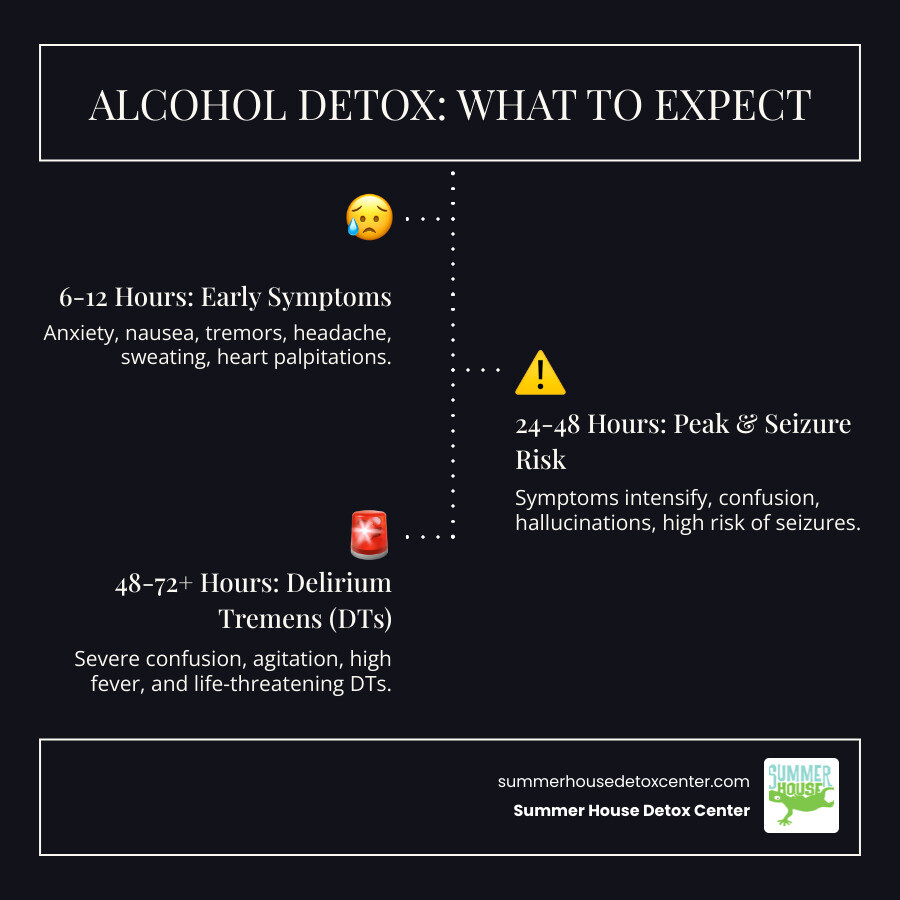
Basic detoxing from alcohol terms:
Understanding Alcohol Withdrawal: Why Quitting “Cold Turkey” Is So Hard
When a person with long-term alcohol dependence stops drinking, they experience alcohol withdrawal syndrome (AWS). Alcohol is a central nervous system (CNS) depressant that slows brain function. To compensate, the brain increases its own excitatory activity. When alcohol is removed, this over-activity is no longer suppressed, leaving the brain in a hyper-excitable state that causes withdrawal symptoms. This intricate process is why understanding Does Alcohol Addiction Change the Way the Brain Works? is so crucial.
The Science of Dependence: How Alcohol Changes Your Brain
Chronic alcohol use suppresses the brain’s excitatory functions (glutamate) and improves its inhibitory functions (GABA). To compensate, the brain produces more glutamate and becomes less sensitive to GABA. When alcohol is removed, this imbalance leads to a state of over-arousal, causing withdrawal symptoms. For a deeper dive, visit resources like Alcohol Withdrawal.
Are You at Risk? Factors for Severe Alcohol Withdrawal
Several factors increase the risk of severe withdrawal, including a history of heavy drinking, previous withdrawal episodes, co-occurring health conditions, and age. If you have any of these risk factors, it is critical to seek professional medical help for detoxing from alcohol. See our guide on the Top 8 Signs You Need Alcohol Withdrawal Treatment for more information.
The Alcohol Withdrawal Timeline: What to Expect Day by Day
Understanding the alcohol withdrawal timeline is key to preparing for detox and highlights the need for medical supervision. While experiences vary, symptoms follow a general pattern. Acute withdrawal usually improves within five days, but some people experience Post-Acute Withdrawal Syndrome (PAWS), with symptoms like anxiety and insomnia lasting for weeks or months. For a detailed breakdown, explore our Alcohol Detox Timeline.
First 6-12 Hours: Early Withdrawal Symptoms
Symptoms begin 6-12 hours after the last drink and include anxiety, insomnia, nausea, headache, heart palpitations, tremors, and sweating. This discomfort can trigger a relapse.
24-48 Hours: Peak Discomfort and Seizure Risk
Symptoms peak between 24-72 hours. This critical period brings intensified symptoms, confusion, hallucinations, and a high risk of seizures. Medical supervision is vital. For more information, see Alcohol withdrawal.
48-72+ Hours: The Danger of Delirium Tremens (DTs)
About 5% of individuals may develop Delirium Tremens (DTs), a medical emergency, 2-3 days after their last drink. Symptoms include severe confusion, agitation, fever, and terrifying hallucinations. DTs can be fatal and require immediate medical care. Learn more about What is the Difference Between Alcohol Abuse, Dependence, and Addiction?.
The Dangers of Detoxing from Alcohol Without Medical Help
Detoxing from alcohol at home is incredibly dangerous and can be fatal. The severity of withdrawal is unpredictable; what starts as mild anxiety can quickly escalate into a medical emergency like seizures or Delirium Tremens. Even “tapering” at home is risky without medical guidance. Complications like dehydration and electrolyte imbalance are also common. This is precisely Why You Should Choose Alcohol Detox at Rehab vs. At-Home Detox.
Life-Threatening Complications: Seizures and DTs
- Grand Mal Seizures: These can occur suddenly, causing injury, brain damage, or death. They can progress to status epilepticus, a dire medical emergency.
- Delirium Tremens (DTs): The most severe form of withdrawal, DTs involves profound confusion, hallucinations, and physiological instability that can lead to cardiovascular collapse. The mortality rate is significant, making immediate medical intervention a necessity. For more on severe consequences, read Can You Die From Alcohol Abuse?.
The Psychological Toll of Unmanaged Withdrawal
Attempting to detox alone can also cause severe psychological distress, including intense anxiety, panic attacks, deep depression, suicidal thoughts, and psychosis. This traumatic experience can deter future attempts at sobriety. Learn more at Anxiety and Substance Use: What’s the Connection?.
How to Safely Detox: The Medically Supervised Approach
Given the risks, the safest way to undergo detoxing from alcohol is through a medically supervised detox program. The goal is to manage withdrawal symptoms safely and comfortably.
At a professional detox center like ours in Miami, FL, the process includes:
- Evaluation: A comprehensive assessment to create a personalized detox plan.
- Stabilization: 24/7 monitoring and medication to manage withdrawal and prevent emergencies like seizures or DTs.
- Fostering entry into treatment: Helping you transition to the next stage of recovery.
This is why Why Medical Detox is a Vital First Step in Recovery is our guiding principle.
What Happens in a Professional Alcohol Detox Center in Miami?
At Summer House Detox Center, we provide a personalized, medically supervised detox in a comfortable, dignified setting. You can expect 24/7 medical monitoring, individualized treatment plans using tools like the CIWA scale, and a calm, supportive environment. Learn more about What to Expect During Your Detox Experience at Summer House.
Medications That Make Detoxing from Alcohol Safer and More Comfortable
Medications are key to a safe detox. They alleviate discomfort and prevent life-threatening complications.
- Benzodiazepines: (e.g., Valium, Ativan) The standard for calming the nervous system and preventing seizures.
- Other Medications: Anti-seizure drugs and beta-blockers may be used to manage specific symptoms.
These are prescribed and monitored by medical professionals. For more information, see What Type of Medications Are Used in Alcohol Treatment? and Medications for alcohol dependency.
The Role of Nutrition and Holistic Care in a Florida Detox
Proper nutrition is vital. Chronic alcohol use depletes essential nutrients, worsening withdrawal.
Our Florida detox center prioritizes:
- Hydration and Vitamins: IV fluids and supplements like Thiamine (B1) are used to rehydrate and prevent complications.
- Balanced Meals: Nutritional support helps replenish the body and support healing.
- Holistic Therapies: We use mindfulness and other therapies to promote well-being.
Nutrition is a key element in recovery, as explored in The Role of Nutrition in Detox: How a Balanced Diet Supports Recovery.
Beyond Detox: Building a Foundation for Lasting Sobriety in Miami
Medical detox is a vital first step, but it is not a cure for addiction. Detoxing from alcohol addresses physical dependence, but long-term recovery requires addressing the underlying psychological and behavioral issues. Transitioning from detox into a comprehensive treatment program is crucial for developing coping skills and preventing relapse. Our goal in Miami is to help you build this foundation. Read more about Life After Detox: Building a Strong Foundation for Long-Term Sobriety.
Continuing Care: Finding an Alcohol Rehab Center
After detox, an alcohol rehab program provides the therapeutic support needed to sustain sobriety. Options in the Miami area include:
- Inpatient/Residential Programs: A 24/7 live-in environment for immersive, structured care. Ideal for severe cases or those needing a supportive setting.
- Outpatient Programs (PHP/IOP): Allows you to live at home while attending regular therapy sessions. A flexible option for those with strong support systems. Learn more at Inpatient vs Outpatient Programs at Miami Alcohol Treatment Centers.
Essential Support Systems: Therapy, AA, and SMART Recovery
Building a strong support network is vital. This includes:
- Therapy: Individual counseling like Cognitive-Behavioral Therapy (CBT) and family therapy.
- Support Groups: Peer support through groups like Alcoholics Anonymous (AA) or SMART Recovery.
- Sponsorship: Personal guidance from someone experienced in recovery. Learn more about Why We Need Sponsors to Help Us Recover.
Understanding Alcohol Withdrawal: Why Quitting “Cold with Cold Turkey” Is So Hard
Alcohol’s impact on the central nervous system (CNS) is profound. As a depressant, it slows brain activity, and with regular use, the brain compensates by increasing its own excitatory processes. When alcohol is suddenly removed, the brain is left in a hyper-excitable state, which causes the symptoms of withdrawal. This is why understanding Does Alcohol Addiction Change the Way the Brain Works? is so crucial.
The Science of Dependence: How Alcohol Changes Your Brain
The brain’s balance between calming (GABA) and exciting (glutamate) neurotransmitters is disrupted by chronic alcohol use. To counteract alcohol’s sedative effect, the brain reduces GABA sensitivity and increases glutamate activity. When drinking stops, this imbalance causes a state of over-stimulation, which is the root of withdrawal. For a deeper dive into this, you can visit resources like Alcohol Withdrawal.
Are You at Risk? Factors for Severe Alcohol Withdrawal
Not everyone experiences severe withdrawal, but certain factors significantly increase the risk. Medical supervision is crucial for detoxing from alcohol if you have:
- A history of heavy, long-term drinking
- Previous withdrawal experiences or seizures
- Co-occurring medical or mental health conditions
- Advanced age or poor general health
- Nutritional deficiencies
If these factors apply to you or a loved one, it’s crucial to seek professional medical help. For more insights, see our guide on the Top 8 Signs You Need Alcohol Withdrawal Treatment.
The Alcohol Withdrawal Timeline: What to Expect Day by Day
When detoxing from alcohol, symptoms follow a general timeline, though individual experiences vary. Acute withdrawal typically improves within five days, but some people experience Post-Acute Withdrawal Syndrome (PAWS), with symptoms like anxiety and insomnia lasting for weeks or months. This is why detox is the first step in a longer recovery journey. For a more detailed breakdown, you can explore our Alcohol Detox Timeline.
First 6-12 Hours: Early Withdrawal Symptoms
Initial symptoms appear within 6-12 hours of the last drink. They are often uncomfortable and include anxiety, insomnia, nausea, headache, heart palpitations, shaky hands (tremors), and sweating. The discomfort can create a strong urge to drink for relief.
24-48 Hours: Peak Discomfort and Seizure Risk
Symptoms typically peak between 24 and 72 hours. This critical period brings intensified symptoms, confusion, and hallucinations. The risk of seizures is highest during this time, peaking around 24 hours. Increased blood pressure and heart rate are also common. This stage highlights why medical supervision is crucial. For more information, see Alcohol withdrawal.
48-72+ Hours: The Danger of Delirium Tremens (DTs)
For about 5% of individuals, the most severe complication, Delirium Tremens (DTs), can emerge 2-3 days after the last drink. DTs are a medical emergency with a mortality rate of 1-4% even with treatment. Symptoms include severe confusion, profound agitation, high fever, rapid heart rate, and terrifying hallucinations. Immediate medical intervention is essential. Learn more about the differences in our article on What is the Difference Between Alcohol Abuse, Dependence, and Addiction?.
The Dangers of Detoxing from Alcohol Without Medical Help
Attempting to detox from alcohol at home without medical supervision is extremely dangerous and can be fatal. Withdrawal severity is unpredictable; what starts as mild discomfort can quickly escalate into a medical emergency. Even a self-managed “taper” is risky, as it’s difficult to control and can lead to complications like dehydration. This is Why You Should Choose Alcohol Detox at Rehab vs. At-Home Detox.
Life-Threatening Complications: Seizures and DTs
The most severe risks of unmanaged withdrawal are seizures and Delirium Tremens (DTs).
- Grand Mal Seizures: These can occur suddenly, leading to injury, brain damage, or death. A continuous seizure state, known as status epilepticus, is a dire medical emergency.
- Delirium Tremens (DTs): This is the most severe form of withdrawal, causing profound confusion, hallucinations, and extreme physiological instability (e.g., cardiovascular collapse, respiratory failure). The mortality rate for DTs is significant, making it a life-or-death situation that requires immediate medical care. For more on the severe consequences, consider reading Can You Die From Alcohol Abuse?.
The Psychological Toll of Unmanaged Withdrawal
Beyond the physical dangers, the psychological stress of unmanaged withdrawal is immense. It can cause intense anxiety, panic attacks, severe depression, and even psychosis. The trauma of a severe withdrawal can also create a powerful fear of trying to get sober again. The link between mental health and substance use is strong, and withdrawal makes it worse. Learn more at Anxiety and Substance Use: What’s the Connection?.
How to Safely Detox: The Medically Supervised Approach
The safest path for detoxing from alcohol is a medically supervised program. The goal is to manage withdrawal symptoms, prevent complications, and ensure your comfort and safety. This process involves evaluation, stabilization, and preparation for ongoing treatment. This is why Why Medical Detox is a Vital First Step in Recovery is our core philosophy.
What Happens in a Professional Alcohol Detox Center in Miami?
At Summer House Detox Center in Miami, Florida, you’ll find a supportive environment for a safe withdrawal. We provide:
- 24/7 Medical Monitoring: Our experienced staff monitors your vital signs and symptoms around the clock.
- Individualized Treatment Plans: We use assessment tools like the CIWA scale to create a custom detox plan for your specific needs.
- A Calm and Supportive Environment: Our Miami facility is a peaceful sanctuary for healing, with compassionate staff who offer genuine understanding.
Learn more about What to Expect During Your Detox Experience at Summer House.
Medications That Make Detoxing from Alcohol Safer and More Comfortable
Medications are a cornerstone of safe alcohol detox. They alleviate discomfort and prevent life-threatening complications. The most common medications include:
- Benzodiazepines (e.g., Valium, Ativan, Librium): The standard for calming the nervous system and preventing seizures.
- Other Supportive Medications: Anti-seizure drugs like Gabapentin, beta-blockers, and others may be used to manage specific symptoms like high blood pressure or tremors.
These are prescribed and monitored by medical professionals. For more details, see What Type of Medications Are Used in Alcohol Treatment? and Medications for alcohol dependency.
The Role of Nutrition and Holistic Care in a Florida Detox
Beyond medication, a holistic approach is vital. Chronic alcohol use depletes essential nutrients, which can worsen withdrawal.
At our Florida detox center, we prioritize:
- Hydration and Vitamins: IV fluids and supplements, especially Thiamine (B1), are used to rehydrate the body and prevent neurological complications.
- Balanced Meals: Nutritional support helps replenish the body and support physical healing.
- Holistic Therapies: We integrate mindfulness and other therapies to promote well-being.
The role of nutrition cannot be overstated, as explored in The Role of Nutrition in Detox: How a Balanced Diet Supports Recovery.
Beyond Detox: Building a Foundation for Lasting Sobriety in Miami
Medical detox is an essential first step, but it is not a cure for addiction. Detoxing from alcohol addresses physical dependence, but long-term recovery requires addressing the underlying psychological and behavioral patterns. Transitioning from detox into a comprehensive treatment program is crucial for developing coping skills and preventing relapse. Our goal in Miami is to help you build this foundation. Learn more about Life After Detox: Building a Strong Foundation for Long-Term Sobriety.
Continuing Care: Finding an Alcohol Rehab Center
After detox, an alcohol rehab program provides the therapeutic support needed to sustain sobriety. Options in the Miami area include:
- Inpatient/Residential Programs: A 24/7 live-in environment for immersive, structured care. Ideal for severe cases or those needing a supportive setting.
- Outpatient Programs (PHP/IOP): Allows you to live at home while attending regular therapy sessions. A flexible option for those with strong support systems. Learn more at Inpatient vs Outpatient Programs at Miami Alcohol Treatment Centers.
Essential Support Systems: Therapy, AA, and SMART Recovery
Building a strong support network is vital. This includes:
- Therapy: Individual counseling like Cognitive-Behavioral Therapy (CBT) and family therapy.
- Support Groups: Peer support through groups like Alcoholics Anonymous (AA) or SMART Recovery.
- Sponsorship: Personal guidance from someone experienced in recovery. Learn more about Why We Need Sponsors to Help Us Recover.
