
Understanding the Alcohol Withdrawal Timeline: What to Expect When You Stop Drinking
Understanding the alcohol withdrawal timeline is critical if you’re planning to stop drinking. Alcohol withdrawal isn’t just uncomfortable; it can be life-threatening without medical supervision.
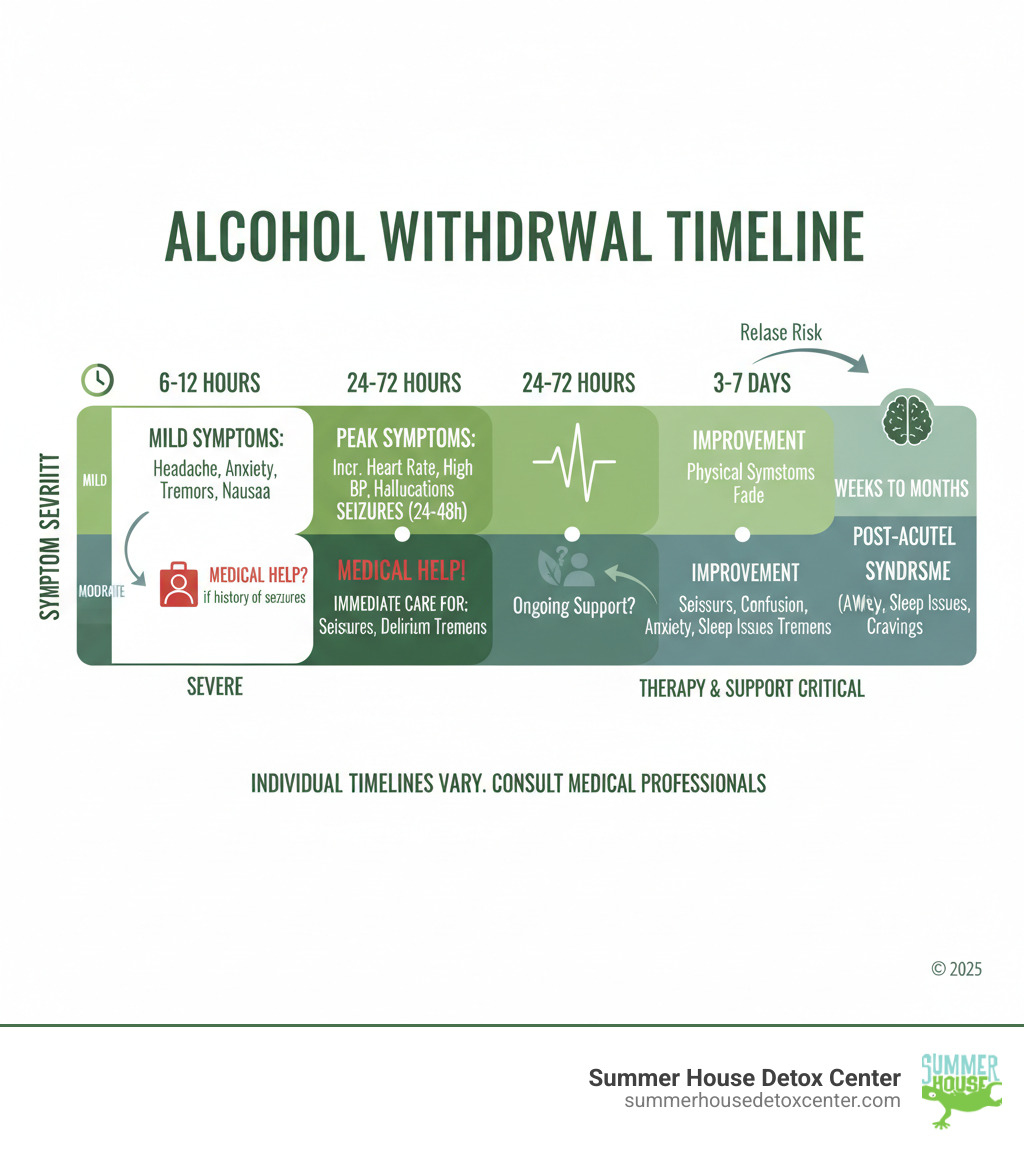
Here’s a general timeline of what to expect:
- 6-12 hours after last drink: Mild symptoms like headache, anxiety, and tremors begin.
- 24-72 hours: Symptoms peak. This is the most dangerous phase, with risks of high blood pressure, rapid heart rate, hallucinations, or seizures.
- 3-7 days: Physical symptoms begin to improve.
- Weeks to months: Psychological symptoms like anxiety and cravings may persist.
This timeline can vary based on your drinking history and overall health. Withdrawal occurs because your brain, having adapted to alcohol’s presence, becomes overactive when it’s removed. This can lead to severe complications like delirium tremens (DTs), which can be fatal. That’s why medical detox is essential. Here in Miami, Florida, facilities like Summer House Detox Center provide the safe, medically supervised care needed to steer this challenging process. You don’t have to do it alone; recovery is possible with the right support.
What is Alcohol Withdrawal and Why Does It Happen?
When someone with prolonged, heavy alcohol use suddenly stops drinking, their body experiences Alcohol Withdrawal Syndrome (AWS), a set of physical and psychological symptoms. This happens due to physical dependence, a biological adaptation where the brain rewires itself to function with alcohol present.
To understand the alcohol withdrawal timeline, it’s crucial to look at the brain’s chemical messengers, or neurotransmitters. Alcohol is a depressant that improves the calming neurotransmitter GABA and suppresses the excitatory neurotransmitter glutamate. To counteract this, the brain reduces its natural GABA production and increases glutamate to maintain balance.
When alcohol is abruptly removed, this system is thrown into chaos. The brain is left with too much glutamate (the “excitatory” chemical) and not enough GABA (the “calming” chemical). This GABA and glutamate imbalance causes the central nervous system to become hyperactive, leading to the symptoms of withdrawal. This process is detailed in The Science of Detox: How Your Body Eliminates Toxins During Recovery.
Fortunately, the brain can rebalance itself. At facilities like Summer House Detox Center in Miami, this process is managed safely with medical support, making recovery achievable.
The Alcohol Withdrawal Timeline: A Stage-by-Stage Guide
The alcohol withdrawal timeline varies for each person based on factors like drinking history, age, and health, but it generally follows a predictable pattern. Knowing the stages can make the process less frightening. For a complete overview, see our Alcohol Detox Timeline.

6 to 12 Hours After the Last Drink: The First Signs
Initial symptoms often appear within 6 to 12 hours and can be mistaken for a severe hangover. These are the first signs that your body is dependent on alcohol. Common symptoms include:
- Headache
- Anxiety and restlessness
- Insomnia
- Tremors (the “shakes”)
- Nausea, vomiting, or loss of appetite
If you notice these signs, it’s important to consider seeking help. Learn more about the Top 8 Signs You Need Alcohol Withdrawal Treatment.
24 to 72 Hours: The Peak of Withdrawal
This window is the most intense and dangerous part of the timeline, as your nervous system is in a state of hyperactivity. Symptoms can include:
- Increased blood pressure and rapid heart rate
- Profuse sweating and fever
- Confusion and agitation
- Hallucinations (seeing or hearing things that aren’t there)
- Seizures, which are a life-threatening medical emergency most common in this period.
The National Library of Medicine confirms that symptoms peak during this time. Attempting to manage this phase alone is extremely risky. Professional medical care, like that offered at our Miami facility, is critical for safety. Our guide on The First 72 Hours of Detox: What to Expect and How to Prepare explains how we provide support during this crucial time.
3 to 7 Days: Symptoms Begin to Subside
After the 72-hour mark, the most severe physical symptoms typically begin to fade. This is a sign that your body is starting to stabilize. However, some symptoms may linger, including:
- Lingering anxiety and irritability
- Significant fatigue as your body recovers
- Mood swings
- Sleep disturbances
For most, physical symptoms are significantly improved within a week, marking the transition from acute withdrawal to the next phase of recovery. To understand the full duration, read our article Alcohol Detox: How Long Does It Take?.
Understanding Withdrawal Severity: From Mild Symptoms to Delirium Tremens
The severity of the alcohol withdrawal timeline varies greatly. Some experience flu-like symptoms, while others face a medical emergency. Factors influencing severity include the amount and duration of drinking, age, co-occurring medical or mental health conditions, and previous withdrawal attempts (known as the “kindling effect”).

This variability is why medical detox is a vital first step in recovery. It’s about safety, not willpower.
Mild to Moderate Withdrawal Symptoms
Most people experience mild to moderate symptoms, which are highly uncomfortable but typically not life-threatening with proper support. These include:
- Intense anxiety and restlessness
- Nausea and vomiting
- Excessive sweating
- Insomnia and persistent headaches
- Hand tremors
While manageable, these symptoms can escalate without warning. Medical monitoring is crucial to intervene if the situation worsens. Learn more about How Your Body Reacts to Alcohol Withdrawal.
Severe Withdrawal and Delirium Tremens (DTs)
Severe alcohol withdrawal is a medical emergency that cannot be managed at home. The most dangerous complication is delirium tremens (DTs), which typically appears 48 to 72 hours after the last drink. Symptoms include:
- Profound confusion and severe agitation
- Terrifying hallucinations
- Racing heart, high blood pressure, and fever
Untreated DTs have a mortality rate as high as 15%, according to research on Delirium Tremens. Seizures are another life-threatening risk, most common between 24 and 48 hours. These dangers are real, and professional intervention is critical. Our article Can You Die From Alcohol Abuse? explores these risks further.
At Summer House Detox Center in Miami, we manage even the most severe withdrawal symptoms safely and with compassion, ensuring you are never alone during this critical time.
Seeking Help in Miami and Florida: Diagnosis and Professional Treatment
Recognizing the need for help is a brave first step. In Miami and across Florida, professional care is available to guide you safely through the alcohol withdrawal timeline. At Summer House Detox Center, our expert team, many with personal recovery experience, provides dignified and compassionate medical care.

South Florida is a leading destination for recovery, offering a supportive environment for healing. Learn more about Alcohol Detox Florida and Why South Florida Is Leading the Way in Effective Detox Programs.
How Alcohol Withdrawal is Diagnosed
Upon arrival at our Miami facility, our priority is your safety and comfort. The diagnostic process includes:
- A thorough physical exam to check vital signs and assess physical symptoms.
- A confidential discussion about your medical and drinking history. Honesty is key to creating a safe treatment plan.
- Blood tests to identify nutritional deficiencies, electrolyte imbalances, and check liver function.
- The CIWA-Ar scale (Clinical Institute Withdrawal Assessment for Alcohol, Revised), a standardized tool to objectively measure the severity of your symptoms and guide treatment intensity.
This comprehensive evaluation helps us understand your unique needs. For more on identifying the need for help, see our guide on Alcohol Withdrawal Signs: How to Know You Need Professional Alcohol Detox Treatment.
Medications Used for Safe Withdrawal
Medically supervised detox uses specific medications to ease discomfort and prevent dangerous complications.
- Benzodiazepines (e.g., Valium) are the standard of care. They calm the overactive nervous system, reducing anxiety and preventing seizures.
- Anti-seizure medications may be used for those at high risk.
- Beta-blockers help manage cardiovascular symptoms like a racing heart and high blood pressure.
- Nutritional support, especially thiamine (Vitamin B1), is vital to prevent neurological damage.
- IV fluids are used to correct dehydration and electrolyte imbalances.
All medications are administered under 24/7 medical supervision. Learn more about What Type of Medications Are Used in Alcohol Treatment?.
The Importance of Personalized Care in Detox
At Summer House Detox Center, we believe your treatment must be as unique as your story. We create individualized plans based on your medical history, dependence severity, and any co-occurring mental health conditions like anxiety or depression (dual diagnosis). This personalized approach includes customized medication protocols and holistic therapies to support your mind and body. As we explain in The Importance of Personalized Care in Detox, this custom care is key to a successful recovery. We also believe in The Role of Therapy in Detox, beginning therapeutic support early to build a strong foundation for your future.
Life After Detox: Post-Acute Withdrawal and Long-Term Sobriety
Completing detox is the first major step, but the recovery journey continues. The next phase of the alcohol withdrawal timeline can involve Post-Acute Withdrawal Syndrome (PAWS), a period where your brain continues to heal and rebalance its chemistry. This phase can last for weeks or months.
Symptoms of PAWS are primarily psychological and emotional, and may include:
- Mood swings and irritability
- Persistent anxiety
- Sleep disturbances and insomnia
- Intense alcohol cravings
- Cognitive issues like “brain fog” or poor concentration
- Low energy and motivation
Experiencing these symptoms is a normal part of the brain’s healing process. Ongoing support is crucial for navigating this phase, as detailed in our guide to Life After Detox: Building a Strong Foundation for Long-Term Sobriety. For more information, SAMHSA offers a resource on Protracted Withdrawal.
The Extended Alcohol Withdrawal Timeline
There is no set timeline for PAWS. During this period, developing effective coping strategies is essential. Therapy, regular exercise, good nutrition, and stress management techniques all support your brain’s recovery. Learning to identify and manage triggers is also a key skill for preventing relapse. Our article on What Happens After Alcohol Detox? provides more insight into this phase.
Support Groups and Building a Sober Life in Florida
Connection with others is a powerful tool for long-term sobriety. Here in Miami and throughout Florida, a strong recovery community is ready to support you.
- Alcoholics Anonymous (AA): Offers peer support through its 12-step program, with meetings widely available across Florida.
- SMART Recovery: Provides a science-based, self-empowerment approach to managing recovery.
- Al-Anon Family Groups: Offers support for friends and family members affected by a loved one’s drinking.
At Summer House Detox Center, we provide comprehensive aftercare planning to connect you with these resources. We help you build a strong support network to maintain sobriety. The National Institute on Alcohol Abuse and Alcoholism also provides extensive resources for long-term recovery. For practical tips, see our guide on 7 Effective Ways to Avoid Relapse After Alcohol Rehab. Building a sober, fulfilling life is possible, and Florida’s supportive environment is an ideal place to do it.
Frequently Asked Questions about the Alcohol Withdrawal Timeline
Deciding to stop drinking raises many questions about the alcohol withdrawal timeline and safety. Here are answers to some common concerns.
Can you die from alcohol withdrawal?
Yes, alcohol withdrawal can be fatal without medical care. Complications like Delirium Tremens (DTs) and seizures can lead to cardiovascular collapse. However, with professional medical supervision in a facility like Summer House Detox Center, these risks are drastically reduced. Our team monitors you 24/7 and uses medication to prevent complications. Attempting to quit “cold turkey” at home is extremely dangerous for those with significant physical dependence. Learn more about The Key to Experiencing a Safe Alcohol Detox.
How much do you have to drink to experience withdrawal?
There is no exact amount, as it depends on individual factors. Withdrawal typically occurs after prolonged, heavy drinking. For men, this is often defined as 15+ drinks per week; for women, 8+ drinks per week. However, your age, genetics, metabolism, and overall health also play a significant role. The “kindling effect” means that withdrawal can become more severe with each attempt to quit. Because it’s so individual, a professional medical assessment is the only way to know your risk. If you’re concerned about your drinking patterns, read Is Binge Drinking a Sign of Alcohol Addiction?.
Can alcohol withdrawal be prevented?
The only way to completely prevent withdrawal is to not develop a physical dependence on alcohol. If you are already dependent, you cannot prevent withdrawal symptoms entirely, but you can prevent them from becoming life-threatening. Gradually tapering your intake should only be done under strict medical supervision, as it can be unpredictable and dangerous. The safest and most effective strategy is to seek professional help for Alcohol Use Disorder (AUD) at a medical detox facility. Early intervention is key. For more on prevention, see 8 Effective Ways to Prevent the Onset of Alcohol Abuse. The safest path forward is always through professional support.
Begin Your Recovery Journey in Miami Today
The alcohol withdrawal timeline can seem daunting, with its physical challenges and medical risks. But the most important thing to remember is that you do not have to go through it alone.
Right here in Miami, Summer House Detox Center provides a safe, compassionate, and medically supervised environment to steer withdrawal. Our experienced team, some of whom are in recovery themselves, understands what it takes to begin this journey. We treat you with dignity, creating a personalized care plan to manage your symptoms and keep you comfortable.
The dangers of withdrawal are real, but so is the hope for a new life. Don’t wait for a crisis. If you or a loved one is struggling, take the courageous first step. Contact Summer House Detox Center today to learn how we can support your path to recovery.
