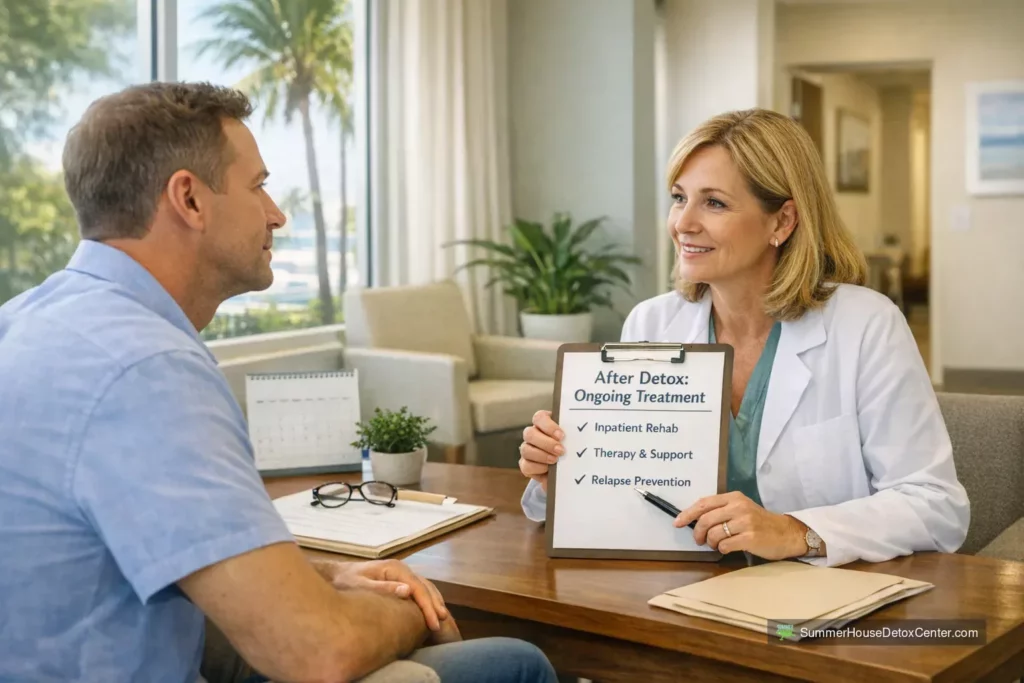
Miami Substance Abuse Treatment: Why Detox Is Often Only the First Step
For many adults and families in South Florida, the first urgent question is whether someone needs detox. That matters, especially when alcohol, opioids, benzodiazepines, stimulants, or multiple substances are involved. But once withdrawal risk is addressed, a second question becomes just as important: what happens next?
That is where miami substance abuse treatment becomes more than a detox decision. Medical detox can help stabilize the body during withdrawal. It does not, by itself, resolve the habits, triggers, cravings, stress patterns, and day-to-day risks that often drive continued substance use. For many people, moving into inpatient rehab or a more complete addiction treatment plan after detox gives recovery a stronger foundation.
At Summer House Detox Center, adults and families from Miami, Fort Lauderdale, West Palm Beach, Pompano Beach, Boca Raton, and Delray Beach often call with the same concern: “Is detox enough, or does my loved one need more support?” The answer depends on the person’s substance use history, medical needs, relapse pattern, home environment, and ability to stay safe and engaged after stabilization.
This guide explains the difference between detox and ongoing treatment, when inpatient rehab may make sense, what treatment after detox can include, and how the admissions process usually works in South Florida. If you are comparing Miami substance abuse treatment options or looking into addiction treatment in Miami, understanding the full picture can help you make a safer, more informed next step.
Why Detox Alone May Not Be Enough for Lasting Recovery
Detox serves a specific purpose. It helps a person through the early phase of stopping alcohol or drugs, especially when withdrawal symptoms may be uncomfortable, intense, or medically risky. In a medically supervised setting, the focus is on stabilization, monitoring, symptom management, and protecting the person during the immediate withdrawal period.
That work is important. In some cases, it is the safest place to begin. But detox addresses the acute physical phase of substance use disorder, not the full addiction pattern.
People often feel better physically before they are ready emotionally or behaviorally to manage sobriety on their own. That gap matters. A person may complete detox, sleep better, eat again, and seem more clear-headed, yet still be highly vulnerable to relapse within days or weeks if the reasons behind substance use have not been addressed.
What Detox Does Well
- Monitors withdrawal symptoms
- Helps reduce immediate medical risk
- Provides a safer setting than trying to stop alone
- Begins early recovery planning
- Creates a short-term pause from active substance use
What Detox Usually Does Not Fully Resolve
- Cravings that continue after withdrawal ends
- Relapse triggers tied to stress, trauma, relationships, or environment
- Compulsive routines around obtaining and using substances
- Mental health concerns that may complicate recovery
- Lack of structure, support, or accountability after discharge
This is one reason national treatment guidance from organizations such as SAMHSA and NIDA consistently describes detox as a beginning stage, not complete addiction treatment by itself. In practical terms, that means a person in Miami may need more than physical stabilization if they have a longer history of use, repeated failed attempts to quit, co-occurring emotional distress, or a home environment where immediate return to old patterns is likely.
A common example is someone who enters alcohol detox after weeks or months of daily drinking. By the end of detox, the most dangerous withdrawal period may have passed. But if the person goes right back to the same apartment, same stressors, same drinking contacts, and no daily treatment structure, the relapse risk can still be high. The same pattern can apply to prescription drug misuse, cocaine use, methamphetamine use, heroin, fentanyl, or polysubstance use.
Families often misread early improvement. Someone may sound sincere, motivated, and physically calmer after detox. That motivation is valuable, but it is not the same as being fully prepared for independent recovery. A more complete treatment plan can help turn that initial willingness into a workable routine.
If you are researching Miami drug rehab resources, it can help to think of detox as the opening phase of care rather than the finish line.
Why Relapse Risk Can Be Higher After Detox Alone
After detox, tolerance often drops. If a person returns to substance use at the amount they used before stopping, the danger can increase. That is one reason treatment teams often emphasize continued care after detox, especially for people with heavy use histories or repeated relapses. The concern is not about blame. It is about the reality that physical stabilization and long-term recovery readiness are not the same thing.
For alcohol specifically, understanding withdrawal stages can clarify why early medical care and follow-up treatment both matter. Readers looking for more detail on withdrawal progression can review the alcohol detox timeline as part of planning what level of support may be needed.
Signs Someone in Miami May Need Treatment Beyond Detox
Not every person needs the same next step after detox. Some may transition to outpatient care with strong support at home. Others may need inpatient rehab because the risks of returning directly to daily life are too high. The key is to look honestly at what happens after withdrawal symptoms begin to settle.
Below are common signs that detox alone may not be enough.
1. Repeated Relapse After Prior Detox or Sobriety Attempts
If someone has gone through detox before, stopped using for a short time, and then returned to alcohol or drugs, that pattern often suggests the need for more structured addiction treatment. The issue may not be willingness. It may be that withdrawal was treated, but the recovery plan after detox was too limited.
For example, a Miami resident may stop drinking for several days, feel physically better, leave detox, and relapse after returning to work stress or isolation. In that case, inpatient rehab may provide enough time and structure to build coping skills before stepping back into everyday pressure.
2. Heavy or Long-Term Substance Use
The longer and more intensively someone has been using, the less likely detox alone will be a complete answer. Years of alcohol misuse, daily opioid use, frequent cocaine binges, or combined use of multiple substances can affect routines, judgment, sleep, mood, relationships, and stability far beyond the acute withdrawal phase.
In these situations, a fuller treatment plan may help address:
- Craving management
- Behavior patterns around use
- Triggers in social circles or at home
- Underlying emotional drivers
- Difficulty functioning without substances
3. Unsafe or Unstable Home Environment
Returning home right after detox is not ideal if the environment includes active substance use, domestic conflict, easy access to drugs or alcohol, or people who discourage treatment. A structured inpatient setting can create distance from those immediate pressures.
This is especially relevant in a large and active metro area like Miami, where nightlife, social availability of alcohol, and proximity to high-risk environments can complicate the first weeks of recovery.
4. Strong Cravings or Poor Impulse Control Right After Stabilization
Some people complete detox but continue to describe intense cravings, obsession with using, or plans to leave treatment early. That does not mean treatment cannot work. It often means they need a setting with more supervision, more therapeutic contact, and fewer opportunities to act on impulses while they gain traction.

5. Co-Occurring Emotional or Behavioral Concerns
Many adults entering detox also report anxiety, depression symptoms, panic, sleep disruption, trauma history, grief, or chronic stress. Detox can help the body begin to reset, but it may not be enough to sort out how those concerns affect substance use. Ongoing treatment can support better assessment and more stable planning.
It is important not to self-diagnose, but if emotional distress keeps feeding drinking or drug use, more comprehensive care may be appropriate.
6. Daily Life Has Become Difficult to Manage
Missing work, isolating from family, neglecting responsibilities, driving while impaired, legal problems, repeated blackouts, financial chaos, or using from morning to night are all signs that the issue extends beyond withdrawal management. When addiction is affecting multiple parts of life, ongoing treatment usually deserves serious consideration.
7. The Person Says They Want Help but Does Not Trust Themselves at Home
This is one of the clearest signs. Many people say some version of, “I want to stop, but if I go home right now, I know what will happen.” That level of insight can be a strong reason to move directly from detox into inpatient rehab or another structured level of care.
How Families in Miami Can Read These Signs Practically
Families do not need to solve the clinical question alone. Still, it helps to notice patterns:
- Has the person tried to quit multiple times?
- Are they returning to the same setting that supported substance use?
- Do they need constant prompting to stay engaged?
- Are they physically stable but emotionally overwhelmed?
- Do they become ambivalent about treatment as soon as withdrawal improves?
If several of those are true, asking about inpatient rehab after detox is reasonable. In South Florida, where access to both triggers and treatment programs can be close by, placement decisions should focus on safety, structure, and fit rather than speed alone.
What Substance Abuse Treatment Can Include After Medical Detox
When people hear “rehab,” they sometimes imagine one generic program. In reality, treatment after detox can include a range of services, depending on the person’s needs. The goal is not to overcomplicate care. It is to make sure the next level of treatment actually matches the person’s risks and recovery needs.
For adults seeking medical detox and rehab Miami support, the transition after stabilization may involve a combination of clinical, behavioral, and recovery-focused services.
Comprehensive Assessment and Treatment Planning
After detox, treatment teams usually take a broader look at the person’s history. This can include substance use patterns, prior treatment experiences, mental health concerns, medical history, family dynamics, and relapse triggers. That fuller view helps determine whether inpatient rehab, outpatient treatment, or another step makes the most sense.
Good treatment planning is not one-size-fits-all. A person detoxing from alcohol after a first serious crisis may need something different from someone with repeated opioid relapses and an unstable living situation.
Individual Counseling
One-on-one therapy or counseling after detox often focuses on helping the person understand:
- What situations lead to substance use
- How cravings and emotional triggers work
- What thinking patterns make relapse more likely
- What practical steps can support early recovery
Individual sessions can also help a person process denial, shame, fear, grief, or resistance in a private setting.
Group Therapy and Peer Support
Group therapy is common in addiction treatment because people benefit from hearing how others manage cravings, setbacks, family conflict, and early recovery stress. For many, it reduces isolation and helps normalize the fact that recovery takes ongoing work.
This is particularly useful after detox, when someone may still feel physically drained but is beginning to reconnect with others and rebuild routine.
Family Involvement and Education
Families often need guidance too. They may be asking whether they should let their loved one move back home, lend money, supervise medications, or trust promises made during early sobriety. Family education can help loved ones understand the difference between support and enabling, how relapse risk works after detox, and what boundaries may help recovery rather than undermine it.
This matters in Miami and across South Florida, where families are often coordinating treatment decisions across multiple cities such as Fort Lauderdale, Boca Raton, Delray Beach, and West Palm Beach.
Relapse Prevention Planning
Relapse prevention is not just “avoid bad influences.” A useful relapse prevention plan may address:
- People, places, and routines linked to use
- Warning signs that motivation is slipping
- How to handle cravings in the first hours and days
- Sleep, nutrition, and stress management
- What to do if the urge to leave treatment appears
- Who to call if the person feels at risk
Medication Management When Appropriate
For some people, medication may be part of treatment planning after detox. That decision should be individualized and discussed with qualified professionals. The larger point is that detox may be the start of a medical and clinical conversation, not the end of it.
Case Management and Discharge Planning
Another major piece of treatment after detox is planning for what comes next. Even during inpatient rehab, the team is usually thinking ahead to housing stability, family communication, follow-up care, work issues, transportation, and aftercare supports. A strong transition plan can help reduce the abrupt drop in structure that often causes early relapse.
Recovery Programming After Detox in South Florida
For many people seeking alcohol and drug treatment South Florida options, the care progression may look something like this:
- Medical detox for stabilization and withdrawal management
- Inpatient rehab or residential treatment for structure and therapy
- Step-down care based on progress and ongoing needs
- Aftercare planning and continued recovery support
That progression will not be identical for everyone, but it illustrates an important point: effective care often unfolds in stages. Asking when detox is not enough is really asking whether the person needs more than short-term physical stabilization to protect recovery.

People comparing treatment paths for alcohol can also review alcohol addiction treatment options to better understand what may come after withdrawal management.
How Inpatient Rehab Supports Relapse Prevention and Stabilization
One of the most common questions from Miami families is whether inpatient rehab is truly necessary after detox. The answer depends on the person, but inpatient care can be especially helpful when relapse risk is high, supervision is needed, or the person has not been able to maintain recovery in less structured settings.
Why Inpatient Rehab Can Matter After Detox
Detox gets someone through the immediate withdrawal phase. Inpatient rehab gives that person time, structure, and support to practice living differently before returning to everyday pressures.
That structured setting may help with:
- Reducing access to substances during vulnerable early recovery
- Building daily routine around treatment and rest
- Increasing accountability
- Supporting clearer thinking after acute withdrawal
- Creating distance from high-risk environments
- Allowing clinicians to monitor progress and adjust the plan
Stabilization Is More Than “Not Using”
In early recovery, stabilization often means more than abstinence for a few days. It may include improved sleep, better emotional regulation, less impulsive thinking, better participation in therapy, and a more realistic understanding of relapse risk. Inpatient rehab can give these changes time to begin taking hold.
For someone coming out of heavy alcohol use, for example, the body may be through the worst of withdrawal while the mind is still swinging between relief, anxiety, low mood, and strong urges to leave treatment. For someone detoxing from stimulants or opioids, the physical phase may improve while motivation, concentration, and coping remain fragile. Inpatient rehab provides a setting where that fragile stage can be managed with more support.
Practical Example: Detox Versus Inpatient Rehab
Consider two adults in Miami who both complete detox:
- Person A has a supportive home, no recent relapse history, stable employment, and strong follow-up engagement. They may be appropriate for a less intensive step if clinically indicated.
- Person B has relapsed repeatedly, lives with others who use substances, and feels strong cravings as soon as discharge is mentioned. That person may benefit far more from immediate inpatient rehab after detox.
This is why placement decisions should be based on risk and support needs, not simply on how someone appears in the final day of detox.
Addressing the Cost Concern Without Guessing Numbers
Families often worry that a higher level of care will be out of reach. It is reasonable to ask about insurance, coverage, and what options exist. The most useful step is to speak directly with admissions and verify benefits rather than assuming care will or will not be possible. A qualified team can help explain what level of care may fit and whether placement is realistic based on the person’s needs and available coverage.
Just as important, families should weigh the cost concern alongside the practical risks of inadequate treatment: rapid relapse, repeated emergency situations, interrupted work, legal consequences, and ongoing instability. That does not mean inpatient rehab is always required. It means the comparison should be realistic.
Why Immediate Transition Matters
In many cases, the safest window for movement into treatment is right after detox, when the person is already in care, already medically observed, and has not yet returned to the environment tied to substance use. A direct transfer into rehab can reduce delays, second thoughts, and exposure to familiar triggers.
That is one reason inpatient rehab after detox is often recommended for adults with complex histories or high relapse vulnerability.
What to Look for in a Miami Addiction Treatment Program
Finding a program in South Florida is not just about finding a bed. It is about finding a setting that offers appropriate care, clear communication, and a treatment plan that makes sense for the person’s condition. If you are reviewing a licensed addiction treatment center Miami area options, here are practical questions to ask.
1. Is the Program Licensed and Structured for Safe Care?
Families should ask whether the facility provides licensed care and whether medical supervision is available during detox when needed. In Florida, licensing and oversight matter. A treatment center should be able to explain what level of care it provides and how medical and clinical needs are handled.
2. Does the Program Distinguish Between Detox and Ongoing Treatment?
This is a major marker of quality communication. A strong provider should explain clearly whether the person needs detox only, detox plus inpatient rehab, or another treatment path. If a program speaks as though detox and complete recovery are the same thing, families should ask more questions.
3. Is the Treatment Plan Based on Individual Need?
No one should be placed into a level of care based solely on convenience. Ask how the team decides what treatment is appropriate. A useful answer should include medical needs, substance use history, relapse history, current safety concerns, home environment, and willingness or ability to participate.
4. What Therapies and Recovery Supports Are Included?
After detox, treatment should address more than physical symptoms. Families can ask whether the program includes:
- Individual counseling
- Group therapy
- Relapse prevention planning
- Family communication or education
- Discharge and aftercare planning
5. How Does the Program Handle Transition Planning?
Good care includes what happens after the current level of treatment ends. Ask how the team prepares patients for the next step, whether that means inpatient rehab, step-down support, or continued recovery planning. Sudden discharge without a realistic plan can leave people vulnerable.
6. Does the Program Understand the South Florida Treatment Landscape?
Local experience matters. Families in Miami may need help coordinating care with loved ones traveling from Fort Lauderdale, Boca Raton, Pompano Beach, Delray Beach, or West Palm Beach. A program that regularly works with South Florida admissions should be able to explain placement, logistics, and timing in a practical way.
7. Will the Admissions Team Answer Direct Questions Clearly?
Families should feel comfortable asking:
- Is detox enough in this case?
- What makes inpatient rehab necessary or unnecessary?
- How quickly can placement happen?
- What should we bring?
- Can you verify insurance benefits?
- What should we do if the person changes their mind?
The goal is not a sales pitch. The goal is informed decision-making.

A Simple Checklist for Choosing Care
- Medical supervision available during detox when indicated
- Licensed care setting
- Clear distinction between detox and ongoing addiction treatment
- Individualized placement recommendations
- Therapy and relapse prevention support after stabilization
- Local South Florida admissions guidance
- Clear communication with patients and families
What the Admissions Process Usually Looks Like in South Florida
When someone needs help, families often assume the admissions process will be complicated or slow. In many cases, the first step is much simpler than expected: a phone call with admissions to review the immediate situation and determine whether detox, inpatient rehab, or another treatment path may fit.
What to Expect on the First Call
For people seeking addiction treatment Miami area support, the initial call usually focuses on practical questions, such as:
- What substances is the person using?
- How often and how much?
- When was the last use?
- Are there current withdrawal symptoms?
- Is alcohol, benzodiazepine, or opioid withdrawal a concern?
- Has the person been through detox or rehab before?
- Are there current medical or mental health concerns?
- Is the person willing to come in now?
- Does the person have insurance?
- Where is the person located in Miami or South Florida?
This conversation helps the team understand urgency, safety needs, and the likely level of care. It is also the time for families to ask what placement may look like and whether direct transfer into inpatient rehab is possible if detox is needed first.
Insurance Verification and Fit Review
Admissions may also review insurance information and discuss whether the program appears to be a fit clinically and logistically. Because each situation is different, it is better to verify rather than assume. If coverage questions are part of the delay, calling directly is often faster than trying to interpret benefits alone.
Clinical Screening and Placement
Once the immediate information is gathered, the next step is usually clinical screening. This helps determine whether the person needs medical detox, inpatient rehab, or another level of care. If the person is in or near Miami, this may support faster local placement compared with trying to coordinate care from a distance with incomplete information.
How Quickly Can Someone Move From Detox Into Treatment?
One of the most common questions is how fast a person can move from stabilization into a treatment program. The answer depends on clinical need, availability, and fit, but in many cases that transition is planned as early as the detox stage rather than waiting until discharge day. When the need for ongoing treatment is clear, early planning can make the handoff smoother.
That is especially important for families worried that a loved one will leave care if there is too much downtime between detox and rehab.
What Families Should Have Ready
- Basic insurance information, if available
- A current list of substances being used
- Approximate timing of last use
- Any known medical or psychiatric concerns
- Current location in Miami or nearby South Florida area
- Information about prior detox or rehab episodes
What If the Person Is Hesitant?
Admissions teams often speak with families when the person needing care is ambivalent. In those cases, it still helps to call. You can ask whether the current pattern sounds like detox, inpatient rehab, or another treatment path may be appropriate, and what the next conversation with your loved one should focus on. Even if the person is not fully committed yet, having a practical plan matters.
When to Call for Help Now
Some situations should not wait for a “better time” or another promise to cut back. If you are in Miami or nearby and you are seeing any of the following, it is reasonable to call now and ask about detox or immediate treatment options.
Call Now If:
- The person may be entering alcohol withdrawal
- There is heavy daily drinking or regular drug use and they want to stop
- They have relapsed right after a prior detox or rehab stay
- They are saying they cannot stay sober at home
- They are mixing substances
- They are increasingly confused, impulsive, or unsafe
- The family cannot manage the situation without professional help
- The window of willingness is open right now
Families often lose time waiting for certainty. In reality, the first call is not a commitment to one exact path. It is a way to find out what level of care may fit, whether withdrawal risk needs medical supervision, and how placement typically works in South Florida.
If you are wondering whether this situation sounds serious enough, it usually makes sense to ask. Early guidance can help you avoid underestimating the need for care or overestimating what can safely be managed at home.
Frequently Asked Questions About Miami Substance Abuse Treatment
How do I know if detox alone is enough or if I need inpatient treatment?
Detox alone may be enough only in limited situations where withdrawal is the main concern and the person has strong stability, low relapse risk, and reliable follow-up care. Inpatient treatment is more often considered when there is repeated relapse, heavy or long-term use, co-occurring emotional distress, unsafe housing, strong cravings, or poor ability to remain sober right after stabilization. A qualified clinical assessment is the best way to determine the appropriate level of care.
What types of therapy or support usually come after detox in Miami?
After detox, treatment may include individual counseling, group therapy, relapse prevention planning, family education, recovery programming, medication management when appropriate, and discharge planning. The exact mix depends on the person’s needs. The main point is that treatment after detox should address behavior, triggers, routine, and support systems, not just withdrawal symptoms.
How quickly can someone move from detox into a treatment program?
In many cases, planning for the next level of care begins during detox. If inpatient rehab is recommended, a direct transition may be possible depending on the person’s clinical status and availability. Families often find it helpful to ask about this early, because a fast handoff can reduce the chance that someone leaves care before ongoing treatment is arranged.
Will insurance help cover substance abuse treatment in Miami?
Coverage varies, so it is important to verify benefits directly with admissions rather than guessing. Insurance may help with certain levels of care, but what is covered depends on the plan and the individual situation. Calling admissions allows the team to review benefits, discuss likely fit, and explain what options may be available.
What should families ask before choosing a Miami rehab or detox center?
Families should ask whether the program offers medically supervised detox when needed, whether the facility is licensed, what level of care is recommended and why, what therapies are included after detox, how relapse prevention is addressed, how family communication works, whether insurance can be verified, and how discharge or ongoing care planning is handled. Clear, direct answers matter.
What if my loved one only agrees to detox but refuses rehab?
It is still worth getting the person into safe, medically appropriate care if detox is needed. Once stabilized, they may be more able to consider the next step. Families can also ask admissions how they approach treatment planning after detox and what options may help someone who is reluctant to commit beyond the first stage.
Does treatment in Miami serve only Miami residents?
No. Many people seeking care in the Miami area are also coming from nearby South Florida communities such as Fort Lauderdale, Pompano Beach, Boca Raton, Delray Beach, and West Palm Beach. Local placement often depends more on clinical fit and availability than on strict city boundaries.
A Practical Next Step for Adults and Families in Miami
If you are trying to decide between detox only, inpatient rehab, or a fuller addiction treatment plan, the safest next move is to talk through the real situation with a qualified admissions team. That conversation can help clarify whether the issue is limited to withdrawal management or whether ongoing treatment is likely needed for a more stable recovery path.
Summer House Detox Center works with adults and families looking for alcohol detox, drug detox, inpatient rehab, addiction treatment, and medically supervised care in the Miami area and across South Florida. If you call, you can ask what to expect based on the substance involved, whether detox or inpatient rehab seems more appropriate, how placement usually works, and whether insurance can be reviewed before admission decisions are made.
If the person is in Miami, Fort Lauderdale, West Palm Beach, Pompano Beach, Boca Raton, or Delray Beach and needs help deciding on the right level of care, call Summer House Detox Center at (800) 719-1090. The first step is simply talking with admissions about what is happening now, whether detox is enough, and how a safe transition into treatment may work in South Florida.
