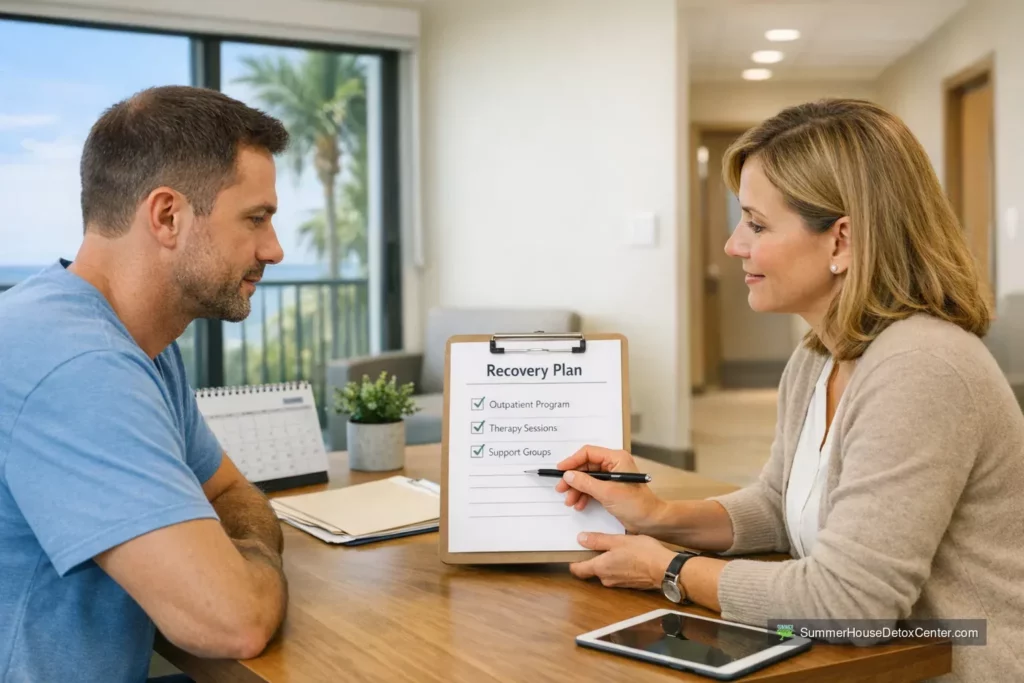
After Detox Recovery Plan Miami: What a Realistic Next Step Looks Like
Detox is often the first urgent step in recovery, but it is rarely the whole plan. For many adults in South Florida, the bigger question comes right after stabilization: what happens next, and what level of support makes sense in Miami?
A practical after detox recovery plan Miami residents can rely on should address safety, relapse risk, transportation, appointments, living environment, and the kind of treatment structure a person needs once withdrawal has been medically managed. For families, this is also the point where discharge planning becomes very important. Leaving detox without a clear plan can create a vulnerable gap at exactly the wrong time.
This guide explains what happens after medical detox, what should be covered before discharge, and how to think through inpatient rehab, outpatient care, sober living, and community-based recovery support in Miami. If you are still deciding whether detox is the first step, you can review Miami detox resources, learn more about safe detox in Miami-Dade, or read this overview of the alcohol detox timeline.
Why the Plan After Detox Matters
Detox helps the body clear alcohol or drugs while managing withdrawal under medical supervision. That matters, especially with substances that can lead to dangerous withdrawal symptoms. But once the immediate withdrawal phase has passed, the person is not automatically protected from cravings, stress, triggers, or a return to use.
This is why aftercare planning after detox should never be treated like a paperwork formality. It is the bridge between physical stabilization and the next stage of treatment.
In Miami, people often return to high-pressure environments quickly. That may mean:
- Going back to a home where alcohol or drugs are present
- Returning to social circles tied to substance use
- Managing work, legal, financial, or family stress immediately after discharge
- Facing transportation barriers that make appointments hard to keep
- Trying to “do it alone” because they feel better physically
Those early days after detox can carry elevated relapse and overdose risk, especially if tolerance has changed. A person may feel physically improved but still be vulnerable in ways that are not obvious to family members. That is one reason detox alone is often not enough.
A strong plan helps answer key questions before discharge:
- Where will the person go immediately after detox?
- Is the home environment safe and supportive?
- Do they need inpatient rehab after detox in Miami?
- If not inpatient, what outpatient structure begins right away?
- Who is coordinating transportation, medications, appointments, and family communication?
- What is the relapse prevention plan after detox?
When these questions are answered early, the transition is usually more stable and less chaotic.
What Usually Happens Before Discharge
Discharge planning for addiction treatment should begin before the day someone leaves detox. In a well-organized setting, the team starts assessing next-step needs while the person is still being monitored and stabilized.
Early assessment starts the process
Before discharge, a treatment team may review factors such as:
- Substance use history and recent patterns of use
- Past detox or rehab attempts
- Mental health concerns or emotional instability
- Current medical needs
- Housing and home environment
- Family support or lack of support
- Legal, work, or caregiving obligations
- Relapse history after previous treatment episodes
This is part of plain-language discharge planning: figuring out what level of support is realistic and safe, not just what sounds ideal.

Clinical recommendations are matched to risk
If a person has a high risk of returning to use quickly, limited support at home, or repeated relapse after prior detox attempts, a more structured setting may be recommended. If someone is medically stable, highly motivated, and stepping into a supportive environment with fast outpatient follow-up, another level of care may be appropriate.
That is why there is no one-size-fits-all answer. The right next step depends on safety, structure, and follow-through.
Appointments and logistics should be arranged before leaving
A discharge plan is stronger when actual details are set up instead of left vague. That may include:
- Confirming the next treatment provider or program
- Scheduling intake or admission times
- Reviewing medications and instructions
- Planning transportation from detox to the next destination
- Giving family or approved supports clear transition information
- Identifying emergency contacts and crisis steps
One of the most common problems after detox is a gap of several days with no appointments, no transportation plan, and no accountability. The larger that gap becomes, the more relapse risk can rise.
Families should know what to expect
Families often assume that once withdrawal is complete, the person can come home and “rest.” Sometimes that is appropriate, but often it is not the safest next step. Families should be told what warning signs to watch for, how cravings or mood swings may show up, and what kind of support is being recommended after detox.
If your family is still deciding whether detox should be followed by a more structured setting, this page on Miami drug rehab options can help frame the next stage.
Which Level of Care May Come Next After Detox
Many people ask: Do most people need rehab or another program after detox in Miami? In practical terms, many do benefit from continued treatment. Detox addresses withdrawal. Recovery planning addresses what happens when real life starts again.
Inpatient rehab after detox Miami
Inpatient rehab is often considered when someone needs a highly structured environment after detox. This may make sense if the person:
- Has relapsed quickly after past detox attempts
- Has severe cravings or poor impulse control
- Lives in an unstable or triggering environment
- Needs distance from access to alcohol or drugs
- Has complicated co-occurring emotional or behavioral concerns
- Needs daily accountability and close support
For someone leaving detox and heading directly into inpatient rehab, the transition is more contained. There is less time spent unstructured, and treatment momentum is easier to maintain.
Residential or structured recovery housing
Some people may not need the same intensity as inpatient rehab but still should not return straight home. In those cases, sober living or another structured housing option may be part of the plan. This can be helpful when the person needs accountability, peer support, and a substance-free environment while attending treatment.
When considering sober living and outpatient support Miami families should ask practical questions:
- Is the home environment truly substance-free?
- Will the person have transportation to treatment and support meetings?
- Is there a routine, curfew, or accountability structure?
- What happens if the person begins struggling again?
Outpatient treatment
Outpatient care can be a reasonable next step for some people after detox, especially when they are medically stable and have reliable support. Depending on need, outpatient treatment may involve individual therapy, group counseling, recovery education, medication management, and regular check-ins.

Outpatient care may fit better when:
- The person has a safe and stable place to live
- Family support is active and informed
- The person can attend appointments consistently
- Relapse risk is present but manageable with structure
- Work or caregiving duties make residential care less practical
That said, outpatient care is only as effective as the person’s ability to show up and stay engaged. If transportation, supervision, or the home setting are unreliable, outpatient may not be enough immediately after detox.
Community recovery support
Peer support groups, recovery meetings, and local recovery networks can also play an important role after treatment. These supports are not a replacement for appropriate clinical care when that care is needed, but they can strengthen accountability, connection, and daily routine.
What a Strong Recovery Plan Should Include
A good after detox recovery plan Miami providers build should be specific, not vague. “Stay sober” is not a plan. “You have an inpatient admission tomorrow at 10 a.m., transportation is confirmed, your medication instructions were reviewed, your family knows the visitation rules, and you have a backup contact if plans change” is a plan.
1. A clear next level of care
The plan should identify whether the person is going to inpatient rehab, outpatient treatment, sober living, home with structured follow-up, or another clinically appropriate setting. The first appointment or admission should be arranged before discharge whenever possible.
2. Relapse prevention planning
A relapse prevention plan after detox should include practical trigger management. That usually means identifying:
- People connected to substance use
- Places where return to use is likely
- Emotional triggers such as shame, anger, grief, or isolation
- Times of day that are high-risk
- What to do if cravings increase
- Who to call before a lapse becomes a full return to use
This kind of planning does not promise perfect protection. It improves readiness.
3. Medication and medical follow-up
Detox discharge should include a clear understanding of any medications, instructions, and follow-up needs. If someone has ongoing medical or psychiatric concerns, those referrals should not be left unclear. Families should know who is handling what and when.
4. Family communication
Family involvement can be helpful when it is informed and coordinated. That may mean reviewing boundaries, transportation, safe housing expectations, and warning signs that suggest more support is needed. Families can be a strong stabilizing factor, but only if they understand the plan.
5. Transportation and arrival logistics
Transportation may sound like a small issue, but in reality it can determine whether the plan actually happens. A person leaving detox should know:
- Who is picking them up or transporting them
- Where they are going first
- What time they need to arrive
- What to bring and what not to bring
In Miami traffic and across South Florida distances, logistics matter. A treatment plan with no transportation plan is often weaker than it looks on paper.
6. Daily structure for the first week
The first several days after discharge are often the most important to map out. A strong plan may include wake-up times, meals, meetings, therapy appointments, family check-ins, and recovery activities. Unstructured time can quickly turn into risky time.

Common Mistakes That Raise Relapse Risk
Families often ask: What increases relapse risk right after detox? Several patterns come up repeatedly.
Treating detox as the finish line
This is one of the biggest mistakes. Once withdrawal symptoms improve, it can be tempting to think the crisis is over. Physically feeling better can create false confidence. But cravings, emotional instability, stress exposure, and access to substances can remain major concerns.
Going back to the same environment too quickly
If home includes conflict, active substance use, old contacts, or easy access to alcohol or drugs, returning there immediately may not be the safest choice. Sometimes the issue is not motivation. It is the environment.
No appointment within the next day or two
A vague plan to “find a therapist soon” or “look into rehab later this week” is risky. The period right after detox should be organized with urgency. Follow-up care should happen promptly.
Not discussing overdose risk after detox
After a period of abstinence or reduced use, tolerance can change. If a person returns to using the same amount they used before detox, the danger can be higher. Families should understand this risk in clear, direct terms.
Ignoring practical barriers
Even a clinically sound plan can fail if nobody addresses transportation, housing, insurance coordination, work leave, child care, or communication gaps. Practical barriers are treatment barriers.
Too much dependence on willpower alone
Motivation matters, but structure matters too. Recovery planning works best when motivation is supported by accountability, appointments, environmental change, and ongoing treatment.
How Miami-Based Support Can Help After Treatment
Recovery support in Miami should be local enough to work in real life. The more realistic the plan is within a person’s actual daily routine, the better the chances of staying engaged.
Local care reduces friction
When support is based in or accessible from Miami, follow-up may be easier to maintain. Families can participate more easily, transportation can be simpler, and the transition from detox to the next level of care may be more direct.
This matters not only in Miami, but across nearby South Florida communities such as Fort Lauderdale, Pompano Beach, Boca Raton, Delray Beach, and West Palm Beach. Some people need treatment close to home for practical reasons. Others need some distance from their home environment while staying within the region. The right answer depends on the person’s risks and supports.
Family involvement is often easier locally
When family members can attend planning conversations, help with transportation, or support a transition to rehab or outpatient care, the discharge plan often becomes more workable. That is especially true when the family needs guidance on whether home is appropriate or whether a more structured setting is safer.
Step-down planning should be realistic
A strong plan often looks beyond the immediate next stop. For example, someone may discharge from detox into inpatient rehab, then step down into outpatient treatment and ongoing recovery support. Thinking in stages can reduce rushed decisions later.

This is one reason early planning helps. Discharge is not just about where someone sleeps tonight. It is about building a path for the next several weeks and months.
When to Call for Help Choosing the Next Step
Many families are unsure how to answer one central question: How do families know whether home, sober living, or inpatient care is the safer next step? The safest answer usually depends on current risk, support, and history.
It makes sense to call for guidance if any of the following apply:
- The person has relapsed after previous detox attempts
- There is no safe or stable home environment
- Family members disagree about whether home is appropriate
- The person says they are fine but has no concrete follow-up plan
- Cravings, impulsivity, or emotional instability remain strong
- There are transportation or appointment barriers
- The family is worried about overdose risk after discharge
- You are not sure whether detox should be followed by inpatient rehab, outpatient care, or another level of support
Another common question is: When should someone call admissions to figure out the right level of care? The practical answer is as soon as there is uncertainty. It is better to ask early than to wait until discharge is hours away and the plan is still unclear.
FAQ: After Detox Recovery Planning in Miami
Do most people need rehab or another program after detox in Miami?
Many people benefit from continued treatment after detox because detox addresses withdrawal, not the ongoing behavioral, emotional, and environmental factors tied to substance use. The right next step may be inpatient rehab, outpatient treatment, sober living, or a combination, depending on risk and support needs.
What should be included in a discharge plan before leaving detox?
A discharge plan should include the next level of care, appointment or admission details, medication instructions, transportation arrangements, relapse prevention steps, emergency contacts, and clear communication with family or approved supports. It should answer where the person is going, when, and with what structure.
How do families know whether home, sober living, or inpatient care is the safer next step?
Families should look at relapse history, cravings, mental and emotional stability, home triggers, access to substances, and the person’s ability to follow through with care. If home is unstable or the person has relapsed quickly in the past, a more structured setting may be safer.
What increases relapse risk right after detox?
Major risk factors include no follow-up care, returning to a triggering home environment, easy access to substances, poor transportation, overconfidence after withdrawal improves, isolation, and lack of a written relapse prevention plan. Overdose risk can also rise if someone returns to use after tolerance has changed.
When should someone call admissions to figure out the right level of care?
Call as soon as you are unsure what should come after detox. Waiting until the day of discharge can create unnecessary gaps. Early planning gives more time to evaluate safety, confirm availability, and coordinate the next step.
Conclusion: The Best Time to Plan the Next Step Is Before Detox Ends
A realistic after detox recovery plan Miami families can trust is not built around hope alone. It is built around discharge planning, level-of-care decisions, relapse prevention, and local coordination that make the transition from detox safer and more stable.
If you or your loved one is asking what should come after detox in Miami, Summer House Detox Center can help you talk through the options in practical terms. If you are unsure whether the safer next step is home, sober living, outpatient care, or inpatient rehab after detox Miami residents often consider, call (800) 719-1090 to get a direct, situation-specific answer about what level of support may fit best in South Florida.
