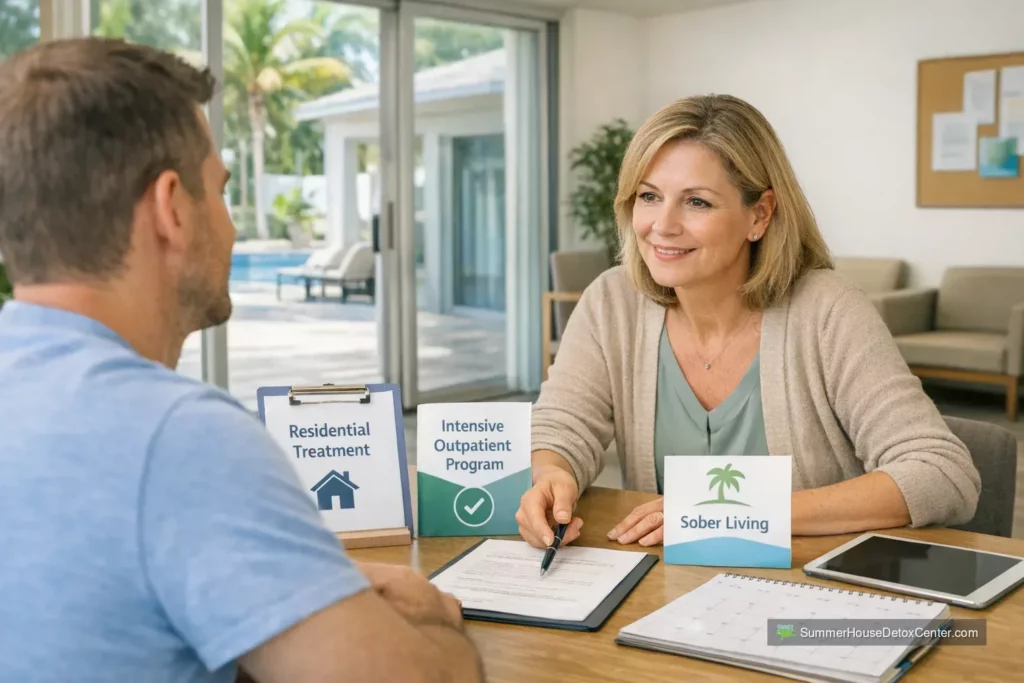
What Makes the Right Next Step After Inpatient Rehab in Boca Raton?
Finishing inpatient treatment is a major milestone, but it is usually not the point where support should stop. For many people, the most important recovery decisions happen right after residential care ends. That is when families start asking practical questions: Should the next step be PHP or IOP? Is standard outpatient enough? Is sober living necessary? Can someone safely return home and go back to work right away?
If you are researching inpatient rehab Boca Raton options or trying to understand what should come after residential treatment, it helps to think in terms of step-down care. Step-down care means moving from a more structured level of support to a less intensive one only when it makes clinical and practical sense. The goal is not to keep someone in treatment longer than needed. The goal is to reduce instability during the early weeks after rehab, when relapse risk can still be high and routines are still fragile.
In Boca Raton and across South Florida, the right aftercare plan often depends on a few key factors: the person’s substance use history, co-occurring mental health needs, home environment, transportation, job demands, motivation, and whether the discharge plan includes real support instead of vague good intentions. Families comparing programs can also review local rehab boca raton resources to understand what licensed treatment and recovery planning may involve.
What Step-Down Care Means After Inpatient Rehab
Step-down care is the structured transition from residential treatment into continued recovery support. Instead of going from 24-hour care straight back to full independence, the person moves into the level of care that matches current risk, stability, and daily needs.
This matters because inpatient rehab addresses immediate concerns such as stabilization, therapy, education, and early recovery skills. But once someone leaves that setting, real-life triggers return. They may face stress at home, relationship conflict, access to substances, boredom, transportation problems, financial pressure, or pressure to resume work quickly. Even people who did well in rehab may need continued accountability and support while they practice recovery in daily life.
Think of step-down care as a bridge. It helps connect the safety and structure of inpatient treatment with the realities of everyday life in Boca Raton, Delray Beach, Fort Lauderdale, Miami, West Palm Beach, and nearby communities. A strong discharge plan may include some combination of:
- Partial hospitalization programming (PHP)
- Intensive outpatient programming (IOP)
- Standard outpatient therapy
- Sober living after inpatient treatment
- Peer support meetings
- Medication management when appropriate
- Relapse prevention planning
- Family involvement and accountability
This is one reason aftercare should not be treated as optional for everyone. The exact level of care varies, but some form of ongoing support is often a key part of a safer transition.
How to Tell Which Level of Support Makes Sense
Choosing the next level of care is not only about what sounds manageable. It should reflect how much structure a person still needs to stay safe and engaged in recovery. A step-down recommendation usually makes more sense when it considers both clinical needs and day-to-day realities.
Factors that often point toward a higher level of follow-up care
- Recent relapse before entering inpatient rehab
- Strong cravings or difficulty managing triggers
- History of leaving treatment early or inconsistent engagement
- Unstable housing or a home environment where substances are present
- Co-occurring anxiety, depression, trauma-related symptoms, or other mental health concerns that still need close support
- Difficulty following routines without outside accountability
- Limited sober support network in Boca Raton or at home
- Major legal, family, or employment stress likely to affect early recovery
Factors that may support a lower level of care
- Stable recovery progress during inpatient treatment
- Safe and substance-free housing
- Reliable transportation to appointments
- Willingness to participate in therapy and peer support consistently
- Strong family involvement or sober support at home
- A clear relapse prevention plan with follow-up appointments already scheduled
In practice, the question is not, “What is the easiest option?” It is, “What setting gives this person the best chance of staying engaged, stable, and accountable in the next few weeks?” That is a more useful way to compare Rehab In Boca Raton with aftercare needs in mind.
Common Step-Down Options: PHP, IOP, Outpatient, and Sober Living
After inpatient rehab, step-down care usually follows a gradual progression. Not everyone needs every level, but understanding the differences can make the next step much clearer.

PHP after inpatient rehab
PHP, or partial hospitalization programming, is one of the most structured step-down options short of returning to residential care. It usually involves treatment programming during the day for multiple days each week, while the person lives at home or in supportive housing.
PHP may be a good fit for someone who has completed inpatient rehab but still needs a high level of clinical support, frequent monitoring, and a predictable routine. This option may make sense when cravings remain strong, emotional regulation is still difficult, or the home environment is not fully stable.
For families asking about PHP vs IOP after rehab, PHP generally offers more structure and contact hours. It may be the better match when stepping down too quickly could create unnecessary risk.
IOP after inpatient rehab
IOP, or intensive outpatient programming, provides a moderate level of structure. It usually includes therapy and recovery programming several times each week, while allowing more flexibility for work, school, or family responsibilities.
IOP may fit people who are medically stable, can manage more independence, and have a reasonably supportive environment. It can be especially helpful for someone returning to regular life in Boca Raton but who still needs frequent check-ins, group support, and therapy as they build a routine outside inpatient rehab.
When families compare PHP vs IOP after rehab, one practical difference is how much outside pressure the person can handle. If returning to work, driving independently, handling relationships, and resisting triggers all at once seems unrealistic, PHP may be safer than IOP.
Standard outpatient therapy
Standard outpatient care is a lower level of structure. It may include individual therapy, group therapy, psychiatric follow-up, medication management when appropriate, and regular recovery meetings. This can work well for people who have already built strong recovery habits and have a stable home setting.
Outpatient therapy is valuable, but it may not be enough for someone fresh out of inpatient rehab if they are still highly vulnerable to cravings, chaos at home, or inconsistent follow-through. It is often more appropriate later in the step-down process rather than immediately after residential treatment, though every case is individual.
Sober living after inpatient treatment
Sober living after inpatient treatment is not the same as clinical treatment, but it can be an important support layer. A sober living home may provide structure, accountability, peer support, house rules, and separation from high-risk environments. For some people, that housing stability is what makes PHP, IOP, or outpatient care more realistic.

Sober living may be especially helpful when:
- Home is not substance-free
- Family conflict is intense
- The person has no reliable sober supports
- Returning to the same neighborhood or social circle creates heavy trigger exposure
- Independent living right away has led to relapse before
It is not necessary in every case, but it should be seriously considered when the home environment is part of the risk picture.
Peer support, therapy, and medication management
Even when someone steps down from inpatient rehab successfully, ongoing recovery support usually works best when it includes more than one type of care. Depending on the person’s needs, that may include:
- Individual counseling
- Group therapy
- Family therapy
- Peer support meetings
- Recovery coaching or sponsor involvement
- Medication management when appropriate and recommended by a qualified provider
This layered approach can strengthen aftercare and recovery support without assuming one service alone is enough.
Warning Signs That Someone May Need More Structure, Not Less
One of the most common mistakes after residential treatment is assuming that motivation alone is enough. A person may genuinely want recovery and still need more support than they first expected.
Signs that someone may be stepping down too quickly include:
- Missing therapy or support meetings soon after discharge
- Talking about skipping parts of the aftercare plan because they “feel fine now”
- Returning to old friends, old neighborhoods, or old routines immediately
- Downplaying cravings or hiding increased stress
- Sudden isolation from family or sober supports
- Sleep problems, agitation, irritability, or emotional instability that interfere with daily functioning
- Conflict at home that makes recovery harder
- Overconfidence without a clear daily plan
- Trouble balancing work, transportation, treatment attendance, and recovery commitments
These warning signs do not mean failure. They suggest that the current level of care may not be enough. In some cases, the right move is slowing the step-down process rather than pushing through and hoping things improve on their own.
This is especially important in the first few weeks after rehab. That period often brings a sharp change in structure. Instead of meals, groups, and accountability built into the day, the person may suddenly need to manage time, emotions, and access to triggers on their own. Good discharge planning reduces that gap.
How Aftercare Planning Works in Boca Raton
Strong Boca Raton addiction treatment aftercare planning should begin before discharge, not after a problem develops. A practical plan looks beyond where the person will sleep and asks what support will actually be in place on day one.

What a useful discharge plan should cover
- The recommended next level of care
- Where the person will live after inpatient rehab
- Whether the home is recovery-supportive
- Transportation to PHP, IOP, therapy, or medical appointments
- Medication follow-up if applicable
- Family expectations, boundaries, and communication
- Work or school re-entry planning
- Peer support and community recovery involvement
- A written relapse prevention planning strategy
In Boca Raton, many families are trying to balance privacy, employment, commuting, and family obligations while figuring out what level of care comes next. South Florida also has many treatment and sober living options, which can be helpful but also confusing. Not every setting offers the same level of supervision, coordination, or appropriateness for a given person.
That is why it helps to verify licensed, supervised care and to ask direct questions about who is overseeing treatment decisions. Families comparing options for substance-specific needs may also want to review Boca Raton Drug Rehab guidance when drug-related treatment planning is part of the picture.
If alcohol use has been part of the treatment history, understanding detox and early stabilization can also give families useful context before they focus on the next phase. Summer House Detox Center offers a related resource here: Everything You Need to Know About the Alcohol Detox Timeline.
Questions Families Should Ask Before Discharge
Families do not need to become clinicians, but they should ask specific questions before a loved one leaves inpatient rehab. Vague answers can lead to avoidable problems.
Helpful questions to ask
- What level of care is recommended next, and why?
- What risks would make PHP a better fit than IOP?
- What would make standard outpatient too little support right now?
- Is returning home realistic, or would sober living offer more stability?
- What specific triggers should we be prepared for during the first few weeks?
- What is the plan for therapy, psychiatry, and medication follow-up if needed?
- What should our family do if the person starts missing sessions or isolating?
- How will work, transportation, and daily scheduling affect treatment attendance?
- What does the relapse prevention plan include?
- What signs would suggest a return to higher care is needed?
These questions matter because family members are often the first to notice when the transition is not going well. They may see denial, instability, dishonesty, or burnout before the person admits they need more help. Clear expectations can reduce confusion and help families respond sooner and more calmly.
When to Get a Professional Recommendation
Some aftercare decisions are straightforward. Others are not. If there is disagreement about whether someone should go to PHP, IOP, sober living, or home, that is usually a sign that professional guidance is worth getting.
A qualified recommendation is especially important when any of the following are present:
- More than one relapse in the recent past
- Alcohol or drug use that led to serious instability before rehab
- Co-occurring mental health concerns
- Unsafe or highly stressful home dynamics
- Pressure to return to work immediately
- Lack of transportation or inability to attend programming reliably
- Uncertainty about whether sober living is needed
- Concerns that the person is minimizing symptoms or overestimating readiness
Recognized treatment frameworks such as those used by ASAM help inform level-of-care decisions by looking at stability, relapse risk, environment, and engagement. Families do not need to apply those standards on their own, but they should know that aftercare planning is not supposed to be guesswork.
FAQ: Step-Down Care After Inpatient Rehab in Boca Raton
How do I know whether PHP, IOP, or standard outpatient care is the right next step after inpatient rehab in Boca Raton?
Start with the person’s current risk and stability, not convenience alone. PHP may make more sense if cravings are still strong, mental health symptoms remain active, or the home environment is unstable. IOP may fit when the person is more stable but still needs frequent structure and accountability. Standard outpatient is often better for someone with a safe home, strong follow-through, and lower immediate risk. A professional recommendation can help clarify the safest step.

Is sober living necessary after inpatient rehab, or can someone return home safely?
It depends on the home environment and the person’s history. If home is substance-free, supportive, and calm, returning home may be appropriate. If there is conflict, easy access to substances, or no sober support, sober living after inpatient treatment may provide a more stable transition. The question is less about preference and more about what setting supports recovery in real life.
What signs suggest a person is stepping down too quickly after residential treatment?
Common signs include missed sessions, isolation, returning to old people or places too fast, minimizing cravings, emotional instability, and difficulty managing basic routines. If the person seems overwhelmed or starts drifting from the discharge plan right away, more structure may be needed.
How long does step-down care usually last after inpatient rehab?
There is no one timeline that fits everyone. Some people move through PHP, IOP, and outpatient care gradually over time, while others may begin at IOP or outpatient depending on their needs. The better question is whether the current level of care still matches relapse risk, home stability, and clinical needs. A rushed timeline is not always the safest one.
When should a family call for guidance instead of trying to choose aftercare on their own?
Families should ask for help when there is uncertainty about safety, disagreement about the next level of care, concern about relapse risk, unstable housing, co-occurring mental health concerns, or a pattern of past treatment followed by quick relapse. Getting guidance early can prevent a fragile transition from becoming a crisis.
Why This Question Matters for Inpatient Rehab in Boca Raton
When people search for inpatient rehab Boca Raton, they are often focused on admission, detox, and residential treatment. Those are important first steps, but discharge planning deserves equal attention. A good inpatient rehab fit is not only about what happens inside the program. It is also about whether the next phase is clear, realistic, and structured enough to support the person once they leave.
That is especially true in South Florida, where patients may be balancing family demands, court issues, work pressure, or a quick return to familiar environments. A thoughtful plan for step-down care after inpatient rehab can help reduce the shock of that transition and support steadier recovery decisions in the weeks that follow.
Conclusion
The right next step after inpatient rehab is not the same for everyone. Some people need PHP before IOP. Some can transition into IOP with strong support. Some need sober living because home is not yet a safe recovery setting. Others may do well with outpatient therapy, peer support, and medication management when appropriate. The best choice usually depends on relapse risk, home environment, transportation, work demands, and ongoing clinical needs.
If you are trying to sort out whether PHP, IOP, sober living, outpatient therapy, or even a return to higher care makes the most sense, Summer House Detox Center can help you think through the practical factors involved. Call (800) 719-1090 to speak with admissions about safe, medically supervised detox and treatment options in South Florida, and to get a direct answer about what kind of transition plan may fit your situation best.
