Understanding Alcohol Withdrawal: What Your Body Is Telling You
Symptoms of alcohol withdrawal are your body’s way of reacting when you stop drinking after prolonged heavy use. If you’re wondering what to expect, here’s what you need to know right away:
Common Symptoms of Alcohol Withdrawal:
- Mild (6-12 hours): Anxiety, shakiness, headache, sweating, nausea, insomnia, rapid heart rate
- Moderate (12-24 hours): Increased blood pressure, confusion, mood swings, clammy skin, vomiting
- Severe (24-72 hours): Hallucinations, seizures, disorientation, fever, delirium tremens (DTs)
Timeline: Symptoms typically start 6-12 hours after your last drink, peak at 24-72 hours, and begin improving around day 5. Some symptoms can persist for weeks.
If you’re reading this from Miami or anywhere in Florida, you’re not alone. About half of all people with alcohol use disorder experience withdrawal when they stop drinking. The good news? With proper medical support, you can get through this safely.
The reason withdrawal happens is simple but serious. When you drink heavily over time, your brain adjusts its chemistry to compensate for alcohol’s effects. Your central nervous system adapts to having alcohol present. When you suddenly stop, your brain goes into overdrive—like a car accelerating without brakes.
This isn’t about willpower or strength. Alcohol withdrawal is a medical condition that happens because of real physiological changes in your body. Your GABA receptors (which calm your nervous system) have been suppressed, while your NMDA glutamate receptors (which excite your nervous system) have ramped up. Remove alcohol suddenly, and you get a dangerous neurochemical imbalance.
The severity varies from person to person. Some people experience mild symptoms similar to a bad hangover. Others face life-threatening complications like seizures or delirium tremens, which has a 37% fatality rate if left untreated. That’s why medical supervision matters so much.
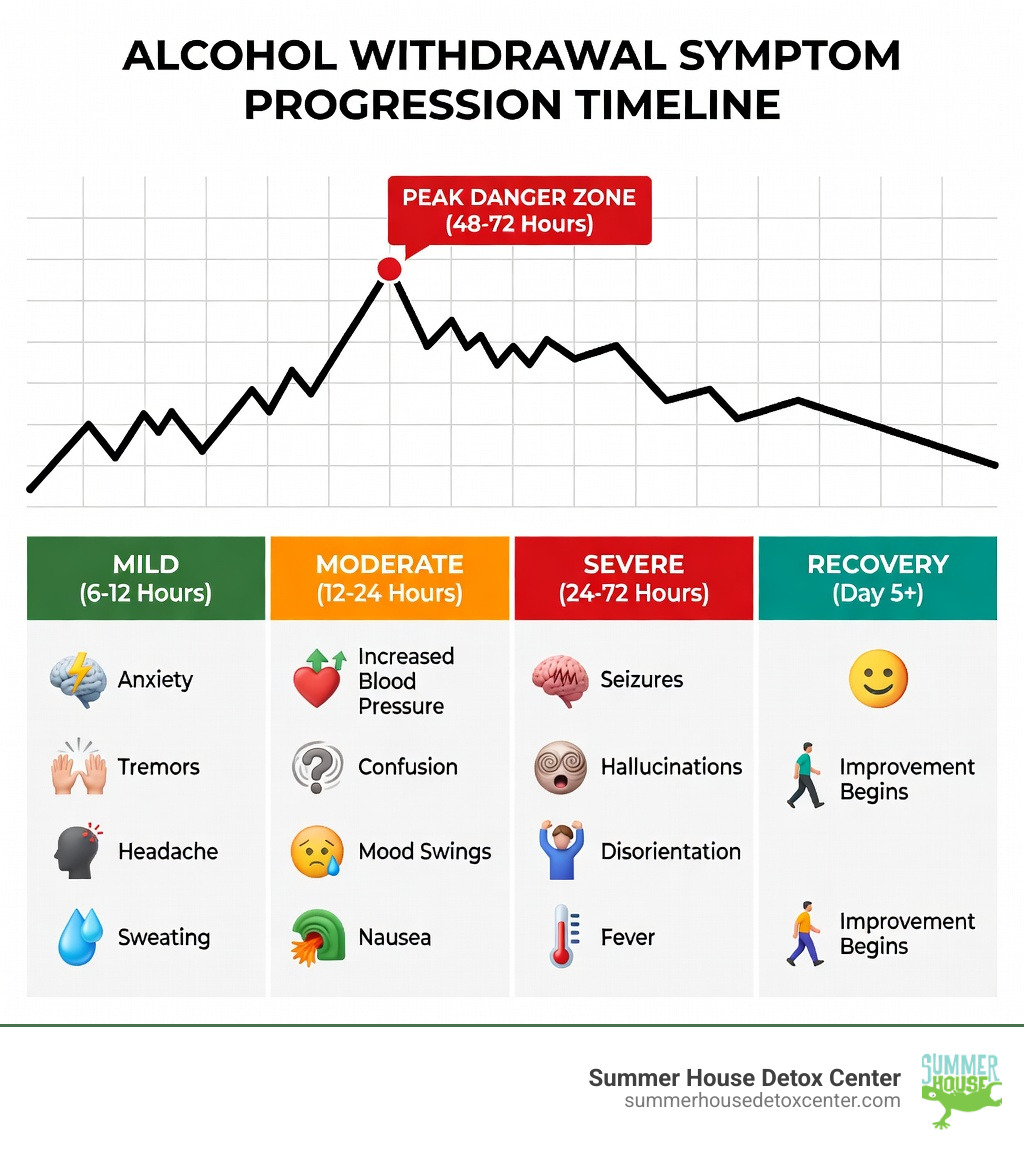
Symptoms of alcohol withdrawal word guide:
Understanding the Causes and Risk Factors
At Summer House Detox Center, we often explain that alcohol withdrawal isn’t just “feeling bad.” It is a profound neurological event. To understand the symptoms of alcohol withdrawal, we have to look at the delicate balance of the brain. Alcohol is a central nervous system depressant. It enhances the activity of GABA, the brain’s primary inhibitory neurotransmitter (the “brakes”), and inhibits NMDA glutamate receptors, the excitatory neurotransmitter (the “gas pedal”).
When you drink heavily for a long time, your brain tries to maintain balance by turning down its GABA sensitivity and turning up its glutamate sensitivity. When alcohol is suddenly removed, the “brakes” fail, and the “gas pedal” is stuck to the floor. This leads to autonomic hyperactivity—the sweating, racing heart, and tremors we associate with withdrawal.

Who Is at Risk?
Not everyone who drinks will experience severe withdrawal, but the risk increases significantly with heavy use. According to the NIAAA, heavy drinking is defined as:
- For Men: More than 4 drinks on any day or more than 15 drinks per week.
- For Women: More than 3 drinks on any day or more than 8 drinks per week.
Other risk factors include:
- Age: Individuals over 65 are at a higher risk for complications.
- History: If you have experienced withdrawal seizures or delirium tremens before, you are much more likely to have them again.
- Co-occurring Conditions: Liver dysfunction, electrolyte imbalances, and dehydration make the process much more dangerous.
- The Kindling Effect: This is a fascinating but scary phenomenon where each successive withdrawal episode becomes more severe than the last. If you’ve “quit and restarted” many times, your brain becomes sensitized, making the next attempt more physically taxing and dangerous.
To learn more about how these chemical shifts affect your daily life, you can read about How Your Body Reacts to Alcohol Withdrawal.
The Progressive Timeline of Detox
One of the most common questions we hear in Miami is, “How long is this going to take?” While everyone’s body is different, there is a typical Alcohol Detox Timeline that most people follow.
6 to 12 Hours After the Last Drink: The first symptoms of alcohol withdrawal usually appear as the blood alcohol level begins to drop. You might feel “the shakes” (tremors), anxiety, nausea, and a nagging headache. This is often mistaken for a standard hangover, but it doesn’t go away with a greasy breakfast.
12 to 24 Hours: Symptoms intensify. You may experience “alcohol hallucinosis,” where you see or hear things that aren’t there, though you usually remain aware that they aren’t real. Heart rate and blood pressure often begin to climb.
24 to 48 Hours: This is the highest risk window for withdrawal seizures. These are typically “grand mal” seizures and can occur even in people with no history of epilepsy.
48 to 72 Hours: This is the “Danger Zone.” If delirium tremens (DTs) is going to occur, it usually starts here. This period involves extreme disorientation, high fever, and severe hallucinations.
5 Days and Beyond: For most, the acute physical symptoms begin to subside. However, some people experience “protracted withdrawal,” where anxiety, insomnia, and mood swings can last for weeks or even months.
For a deeper dive into those critical first few days, check out our guide on The First 72 Hours of Detox: What to Expect and How to Prepare.
When symptoms of alcohol withdrawal Peak
The hardest part of withdrawal almost always occurs between the 48 and 72-hour marks. This is when the metabolic surge is at its highest. Your body is essentially in a state of high-voltage alarm. Autonomic hyperactivity means your heart is racing, you’re drenched in sweat, and your blood pressure is spiking. This is the point where medical intervention is most critical to prevent the system from “short-circuiting.”
Identifying Specific symptoms of alcohol withdrawal
Identifying the symptoms of alcohol withdrawal early can be the difference between a manageable detox and a medical emergency. We categorize these symptoms into three stages: mild, moderate, and severe.
Mild Symptoms (Stage 1)
- Tremors: Often called “the shakes,” usually starting in the hands.
- Anxiety: A feeling of impending doom or extreme nervousness.
- Insomnia: Difficulty falling or staying asleep.
- Gastrointestinal Distress: Nausea, vomiting, or loss of appetite.
- Palpitations: Feeling like your heart is skipping beats or racing.
Moderate Symptoms (Stage 2)
- Diaphoresis: Excessive, drenching sweating.
- Hypertension: High blood pressure that can lead to headaches and chest pain.
- Hyperthermia: A slight fever as the body struggles to regulate temperature.
- Mental Confusion: Difficulty focusing or remembering simple details.
| Stage | Severity | Primary Symptoms | Timing |
|---|---|---|---|
| Stage 1 | Mild | Anxiety, insomnia, tremors, headache | 6–12 hours |
| Stage 2 | Moderate | High BP, sweating, confusion, mild fever | 12–48 hours |
| Stage 3 | Severe | Seizures, DTs, hallucinations, disorientation | 48–72+ hours |
If you notice these signs in yourself or a loved one, it’s time to look for Alcohol Withdrawal Signs: How to Know You Need Professional Alcohol Detox Treatment.
Managing Severe symptoms of alcohol withdrawal
Severe withdrawal is a different beast entirely. Alcohol hallucinosis affects approximately 2% of patients and usually involves seeing multiple small, moving objects—think crawling insects or falling coins. Unlike the hallucinations in DTs, people with hallucinosis often know what they are seeing isn’t real, which can be even more terrifying.
Disorientation is another hallmark of severe withdrawal. You might lose track of what day it is, where you are, or even who you are talking to. In Miami, if someone is experiencing these symptoms, they need immediate medical attention. Our local emergency resources are well-equipped, but an inpatient setting like Summer House provides the continuous monitoring needed to manage these shifts.
For a step-by-step look at how professionals handle these cases, read What to Expect During Alcohol Detox: A Step-by-Step Guide to the Process.
Dangerous Complications: Delirium Tremens and Seizures
We cannot emphasize this enough: alcohol withdrawal can be fatal. While only 3% to 5% of patients progress to delirium tremens (DTs), those who do face a 37% fatality rate if untreated.
Delirium Tremens (DTs)
DTs is the most severe form of withdrawal. It is characterized by:
- Severe Hallucinations: Often terrifying and vivid.
- Extreme Agitation: The person may become combative or frantic.
- Autonomic Instability: Dangerous spikes in heart rate, breathing, and temperature (hyperthermia).
- Global Confusion: Complete loss of contact with reality.
Withdrawal Seizures
Seizures occur in 3% to 5% of cases, typically within the first 48 hours. These are usually “tonic-clonic” (grand mal) seizures that involve a loss of consciousness and violent muscle contractions. They are dangerous not just because of the seizure itself, but because they can lead to aspiration, head injuries, or a progression into DTs.
In South Florida, hospital protocols for these emergencies are strict. If you are at high risk—due to age, previous seizures, or heavy long-term use—”cold turkey” is never an option.
Professional Diagnosis and Treatment Strategies
When you enter a professional facility, we don’t just guess how you’re doing. We use a standardized assessment tool called the CIWA-Ar (Clinical Institute Withdrawal Assessment for Alcohol). This scale measures ten different symptoms, including nausea, tremors, and anxiety, to give us a score.
- 8 or less: Mild withdrawal.
- 9 to 15: Moderate withdrawal.
- 15 or more: Severe withdrawal (high risk of seizures/DTs).
Medications and Supportive Care
Modern medicine has made detox much safer and more comfortable.
- Benzodiazepines: Drugs like Diazepam (Valium) or Lorazepam (Ativan) are the gold standard. They act on the same GABA receptors as alcohol, effectively “tricking” the brain and allowing us to taper you off safely.
- Phenobarbital: Sometimes used for severe cases that don’t respond to benzodiazepines.
- Thiamine (Vitamin B1): This is crucial. Chronic alcohol use depletes thiamine, which can lead to Wernicke-Korsakoff syndrome—a permanent and devastating form of brain damage. We always supplement thiamine before giving any glucose.
- Hydration and Electrolytes: Alcohol causes dehydration and leaches magnesium, phosphate, and potassium from your system. Replacing these helps stabilize the heart and muscles.
At Summer House, we follow these Florida inpatient detox standards to ensure that every patient is monitored 24/7 by experienced medical staff.
Long-Term Benefits of Overcoming Alcohol Dependence
Quitting alcohol is a brutal first step, but the rewards that follow are life-changing. Once you move past the symptoms of alcohol withdrawal, your body begins a remarkable process of healing.
- Restorative Sleep: Alcohol might help you fall asleep, but it keeps you from reaching the deepest, most restorative stages of sleep. After withdrawal, you’ll wake up feeling truly rested for the first time in years.
- Cardiovascular Health: By the third week of abstinence, your blood pressure often drops significantly, reducing your risk of heart disease and stroke.
- Liver Recovery: Liver inflammation starts to subside within four weeks. While scarring (cirrhosis) may be permanent, the reduction in inflammation allows the liver to function much more effectively.
- Weight Loss and Nutrition: Alcohol is full of empty calories. By week four, the average person has avoided about 12,000 calories—that’s roughly 4 pounds of weight loss just from cutting the drinks!
- Financial Freedom: If you were spending $200 a week on alcohol (not uncommon for heavy drinkers), you’ll have saved over $800 by the end of your first month. That’s nearly $10,000 a year!
- Cognitive Clarity: Alcohol creates a “brain fog.” As you recover, you’ll notice improved memory, better focus, and a more stable mood.
Frequently Asked Questions about Alcohol Withdrawal
How long do symptoms of alcohol withdrawal last?
The acute physical symptoms usually peak at 72 hours and begin to fade after 5 to 7 days. However, psychological symptoms like anxiety and cravings can last for several weeks or even months as the brain continues to recalibrate.
Can you detox from alcohol at home safely?
For a heavy, long-term drinker, the answer is generally no. Because the risk of seizures and delirium tremens is unpredictable, detoxing without medical supervision can be fatal. In a professional setting, we can administer medications that stop these complications before they start.
What is the most dangerous symptom of withdrawal?
Delirium tremens (DTs) is the most dangerous because it affects the body’s ability to regulate vital functions like heart rate and temperature. Seizures are also a major concern, as they can occur suddenly and lead to serious injury or death.
Conclusion
Overcoming the symptoms of alcohol withdrawal is the first, most courageous step toward a new life. In Miami, Florida, we are lucky to have a community that supports recovery and provides world-class medical care. At Summer House Detox Center, we believe that every person deserves to go through this process with dignity, comfort, and the highest level of medical safety.
You don’t have to do this alone. Our experienced staff, many of whom have walked this path themselves, are here to provide personalized care in a supportive, inpatient environment. From managing the first tremors to helping you find cognitive clarity, we are dedicated to your success.
If you or someone you love is struggling with alcohol, don’t wait for the symptoms to become an emergency. Reach out to us today and take the first step toward a healthier, happier future.
Explore our Alcohol Detox Services to learn more about how we can help you reclaim your life.
