
What Long Term Benzo Use Really Does to Your Body and Mind
Long term benzo use affects millions of people — many of whom started with a legitimate prescription for anxiety or sleep problems. If you’re here because you’re worried about what prolonged benzodiazepine use has done to you, or someone you love, here’s a quick summary:
Key facts about long term benzo use at a glance:
- Tolerance can develop in as little as a few days to weeks
- At least 44% of long-term users become physically dependent
- Cognitive effects — including memory loss and slowed thinking — can persist months after stopping
- Withdrawal can be life-threatening without medical supervision
- Recovery is possible, but it takes time and the right support
Benzodiazepines — medications like Xanax, Valium, Klonopin, and Ativan — work by enhancing the effects of GABA, a chemical that calms the nervous system. In the short term, they can bring real relief from crippling anxiety or sleepless nights.
But here’s the problem: they were never designed for long-term use.
Most guidelines recommend using them for no more than two to four weeks. Yet many people end up taking them for months, years, or even decades — often without realizing what’s happening to their brain and body in the process.
One survey of over 1,200 current and former users found that more than half experienced memory loss, anxiety, insomnia, pain, and low energy for more than a year after stopping. More than 50% also reported suicidal thoughts or attempts. These aren’t rare edge cases — they’re common outcomes of long-term use that rarely get discussed openly.
If you’re in Florida and you’ve been on benzos for a long time, you’re not alone. And the road back, while challenging, is real.
Quick long term benzo terms:
Understanding the Impact of Long Term Benzo Use
When we talk about long term benzo use, we aren’t just talking about taking a pill for a few weeks to get through a rough patch. In the medical world, “long-term” is often defined as anything beyond two months of daily use. In Florida, where we see a high volume of prescriptions for anxiety and insomnia, many residents find themselves on these medications for years.
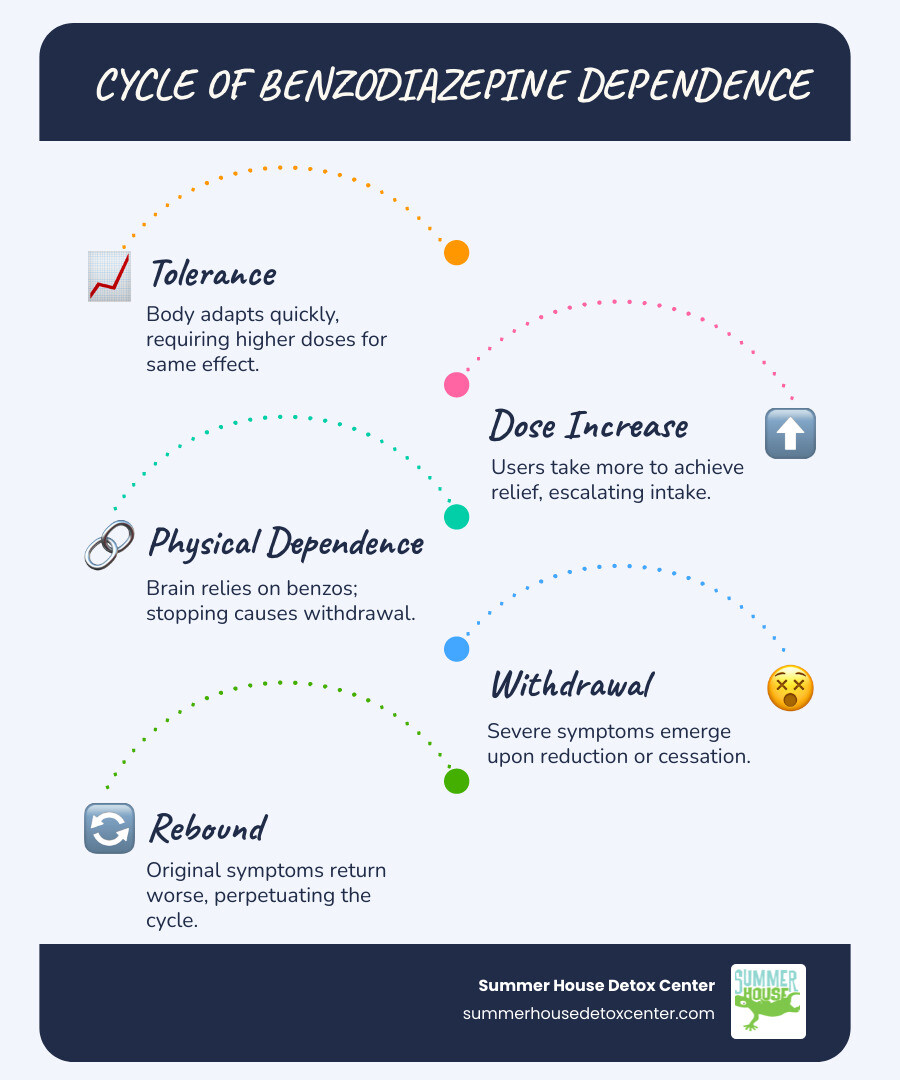
The human brain is incredibly adaptable, but that’s a double-edged sword. When you introduce a benzodiazepine, it binds to GABA-A receptors, making them more sensitive to GABA. This is why you feel that signature “chill” or sleepiness. However, the brain quickly realizes there is “too much” calming activity and tries to balance things out. It does this by “down-regulating” its receptors—essentially closing some of the docking stations for GABA.
Tolerance and Physical Dependence
This down-regulation leads directly to tolerance. You might notice that the 0.5mg of Xanax that used to knock you out now barely takes the edge off. Tolerance to the sedative effects can happen in just a few days. Once tolerance sets in, physical dependence is right around the corner. Your brain reaches a point where it needs the drug just to function at a “normal” level. Without it, the nervous system becomes hyper-excited.
Cognitive Impairment and Memory Loss
One of the most concerning aspects of long term benzo use is what it does to your thinking. We call this cognitive impairment. Studies have shown that chronic users often struggle with:
- Processing speed (feeling like your brain is “lagging”)
- Sustained attention (difficulty focusing on a task)
- Anterograde amnesia (struggling to form new memories)
There is a growing recognition of a condition called BIND (Benzodiazepine-Induced Neurological Dysfunction). This term describes the brain changes that persist long after the drug has left the system. It’s not just “side effects”; it’s a functional change in how the brain processes information and manages anxiety. We explore these deeper implications in our guide on the dark side of benzos.
The Risks and Physical Toll of Prolonged Use
The physical toll of long term benzo use extends far beyond the brain. Because these drugs act as central nervous system depressants, they affect almost every major system in the body.
Hip Fractures and the Elderly
In Florida, we have a significant population of older adults who are often prescribed benzos for sleep. This is particularly risky. Research shows that benzodiazepines increase the risk of hip fractures in older people by at least 50%. One specific drug, zolpidem (Ambien), which acts on similar receptors, was found to increase fracture risk by 2.55 times in those over 65. This happens because benzos impair balance, slow reaction times, and cause muscle weakness.
Sleep Architecture Disruption
It’s a cruel irony: many people take benzos to sleep, but long term benzo use actually ruins the quality of that sleep. Benzos disrupt what we call “sleep architecture.” They increase Stage 2 NREM sleep (light sleep) while significantly decreasing Stages 3 and 4 (deep, restorative sleep) and REM sleep (where you process emotions and memories). You might be “unconscious” for eight hours, but you aren’t getting the restorative rest your body needs.
Other Physical Complications
- Digestive Issues: The gut is lined with GABA receptors. When you use benzos long-term or try to quit, your digestion can go into haywire. Many of our patients ask, why do I experience stomach and digestive problems when quitting benzos? The answer lies in the massive concentration of receptors in your enteric nervous system.
- Respiratory Depression: Especially when mixed with other substances, benzos slow down breathing, which can be fatal.
- Immune System Suppression: Chronic use has been linked in some studies to a weakened immune response and even an increased risk of certain cancers.
- Motor Vehicle Accidents: Driving while on a therapeutic dose of benzos can be as dangerous as driving with a blood alcohol level between 0.05% and 0.079%.
Navigating the Challenges of Long Term Benzo Withdrawal
If you have been on a long term benzo regimen, stopping “cold turkey” is not just difficult—it is dangerous. Because your brain has down-regulated its calming receptors, removing the drug suddenly causes a “GABA Rebound.” This is like a dam breaking; your nervous system is flooded with excitatory signals, leading to severe physical and psychological distress.
The Danger of Seizures
The most significant risk of abrupt cessation is grand mal seizures. This is why medical supervision is non-negotiable for long-term users. At Summer House Detox Center in Miami, we prioritize safety above all else. We monitor vital signs around the clock to prevent withdrawal delirium and seizure activity.
Tapering Protocols and the Ashton Manual
The gold standard for quitting is a slow, gradual taper. Many clinicians look to the “Ashton Manual,” developed by Professor Heather Ashton, which suggests switching from a short-acting benzo (like Xanax) to a long-acting one (like Valium) and then slowly reducing the dose over months.
One of the most common questions we hear is: how long does benzo withdrawal last? The answer varies. While the acute phase might last a few weeks, some people experience Protracted Withdrawal Syndrome (PAWS), where symptoms like anxiety, insomnia, and sensory sensitivities linger for months or even a year.
Managing Symptoms of a Long Term Benzo Taper
Tapering is an art as much as a science. Even with a slow reduction, you might experience:
- Anxiety Rebound: A return of anxiety that feels even more intense than what you started with.
- Insomnia: Difficulty falling or staying asleep as the brain relearns how to shut down naturally.
- Muscle Tremors and Twitching: The physical manifestation of an overexcited nervous system.
For those struggling specifically with high-potency drugs, specialized Xanax addiction withdrawal treatment is often necessary. In our South Florida facility, we use a combination of long-acting tapers and supportive medications to make this process as comfortable as possible. We believe in “dignity in detox”—you shouldn’t have to suffer needlessly to get your life back.
Psychological Effects of Long Term Benzo Recovery
The road back isn’t just physical; it’s deeply emotional. Long term benzo use can mask underlying depression or even cause it—up to a third of long-term alprazolam users develop clinical depression.
During recovery, you may face:
- Suicidal Ideation: More than 50% of surveyed long-term users reported suicidal thoughts. This is why peer support and professional therapy are vital.
- Relearning Coping Mechanisms: If you’ve used a pill to handle stress for ten years, your natural “coping muscles” have likely atrophied.
- Emotional Regulation: You might feel “raw” or hyper-sensitive to sounds, lights, and emotions as your brain’s dampening system resets.
We focus heavily on benzo addiction recovery that includes cognitive-behavioral therapy (CBT). CBT helps you address the thoughts that trigger anxiety, giving you tools that don’t come in a prescription bottle.
Alternatives and the Path to Sustainable Wellness
Once you’ve navigated the detox phase, the goal is to build a life where you don’t need to rely on a long term benzo prescription. The good news is that there are many effective, non-addictive alternatives for managing anxiety and insomnia.
Evidence-Based Medications
- SSRIs and SNRIs: While they take longer to work, antidepressants are actually the first-line treatment for chronic anxiety disorders and do not carry the same addiction risk as benzos.
- Propranolol: This is a beta-blocker that helps with the physical symptoms of anxiety (like a racing heart or shaking hands) without affecting your brain chemistry or being addictive.
- Non-Addictive Sleep Aids: Medications like trazodone or melatonin-receptor agonists can help restore sleep without ruining your sleep architecture.
Holistic and Lifestyle Approaches
- Psychotherapy: CBT-I (Cognitive Behavioral Therapy for Insomnia) is often more effective than medication in the long run for chronic sleep issues.
- Sleep Hygiene: Establishing a strict routine, cooling your room, and ditching screens can work wonders.
- Stress Reduction: Techniques like mindfulness, yoga, and exercise are scientifically proven to increase your natural GABA levels over time.
You might wonder, why are benzos used in drug detox if they’re so addictive? It’s a valid question. In a controlled, short-term medical setting, they are vital for preventing seizures during alcohol or sedative withdrawal. The key is that they are used as a “bridge” for a few days, not a “crutch” for a few years.
Frequently Asked Questions about Long Term Benzo Use
Is it possible to reverse brain changes from long-term use?
Yes, thanks to a concept called neuroplasticity. The brain is remarkably capable of healing itself. While some residual effects (like minor memory issues) may persist for a while, many people see significant improvements in cognitive function within six months of complete abstinence. The “fog” does eventually lift, but it requires patience and a commitment to staying benzo-free.
Why is medical supervision necessary for tapering?
As we mentioned, the risks are high. Beyond just seizures, there is the risk of “withdrawal delirium”—a state of confusion and agitation that can be terrifying and dangerous. In a clinical setting like ours, we can adjust your taper in real-time based on your symptoms and vital signs. Our detox services are designed to catch these issues before they become emergencies.
How do benzos interact with other substances like alcohol?
This is a “1+1=5” situation. Both benzos and alcohol affect the same GABA receptors. When taken together, they can cause your respiratory system to simply stop. This is a leading cause of accidental overdose in Florida. We often see patients who struggle with both, and it’s important to understand what happens if I drink alcohol while using benzos? The combination is incredibly toxic to the liver and the brain. Similarly, the dangers of mixing methadone and benzodiazepines are extreme, often leading to fatal respiratory failure.
Conclusion
The journey away from long term benzo use is rarely a straight line. It’s often a long road, filled with ups and downs, but it is a road that leads back to your true self. You deserve to live a life where your memory is sharp, your sleep is natural, and your anxiety is managed by your own inner strength rather than a chemical.
At Summer House Detox Center, we’ve seen hundreds of people reclaim their lives from these medications. We offer a sanctuary in Miami where you can begin this process with the dignity and medical support you deserve. Our staff understands the nuances of benzo dependence—many of us have been in your shoes.
If you’re ready to beat Xanax addiction at Summer House Detox Center in Miami, we are here to walk that road with you. Don’t let another day go by feeling trapped by a prescription bottle. Reach out to learn more about our Benzo Detox Services and start your recovery journey today. You don’t have to do this alone.
