
Sunshine and Sobriety: Heroin Detox Miami Guide
The Heroin Crisis in Florida — and How to Find Real Help
Heroin rehab Florida programs offer structured, medically supervised treatment to help people safely detox and build lasting recovery — right here in the Sunshine State.
Quick answer — top heroin rehab options in Florida:
- Residential Medical Detox — 24/7 medical supervision, safest option for withdrawal
- Inpatient/Residential Rehab — Structured live-in treatment after detox
- Partial Hospitalization Program (PHP) — Intensive daily treatment, sleep at home or sober living
- Intensive Outpatient Program (IOP) — Flexible treatment while resuming daily life
- Dual Diagnosis Treatment — Addresses addiction and co-occurring mental health conditions
The numbers are hard to ignore.
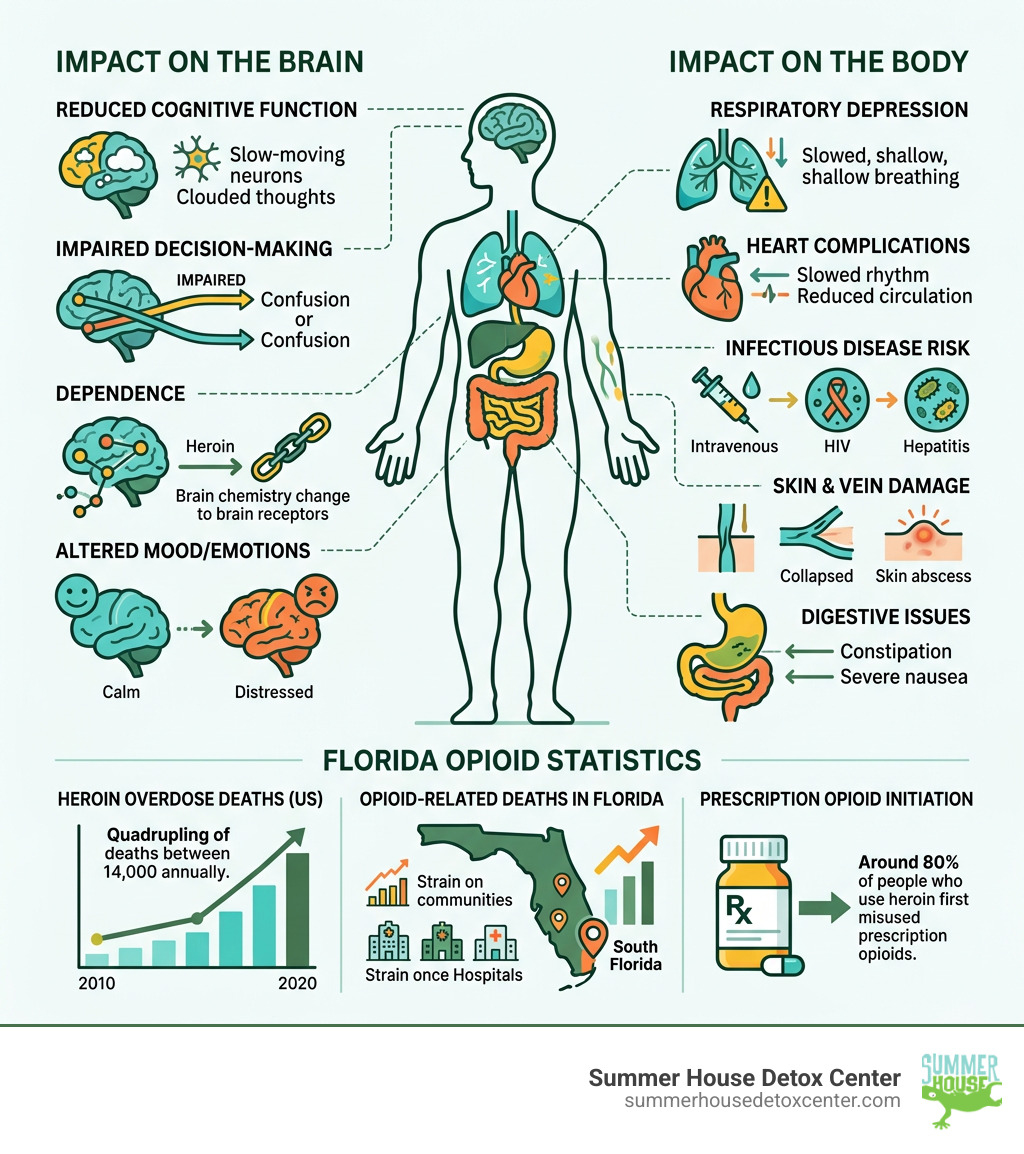
Every single day, more than 130 people in the United States die from an opioid overdose. Heroin alone kills over 14,000 Americans every year. And between 2010 and 2020, heroin overdose deaths more than quadrupled.
Florida sits at the heart of this crisis. South Florida in particular has seen heroin and opioid addiction strain hospitals, families, and communities in ways that demand serious, professional responses.
For many people, heroin doesn’t start with heroin. Around 80% of people who use heroin first misused prescription opioids — painkillers that were supposed to help, but opened a door that became very hard to close.
If you or someone you love is caught in that cycle, you already know how exhausting it is. The fear of withdrawal. The failed attempts to stop alone. The shame that makes asking for help feel impossible.
You don’t have to do this alone — and you don’t have to leave Florida to get world-class care.
Miami’s recovery community is one of the most robust in the country, with access to compassionate, accredited treatment programs that treat you like a person — not a person to be managed.
Simple guide to heroin rehab Florida terms:
Understanding Heroin Addiction and the Need for Heroin Rehab Florida

Heroin is a highly addictive opioid derived from morphine, which is sourced from the seeds of certain poppy plants. It works by binding to opioid receptors in the brain, flooding the system with dopamine and creating an intense rush of pleasure. However, this “high” comes at a devastating price. The brain’s reward system is quickly rewired, replacing natural joy with a desperate, physical dependency.
In Florida, the opioid crisis has evolved rapidly. What often begins with a legitimate prescription for a back injury or surgery can spiral into a pain medication as a gateway to heroin. When prescriptions run out or become too expensive, many turn to heroin because it is cheaper and more accessible on the street.
Because heroin is often “cut” or mixed with substances like sugar, starch, or—more dangerously—fentanyl, the potency is never guaranteed. This makes every single use a gamble with overdose. Professional heroin rehab Florida is necessary because the physical and psychological grip of the drug is too strong for most to break alone.
If you are wondering, how do I know my loved one is addicted to opiates?, look for a shift in priorities. When obtaining and using the drug becomes more important than family, work, or health, it is time to seek help. Understanding the signs of opiate addiction is the first step toward getting them into a safe environment.
Signs and Symptoms of Heroin Use
Recognizing heroin use early can save a life. The signs are often categorized into physical, behavioral, and psychological changes:
- Behavioral Changes: Sudden social isolation, lying about their whereabouts, declining performance at work or school, and losing interest in long-term hobbies.
- Physical Indicators: Constricted “pinpoint” pupils, sudden weight loss, poor hygiene, and “nodding off” at inappropriate times.
- Visible Marks: Track marks or bruising near veins on the arms, legs, or even between toes.
- Financial Distress: Unexplained missing money, selling off valuable possessions, or constant “emergencies” requiring cash.
- Withdrawal: If they haven’t used in a few hours, you may notice opiate withdrawal symptoms such as extreme restlessness, sweating, and agitation.
Short-term and Long-term Effects
The immediate “rush” of heroin is followed by a state of sedation. Short-term effects include dry mouth, warm flushing of the skin, and heavy feelings in the arms and legs. Most dangerously, it causes respiratory depression—slowing the heart and lungs to the point of death.
Long-term use causes catastrophic damage to the body. Chronic users may suffer from collapsed veins, heart lining infections, and liver or kidney disease. The brain also suffers permanent alterations, making it difficult to regulate behavior or respond to stress. For pregnant women, the risks extend to the next generation; understanding what happens to babies exposed to heroin in the womb highlights the tragic reality of Neonatal Abstinence Syndrome (NAS).
Navigating the Heroin Rehab Florida Treatment Landscape
Florida, and specifically Miami, has become a premier destination for recovery for a reason. The serene environment, combined with some of the nation’s most experienced medical professionals, provides a “home away from home” atmosphere that fosters healing.
When looking for treatment centers in Florida, you will encounter several levels of care. Choosing the right one depends on the severity of the addiction and your personal health history.
| Treatment Level | Best For | Key Benefits |
|---|---|---|
| Residential Medical Detox | The first 7–10 days of sobriety | 24/7 medical supervision, safety, and dignity. |
| Inpatient Rehab | Long-term stabilization | Structured environment, 24/7 support, and intensive therapy. |
| PHP (Partial Hospitalization) | Transitioning back to life | Daily clinical treatment while living in a supportive environment. |
| IOP (Intensive Outpatient) | Maintaining recovery | Flexible schedule, group therapy, and relapse prevention. |
For most, the journey must begin with Florida detox centers. Attempting to quit “cold turkey” at home is not only painful but can be life-threatening. So, who needs opiate detox in Florida? Anyone who has developed a physical tolerance and experiences sickness when they stop using needs a medically supervised start.
The Role of Dual Diagnosis in Heroin Rehab Florida
Addiction rarely travels alone. Often, heroin use is a way to “self-medicate” underlying mental health issues like trauma, anxiety, or depression. This is known as a co-occurring disorder.
A high-quality heroin rehab Florida program will offer dual diagnosis treatment. This means we don’t just treat the drug use; we treat the person. By addressing untreated trauma or depression alongside the addiction, we reduce the risk of relapse. Integrated recovery ensures that when you leave, you have the mental health tools to stay sober for the long haul.
Choosing the Right Heroin Rehab Florida Program
With so many options, how do you pick? It’s not just about the palm trees (though they help!). You need to look for:
- Accreditation: Ensure the facility is licensed and industry-trusted.
- Staff Credentials: Look for a multidisciplinary team including doctors, nurses, and therapists. At Summer House, we take pride in having staff members who are in recovery themselves, providing a unique level of empathy.
- Personalized Plans: No two addictions are the same. Your plan should be tailored to your specific health needs and goals.
- Supportive Amenities: Comfort is not a luxury; it’s a necessity for healing. A dignified environment helps you focus on recovery rather than the “sickness” of withdrawal.
If you are still unsure, research opiate detox centers: how to find the best support to learn what questions to ask during the admissions process. There are many reasons why choose Florida for opiate detox?, ranging from the year-round sunshine to the high concentration of world-class specialists in the Miami area.
The Detox Process: Managing Heroin Withdrawal Safely
The fear of withdrawal is the #1 reason people continue to use heroin even when they want to stop. We call it “withdrawal sickness,” and it can feel like the worst flu imaginable, multiplied by ten.
In our heroin detox services, we prioritize your comfort. You aren’t just a patient; you are a guest. Medical detox involves 24/7 monitoring by medical professionals who use specialized medications to ease cravings and physical pain.
So, how long does it take to withdraw from opiates? Generally, symptoms begin within 6 to 12 hours after the last dose, peak around day 2 or 3, and begin to subside after a week. However, the psychological cravings can last much longer.
Is it dangerous? While heroin withdrawal itself is rarely fatal for a healthy adult, the complications are. Dehydration, heart stress, and seizures can occur. Furthermore, is opiate withdrawal deadly? It can be if you have underlying health issues or if you attempt to quit alone. The risks of quitting cold turkey are high, and are at-home opiate detox kits safe? Usually, no. They lack the medical oversight needed to manage a true crisis.
Medications Used in Heroin Recovery
Modern medicine has given us incredible tools to fight opioid addiction. These aren’t “substituting one drug for another”; they are stabilizing the brain so you can focus on therapy.
- Buprenorphine/Suboxone: These help reduce cravings and prevent withdrawal symptoms without producing the same high as heroin.
- Naltrexone/Vivitrol: This blocks the opioid receptors in the brain, meaning if you were to use heroin, you wouldn’t feel the effects.
- Clonidine: Often used to manage the “physical” symptoms like sweating, cramping, and anxiety.
If you want to know more about the specifics, check out which medications are used in opiate detox?. And for those looking toward the future, you might wonder are scientists working on a heroin treatment vaccine? While research is ongoing, the current medications we have are highly effective when paired with therapy.
Therapeutic Support During Detox and Beyond
Detox cleans the body, but therapy heals the mind. During heroin rehab Florida, you will participate in various forms of support:
- Individual Counseling: One-on-one time to dig into the “why” behind the addiction.
- Group Counseling: Sharing experiences with others who truly understand what you’re going through.
- Family Therapy: Healing the relationships that addiction has strained.
- Relapse Prevention: Learning the specific triggers that lead to use and how to navigate them.
If you are currently struggling, learning how can someone come off heroin? safely is the most important information you can have right now.
Planning Your Recovery: Duration, Costs, and Aftercare
Recovery is a marathon, not a sprint. While detox usually lasts 7 to 10 days, a full opiate detox program is just the beginning. Most experts recommend at least 30 to 90 days of structured treatment to significantly reduce the risk of relapse.
One of the biggest hurdles for families is the cost. However, most major insurance providers cover at least a portion of heroin rehab Florida. Whether you have Aetna, Cigna, Blue Cross Blue Shield, or others, we can help you verify your benefits. This ensures you can focus on getting better rather than worrying about the bill.
Aftercare is the “secret sauce” of long-term sobriety. This includes alumni support groups, sober living arrangements, and ongoing opiate detox treatment through outpatient services. We stay by your side even after you leave our doors.
Managing Fentanyl Complications in Heroin Rehab
We cannot talk about heroin today without talking about fentanyl. Fentanyl is up to 50 times stronger than heroin and is now found in almost all street heroin in Florida. This makes the detox process more complex, as fentanyl stays in the body’s fat cells longer and increases the risk of “precipitated withdrawal.”
At Summer House, we have developed specific protocols for how to detox from fentanyl. Our top-rated fentanyl detox involves enhanced medical monitoring to ensure your safety against this lethal additive.
Frequently Asked Questions about Heroin Detox in Florida
How long does heroin detox typically last?
For most individuals, the acute physical withdrawal phase lasts between 7 and 10 days. However, the total time in a heroin rehab Florida program depends on the individual’s health, the length of their addiction, and whether they are also detoxing from other substances like alcohol or benzos.
Does insurance cover the cost of heroin detox in Miami?
Yes, most private insurance plans cover medically necessary detox and substance abuse treatment. We recommend calling our admissions specialists for a free, confidential insurance verification to see exactly what your provider covers.
Why choose residential medical detox for heroin addiction?
Residential detox provides a safe, controlled environment where you are removed from the triggers of your daily life. With 24/7 medical care, you have immediate access to medications and support, making the process much more comfortable and significantly increasing your chances of successfully completing detox.
Conclusion
Recovery in Miami is about more than just “stopping.” It’s about starting a new life under the Florida sun. At Summer House Detox Center, we believe that every person deserves to be treated with dignity, regardless of their past. We offer a path out of the darkness of heroin addiction through personalized, compassionate, and medically expert care.
You have suffered enough. The cycle of addiction is exhausting, but it is not permanent. Whether you are looking for yourself or a loved one, the best time to start is right now.
Start your journey with professional heroin detox today. We are here to help you find your sunshine again.
