Why Long Term Sobriety Is Worth Every Hard Step

Long term sobriety is one of the most life-changing things a person can achieve — and one of the hardest to maintain.
Here’s a quick overview of what it takes and what it means:
- What it is: Staying free from alcohol or drugs for an extended period — commonly defined as one year or more, though many consider five or more years to be true long-term recovery
- Why it matters: Beyond just not using, long-term sobriety brings real improvements to your health, relationships, finances, and sense of self
- How it works: It requires more than willpower — it takes professional support, a strong community, healthy habits, and a plan for handling setbacks
- Is relapse normal? Yes. Relapse rates can reach 62–91% depending on the substance, but returning to recovery after a slip is part of the process — not proof that sobriety is impossible
- How long does it take? On average, it takes people eight years of trying before they reach their first full year without their substance of choice
That last number is worth sitting with. Recovery is rarely a straight line.
Late actor Matthew Perry famously entered rehab 15 times before finding sustained sobriety. His story isn’t unusual — it’s a reminder that the road is long for many people, and that persistence matters far more than perfection.
If you’ve struggled before, that doesn’t mean you’ve failed. It means you’re still in the fight.
At Summer House Detox Center in Miami, FL, we work with people every day who are starting over — sometimes for the first time, sometimes after a relapse. This guide is for anyone who wants to understand what long-term sobriety really looks like and how to build a life that supports it.
Long term sobriety basics:
Defining Long Term Sobriety and Its Life-Changing Benefits
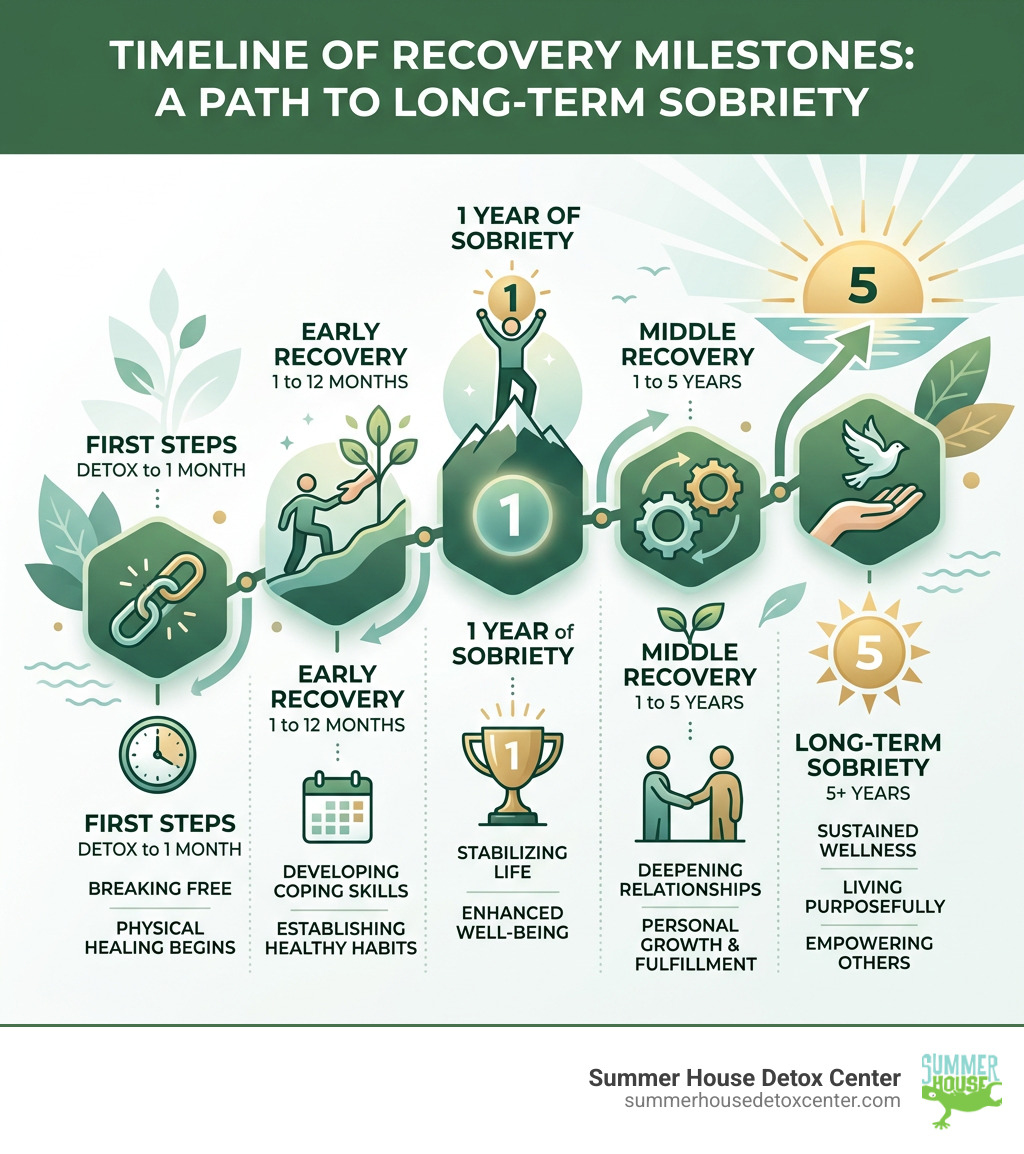
When we talk about Long term sobriety, we aren’t just talking about a few weeks of “white-knuckling” it through cravings. While definitions vary in clinical research, most experts consider the one-year mark to be the first major milestone of sustained abstinence. However, many in the recovery community point to the five-year mark as the point where sobriety truly becomes a stable, integrated part of a person’s identity.
Achieving this isn’t just about the absence of a substance; it’s about a total lifestyle transformation. We often see that life after detox involves building a strong foundation for long term sobriety by replacing old, destructive habits with new, life-affirming ones.

The benefits of staying sober long-term touch every single corner of your life:
| Aspect of Life | Active Addiction | Long Term Sobriety |
|---|---|---|
| Physical Health | Chronic fatigue, organ damage, poor sleep | High energy, organ regeneration, restful sleep |
| Mental State | Anxiety, paranoia, “brain fog” | Clarity, emotional stability, improved focus |
| Relationships | Broken trust, isolation, conflict | Rebuilt trust, deep connections, reliability |
| Finances | Drained savings, legal fees, job loss | Financial stability, career growth, savings |
| Legal Status | Risk of arrest, DUI, loss of freedom | Legal freedom, clean record, peace of mind |
Beyond the logistics, there is a profound boost in self-esteem. When you stop breaking promises to yourself, you begin to believe in your own worth again. You move from a state of survival to a state of thriving.
The Physical and Mental Rewards of Long Term Sobriety
The human brain is remarkably resilient. Through a process called neuroplasticity, the brain can actually begin to heal the damage caused by chronic substance use. In the first 12 to 24 months of Long term sobriety, individuals often report significant cognitive improvements, including better memory, sharper attention spans, and improved impulse control.
We believe that bolstering your recovery by making healthy choices—like prioritizing nutrition and regular exercise—speeds up this healing process. Physically, your liver begins to regenerate, cardiovascular health improves, and the chronic inflammation often associated with heavy drinking or drug use subsides. Mentally, the “rollercoaster” of emotions begins to level out. You gain the ability to regulate your feelings without reaching for a bottle or a pill, leading to a massive reduction in daily anxiety.
The Essential Stages of Sustained Recovery
Recovery isn’t an event; it’s a process. Psychologists often use the “Stages of Change” model to describe this journey:
- Precontemplation: Not yet acknowledging there is a problem.
- Contemplation: Acknowledging the problem but feeling unsure about changing.
- Preparation: Getting ready to make a change (e.g., calling a detox center).
- Action: The early stages of abstinence and treatment.
- Maintenance: Working to prevent relapse and sustain the new lifestyle.
At Summer House Detox Center, we emphasize that how detox is the first step to long term sobriety is by clearing the physical fog so you can enter the “Action” and “Maintenance” phases with a clear head.
Research suggests that staying in a structured treatment environment for at least 90 days significantly improves the chances of long-term success. Why? Because habit formation takes time. While the old myth says it takes 21 days to form a habit, newer studies show it actually takes an average of 66 days for a new behavior to become automatic. Residential treatment provides the safe “bubble” needed to get through those first two months without the interference of outside triggers.
Taking three steps toward beginning a successful recovery after detox—finding support, creating a routine, and addressing root causes—is essential for moving from the “Action” phase into permanent “Maintenance.”
Navigating the First Year Toward Long Term Sobriety
The first year is often the “gauntlet.” Many people encounter Post-Acute Withdrawal Syndrome (PAWS), which includes mood swings, sleep disturbances, and “sobriety fatigue” that can last from six months to two years. Understanding the next steps after completing a detox program is vital during this time.
To make it through the first year, you must:
- Celebrate Milestones: Whether it’s 30 days, 90 days, or six months, acknowledge your progress.
- Follow Through: As we often say, staying clean and sober means following through with aftercare appointments and therapy.
- Manage Cravings: Most urges only last 15 to 30 minutes. If you can distract yourself for half an hour, the wave will usually pass.
- Establish Routines: A structured schedule—including set times for meals, sleep, and meetings—is a powerful defense against the chaos of early recovery.
Practical Strategies for Relapse Prevention in Florida
Living in a beautiful, vibrant place like Miami offers plenty of healthy distractions, but it also has its share of triggers. Relapse prevention is about being a “detective” in your own life—identifying the people, places, and things that make you want to use and having a plan to deal with them.
There are effective ways to avoid relapse after alcohol rehab that involve both internal and external changes.
Healthy Coping Mechanisms for Long Term Sobriety:
- Mindfulness and Meditation: Learning to sit with uncomfortable feelings rather than running from them.
- Physical Activity: Exercise releases natural endorphins, which can help repair the brain’s reward system.
- Avoiding “Slippery” Places: If you used to drink at a specific beach bar, find a new spot for your weekend sun.
- The 15-Minute Rule: When an urge hits, commit to waiting 15 minutes before taking any action. Usually, the intensity fades.
choosing sobriety is about rebuilding what matters, so focus on what you are gaining (freedom, health, family) rather than what you are “giving up.”
Building a Support Network for Long Term Sobriety
No one stays sober alone. A robust support network is perhaps the single most important predictor of Long term sobriety. This network usually includes a mix of professional help and peer support.
12-Step Fellowships (AA/NA): These programs provide a free, 24/7 community of people who understand exactly what you are going through. Sponsors are essential because they provide one-on-one accountability and guidance through the steps. In these rooms, you will meet many different types of people, but they all share a common goal.
Connecting with others is a fundamental part of recovery. You specifically need six types of people in your sobriety circle, including mentors, peers who are also in recovery, and supportive family members.
Other support options include:
- Sober Living Homes: Transitional housing that provides a drug-free environment and peer accountability.
- Alumni Networks: Many treatment centers, including ours, offer alumni programs to keep you connected to the community.
- Family Therapy: Healing the family unit is often necessary to create a supportive home environment.
Overcoming Challenges and the Reality of Relapse
We need to talk about the “elephant in the room”: relapse. Statistics show that relapse rates for alcohol use disorder can be up to 62% in the first year, and for opioids, the rate can be as high as 91%. These numbers aren’t meant to discourage you; they are meant to show that addiction is a chronic, relapsing brain disease—not a lack of willpower.
The story of Matthew Perry is a powerful example. It took 15 trips to rehab and millions of dollars to find his footing. He viewed his struggles not as failures, but as part of a very difficult learning process.
Common pitfalls in Long term sobriety include:
- “Stinking Thinking”: This is the return of old, negative thought patterns—denial, resentment, and self-pity.
- Complacency: After a few years, you might think, “I’ve got this,” and stop going to meetings or therapy. This is often when a relapse begins.
- Sobriety Fatigue: Feeling exhausted by the constant effort of staying sober.
Combatting these requires aftercare and ongoing support, especially for older adults who may face unique challenges. Cultivating the practice of gratitude is also a scientifically backed way to keep your perspective positive and your recovery on track.
Frequently Asked Questions about Staying Sober
What is considered long-term sobriety?
While it’s a relative term, most researchers and clinicians define Long term sobriety as at least one year of continuous abstinence. Many in the recovery community feel that “true” long-term stability is reached after five years, as the risk of relapse drops significantly after this milestone. It is characterized by lifestyle transformation, emotional stability, and significant personal growth.
How common is relapse during the recovery process?
Relapse is very common, affecting 40% to 60% of people with substance use disorders—a rate similar to other chronic diseases like asthma or hypertension. It is widely considered a part of the recovery process rather than a failure. A relapse is a sign that treatment needs to be adjusted or resumed, not that the person is “incapable” of being sober.
How much does sober living cost in Florida?
In Florida, particularly in the Miami area, sober living costs can range from $500 to $5,000 per month depending on the level of luxury and the services provided. These costs are typically paid out-of-pocket, as most insurance plans do not cover the “room and board” aspect of transitional housing, though they may cover the associated outpatient therapy sessions.
Conclusion
Long term sobriety is a marathon, not a sprint. It begins with a single, courageous decision to ask for help and continues through a series of daily choices to prioritize your health and well-being. Whether you are just starting out or are looking to get back on track after a setback, the road to recovery is always open.
At Summer House Detox Center, our Miami-based inpatient facility provides the personalized, medically supervised detox you need to build a strong foundation. We focus on comfort, dignity, and expert support to ensure you start your journey on the right foot. If you are wondering where to start when rebuilding your life after rehab, the answer is simple: start with a safe, professional detox.
Ready to take the first step toward a lifetime of freedom? Learn more about our rehabilitation services and how we can help you find your way to Long term sobriety. Your future is waiting.
