How to Handle Appetite Loss During Oxycodone Withdrawal
Understanding Oxycodone Withdrawal Appetite Loss
Oxycodone withdrawal appetite loss is one of the most common and disruptive symptoms people face when stopping oxycodone — and it typically begins within 12 to 36 hours of the last dose.
Here is a quick overview of what to expect:
- When it starts: 12–36 hours after your last dose (as early as 6–12 hours for short-acting forms)
- Why it happens: Gastrointestinal distress, nausea, vomiting, and stomach cramps suppress hunger signals
- How long it lasts: Appetite loss peaks around days 3–4 and usually improves within 5–7 days
- Key risks: Dehydration, malnutrition, and electrolyte imbalance if left unmanaged
- How it’s treated: Medical supervision, medications like buprenorphine or clonidine, small frequent meals, and hydration strategies
Stopping oxycodone after regular use puts your body through a major adjustment. Your brain and gut have both adapted to the drug — and when it’s gone, they react strongly. Nausea, stomach cramps, vomiting, and diarrhea all hit at once, making the idea of eating feel impossible.
For many people, not being able to eat feels like one more thing their body is doing wrong. But it’s not. It’s a predictable, temporary response to a very real physiological shift.
If you’re going through this in Florida — or supporting someone who is — know that you are not alone, and this is manageable with the right support.
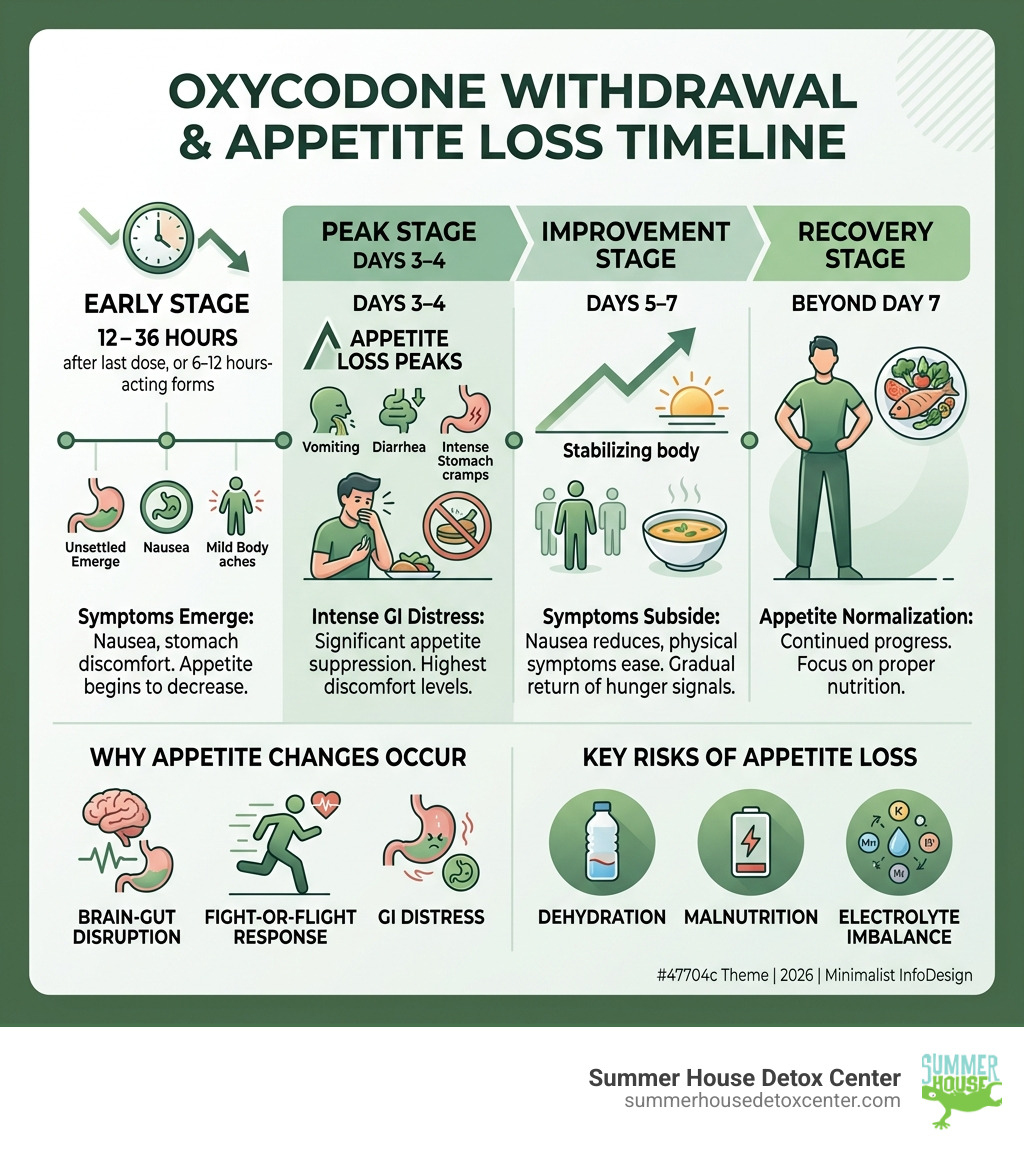
When we talk about oxycodone withdrawal appetite loss, we are looking at a complex physiological “rebellion.” Oxycodone is a powerful semi-synthetic opioid that binds to receptors in the brain and the digestive tract. Over time, the body stops producing its own natural painkillers (endorphins) and relies on the drug to maintain balance. When that drug is suddenly removed, the central nervous system goes into overdrive.
This state of opiate withdrawal involves a massive shift in brain chemistry. The body enters a “fight or flight” mode, which naturally diverts energy away from digestion. If you’ve ever felt too nervous to eat before a big presentation, imagine that feeling multiplied by a hundred, accompanied by severe flu-like symptoms.
Why Appetite Changes Occur
The primary driver behind the loss of desire for food is the hyperactivity of the locus coeruleus, a part of the brain responsible for the body’s “alarm” response. During withdrawal, this area floods the system with noradrenaline, leading to jitters, high blood pressure, and a total suppression of hunger.
Furthermore, oxycodone use heavily impacts the brain’s reward system. By artificially stimulating dopamine, the drug makes the brain forget how to find pleasure in natural rewards—like a good meal. When you stop using, your dopamine levels plummet, leading to a state called anhedonia, where nothing—including food—seems appealing. Recognizing these signs of opiate addiction and the subsequent withdrawal is the first step toward reclaiming your health.
How Common is Poor Appetite?
If you are struggling to look at a plate of food without feeling ill, you are in the majority. Poor appetite is listed as a core physical and emotional manifestation of opioid withdrawal. It occurs alongside restlessness, anxiety, and watery eyes. In the early and peak stages of detox, the lack of appetite is almost universal because the body is preoccupied with “purging” and resetting its internal thermostat.
Whether you are following a complete mild opiate withdrawal guide or dealing with a more severe dependency, the gastrointestinal distress—including those infamous stomach cramps—makes eating a secondary concern for most people in the first few days.
The Timeline of Oxycodone Withdrawal Appetite Loss
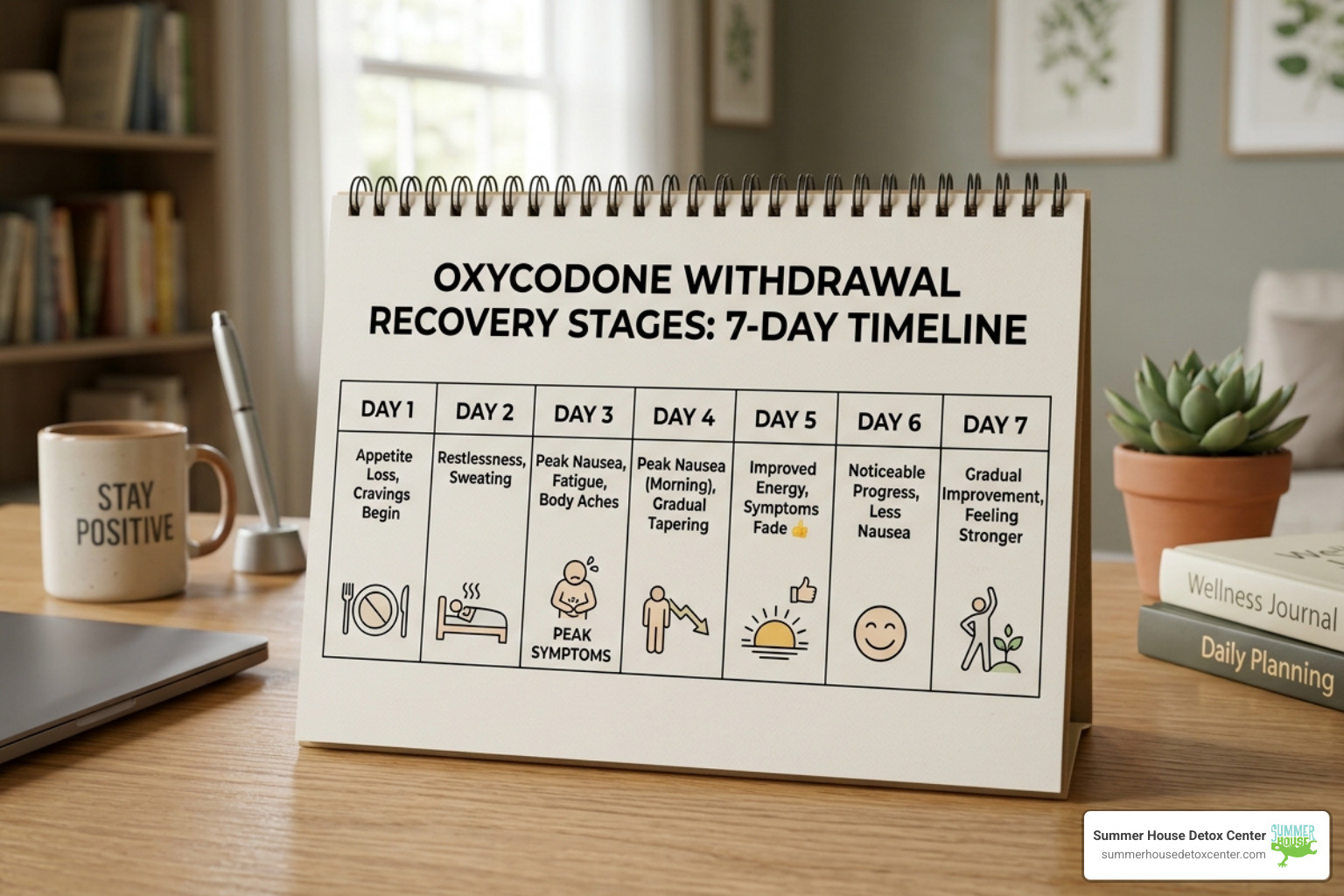
The duration of oxycodone withdrawal appetite loss depends largely on the type of oxycodone used (immediate-release vs. extended-release) and the individual’s history of use. However, most people follow a fairly predictable schedule.
- Days 1–2: Symptoms begin. Appetite starts to fade as anxiety and muscle aches set in.
- Days 3–4: The “Peak.” This is usually when nausea, vomiting, and diarrhea are at their worst. Eating is often the last thing on anyone’s mind.
- Days 5–7: The acute physical symptoms begin to subside. You may start to feel a slight return of hunger, though it is often fragile.
- Week 2 and beyond: Physical symptoms are mostly gone, but psychological symptoms like depression can keep appetite low for a while longer.
When Does Oxycodone Withdrawal Appetite Loss Begin?
For short-acting oxycodone, the “clock” starts fast. You might notice the first signs of day 3 opiate withdrawal symptoms appearing much earlier than you’d expect. Typically, the window is 6 to 12 hours after the last dose. Metabolic factors, such as how fast your body processes medication, and the specific dosage levels you were taking, will dictate how quickly the “shut down” of your appetite occurs. To better understand the duration, you can check our guide on how long it takes to withdraw from opiates.
Risks of Prolonged Appetite Loss During Oxycodone Withdrawal
While a few days of not eating might not seem like a crisis, the combination of no food intake and the loss of fluids through sweating, vomiting, and diarrhea is dangerous.
- Dehydration: This is the most immediate threat. Without water and electrolytes, the body’s organs begin to struggle.
- Electrolyte Imbalance: Low levels of sodium, potassium, and magnesium can lead to heart palpitations and severe muscle cramps.
- Malnutrition: Prolonged lack of nutrients weakens the immune system, making it harder for the body to repair the damage caused by long-term drug use.
- Weakened Recovery: If you don’t have the energy from food, your brain takes longer to heal.
These are the primary risks of quitting opiates cold turkey without medical support to manage your intake.
Accompanying Symptoms and Health Impacts
Appetite loss doesn’t travel alone. It’s part of a “symptom pack” that makes the first week of recovery feel like a grueling marathon.
| Early Symptoms (0-48 Hours) | Late Symptoms (48-72+ Hours) |
|---|---|
| Agitation and Anxiety | Abdominal Cramping |
| Muscle Aches | Diarrhea |
| Runny Nose / Tearing Eyes | Nausea and Vomiting |
| Sweating and Chills | Dilated Pupils |
| Intense Cravings | Goosebumps |
Understanding this opiate withdrawal symptoms guide helps you prepare for the waves of discomfort.
Physical and Emotional Manifestations
The lack of appetite is often worsened by the emotional weight of withdrawal. Anxiety and restlessness make it hard to sit still long enough to eat, while opiate withdrawal and depression can make the very act of chewing feel like an exhausting chore. This “emotional anorexia” is a common hurdle in the early days of sobriety.
Impact on Overall Nutrition
When we stop eating, our bodies begin to break down muscle for energy—a process called muscle wasting. This, combined with vitamin deficiencies (especially B vitamins and Vitamin C), leads to profound energy depletion. This is why many people in withdrawal feel like they can barely lift their arms. These opiate withdrawal symptoms are the body’s way of saying it’s out of fuel.
Managing and Treating Appetite Loss Effectively
At Summer House Detox Center, we focus on making the “impossible” task of eating a bit more manageable through clinical expertise and personal comfort.
Medical Treatments and Medications
We don’t expect you to “tough it out.” Modern medicine offers incredible tools to settle the stomach and bring back the appetite:
- Buprenorphine (Suboxone): By stabilizing the opioid receptors, Suboxone helps with opiate withdrawal symptoms by removing the “emergency” signal in the brain, which often allows appetite to return quickly.
- Clonidine: This medication lowers the noradrenaline surge, reducing anxiety and cramping. Our Clonidine opiate withdrawal symptoms guide explains how it calms the “fight or flight” response.
- Ondansetron (Zofran): A powerful anti-nausea medication that can stop vomiting in its tracks, making it possible to keep fluids and light snacks down.
Home Remedies and Lifestyle Changes
If you are managing mild symptoms, certain “old school” remedies still hold weight:
- Ginger Tea: Excellent for settling a rolling stomach.
- The BRAT Diet: Bananas, Rice, Applesauce, and Toast are gentle on the digestive system.
- Mindfulness: Reducing the “panic” of withdrawal can sometimes lower the physical barrier to eating.
- Herbal Support: Some find relief in herbal remedies for opiate withdrawal symptoms, though these should always be discussed with a professional first.
We often suggest easing withdrawal symptoms from opiates by focusing on “liquid gold”—broths and electrolyte drinks—before trying to tackle solid food.
The Role of Medical Supervision in Recovery
Trying to handle oxycodone withdrawal appetite loss at home in Miami can be dangerous because of the heat and the risk of rapid dehydration. Medical supervision provides a safety net that “cold turkey” simply cannot offer.
Preventing Severe Nutritional Deficiencies
In a clinical setting like ours, we don’t just wait for you to feel hungry. We use opiate withdrawal relief guides to proactively manage your health. This includes:
- IV Fluids: To bypass a nauseous stomach and hydrate you instantly.
- Electrolyte Replacement: Ensuring your heart and muscles have the minerals they need to function.
- Professional Dietary Planning: Our staff understands which foods provide the most “bang for their buck” nutritionally without upsetting your stomach.
Knowing which medications are used in opiate detox allows us to tailor a plan that prioritizes your comfort and dignity.
When to Seek Emergency Medical Help
Withdrawal is rarely life-threatening for healthy adults, but complications can arise. You should seek immediate help if you experience:
- Persistent vomiting that prevents any fluid intake for more than 12 hours.
- Confusion or extreme dizziness (signs of severe dehydration).
- Chest pain or a racing heart that won’t slow down.
- Thoughts of self-harm or suicide.
If you are worried about a family member, knowing how to tell if a loved one is addicted to opiates can help you intervene before the withdrawal stage becomes an emergency.
Frequently Asked Questions About Oxycodone Withdrawal
How long does it take for appetite to return to normal?
For most, the “fog” lifts between days 7 and 10. Once the acute physical symptoms resolve, your hunger cues will begin to return. However, if you experience Post-Acute Withdrawal Syndrome (PAWS), your appetite might fluctuate for a few weeks as your brain chemistry continues to level out. You can learn more about this in our guide on how long withdrawal symptoms last from opiates.
Can medications like Gabapentin help with appetite issues?
While not a direct “appetite stimulant,” Gabapentin can help with opiate withdrawal symptoms by reducing the restless legs and anxiety that often make eating difficult. By calming the nervous system, it indirectly makes the body more receptive to food.
Are there differences in appetite loss based on dosage?
Yes. Those who have been on high doses for years will likely face a more “stubborn” loss of appetite than someone on a lower dose for a shorter period. Factors like age, metabolism, and co-occurring health issues also play a role. A medicine opiate withdrawal symptoms guide can provide more specific insights into these variables.
Conclusion
At Summer House Detox Center, we know that oxycodone withdrawal appetite loss is more than just “not feeling hungry”—it’s a sign that your body is fighting to find its balance again. In our Miami-based facility, we provide the medical supervision, personalized nutrition, and compassionate support necessary to get you through those first difficult days.
Recovery is a journey that requires fuel, and we are here to help you find your appetite for life again. Whether you are coping with opiate withdrawal for the first time or looking for a safe place to start over, we offer the expertise you need.
If you or someone you love needs opiate detox in Florida, don’t wait for the symptoms to become overwhelming. Reach out to us today to learn more about our opiate detox services and how we can make your recovery as comfortable and successful as possible. Your health and your future are worth the call.
