
What You Actually Need to Know About How to Detox From Alcohol Fast
How to detox from alcohol fast is possible — but “fast” doesn’t mean skipping the process. It means doing it right, so your body clears alcohol safely and without dangerous setbacks.
Here’s the short answer:
- Stop or reduce alcohol intake — never abruptly quit cold turkey if you’re a heavy drinker
- Seek medical supervision — especially for moderate to severe dependence
- Stay hydrated — drink plenty of water and electrolyte-rich fluids
- Eat nutrient-dense foods — especially those rich in Vitamin B and thiamine
- Use prescribed medications — benzodiazepines and other medications ease withdrawal safely
- Rest and manage stress — sleep, meditation, and support networks speed recovery
- Follow through with treatment — detox is just the first step toward lasting sobriety
The hard truth? For most people with heavy drinking histories, the safest and fastest path through detox is medically supervised care — not a home remedy.
Here’s why this matters. Alcohol withdrawal is not like quitting coffee. It’s one of the only forms of substance withdrawal that can be fatal. Symptoms can begin as soon as 6 hours after your last drink, peak dangerously between 24 and 72 hours, and in rare but serious cases, progress to life-threatening seizures or delirium tremens.
Skipping steps doesn’t speed things up — it puts you at serious risk.
If you’re in the Miami, FL area and feel overwhelmed about where to start, you’re not alone. Many people go through exactly this, and there is a clear, safe path forward.
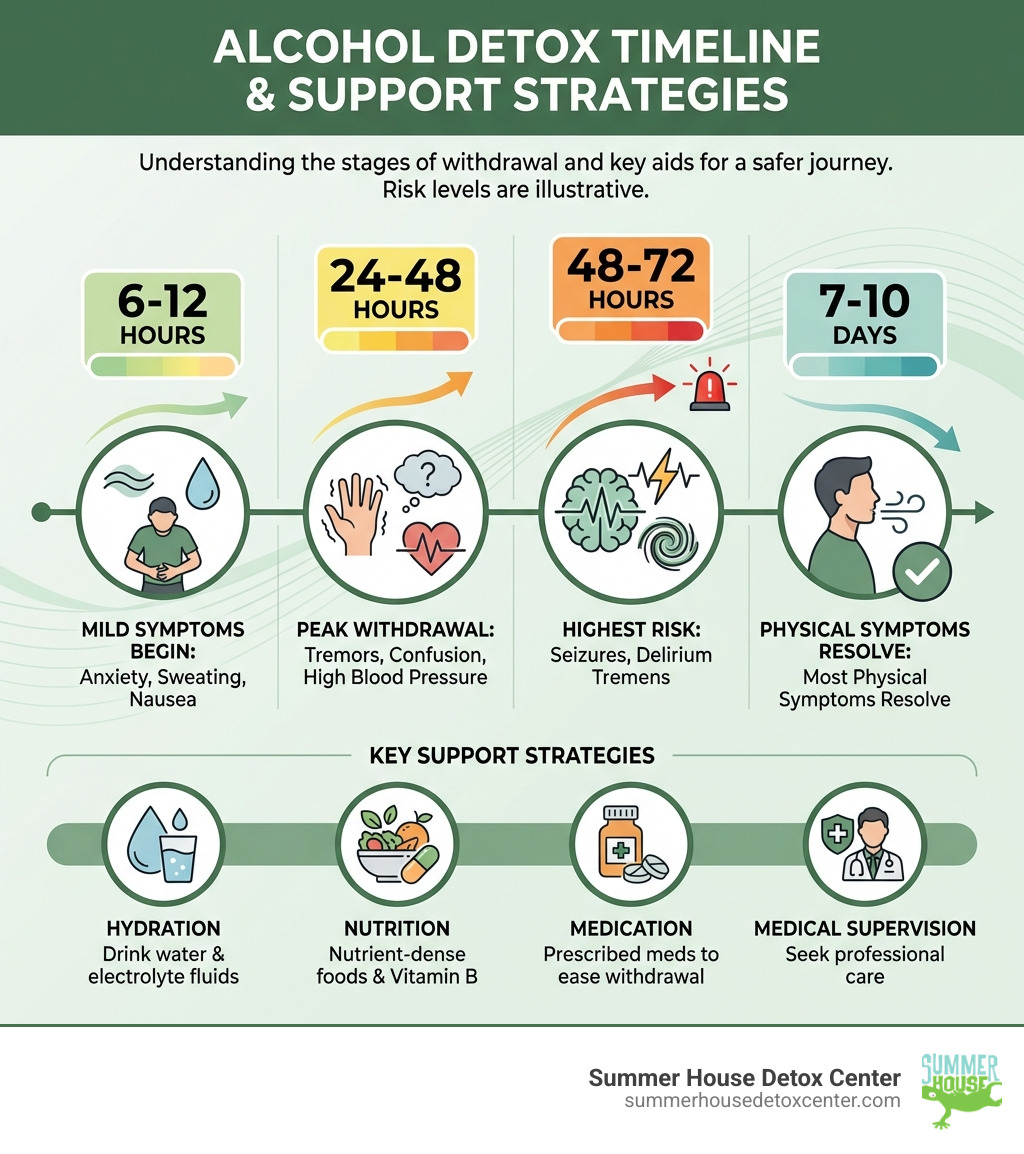
How to detox from alcohol fast terms explained:
Understanding the Reality of How to Detox From Alcohol Fast
When we talk about how to detox from alcohol fast, we have to address the biology of the human body. Your liver can only process alcohol at a fixed rate—roughly one standard drink per hour. No amount of “detox teas” or “miracle supplements” can force your liver to work faster than its biological capacity. However, “fast” in the context of recovery refers to the efficiency and smoothness of the transition from dependence to sobriety.
The real challenge isn’t just flushing the toxins; it’s managing how your brain reacts once the alcohol is gone. Alcohol is a central nervous system depressant. Over time, your brain adapts by working in a state of “overdrive” to counteract the sedative effects of the drink. When you stop suddenly, that overdrive doesn’t just switch off. This leads to an overexcitation of the nervous system, affecting GABA receptors and causing the physical tremors and anxiety associated with withdrawal.
To understand the timeline better, check out our guide on Alcohol Detox How Long Does It Take. For most, the process takes between 5 to 7 days, but individual factors can shift this window. The goal is to navigate this period without complications like seizures, which is The Key to Experiencing a Safe Alcohol Detox.
The Alcohol Withdrawal Timeline and Stages
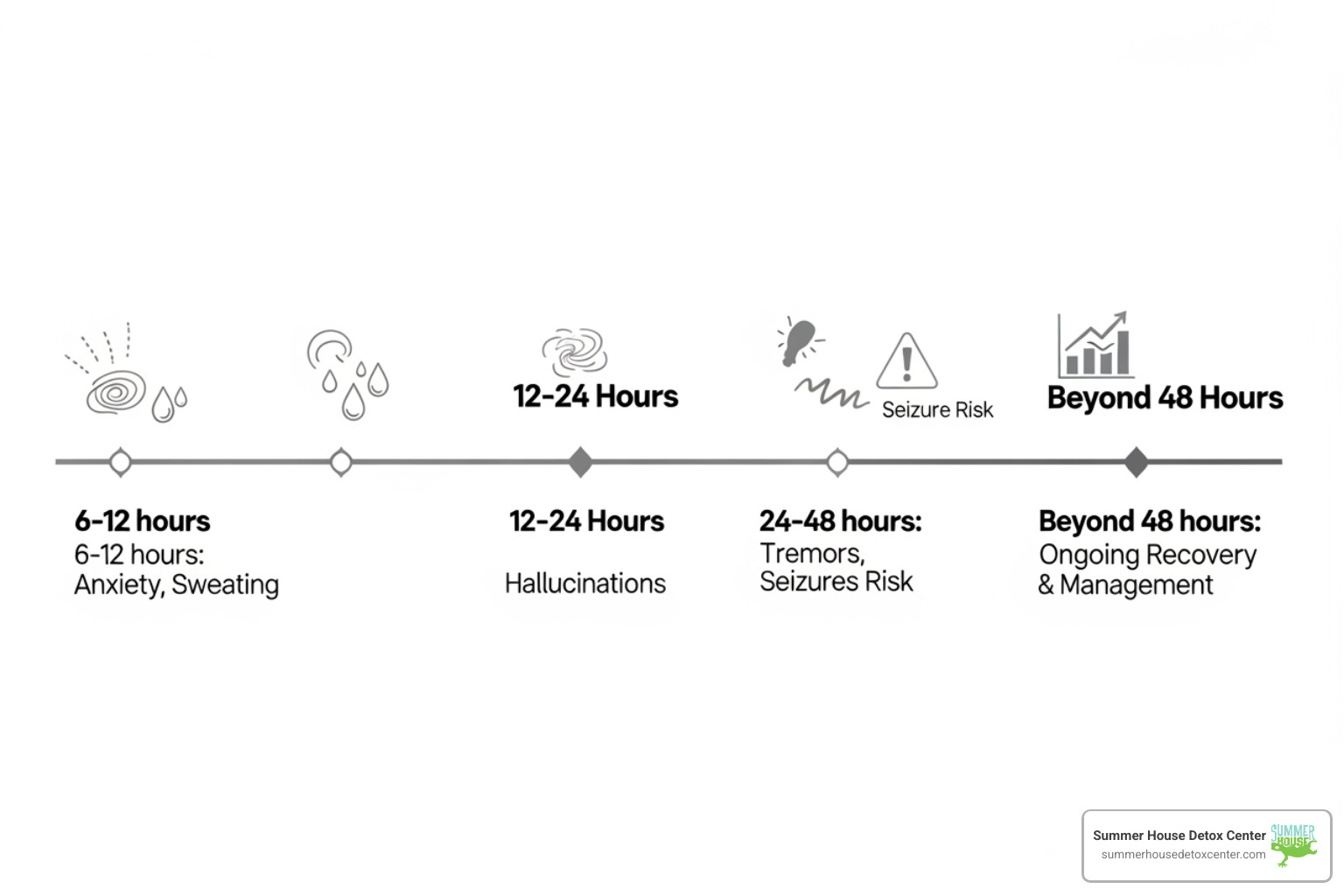
Knowing what to expect hour-by-hour can take the “fear of the unknown” out of the equation. While every person’s body is different, the Alcohol Detox Timeline generally follows a predictable pattern:
- 6 to 12 Hours: Minor withdrawal symptoms begin. You might feel anxious, shaky, or nauseous. Some people develop a headache or start sweating.
- 12 to 24 Hours: For some, visual, auditory, or tactile hallucinations may begin. This is often a sign that the withdrawal is progressing toward a more severe stage.
- 24 to 48 Hours: This is the peak window for physical discomfort. Tremors can become more pronounced, and blood pressure may spike. Crucially, the risk of withdrawal seizures is highest during this 24-48 hour window.
- 48 to 72 Hours: This is known as the “danger zone.” While most people begin to feel better, a small percentage (about 1% to 1.5%) develop Delirium Tremens (DTs). This condition involves severe confusion, racing heart, and high fever.
Because the first three days are the most volatile, we emphasize The First 72 Hours of Detox: What to Expect and How to Prepare as the most critical phase of the journey.
Factors That Influence How to Detox From Alcohol Fast
Why does one person have a mild headache while another faces a medical emergency? Several individual factors dictate the speed and intensity of your detox:
- Drinking History: How long have you been drinking, and how much? Chronic, heavy use leads to deeper physical dependence.
- Age: Older adults (especially those over 65) are at a higher risk for severe complications and may take longer to metabolize toxins.
- Body Mass Index (BMI) and Liver Function: Your overall health and the state of your liver play a massive role in how efficiently your body can process the backlog of toxins.
- Co-occurring Disorders: If you are managing mental health struggles like depression or anxiety alongside addiction, the psychological symptoms of detox can feel much more intense.
We often look at the Jellinek Curve Alcohol Detox to help individuals understand where they are in the phases of addiction and what their specific recovery path might look like.
Recognizing When Professional Intervention is Necessary
Trying to “tough it out” is a common myth, but it can be a deadly one. You should never attempt to detox alone if you recognize these Alcohol Withdrawal Signs: How to Know You Need Professional Alcohol Detox Treatment:
- A history of previous severe withdrawals or seizures.
- Drinking soon after waking up to “stop the shakes.”
- Consuming more than 15 units of alcohol daily (roughly half a bottle of spirits or 1.5 bottles of wine).
- Presence of co-existing medical conditions like heart disease or liver cirrhosis.
If you are unsure, reviewing the Top 8 Signs You Need Alcohol Withdrawal Treatment can provide clarity on whether home care is a safe option or a dangerous gamble.
Medical vs. Home Detox: Efficiency and Safety
When people search for how to detox from alcohol fast, they are often looking for a way to do it at home. While mild cases can sometimes be managed with a doctor’s guidance and a tapering plan, it is rarely the “fastest” way because the risk of relapse or emergency room visits is so high.
| Feature | Medical Inpatient Detox | Home Detox (DIY) |
|---|---|---|
| Safety | High; 24/7 medical monitoring | Low; high risk of complications |
| Speed | Efficient; symptoms managed with meds | Slower; symptoms may halt progress |
| Comfort | High; clinical interventions for pain | Low; limited to OTC remedies |
| Success Rate | High; structured support prevents relapse | Lower; easy access to alcohol |
| Medication | Prescribed benzos/anticonvulsants | None or very limited |
For residents in Florida, choosing an Alcohol Detox Center Miami provides a level of stabilization that home environments simply cannot match. We focus on dignity and comfort, ensuring that the “fastest” path is also the most humane one. Understanding Why You Should Choose Alcohol Detox at Rehab vs. At Home Detox is about realizing that professional care removes the barriers—like extreme pain and cravings—that usually cause people to give up.
Risks of Attempting to Detox From Alcohol Fast at Home
The biggest myth about how to detox from alcohol fast at home is that “cold turkey” is the bravest way to go. In reality, it’s the most dangerous. Alcohol withdrawal has a high fatality rate if untreated—specifically regarding Delirium Tremens, which carries a 37% mortality rate without medical intervention. With proper care, that risk drops to less than 5%.
Beyond the risk of death, home detox often leads to:
- Grand Mal Seizures: These can occur within the first 48 hours and cause permanent brain injury or physical trauma from falls.
- Severe Dehydration: Vomiting and sweating can lead to electrolyte imbalances that affect heart rhythm.
- The “Kindling” Effect: Each failed attempt at home detox makes the nervous system more sensitive, meaning the next withdrawal will be even more severe.
If you are looking for Alcohol Detox Florida, The Importance of Medically Supervised Detox: Why DIY Detox Can Be Dangerous cannot be overstated. Safety is the foundation of speed.
Essential Strategies to Support a Safe and Rapid Recovery
Whether you are in a facility or under a doctor’s strict home-care plan, what you put into your body determines how quickly you bounce back. Alcohol depletes vital nutrients, and replacing them is essential for cellular repair.
We recommend focusing on Seven Healthy Foods That Can Help with Alcohol Detox:
- Leafy Greens and Salmon: High in Vitamin B complex, which is heavily depleted by chronic drinking.
- Whole Grains: These provide steady energy and fiber to help your gut bacteria recover, supporting your liver and kidneys.
- Fruits like Bananas and Berries: These help manage sugar cravings and provide essential potassium.
- Cayenne Pepper: Surprisingly, adding this to food can help reduce cravings and soothe an upset stomach.
Hydration is equally critical. We suggest drinking at least 3 liters of water or electrolyte drinks daily. Avoid caffeine, as it can worsen the anxiety and tremors already present during Alcohol Detox Treatment.
Medications and Professional Interventions
The “secret” to how to detox from alcohol fast without suffering is often found in modern medicine. In a clinical setting, we use specific protocols to “cushion” the nervous system.
- Benzodiazepines (like Librium or Valium): These are the gold standard. They mimic some of alcohol’s effects on the brain, preventing the “overdrive” that leads to seizures and DTs.
- Anticonvulsants: Used to specifically target and lower the risk of seizures.
- Thiamine (Vitamin B1) Injections: This is vital to prevent Wernicke-Korsakoff syndrome, a serious brain disorder caused by thiamine deficiency in heavy drinkers.
If you’re curious about the clinical side, you can read more about What Type of Medications Are Used in Alcohol Treatment. This medical support is why patients in our care often feel significantly better within just a few days. For a full breakdown of the clinical journey, see What to Expect During Alcohol Detox: A Step-by-Step Guide to the Process.
Holistic Approaches to Ease Discomfort
While medicine handles the physical risks, holistic strategies handle the “mental noise.” Speeding up detox involves lowering your cortisol (stress) levels so your body can focus on healing.
- Stress Management: Techniques like deep breathing and guided meditation can help lower a racing heart rate.
- Sleep Hygiene: Withdrawal often causes insomnia. A dark, cool room and soft music can encourage the restorative sleep your brain needs to rebalance its chemistry.
- Support Networks: Whether it’s family or a peer group like AA or SMART Recovery, having someone to talk to reduces the psychological burden of detox.
Our Detox Services / Alcohol Detox incorporate these comfort-focused elements because we believe recovery should be rooted in dignity, not just clinical stability.
Frequently Asked Questions about Alcohol Detox
How long does it typically take to detox from alcohol?
For most individuals, the acute phase of detox lasts between 5 to 7 days. While the most severe physical symptoms peak within the first 72 hours, lingering effects like anxiety or sleep disturbances can persist for a few weeks as the brain chemistry stabilizes.
Is it possible to safely detox from alcohol at home?
It is only considered safe for those with mild alcohol dependence and no history of severe withdrawal. Even then, it should only be done after a consultation with a healthcare professional, with a trusted person present 24/7, and with all alcohol removed from the premises. For moderate to heavy drinkers, home detox is highly discouraged due to the risk of seizures.
What is the fastest way to detox from alcohol without risks?
The fastest and safest method is medically supervised inpatient detox. Because medical professionals can use medications to manage symptoms immediately, the body isn’t “stuck” in a state of high stress, allowing the metabolic clearance of alcohol to happen as efficiently as possible while ensuring the patient remains safe and comfortable.
Conclusion
The journey toward long-term sobriety begins with a single, often difficult step: the detox. While the desire to find out how to detox from alcohol fast is understandable, the focus should always be on “safely” and “effectively.” Speed doesn’t matter if the process leads to a medical emergency or an immediate relapse.
At Summer House Detox Center, we provide a sanctuary for this transition. Located in Miami, FL, our facility is designed to offer the personalized care you need to clear your system and regain your life. We combine medical expertise with a warm, supportive environment—many of our staff members have been exactly where you are and understand the courage it takes to start.
Detox is the bridge to your new life. Once the alcohol is out of your system, you can begin the real work of relapse prevention and long-term healing. If you’re ready to take that step, we are here to help you cross that bridge with dignity.
Explore our Alcohol Detox Services today and discover how a professional, compassionate approach can make all the difference in your recovery.
