
Understanding the Path to Recovery
How can we stop alcoholism is a question that millions of Americans, and thousands right here in Florida, ask themselves every day. The answer is both simple and complex: through a combination of recognizing the problem, creating a solid plan, seeking professional help, building strong support systems, and committing to long-term maintenance. Recovery from Alcohol Use Disorder (AUD) is absolutely possible. Extensive research and countless personal stories confirm that most people who struggle with heavy drinking can significantly cut back or quit entirely, reclaiming their health and happiness.
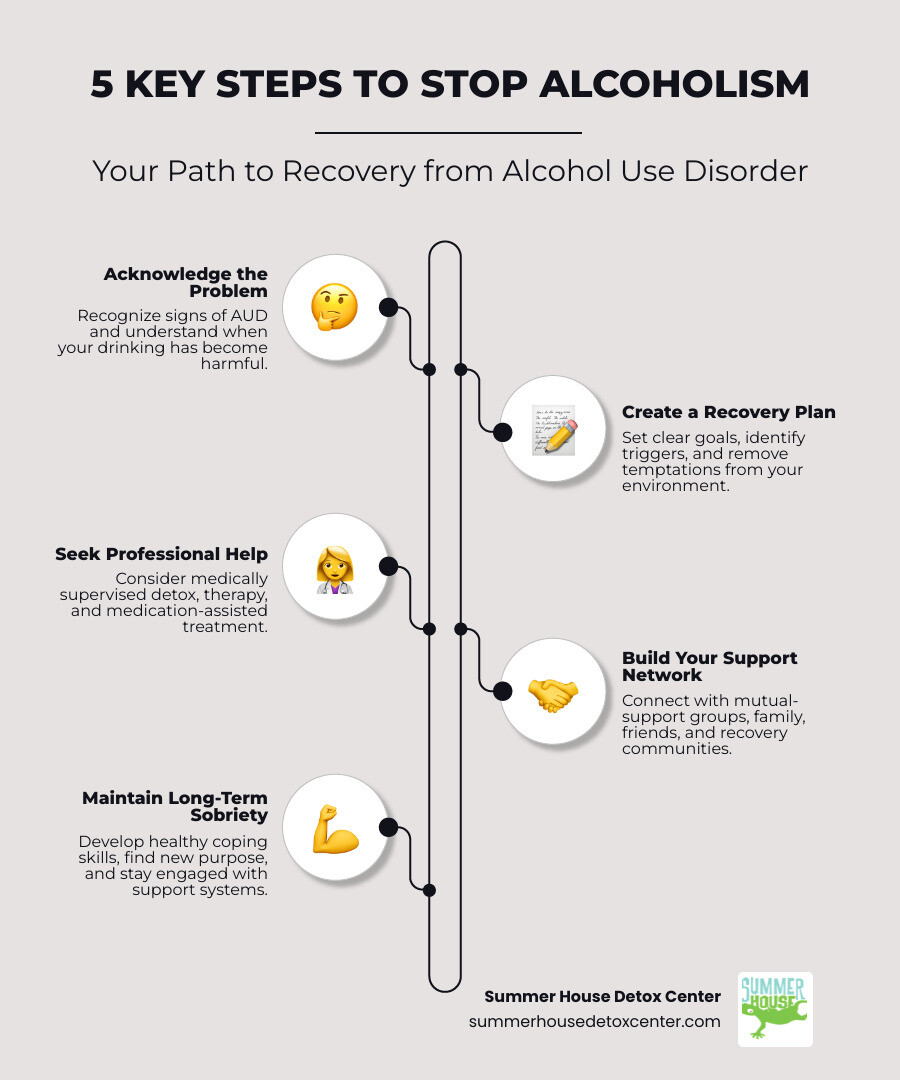
Quick Answer: 5 Key Steps to Stop Alcoholism
- Acknowledge the Problem – The first, most courageous step is to honestly assess your relationship with alcohol and recognize when it has become harmful to your health, relationships, or quality of life.
- Create a Recovery Plan – A goal without a plan is just a wish. This involves setting clear, achievable goals, identifying personal triggers, and preparing your environment for success by removing temptations.
- Seek Professional Help – You don’t have to do this alone. Professional guidance, including medically supervised detox, therapy, and medication-assisted treatment, provides the safest and most effective foundation for recovery.
- Build Your Support Network – Recovery thrives in community. Connecting with mutual-support groups, supportive family and friends, and sober communities creates a vital safety net.
- Maintain Long-Term Sobriety – The journey doesn’t end after the last drink. Long-term success involves developing healthy coping skills, finding new purpose and passions, and staying actively engaged with your support systems.
If you’re reading this in the Miami area, you’re not alone in your struggle. Florida’s vibrant, high-energy culture can sometimes mask the challenges of alcohol misuse. In 2021, nearly a quarter of American adults who drink met the criteria for an alcohol use disorder, and Florida’s rates of binge drinking and related harms reflect this national trend. This means millions of people are facing the same challenges you are. The good news? Treatment works. No matter how severe your drinking problem may seem, evidence-based approaches can help you build a life free from alcohol’s grip.
Recovery is possible. It’s not a matter of willpower or moral strength. AUD is a chronic medical condition that responds to treatment, just like diabetes or heart disease. The brain is remarkably resilient; a concept known as neuroplasticity means it can heal and form new, healthy neural pathways. Professional treatment accelerates this healing process. Whether you’ve tried to quit before or this is your first attempt, each day offers a fresh start on the path to a better life.
This comprehensive guide, created by the experienced team at Summer House Detox Center, will provide you with a clear roadmap. We’ll dig into the specifics of safely navigating withdrawal, explore the most effective therapies like CBT, discuss how medication can support your journey, and show you how to tap into Miami’s vibrant and growing recovery community to build a life that is not just sober, but truly fulfilling.
Let’s start with the most important step: understanding where you are right now and what needs to change.
First Step: Recognizing the Need for Change
Before we can effectively address how can we stop alcoholism, we must first recognize its presence. Alcohol Use Disorder (AUD) is a medical condition characterized by an impaired ability to stop or control alcohol use despite adverse social, occupational, or health consequences. It’s not a moral failing or a lack of willpower; it’s a complex brain disease that impacts millions of adults in the United States. In fact, approximately 1 in 10 children live in a home with a parent who has AUD, highlighting its widespread, generational impact.
The Diagnostic and Statistical Manual of Mental Disorders, Fifth Edition (DSM-5), outlines 11 specific criteria for diagnosing AUD. A doctor or mental health professional will assess if you meet at least two of these criteria over a 12-month period to determine if you have AUD and its severity (mild, moderate, or severe).
Common signs and symptoms of AUD include:
- Craving alcohol: A strong, often overwhelming urge or need to drink that can be difficult to think about anything else.
- Continuing to use despite negative impacts: Drinking even when it causes or worsens problems with relationships (e.g., arguments with a spouse), work (e.g., poor performance), or your health.
- Drinking more than intended: Regularly finding that you’ve consumed more alcohol or for a longer period than you originally planned.
- Spending excessive time: A significant portion of your time is spent obtaining alcohol, drinking, or recovering from its effects (hangovers).
- Repeatedly trying to reduce: Wanting to cut back or stop drinking and making unsuccessful attempts to do so.
- Failing to meet obligations: Neglecting major responsibilities at work, school, or home because of your alcohol use.
- Giving up activities: Reducing or stopping important social, occupational, or recreational activities that you once enjoyed because of alcohol use.
- Hazardous situations: Using alcohol in situations where it’s physically dangerous, such as driving, swimming, or operating machinery.
- Continuing despite worsening medical conditions: Drinking even when you know it’s exacerbating a physical problem (like liver disease) or a mental health issue (like depression or anxiety).
- High tolerance: Needing to drink more alcohol than you used to in order to get the desired effect, or finding that your usual number of drinks has less effect.
- Withdrawal symptoms: Experiencing physical and psychological symptoms when the effects of alcohol wear off, or drinking to avoid or relieve these symptoms.
Some individuals may display what’s known as “high-functioning alcoholism,” where they maintain a successful career, family life, and social circle while secretly struggling with alcohol dependence. This can make it harder for them or their loved ones to recognize the problem. The internal struggle, however, is immense—characterized by constant anxiety about hiding the drinking, fear of being finded, and the mental exhaustion of maintaining a facade. The long-term health risks are just as severe. If you’re questioning your relationship with alcohol, it’s a sign worth exploring. You can start by asking yourself: Is My Drinking a Problem?.
Understanding Alcohol Withdrawal
When someone with alcohol dependence stops or significantly reduces their drinking, their body can react with a range of alcohol withdrawal symptoms. Alcohol is a central nervous system depressant. Over time, your brain compensates for its constant presence by increasing its own stimulating chemicals to maintain balance. When you suddenly stop drinking, the depressant is gone, but the brain’s “go” signals are still on overdrive. This state of hyperexcitability is what causes the uncomfortable and, in severe cases, dangerous symptoms of withdrawal. Symptoms typically begin within hours after the last drink, peak within 24 to 48 hours, and generally improve within five days.
Common physical and psychological symptoms of alcohol withdrawal include:
- Headache
- Shaking or tremors (especially in the hands)
- Heavy sweating, sometimes with clammy skin
- Nausea and vomiting
- Intense anxiety, agitation, and restlessness
- Stomach cramps and diarrhea
- Trouble sleeping (insomnia) or concentrating
- Liftd heart rate and high blood pressure
For individuals who have been heavy or long-term drinkers, withdrawal can escalate to a severe and potentially life-threatening condition known as Delirium Tremens (DTs). This is a medical emergency. Signs of DTs include severe vomiting, profound confusion and disorientation, high fever, tactile, auditory, or visual hallucinations, extreme agitation, and seizures or convulsions. Without medical intervention, DTs can lead to cardiovascular collapse and can be fatal. If you or someone you know experiences these severe symptoms, it’s crucial to seek emergency medical help immediately. Never try to manage severe alcohol withdrawal alone.

Medically supervised detox is the safest and most effective way to manage alcohol withdrawal. In a professional setting like Summer House Detox Center, medical staff can monitor your vital signs 24/7, administer specific medications to alleviate symptoms and prevent complications like seizures, and ensure your comfort and safety throughout the entire process. This is why choosing a specialized facility for alcohol detox is always recommended over attempting to detox at home, especially for those with significant dependence. Learn more about The Importance of Medically Supervised Detox: Why DIY Detox Can Be Dangerous. If you’re unsure if you need professional help, consider the Top 8 Signs You Need Alcohol Withdrawal Treatment.
The Difference Between Cutting Back and Quitting
When we talk about how can we stop alcoholism, a common question arises: should we cut back or quit altogether? The answer depends heavily on the severity of your alcohol dependence, your personal health, and your treatment goals. For anyone diagnosed with moderate to severe AUD, abstinence is nearly always the recommended and safest path.
| Aspect | Moderation (Cutting Back) | Abstinence (Quitting) |
|---|---|---|
| Primary Goal | To reduce alcohol consumption to low-risk levels (e.g., no more than 1 drink/day for women, 2 for men) and minimize harm. | To completely stop all alcohol consumption and maintain long-term sobriety. |
| Best Suited For | Individuals who show signs of mild alcohol misuse but do not have a significant physical dependence or a diagnosis of moderate-to-severe AUD. | Individuals with moderate to severe AUD, a history of binge drinking, physical dependence (experiencing withdrawal), or co-occurring health conditions. |
| Key Strategies | Setting specific drinking limits, tracking drinks, learning to say “no,” avoiding high-risk situations, spacing drinks with water. | Medically supervised detox, behavioral therapy (CBT), medication-assisted treatment, joining support groups (like AA), and making significant lifestyle changes. |
| Potential Risks | The “slippery slope” effect, where moderation attempts can easily slide back into heavy drinking. It can be difficult to maintain long-term. | The initial challenge of withdrawal and early recovery can be intense, requiring strong professional and social support to prevent relapse. |
