
Why Florida Substance Treatment Matters Now More Than Ever
Florida substance treatment is a critical lifeline as the state grapples with a surge in overdose deaths, largely driven by fentanyl. This crisis affects families in Miami, Fort Lauderdale, and every community in between, but there is hope.
Florida has established a comprehensive support network. Here are some key resources:
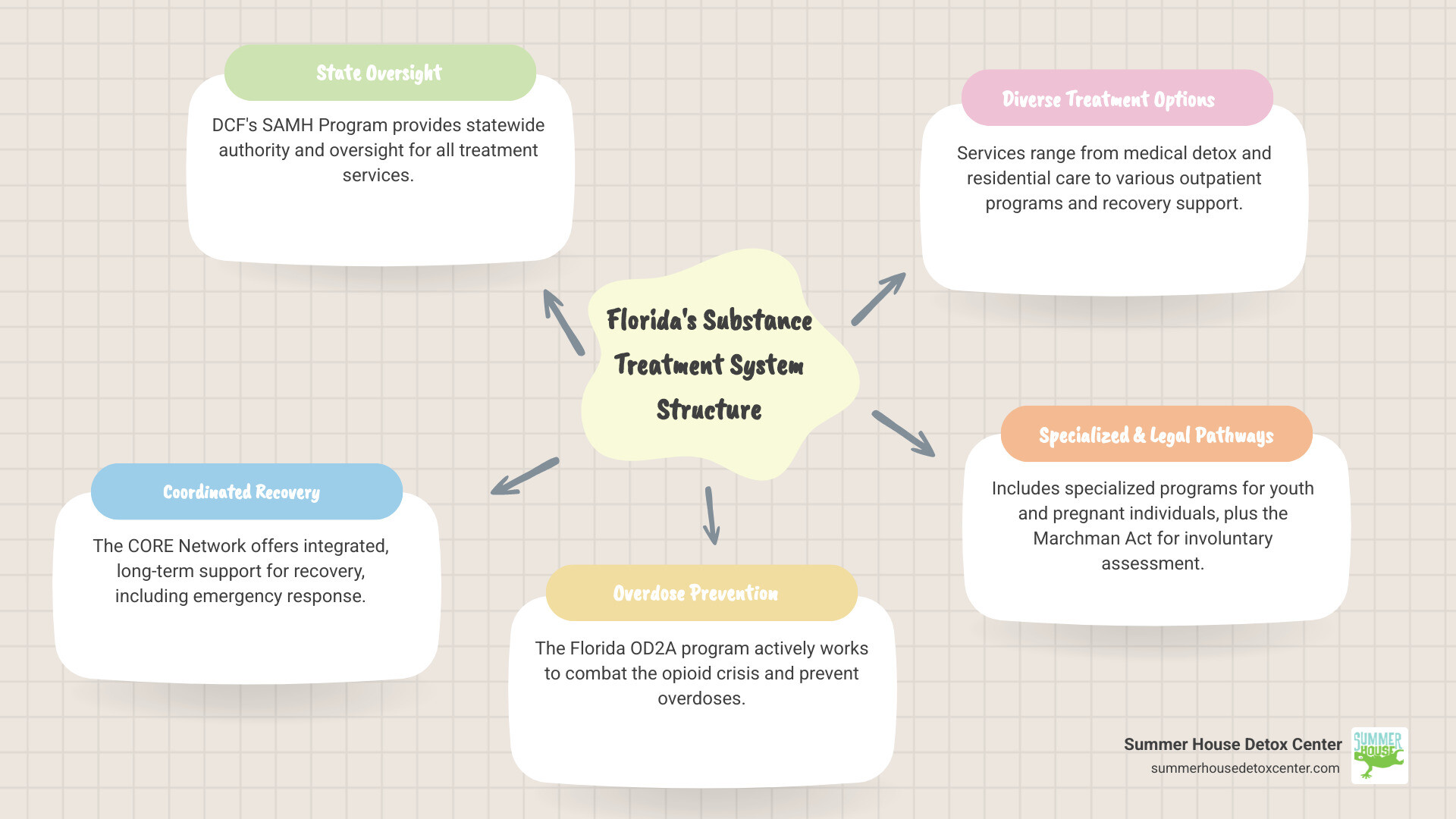
- State Authority: The Department of Children and Families’ Substance Abuse and Mental Health (SAMH) Program oversees all state treatment services.
- Crisis Support: The CORE Network provides coordinated, long-term recovery care.
- Emergency Response: The Florida OD2A program focuses on preventing opioid-related harm.
- Treatment Options: A full range of services is available, from medical detox and residential programs to outpatient care.
- Access Help: Contact Florida Health at 850-245-4444 or visit Hope for Healing Florida for immediate assistance.
This guide explains how Florida’s substance treatment system works, what services you can access, and how to take the first step toward recovery. You don’t have to face this alone—compassionate, professional care is waiting.
Florida’s Coordinated Response to the Substance Abuse Crisis
In Florida, help for addiction comes from a coordinated network of state agencies and community partners. This system treats addiction as a public health crisis, which is critical given the rise in fentanyl-related overdoses. Florida substance treatment involves multiple agencies partnering with local providers, like Summer House Detox Center in Miami, to create a comprehensive system of care from prevention to long-term recovery support.
The Role of the Department of Children and Families (DCF)
The Florida Department of Children and Families (DCF) is the state’s lead authority on substance abuse. Its Substance Abuse and Mental Health (SAMH) Program oversees all related services, ensuring access to care from Miami-Dade to the Panhandle.
The SAMH Program’s work covers three key areas: prevention, treatment, and recovery support. They implement evidence-based prevention programs for youth, oversee a network of community-based treatment providers, and coordinate ongoing support to help individuals maintain sobriety. This network offers everything from medical detox to residential and outpatient care.
The Role of the Florida Department of Health (DOH)
While DCF manages the treatment system, the Florida Department of Health (DOH) tackles the crisis from a public health perspective. The agencies work in partnership, with the DOH’s Florida OD2A program (Overdose Data to Action) at the forefront of preventing opioid-related harm.
The OD2A program collaborates with health systems to reduce unsafe opioid exposure, expand treatment access, and respond to emerging threats by tracking overdose data. The DOH also issues public health advisories, such as the Fentanyl Overdose Safety Alert, to provide life-saving information and warnings about dangerous drugs to communities across Florida.
DOH vs. DCF: Understanding the Overlap
It can be confusing to have two agencies involved, but their roles are distinct. Here’s a simple breakdown of their responsibilities in Florida substance treatment:
| Feature | Florida Department of Children and Families (DCF) | Florida Department of Health (DOH) |
|---|---|---|
| Primary role | State authority for behavioral health; oversees the Substance Abuse and Mental Health (SAMH) Program | Public health agency focused on prevention, surveillance, and overdose response |
| Focus areas | Prevention, treatment, and recovery support; provider network oversight and funding | Harm reduction, overdose prevention, data analysis, and community education |
| Responsibilities | Licenses and funds providers; sets standards; ensures access statewide; coordinates services across levels of care | Runs OD2A; tracks overdose trends; issues alerts like the Fentanyl Overdose Safety Alert; supports naloxone initiatives |
| When to contact | To find or understand treatment services and levels of care, or to locate licensed providers | For public health advisories, prevention resources, and county health department information |
| Examples | Medical detox, residential treatment, outpatient programs delivered through community-based providers | OD2A strategies, fentanyl safety alerts, and public health education campaigns |
Why Florida Substance Treatment Matters Now More Than Ever
Behind Florida’s sunny image, a substance abuse crisis is tearing families apart. Florida substance treatment has become a vital lifeline for people struggling with addiction in Miami, Fort Lauderdale, and across the state.
Overdose deaths have skyrocketed, with the synthetic opioid fentanyl at the heart of the epidemic. It’s often mixed into other drugs, turning a manageable high into a potentially fatal dose. This crisis affects every community in Florida.
But there is hope. Whether you’re seeking help for yourself or a loved one, Florida has built a comprehensive treatment network. Key components include:
- The Substance Abuse and Mental Health (SAMH) Program, which oversees all statewide treatment services.
- The Florida CORE Network, which coordinates long-term recovery support.
- The Florida OD2A program, which works to prevent opioid-related harm.
This means help is closer than you think. From medical detox to outpatient care, programs are available for your specific needs. Contact Florida Health at 850-488-0595 or visit Hope for Healing Florida to get started.
This guide explains the Florida substance treatment system and how to take the first step. You don’t have to face withdrawal fears or past failures alone. Compassionate, professional care is waiting.
Florida’s Coordinated Response to the Substance Abuse Crisis
When seeking help for substance abuse in Florida, you’re not alone. The state has built a coordinated network of agencies and community partners to get people the help they need. This multi-layered approach treats addiction as a public health crisis, which is more important than ever with fentanyl-related overdoses on the rise.
The Florida substance treatment system unites state agencies and local providers to create a safety net for prevention, treatment, and long-term recovery, ensuring comprehensive care is accessible everywhere from Miami-Dade County to the Panhandle.
The Role of the Department of Children and Families (DCF)
The Florida Department of Children and Families (DCF) is the backbone of the state’s treatment efforts. Its Substance Abuse and Mental Health (SAMH) Program is the official state authority overseeing all substance abuse and mental health services in Florida.
The SAMH Program ensures services are accessible statewide, funds youth prevention programs, coordinates treatment through community-based providers, and supports ongoing recovery. By partnering with licensed facilities, DCF works to ensure families can find quality care, from medical detox to therapy, when they need it most.
The Role of the Florida Department of Health (DOH)
While DCF manages treatment infrastructure, the Florida Department of Health (DOH) addresses the crisis from a public health angle, working to prevent overdoses before they happen.
The DOH’s Florida OD2A program (Overdose Data to Action) is at the forefront of fighting the opioid epidemic. It partners with health systems to reduce dangerous opioid exposure and expand treatment access by analyzing data and responding to threats. The DOH also issues timely Fentanyl Overdose Safety Alerts to inform communities and save lives.
DOH vs. DCF: Understanding the Overlap
Florida needs both agencies because they serve complementary roles. DCF is the state authority for the Florida substance treatment system, responsible for licensing facilities, funding providers, and ensuring treatment reaches those in need. Any licensed treatment program in Florida operates under DCF’s framework.
DOH focuses on public health protection. It tracks overdose data, issues health alerts, and runs prevention campaigns. Its OD2A program uses data-driven strategies to prevent overdoses.
In short: DCF builds and maintains the treatment system for individuals who need it, while DOH works on community-wide prevention and harm reduction. Together, they create a comprehensive response that addresses both immediate treatment needs and long-term prevention.
The Path to Recovery: A Look at Treatment Components
Addiction is a complex but treatable disease. Like other chronic conditions, it responds to comprehensive, individualized care. Effective Florida substance treatment programs tailor their approach to each person’s unique journey, combining medical intervention, therapy, and ongoing support.

Medically Supervised Detoxification
Detoxification is the essential first step. When you stop using a substance, your body goes through withdrawal, which can be uncomfortable and even dangerous. Attempting to detox alone from alcohol, benzodiazepines, or opioids is risky. Professional medical support is critical for a safe transition.
At Summer House Detox Center in Miami, we provide personalized, medically supervised detox focused on your comfort and safety. Our experienced team uses proven clinical procedures to manage withdrawal symptoms, ease cravings, and support you through the process. Professional Drug and Alcohol Detox in Miami, FL provides the oversight needed for a safe start. For those seeking Alcohol Detox Florida, a supportive environment is key to success.
Counseling and Treatment Services
After detox, the deeper work of addressing the why behind substance use begins. Florida substance treatment programs offer comprehensive counseling to build coping skills and create a foundation for recovery. This includes:
- Assessment: Clinicians evaluate your substance use history and mental health to create a personalized treatment plan.
- Case Management: Coordinates support for practical needs like appointments or housing.
- Individual Therapy: A confidential space to explore triggers, process trauma, and develop strategies for sobriety.
- Group Counseling: Provides connection and healing by sharing experiences with others who understand.
- Family Therapy: Helps repair relationships and build a supportive home environment.
Treatment is offered in various settings, from 24/7 residential programs to flexible outpatient settings. Finding a program that offers the right blend of therapeutic approaches, like those available for Drug Rehab Miami or Alcohol Treatment in Florida, is crucial for lasting healing.
Medication-Assisted Treatment (MAT) and Recovery Support
For opioid or alcohol use disorders, Medication-Assisted Treatment (MAT) can be a game-changer. MAT combines FDA-approved medications (like buprenorphine or naltrexone) with counseling. It is a highly successful, evidence-based method for reducing cravings and preventing relapse, allowing your brain to heal while you develop recovery skills.
Access to MAT is expanding in Florida. The state’s 2023/2024 Methadone Needs Assessment identified a need for more clinics, including three in Miami-Dade County, reflecting the local demand. Ongoing recovery support is also vital. This includes transitional housing, peer counseling, and support groups. Florida’s CORE Network exemplifies this commitment, treating addiction as a chronic disease that requires continuous, coordinated care to help you build a life worth staying sober for.
Navigating the Florida Substance Treatment System
Finding the right help can feel overwhelming, but Florida substance treatment offers a range of options to meet you where you are. From intensive, 24/7 care to flexible approaches, there is a path forward. Let’s break down the available levels of care and specialized programs.

Levels of Care: Inpatient vs. Outpatient
Florida’s treatment system offers different levels of care to fit individual needs:
- Inpatient/Residential Services: This is the highest level of support, with 24/7 care in a live-in facility. It’s ideal for severe addiction or for those needing a safe environment away from triggers. Medically supervised detox, like that offered at Summer House Detox Center in Miami, is often the first step. Our guide to Miami Rehab Centers can help you explore options.
- Partial Hospitalization Programs (PHP): Also called “day treatment,” PHP offers intensive therapy for several hours a day, five to seven days a week, while you return home or to a sober living environment at night.
- Intensive Outpatient Programs (IOP): IOP provides structured therapy for fewer hours per week than PHP, allowing you to maintain work or family commitments.
- Outpatient Services: The most flexible option, involving regular therapy sessions while living at home. It’s suitable for less severe issues or as a step-down from a higher level of care.
Choosing the right level depends on addiction severity, mental health needs, and your home environment. As highlighted in Why South Florida is Leading the Way in Effective Detox Programs, many facilities offer a continuum of care to help you transition smoothly as your needs change.
Specialized Programs for Specific Populations
Effective Florida substance treatment recognizes that different people have different needs:
- Youth Prevention Programs: Proactive programs educate young people on the risks of substance use and teach healthy coping skills.
- Pregnant Individuals: Specialized services provide medical care and counseling custom to the unique challenges pregnant women face, protecting both mother and baby.
- Co-occurring Mental Health Disorders: Also called dual diagnosis, this is when addiction coexists with conditions like depression or anxiety. Effective treatment must address both simultaneously. Facilities offering Miami Substance Abuse Treatment prioritize integrated care to treat the whole person.
Understanding the Marchman Act
When a person’s addiction prevents them from recognizing their need for help, Florida’s Marchman Act provides a legal pathway for intervention. This act allows family to seek involuntary assessment and treatment for a loved one who has lost self-control and is a danger to themselves or others.
The process can lead to a court-ordered assessment and stabilization. While it involves the legal system, the goal is compassionate: to protect someone from the consequences of their addiction when they cannot do it themselves. For many Florida families, it has been a lifesaver.
Frequently Asked Questions about Florida Substance Treatment
Navigating the path to recovery can bring up many questions. Here are straightforward answers to some of the most common questions about Florida substance treatment to help you move forward with confidence.
How do I find licensed treatment facilities in Florida?
Florida provides several reliable resources to find quality, licensed care:
- FindTreatment.gov: A confidential, anonymous tool from the Substance Abuse and Mental Health Services Administration (SAMHSA) to locate programs in Florida and nationwide.
- DCF Licensed Provider Search: The Florida Department of Children and Families website has a searchable list of licensed providers by area.
- Hope for Healing Florida: This state initiative simplifies the process of finding mental health and substance abuse resources.
Always verify a facility’s credentials and licensing. Summer House Detox Center is fully licensed and staffed by experienced medical professionals who understand the recovery journey.
What resources are available for co-occurring mental health issues?
It is very common for addiction to coexist with mental health conditions like anxiety or depression. This is known as a dual diagnosis or co-occurring disorder. It is critical to treat both conditions at the same time for recovery to be successful.
Florida substance treatment programs offer integrated care for dual diagnosis. The state’s SAMH Program oversees services for individuals with both challenges. Many Miami and Florida facilities provide programs that combine therapy and medication management to treat the whole person. At Summer House Detox Center, we address co-occurring conditions during stabilization and help connect you to ongoing integrated care.
What is the CORE Network?
Florida’s Coordinated Opioid Recovery (CORE) Network is an innovative approach that treats substance use disorder as a chronic disease requiring ongoing care. It applies the same philosophy of continuous support used for conditions like diabetes or heart disease to addiction.
The CORE Network integrates emergency services, medical care, and behavioral health into a coordinated system. This creates a seamless pathway from crisis intervention to long-term recovery, disrupting the cycle of relapse. The network’s emphasis on long-term recovery support ensures that if an overdose occurs, the individual is connected to comprehensive care, not just emergency stabilization. You can learn more at Florida’s CORE Network.
Conclusion
Florida’s coordinated Florida substance treatment system—from the oversight of the DCF and DOH to the various levels of care—is designed to help people find their way back from addiction. We’ve explored how treatment works, from medically supervised detox to counseling and long-term recovery support. Healing is happening every day across Miami and the Sunshine State.
Addiction is a treatable disease, but taking the first step is often the hardest. Fears about withdrawal and uncertainty about the future can feel overwhelming. But in Florida, and especially in Miami, you have access to personalized, medically supervised care that prioritizes your comfort, dignity, and safety.
At Summer House Detox Center, our experienced staff, many in recovery themselves, understand what you’re going through. We’ve seen countless individuals leave with hope restored. The path isn’t always straight, but with compassionate, professional support, it is navigable.
The resources discussed, from the Marchman Act to the CORE Network, exist because your recovery matters. As we’ve explored in Why Choose Florida for Opiate Detox, our state offers a robust system to meet you where you are. You don’t have to face this alone.
Your story doesn’t end with addiction. It begins again with recovery. Reach out today to take the first step toward a healthier life.
