
Understanding Your Path Through Drug Withdrawal
Drug withdrawal treatment is the medical and psychological care that helps you safely stop using substances after your body has become dependent. Abruptly stopping heavy drug or alcohol use can cause severe and sometimes dangerous symptoms, which is why professional treatment is essential.
Key aspects of drug withdrawal treatment include:
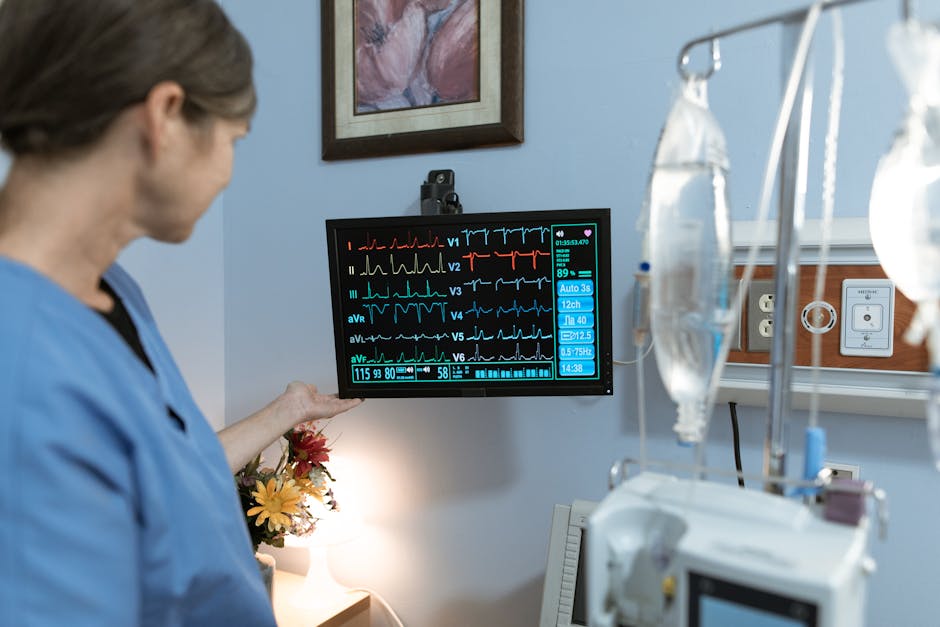
- Medical Supervision: 24/7 monitoring of vital signs to manage dangerous complications like seizures or dehydration.
- Medication: FDA-approved drugs to ease withdrawal symptoms and reduce cravings.
- Variable Timelines: Treatment duration typically lasts 5-10 days but varies by substance and usage history.
- The First Step: Detox clears substances from your body, but it’s just the beginning of long-term recovery.
- Improved Outcomes: Medical detox significantly reduces relapse risk and prevents life-threatening complications.
If you’re in Miami or South Florida, you’re not alone. The Centers for Disease Control and Prevention reported that in 2018, over 11% of Americans 12 and older used illicit substances. That same year, about 808,000 people used heroin, and 11.4 million misused prescription pain relievers.
The good news is that withdrawal doesn’t have to be dangerous or faced alone. With proper medical care, the process is manageable and serves as the first step toward lasting recovery. South Florida is a hub for addiction recovery, offering experienced facilities and a supportive community. Professional withdrawal treatment provides the medical expertise and compassion you deserve during this vulnerable time.
What is Drug Withdrawal? Understanding the Body’s Response
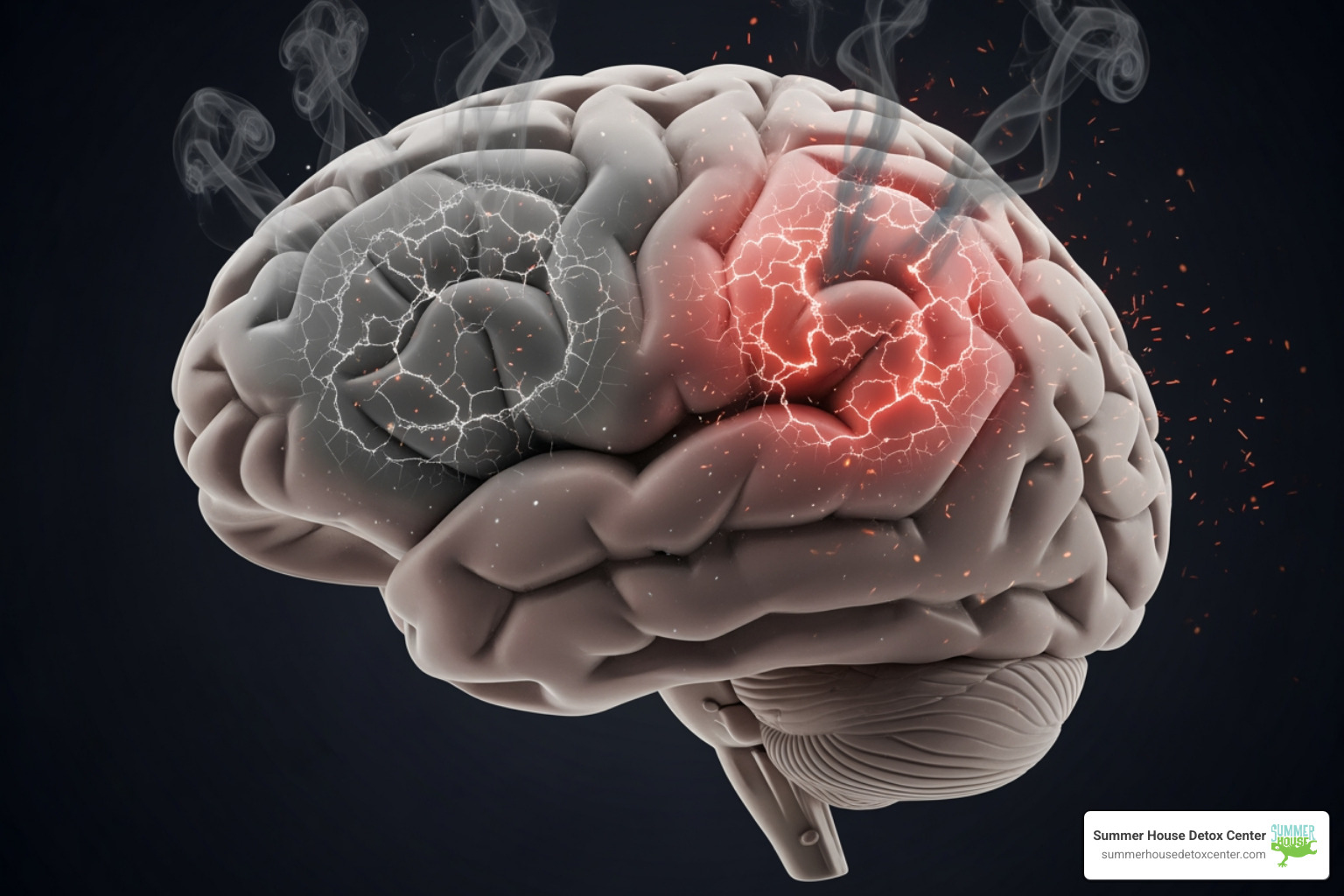
When you use drugs or alcohol regularly, your brain chemistry adapts to their presence. This is called physical dependence. Your brain’s chemical messengers, or neurotransmitters, adjust their function to maintain balance (homeostasis) with the substance in your system.
When you suddenly stop or reduce your intake, your brain is thrown off balance. It scrambles to function without the substance it has come to rely on, creating a cascade of physical and psychological symptoms. This process is drug withdrawal. It’s a biological response, not a sign of weakness. As we explore in The Inner Workings of Addiction: Why Can’t We Be Rational?, these changes are neurological and beyond conscious control.
Common Withdrawal Symptoms to Watch For
Withdrawal can feel like a severe flu, but with intense psychological distress. Symptoms vary but often follow a general pattern.
Early symptoms (within hours of last use) can include:
- Restlessness and anxiety
- Muscle aches and sweating
- Racing heart and insomnia
As withdrawal progresses, symptoms may intensify to include:
- Severe nausea, vomiting, and diarrhea, leading to dehydration
- Intense muscle and bone pain
- Chills, fever, and dilated pupils
The psychological symptoms are equally challenging, featuring intense cravings, panic attacks, and severe depression. These symptoms can be dangerous without medical supervision. For more details, see What Are the Symptoms of Opiate Withdrawal?
This process occurs because your body develops tolerance, requiring more of a substance for the same effect. Underneath, your brain has adapted its chemical production, creating physical dependence. Withdrawal is the difficult, uncomfortable, and sometimes risky process of your body re-learning to function without the drug. This is a medical condition, not a moral issue, as discussed in Why Addiction Is Not a Moral Failing.
Opiate vs. Opioid Withdrawal: What’s the Difference?
You may hear the terms “opiate” and “opioid” used interchangeably. While there’s a chemical distinction, it doesn’t change the withdrawal experience.
- Opiates are natural drugs from the opium poppy (e.g., morphine, heroin).
- Opioids are synthetic or semi-synthetic drugs that mimic opiate effects (e.g., oxycodone, fentanyl, methadone).
From a withdrawal standpoint, both opiates and opioids behave almost identically. They bind to the same brain receptors, create similar dependence, and produce nearly identical withdrawal symptoms. Therefore, the drug withdrawal treatment approach is fundamentally the same. At Summer House Detox Center in Miami, our Opiate Detox Treatment programs are designed to manage withdrawal from all of these substances with expert medical care and compassion.
The Withdrawal Timeline: What to Expect and When
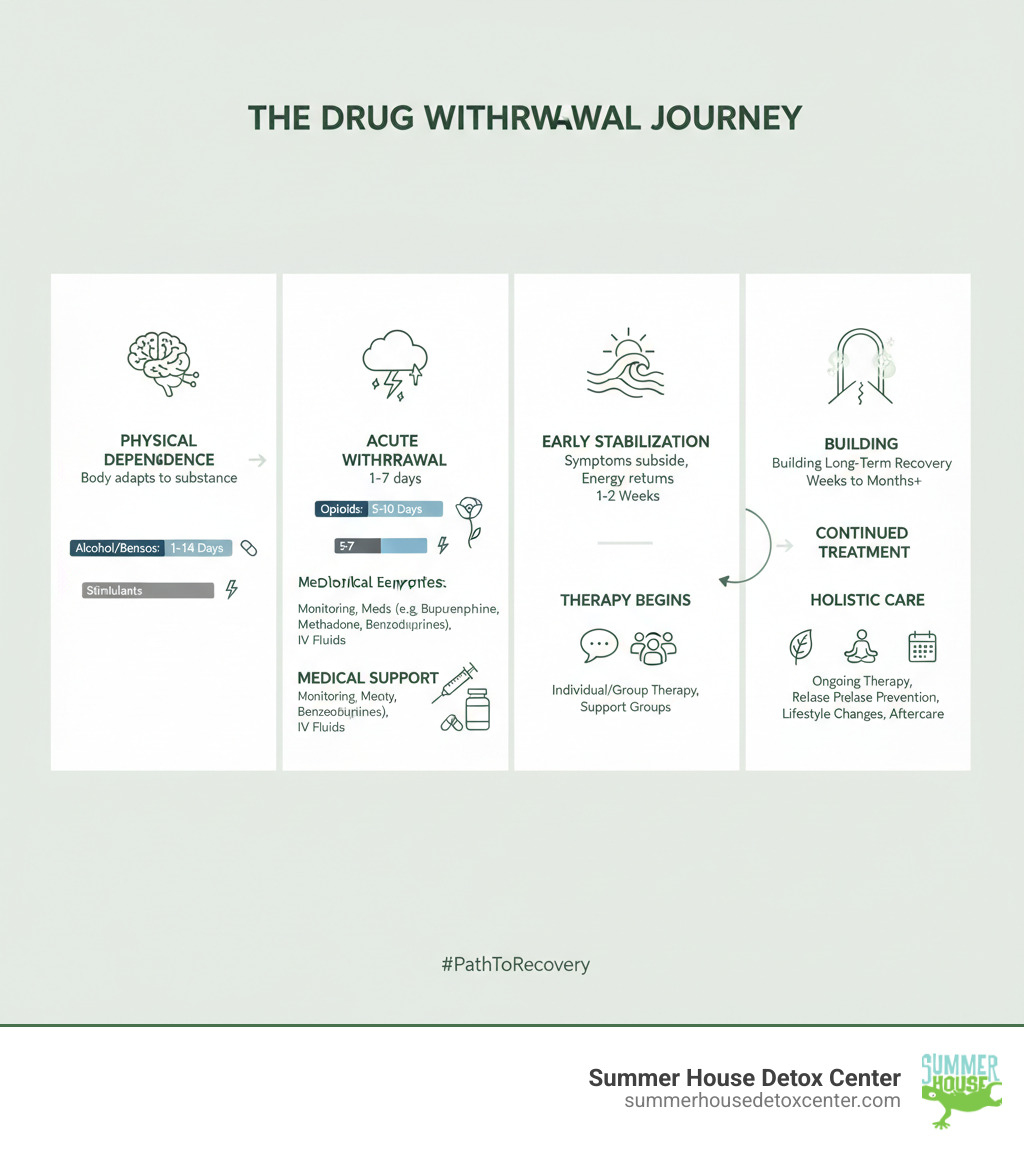
One of the first questions people ask is, “How long will this last?” The withdrawal timeline is personal and depends on the specific drug, duration and level of use, and your overall health. While we can provide general guidelines, your journey may differ.
It’s also important to know about Post-Acute Withdrawal Syndrome (PAWS), where psychological symptoms like mood swings, anxiety, and insomnia can linger for weeks or months after detox. This is a normal part of the brain’s healing process and highlights why detox is just the first step. Learn more in How Long Does It Take to Withdraw From Opiates?.
Short-Acting vs. Long-Acting Opioids
The drug’s half-life, or how long it stays in your system, is a key factor in the withdrawal timeline.
-
Short-acting opioids (heroin, fentanyl, oxycodone) leave the body quickly. Symptoms can begin 8-24 hours after the last use, peak within a few days, and typically resolve in 4-10 days. Fentanyl withdrawal can be particularly rapid and intense, requiring specialized medical support like that offered at our Miami facility.
-
Long-acting opioids (methadone) stay in the system longer. Symptoms usually appear 12-48 hours after the last dose, and the withdrawal period is often longer, lasting 10-20 days. This extended timeline makes a medically supervised taper crucial. For guidance, see Best Way to Get Off Methadone.
Alcohol and Benzodiazepine Withdrawal
Withdrawal from alcohol and benzodiazepines can be life-threatening without medical care, a common need we address here in South Florida.
-
Alcohol withdrawal usually starts 6-24 hours after the last drink, with symptoms peaking at 36-72 hours and lasting 2-10 days. The primary danger is the risk of seizures and Delirium Tremens (DTs), a severe condition with a high mortality rate if untreated. This is why at-home alcohol detox is never recommended. Our Alcohol Detox Timeline provides a day-by-day breakdown.
-
Benzodiazepine withdrawal can be even more prolonged. Symptoms may begin 1-4 days after the last dose, depending on the specific drug (e.g., Xanax vs. Valium). The acute phase can last two weeks, but some symptoms may persist for months. Abruptly stopping can cause seizures, making a slow, medically supervised taper essential. For more, visit How Long Does Benzo Withdrawal Last?.
No matter the substance, professional medical supervision makes the process safer and more manageable.
The Risks of Unmanaged Withdrawal
Attempting withdrawal without professional medical care is not just uncomfortable—it can be dangerous and even life-threatening. The body’s reaction to the sudden absence of a substance is unpredictable.
Key medical risks include:
- Dehydration: Persistent vomiting, diarrhea, and sweating can lead to a rapid loss of fluids, requiring medical intervention.
- Seizures: A critical risk, especially with alcohol and benzodiazepine withdrawal, which can be fatal without immediate medical care.
- Hallucinations: Frightening visual, auditory, or tactile hallucinations can occur, particularly in severe alcohol withdrawal.
- Aspiration: Vomiting while semi-conscious can cause material to enter the lungs, leading to serious infections like pneumonia.
- Psychological Distress: Intense anxiety, paranoia, depression, and suicidal thoughts are common and can be overwhelming without professional support.
Dangers of At-Home or “Cold Turkey” Detox
Detoxing at home might seem private and convenient, but the risks are immense. The physical and psychological pain of “cold turkey” withdrawal is often so unbearable that most people relapse. This isn’t a failure of willpower; it’s a predictable response to an overwhelming physical crisis.
Without medical support, there is no one to administer IV fluids, manage seizures, or provide psychological support during a crisis. This is why Why Medical Detox Is a Vital First Step in Recovery is so critical. Be wary of “at-home detox kits,” which are often ineffective and create a false sense of security. Learn the truth in Are At-Home Opiate Detox Kits Safe?.
Overdose: The Most Serious Complication
The period immediately following detox carries the highest risk of a fatal overdose. During withdrawal, your body’s tolerance to the drug plummets. If you relapse, a dose that was once normal can now be lethal. Most opiate overdose deaths occur in people who have recently detoxed. This tragic irony underscores why professional drug withdrawal treatment must be followed by ongoing recovery support. For more on this risk, read Is Opiate Withdrawal Deadly?.
Co-Occurring Mental Health Disorders
Substance use is often intertwined with mental health conditions like anxiety and depression. During withdrawal, these underlying issues can intensify as the brain’s chemistry is in upheaval. Comprehensive drug withdrawal treatment must address both addiction and mental health simultaneously. At Summer House Detox Center, our Dual Diagnosis Rehab programs treat the whole person, providing the best foundation for lasting recovery.
Professional Drug Withdrawal Treatment: A Path to Safe Recovery
Given the dangers of unmanaged withdrawal, professional drug withdrawal treatment is the safest and most effective path forward. This process, known as Withdrawal Management (WM), provides the medical and psychological care needed to steer this intense experience safely and with dignity.

Our Miami facility offers personalized, medically supervised detox focused on your comfort and wellbeing. With 24/7 medical care, our trained professionals monitor your vitals and manage symptoms, ensuring you are never alone. This inpatient setting provides a safe, trigger-free environment where you can focus solely on healing. The supportive recovery community in South Florida makes it an ideal place to begin your journey. Learn more about Why Choose Florida for Opiate Detox?.
Medically-Assisted Treatment (MAT) for Drug Withdrawal Treatment
Medically-Assisted Treatment (MAT) is a cornerstone of modern drug withdrawal treatment. It combines FDA-approved medications with counseling to manage withdrawal. These medications alleviate severe discomfort, reduce intense cravings, and prevent dangerous complications. By stabilizing the body and brain, MAT provides the breathing room needed to begin the psychological work of recovery. This integrated approach dramatically improves the chances of completing detox and moving toward long-term sobriety. For more, see our guide on Understanding Medication-Assisted Treatment.
Common Medications Used in Detox
Medication is custom to your specific needs, depending on the substance of dependence. Our medical team adjusts dosages to ensure your safety and comfort.
- Buprenorphine (Suboxone): A partial opioid agonist that relieves withdrawal symptoms and cravings without producing a high.
- Methadone: A long-acting opioid that prevents withdrawal symptoms and blocks the effects of other opioids.
- Naltrexone: An opioid antagonist that blocks the euphoric effects of opioids and can help reduce alcohol cravings after detox is complete.
- Benzodiazepines: Used to safely manage and taper withdrawal from alcohol and other benzodiazepines, preventing life-threatening seizures.
- Clonidine: A non-opioid medication that helps manage physical symptoms like sweating, muscle aches, and anxiety.
These medications are administered under strict medical supervision. For a deeper look, check out Which Medications Are Used in Opiate Detox?.
The Role of Counseling and Support in Effective Drug Withdrawal Treatment
While medication addresses the physical crisis, counseling is vital for emotional and psychological healing. Once you are stable, therapy becomes a cornerstone of your recovery.
- Individual Therapy helps you understand the roots of addiction and develop healthy coping skills.
- Group Support connects you with peers, reducing isolation and building a sense of community.
- Family Counseling works to repair relationships and create a supportive home environment.
This holistic approach prepares you for long-term success by addressing the behaviors and emotions behind substance use. This is why we emphasize The Role of Therapy in Detox as a crucial part of our programs in Miami.
Frequently Asked Questions about Drug Withdrawal Treatment
What is the prognosis for individuals undergoing opioid withdrawal?
The prognosis is generally very good for those who complete professional drug withdrawal treatment and commit to long-term care. While the detox process is medically manageable, the real challenge is preventing relapse afterward. Your body’s tolerance to the drug will be significantly lower, making overdose a serious risk if you return to use. Detox cleanses the body, but sustained recovery requires ongoing therapy, support groups, and a strong aftercare plan.
Can opioid withdrawal be managed at home?
We strongly advise against it. While not always life-threatening like alcohol withdrawal, at-home opioid detox is uncomfortable and carries a very high risk of relapse. The severe physical and psychological distress often becomes unbearable. Relapsing after your tolerance has dropped can easily lead to a fatal overdose. The safest and most effective option is medical supervision in a facility like a Detox Center in South Florida.
How long does drug detox last?
The duration of detox varies based on the substance, usage history, and individual health, but most acute programs last 5 to 10 days. Withdrawal from short-acting opioids (heroin, oxycodone) and alcohol typically falls within this range. Long-acting opioids (methadone) and benzodiazepines can take longer, often requiring a gradual taper over 10 to 20 days or more. Our medical team in Miami creates a personalized plan based on your unique needs, not a fixed calendar.
Your First Step to Recovery in Miami
Facing drug withdrawal treatment is a monumental step, but you do not have to do it alone. Here in Miami, our team at Summer House Detox Center understands what you’re going through, as many of us have walked this path ourselves. This combination of lived experience and medical expertise creates a space where you are not just treated, but truly understood.
Detox is the essential first step of your healing journey. It lays the foundation for recovery by clearing your system and stabilizing your body and mind. You cannot build lasting sobriety on unstable ground.
Our program is built on personalized care, 24/7 medical supervision, and a comfortable, trigger-free environment. We treat every client with the dignity they deserve. South Florida’s warm climate and robust recovery community provide an ideal setting to begin this new chapter.
If you’re ready to break free from addiction, we are ready to walk with you. Thousands have taken this step and found lasting recovery. You can too. Begin your recovery with our comprehensive detox services and let us help you build the foundation for a healthier, substance-free life. Your story begins again with recovery.
