
Understanding Alcohol Detox Program Length: A Quick Answer First
Alcohol detox program length is one of the most important things to understand before starting your recovery journey. Here’s a fast overview:
Typical Alcohol Detox Timelines at a Glance:
| Severity | Detox Duration | Key Risks |
|---|---|---|
| Mild | 3-5 days | Anxiety, tremors, insomnia |
| Moderate | 5-7 days | Elevated blood pressure, confusion |
| Severe | 7-10 days | Seizures, delirium tremens (DTs) |
- Symptoms usually begin 6-12 hours after the last drink
- Symptoms peak between 24-72 hours
- Delirium tremens can appear 48-72 hours after stopping
- Most people are medically stable within 3-7 days
- Some protracted symptoms can linger for weeks or months
If you or someone you love is weighing the decision to stop drinking, one of the first questions that comes up is simple and completely understandable: How long is this going to take?
The honest answer is that detox length is personal. It depends on how long you’ve been drinking, how much, your age, your overall health, and whether other substances are involved. There’s no single clock that runs the same for everyone.
What is consistent is this: alcohol withdrawal is one of the most medically serious types of drug withdrawal. Unlike many substances, stopping alcohol abruptly can be life-threatening without proper care. That’s why understanding the process — and getting the right support — matters so much.
At Summer House Detox Center in Miami, FL, we see people at every stage of alcohol dependence. Some need a few days of careful monitoring. Others need a more extended, closely supervised protocol. Either way, knowing what to expect helps reduce fear and makes it easier to take that first step.
This guide breaks down everything you need to know about alcohol detox program length — what drives it, what happens day by day, and what comes next.
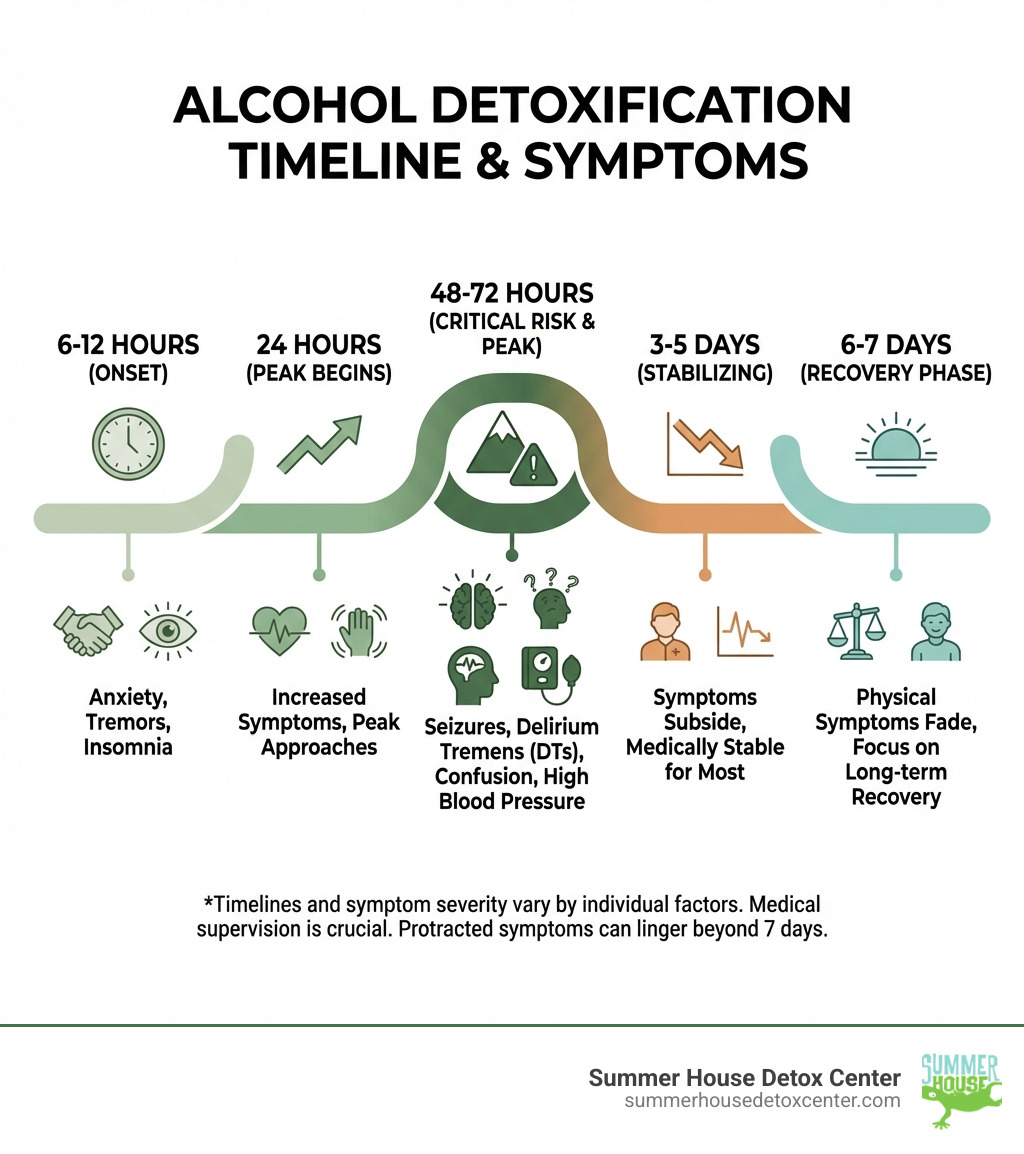
Simple guide to alcohol detox program length:
What is Alcohol Detox and Why is it Necessary?
To understand why the alcohol detox program length varies, we first have to look at what is actually happening inside the body. Alcohol is a central nervous system depressant. When you drink heavily over a long period, your brain adjusts its chemistry to compensate for the “slowing” effect of the alcohol.
Specifically, it suppresses GABA receptors (which help you feel calm) and ramps up glutamate (which keeps you alert). When you suddenly stop drinking, the “brakes” are gone, but the “gas pedal” is still floored. This results in a glutamate rebound, a hyper-aroused state that causes the sweating, shaking, and racing heart associated with withdrawal syndrome.
Medical detox is the process of safely navigating this neurochemical storm. It isn’t just about “toughing it out”; it’s about medical stabilization. Without professional oversight, that hyper-arousal can lead to dangerous complications like seizures or organ failure. At Summer House, we focus on restoring neurochemical balance with dignity. If you are curious about the specifics of our facility, you can learn more about what to expect during your detox experience to ease any anxieties you may have.

Factors Influencing Alcohol Detox Program Length
While the average person completes the acute phase of detox in about a week, several factors can stretch or shorten that window. Think of it like a thumbprint; no two recovery timelines are identical.
- Severity and Duration of Use: Someone who has been drinking a fifth of vodka daily for ten years will likely face a longer, more complex detox than someone who has been binge drinking on weekends for one year.
- Previous Withdrawal History: This is a big one. There is a phenomenon called the kindling effect. Each time you go through alcohol withdrawal and then start drinking again, the next withdrawal tends to be more severe and last longer.
- Polydrug Use: If you are also using benzodiazepines, opioids, or other substances, the detox process becomes more complicated. For example, understanding how long it takes to withdraw from opiates is a different beast entirely, and combining the two requires expert medical balancing.
- Co-occurring Disorders: If there is an underlying mental health condition like depression or PTSD, the psychological symptoms of detox may require a longer period of stabilization.
- Biological Factors: Age, body weight, and liver function play a role. As we age, our bodies process toxins more slowly, which can extend the time it takes to reach a stable state.
In Florida, medical standards for detox are rigorous. At our Miami facility, we assess these factors on day one to determine exactly how long detox takes for your specific situation.
Typical Alcohol Detox Program Length for Mild vs. Severe Cases
To give you a clearer picture, we can categorize the alcohol detox program length based on the intensity of the dependence.
| Severity | Typical Duration | Clinical Milestones |
|---|---|---|
| Mild | 3 – 5 Days | Vital signs remain relatively stable; patient can eat and sleep with minimal aid. |
| Moderate | 5 – 7 Days | Requires medication to manage heart rate and tremors; stabilization usually reached by day 5. |
| Severe | 7 – 10+ Days | High risk for DTs and seizures; requires 24/7 intensive monitoring and significant medical intervention. |
Medical stability is the ultimate goal. We don’t watch the clock; we watch the patient. Once clinical milestones—like stable blood pressure and the absence of tremors—are met, the acute detox phase is considered complete.
How Insurance Impacts Your Alcohol Detox Program Length
Navigating the financial side of recovery can feel like a headache, but there are protections in place. The Affordable Care Act (ACA) and the Mental Health Parity and Addiction Equity Act (MHPAEA) mandate that insurance companies treat substance use disorder treatment with the same weight as other medical conditions.
However, insurance providers often require “medical necessity” to cover an extended stay. This is where clinical documentation becomes vital. Our team at Summer House works closely with providers to ensure they understand the patient’s risk factors. We handle the length of stay and insurance conversations so you can focus on getting better. Pre-certification is usually required, and Florida-specific coverage often depends on the type of plan you carry (HMO vs. PPO).
The Alcohol Detox Timeline: What to Expect Day-by-Day
Knowing the “when” is just as important as the “how long.” The alcohol detox program length is a journey of stages.
- 6-12 Hours After the Last Drink: The first symptoms usually appear. You might feel “the shakes,” anxiety, nausea, or a pounding headache. This is the brain’s first reaction to the absence of alcohol.
- 24-48 Hours: This is often the most uncomfortable window. Symptoms like hallucinations (seeing or hearing things that aren’t there) can begin. Seizure risk is also highest during this period.
- 48-72 Hours: This is the “peak.” For those at risk, this is when Delirium Tremens (DTs) can occur. It is characterized by extreme confusion, fever, and dangerous spikes in blood pressure.
- Day 4-7: For most, the clouds begin to part. Physical symptoms start to recede, though you may still feel exhausted or “foggy.”
During this alcohol withdrawal timeline, we use evidence-based tools like benzodiazepines to prevent seizures and keep you comfortable. Nutritional support—including IV fluids and B-vitamins—is also critical, as chronic alcohol use often leaves the body severely depleted. Preparing for the first 72 hours of detox is the best way to ensure success.
Managing Risks During the Alcohol Detox Program Length
Safety is our primary focus. Alcohol withdrawal is unpredictable. Even someone who seems “fine” on day one can experience a sudden seizure on day two. This is why vitals monitoring—checking your heart rate, blood pressure, and temperature every few hours—is non-negotiable.
We also look out for the alcohol abstinence timeline which includes managing the psychological “crash.” By using vitamin therapy (especially Thiamine) and proper hydration, we significantly reduce the risk of long-term neurological damage.
Beyond Detox: Transitioning to Long-Term Alcohol Treatment
It is a common misconception that detox is the treatment. In reality, detox is just the “clearing of the decks.” It addresses the physical dependence, but it doesn’t touch the reasons why someone started drinking in the first place.
Once you are medically stable, the next step is usually a full rehab program. These are often structured in 30, 60, or 90-day increments. Research consistently shows that staying in treatment for at least 90 days leads to much higher success rates.
Options for treatment after detox include:
- Inpatient/Residential Rehab: Living at a facility for 24/7 support and therapy.
- Partial Hospitalization Programs (PHP): Intensive treatment during the day while returning home or to a sober living environment at night.
- Intensive Outpatient Programs (IOP): 9 to 20 hours of therapy per week, allowing for more flexibility with work or family.
Planning for Long-Term Recovery Success
What happens after you leave our Miami facility? That’s where the real work begins. We help every patient create a relapse prevention plan. This might include moving into a sober living home, joining a 12-step group like AA, or continuing with individual therapy.
Understanding how long your alcohol addiction recovery will last is a mindset shift. It’s not a sprint; it’s a lifestyle change. We often reference the Jellinek Curve, which illustrates the phases of addiction and the subsequent path of recovery, helping patients see that while the descent was hard, the ascent is possible and structured.
Frequently Asked Questions about Alcohol Detox
How long do the worst withdrawal symptoms last?
The peak of physical withdrawal typically occurs between 24 and 72 hours after your last drink. By the fifth or seventh day, most people feel significantly better physically, though psychological cravings and fatigue can last longer.
Is it safe to detox from alcohol at home?
Generally, no. Because alcohol withdrawal can cause sudden seizures and Delirium Tremens—which has a mortality rate of up to 5% even with modern medicine—detoxing at home is extremely risky. A medical setting provides the “safety net” of immediate intervention.
What medications are used to shorten detox?
While “shortening” isn’t exactly the goal (safety is), medications like benzodiazepines (Valium, Librium) manage the symptoms so the body can heal faster. Other medications like acamprosate or naltrexone may be started toward the end of detox to help reduce long-term cravings.
Conclusion
The alcohol detox program length is a vital piece of the recovery puzzle, but it’s only the beginning. Whether your stay is five days or ten, the goal is the same: to get you through the dangerous “rebound” period safely, comfortably, and with your dignity intact.
At Summer House Detox Center, our Miami-based team provides a bridge from the chaos of addiction to the stability of sobriety. With a staff that understands the journey—many from personal experience—we offer more than just medical monitoring; we offer a path forward.
Don’t let the fear of withdrawal keep you trapped. Start your recovery journey at our Miami facility today and take back control of your time and your life.
