What Are Clonazepam Withdrawal Symptoms?
Clonazepam withdrawal symptoms can range from uncomfortable to life-threatening, and knowing what to expect is the first step toward getting safe help.
Here is a quick overview of the most common symptoms:
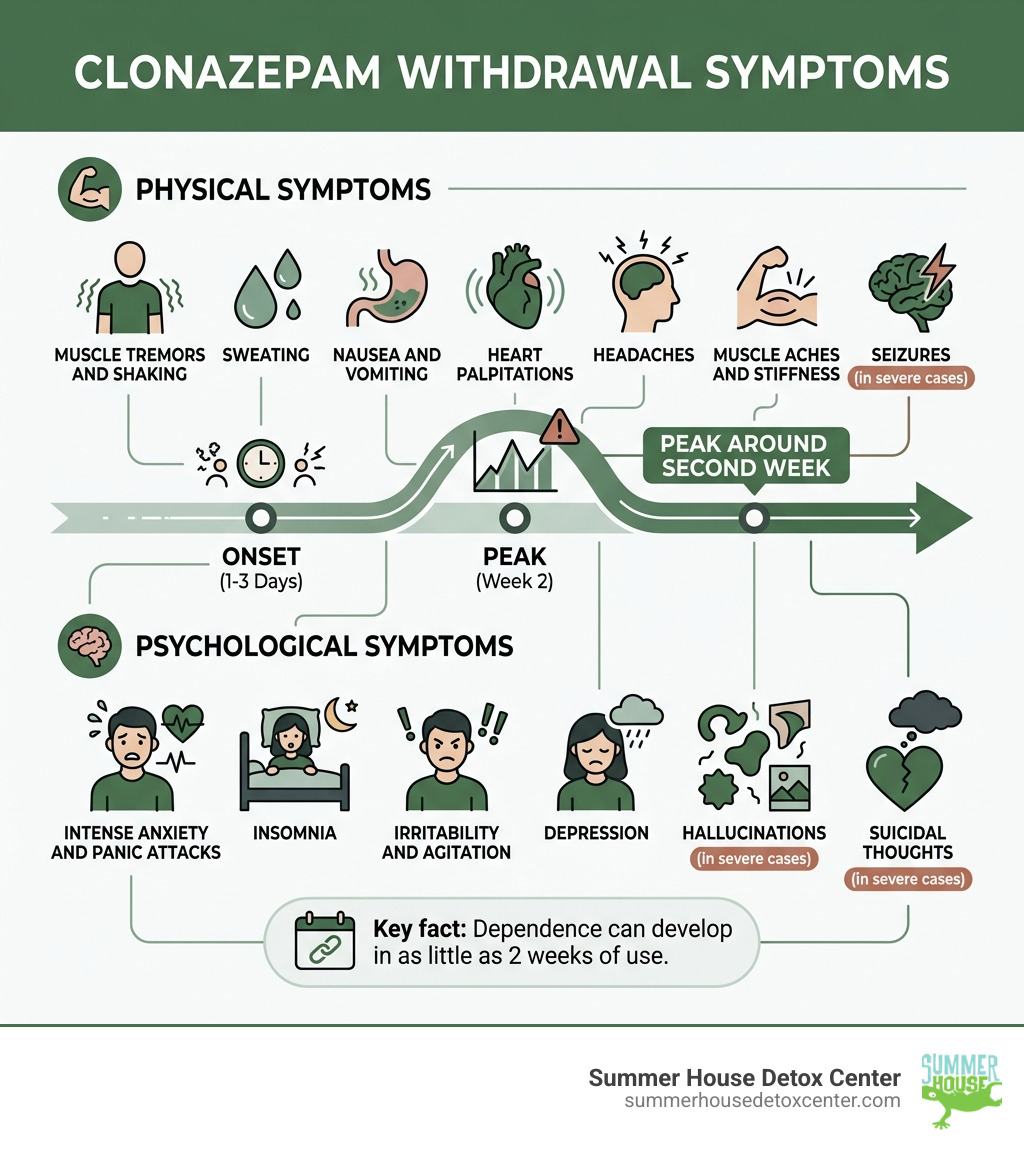
Physical symptoms:
- Muscle tremors and shaking
- Sweating
- Nausea and vomiting
- Heart palpitations
- Headaches
- Muscle aches and stiffness
- Seizures (in severe cases)
Psychological symptoms:
- Intense anxiety and panic attacks
- Insomnia
- Irritability and agitation
- Depression
- Hallucinations (in severe cases)
- Suicidal thoughts (in severe cases)
Key fact: Dependence can develop in as little as 2 weeks of use. Withdrawal symptoms can begin 1–3 days after the last dose and peak around the second week.
Clonazepam — sold under the brand name Klonopin — is a benzodiazepine prescribed to treat seizures, panic disorder, and anxiety. It works by boosting GABA, a brain chemical that calms nerve activity.
The problem? The brain adapts. Over time, it stops producing enough GABA on its own. When you stop taking clonazepam, your central nervous system goes into overdrive — and that’s where withdrawal begins.
For many people in Florida and across the country, this process is frightening, painful, and potentially dangerous without medical support.
This guide breaks down exactly what clonazepam withdrawal looks and feels like, how long it lasts, and how to manage it safely.
Discover more about clonazepam withdrawal symptoms:
Understanding Clonazepam Withdrawal Symptoms

When we talk about clonazepam withdrawal symptoms, we are really talking about a brain trying to find its brakes again. Clonazepam is a central nervous system depressant. It enhances the effects of gamma-aminobutyric acid (GABA), which is the primary inhibitory neurotransmitter in your brain. Think of GABA as the “chill out” signal. When you take Klonopin regularly, your brain gets used to having that extra help and eventually stops working as hard to produce its own calming signals.
If you stop taking the medication suddenly, your brain is left with a massive neurotransmitter imbalance. Without the drug and without enough natural GABA, your nervous system becomes hyper-excitable. This leads to “rebound effects,” where the very symptoms the drug was meant to treat—like anxiety or seizures—return with a vengeance, often much worse than before.
In April 2026, medical experts continue to emphasize that this isn’t just “all in your head.” It is a physiological response. Many people also report stomach and digestive problems when quitting benzos because we actually have GABA receptors in our gut, too. This “second brain” in your digestive tract reacts to the withdrawal just as strongly as the one in your skull.
Common Physical Clonazepam Withdrawal Symptoms
The physical toll of Klonopin withdrawal can be exhausting. Because your nervous system is firing non-stop, your body stays in a “fight or flight” mode. Common physical signs include:
- Muscle Tremors: Involuntary shaking, particularly in the hands.
- Excessive Sweating: Night sweats or cold sweats even when the room is cool.
- Nausea and GI Distress: Vomiting, dry retching, and weight loss are common.
- Heart Palpitations: A racing heart or the feeling that your heart is skipping beats.
- Muscle Pain and Stiffness: Often described as a deep ache or “pins and needles” sensation.
| Symptom Severity | Description | Action Required |
|---|---|---|
| Mild | Headaches, mild sweating, insomnia, restless legs. | Monitor closely; consult a professional. |
| Moderate | Nausea, tremors, increased heart rate, blurred vision. | Medical supervision highly recommended. |
| Severe/Emergency | Seizures, hallucinations, catatonia, psychosis. | Immediate emergency medical intervention. |
Understanding the dark side of benzos means recognizing that these physical symptoms aren’t just a nuisance—they are signs of a body under extreme stress.
Psychological Clonazepam Withdrawal Symptoms
The mental and emotional side of withdrawal is often what people find hardest to endure. When the brain’s calming chemistry is stripped away, the world can feel overwhelming and terrifying.
- Panic Attacks: Sudden, intense waves of fear that can feel like a heart attack.
- Severe Insomnia: The inability to fall or stay asleep, often accompanied by vivid, disturbing dreams.
- Cognitive Fog: Difficulty concentrating, memory problems, and a general feeling of being “spaced out.”
- Hallucinations and Paranoia: Seeing or hearing things that aren’t there, or feeling an extreme sense of distrust.
- Suicidal Ideation: In 2009, the FDA added warnings to Klonopin labels regarding suicidal thoughts, and this risk is heightened during the distress of withdrawal.
Finding your path to freedom through addiction therapy involves addressing these mental health challenges with professional support, rather than trying to white-knuckle through the darkness alone.
The Klonopin Withdrawal Timeline and Duration
One of the most common questions we hear at Summer House Detox Center is, “How long is this going to last?” Because Klonopin is a long-acting benzodiazepine, the timeline is different than it is for shorter-acting drugs like Xanax.
Klonopin has a half-life of roughly 18 to 50 hours. This means it takes a long time for the drug to leave your system entirely. Consequently, you might not feel the full force of withdrawal immediately. It’s a marathon, not a sprint, and understanding how long benzo withdrawal lasts can help you prepare mentally for the journey.
Several factors influence how long it takes to detox from benzodiazepines, including:
- Your average daily dosage.
- How long you have been taking the medication.
- Whether you are using other substances (polydrug use).
- Your age and overall metabolic health.
Acute Phase and Peak Intensity
For most people, the clonazepam withdrawal symptoms follow a predictable pattern during the first few weeks:
- Days 1–3: Early withdrawal begins. You might feel a return of anxiety (rebound anxiety) and some restlessness.
- Days 4–14: This is the “Acute Phase.” Symptoms intensify. This is when physical tremors, nausea, and intense psychological distress are most likely to occur.
- Week 2: This is typically the “Peak.” Symptoms are at their most intense during the second week after your last dose.
- Week 3: For many, the “totality” of the acute withdrawal syndrome begins to subside around day 21, though subtle signs can linger.
During this window, a medically supervised benzodiazepine detox is essential. We focus on keeping you stable while your brain chemistry begins the slow process of recalibration. You can learn more about how the detox process works to ease your mind before starting.
Protracted Withdrawal and PAWS
Unfortunately, for about 10-15% of heavy or long-term users, the symptoms don’t fully vanish after three weeks. This is known as Post-Acute Withdrawal Syndrome (PAWS) or protracted withdrawal.
Protracted symptoms can last for months or, in rare cases, even a year or more. These symptoms are usually less intense than the acute phase but can be incredibly frustrating. They include:
- Paresthesia: Tingling or “crawling” sensations under the skin.
- Persistent Anxiety: A low-level hum of nervousness that lingers for 1–2 years.
- Mood Swings: Sudden bouts of depression or irritability.
- Sleep Disturbances: Difficulty maintaining a regular sleep cycle.
While this sounds daunting, benzo addiction recovery is entirely possible. With the right therapeutic support and healthy coping mechanisms, these lingering symptoms eventually fade as the brain heals.
The Dangers of Quitting Cold Turkey vs. Medical Detox
We cannot emphasize this enough: Do not quit Klonopin cold turkey.
Stopping benzodiazepines abruptly is one of the few types of drug withdrawal that can be fatal. When you suddenly remove the drug that has been suppressing your central nervous system, your brain can experience a “storm” of electrical activity. This can lead to Grand mal seizures, which are life-threatening medical emergencies.
Other risks of unmanaged withdrawal include:
- Catatonia: A state where a person becomes unresponsive and unable to move or speak.
- Psychosis: Losing touch with reality, which can lead to dangerous behavior.
- Severe Dehydration: Caused by persistent vomiting and sweating.
At Summer House Detox Center, we provide essential help for Klonopin withdrawal so you never have to face these risks alone. While some people look into how rapid detox works, we believe a personalized, carefully monitored approach is the safest path to long-term success.
Tapering Strategies and Clinical Support
The gold standard for managing clonazepam withdrawal symptoms is a gradual taper. This involves slowly reducing your dose over time, allowing your brain to adjust in small increments rather than all at once.
A typical tapering schedule might involve:
- Reducing the dose by 0.5mg every two weeks.
- For long-term users (over a year), a slower reduction of about 10% per month is often recommended.
- In some cases, a doctor may switch you to a different long-acting benzodiazepine (like Valium) to make the final steps of the taper smoother.
Benzo withdrawal management is about more than just the schedule; it’s about clinical support. We use various protocols to manage withdrawal effectively, including monitoring vital signs and providing a calm environment. You might wonder why benzos are used in detox for other drugs if they are so addictive—it’s because, under strict medical supervision, they can prevent life-threatening seizures during alcohol or sedative withdrawal. The key is the supervision.
Frequently Asked Questions
Is it safe to detox from Klonopin at home?
In a word: No. Because of the high risk of seizures and severe psychological distress, “DIY” detoxing is dangerous. In Florida, medical standards for addiction treatment emphasize the need for 24/7 monitoring during the acute phase of benzodiazepine withdrawal. At our Miami facility, we ensure that if a medical emergency like a seizure occurs, help is immediate. Trying to manage this at home leaves you vulnerable to complications that can escalate in seconds. You can read more about the specifics of how professional detox works to see the difference in safety.
How does Klonopin withdrawal differ from Xanax?
The primary difference is the “speed” of the experience. Xanax is a short-acting benzo, meaning withdrawal hits fast—often within 6–8 hours—and peaks quickly. Klonopin is long-acting, so the onset is delayed (1–3 days), and the symptoms tend to last longer. While the symptoms of Xanax withdrawal are similar, the timeline for Klonopin requires more patience and a longer period of medical oversight. If you are switching from one to the other, detoxing from Xanax requires a slightly different clinical approach than Klonopin.
What medications help manage withdrawal?
While tapering the Klonopin itself is the main strategy, other medications can help manage specific clonazepam withdrawal symptoms:
- Clonidine: Often used to help with high blood pressure and anxiety.
- Anticonvulsants: Medications like Keppra can be used to reduce the risk of seizures.
- Antidepressants: To help with the profound low moods that can occur.
- Sleep Aids: Non-benzodiazepine sleep medications can help restore a sleep cycle. Medical professionals use these as part of a comprehensive withdrawal treatment plan to ensure you are as comfortable as possible.
Conclusion
Breaking free from Klonopin is a brave decision, but it isn’t one you should make in isolation. The risks associated with clonazepam withdrawal symptoms are real, but they are manageable when you have a team of experts by your side.
At Summer House Detox Center in Miami, Florida, we specialize in helping people navigate the complexities of benzodiazepine withdrawal with dignity and comfort. Our inpatient facility is designed to feel like a home, providing 24/7 medical supervision from a staff that truly understands the journey of recovery—because many of us have been there ourselves.
We focus on the whole person, not just the symptoms. From the initial taper to the transition into long-term therapy like Cognitive Behavioral Therapy (CBT), we are here to ensure your path to freedom is safe and sustainable.
If you or a loved one are struggling with Klonopin, don’t wait for a crisis to happen. Reach out to our Florida addiction specialists today to learn more about our personalized benzo detox services. Your recovery starts with a single, safe step.
