Beyond the Stigma: Understanding How MAT Transforms Addiction Recovery
Why Medication-Assisted Treatment Is a Life-Changing Path to Recovery
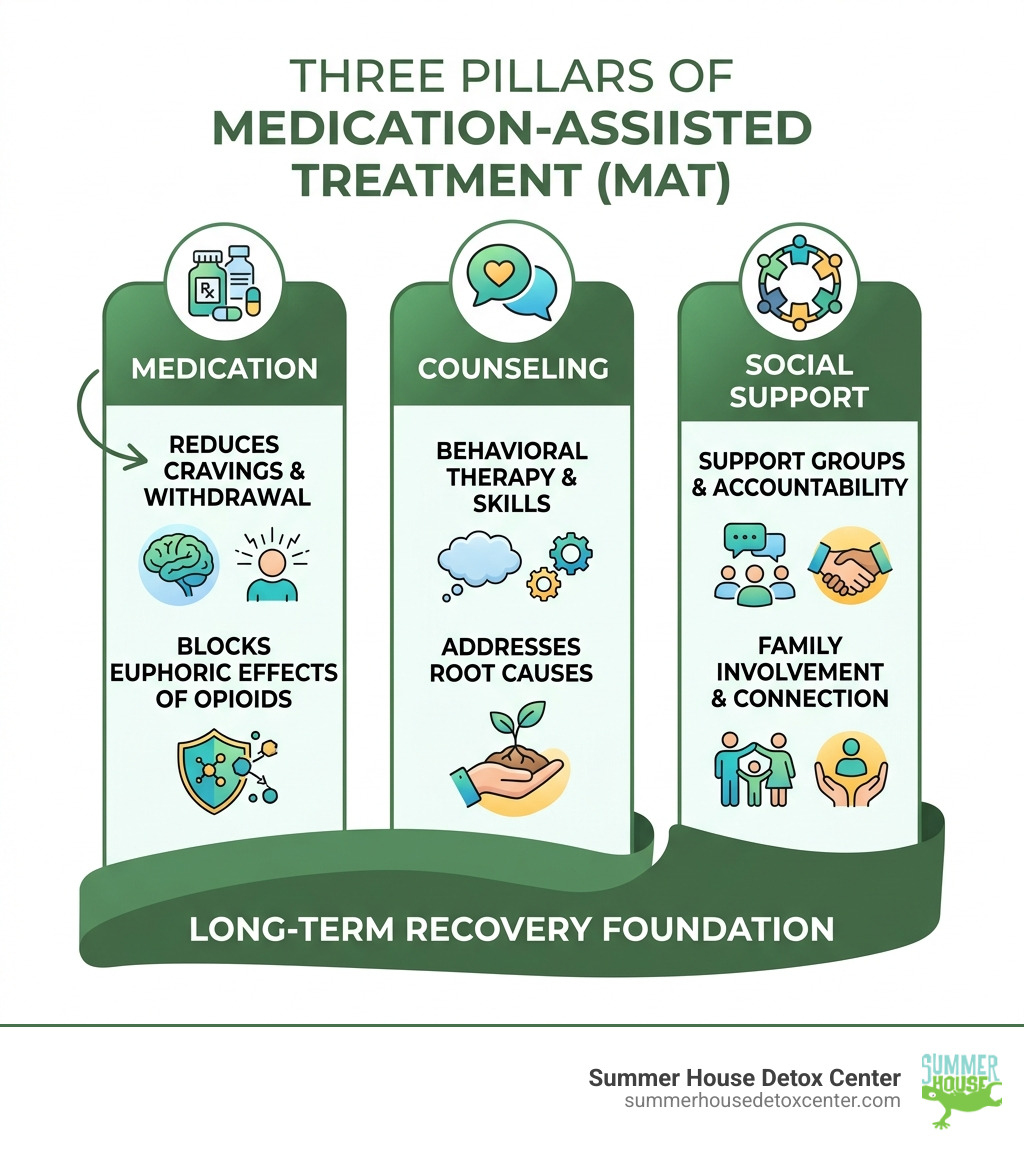
How medication-assisted treatment supports recovery can be understood through three core mechanisms:
- Reduces cravings and withdrawal symptoms so the body can stabilize
- Blocks the euphoric effects of opioids to lower the risk of relapse
- Creates a foundation for behavioral therapy and counseling to address the root causes of addiction
Together, these mechanisms give people a real, science-backed chance at lasting sobriety.
The opioid crisis has touched every corner of Florida. In Miami-Dade County and across the state, families have watched loved ones struggle — not from a lack of willpower, but from a chronic brain disorder that rewires how the mind responds to pain, pleasure, and stress.
By 2015, drug overdoses had already surpassed traffic accidents as the leading cause of accidental death in the United States. Today, an estimated 91 Americans die from an opioid overdose every single day.
Yet despite decades of evidence, one of the most effective tools available — Medication-Assisted Treatment (MAT) — remains deeply misunderstood. Many people still hear “MAT” and think it just means swapping one drug for another. That couldn’t be further from the truth.
MAT combines FDA-approved medications with counseling and support services to treat the whole person — not just the physical symptoms of addiction. It’s the same evidence-based logic we apply to managing diabetes or heart disease. And the results speak for themselves.
If you’ve tried to get sober before and felt like you failed, it’s worth understanding what MAT actually does — and why it might be the missing piece.
Quick how medication-assisted treatment supports recovery terms:
What is Medication-Assisted Treatment and How Does It Work?
At its heart, Medication-Assisted Treatment (MAT) is a clinically driven strategy that uses FDA-approved medications to treat substance use disorders. While it is most famous for its role in fighting the opioid epidemic, it is also highly effective for alcohol use disorder.
The goal of MAT isn’t to keep someone “drugged.” Instead, these medications are designed to normalize brain chemistry. When someone develops a dependency on opioids, their brain’s reward system is essentially hijacked. MAT helps “reset” that system, blocking the euphoric “high” of illicit drugs while relieving the agonizing physical symptoms of withdrawal.
According to the National Institutes of Health (NIH), opioid dependence is a chronic medical brain disorder. Treating it requires a medical solution, much like using insulin for diabetes. By stabilizing the patient, MAT allows them to focus on the psychological work of recovery without being constantly derailed by physical cravings.
| Medication | Type | Primary Use | Administration |
|---|---|---|---|
| Methadone | Full Agonist | Opioid Use Disorder | Daily at a certified clinic |
| Buprenorphine | Partial Agonist | Opioid Use Disorder | Daily (film/pill) or Monthly (injectable) |
| Naltrexone | Antagonist | Opioids & Alcohol | Daily (pill) or Monthly (injectable) |
For a deeper dive into which option might be right for you, check out our guide on Methadone vs Suboxone: How Do They Differ?
Mechanisms of Action in the Brain
To understand how medication-assisted treatment supports recovery, we have to look at the “lock and key” system of the brain. Opioid receptors are the locks, and opioids (like heroin or oxycodone) are the keys.
- Full Agonists (Methadone): These fully activate the opioid receptors. However, because they are long-acting (lasting 24 hours or more), they don’t produce a “high” in people with a tolerance. Instead, they provide a steady state that prevents withdrawal.
- Partial Agonists (Buprenorphine): Think of this like a key that fits the lock but only turns halfway. It satisfies the brain’s physical need for opioids to prevent withdrawal but has a “ceiling effect,” meaning it won’t produce a euphoric high even if you take more of it. It also sticks to the receptors so tightly that it blocks other opioids from getting on.
- Antagonists (Naltrexone): This is like putting a piece of tape over the lock. It doesn’t activate the receptor at all; it simply blocks it. If someone on Naltrexone uses an opioid, they won’t feel anything.
Understanding which medications are used in opiate detox is the first step in choosing a path that fits your biology and lifestyle.
Administration and Safety Protocols
Safety is a cornerstone of MAT. Because some of these medications are controlled substances, they are regulated to prevent misuse.
Methadone is typically dispensed daily through federally registered outpatient programs. This provides a high level of structure, which is often helpful in early recovery. Buprenorphine (often known by the brand name Suboxone) can be prescribed by qualified physicians in an office setting, offering more flexibility for those returning to work or school.
To prevent abuse, Suboxone contains Naloxone. If the medication is taken as directed (dissolved under the tongue), the Naloxone isn’t absorbed. However, if someone tries to inject the film to get high, the Naloxone activates, immediately triggering withdrawal. This built-in safety feature is one reason Suboxone helps with opiate withdrawal symptoms so effectively while remaining safe for home use.
How Medication-Assisted Treatment Supports Recovery Through Science

Recovery isn’t just about stopping drug use; it’s about reclaiming a life. When someone is in the throes of active addiction, their entire day is often dictated by the need to avoid “dope sickness.” This makes it nearly impossible to hold a job, maintain a home, or be present for family.
How medication-assisted treatment supports recovery is by providing neurological stabilization. By suppressing cravings and relieving withdrawal, MAT “quiets the noise” in the brain. This allows the prefrontal cortex—the part of the brain responsible for decision-making and logic—to come back online. For more on this process, read about understanding medication-assisted treatment.
How medication-assisted treatment supports recovery in Miami communities
In Miami and throughout South Florida, the impact of MAT is visible in our public health data. Florida has been hit hard by the fentanyl crisis, but communities that embrace MAT see significant improvements.
Research shows that for every dollar spent on methadone treatment, approximately $12 to $14 is saved in societal costs. This includes reductions in drug-related crime, fewer emergency room visits for overdoses, and decreased transmission of infectious diseases like HIV and Hepatitis C. In Miami-Dade, expanding access to MAT means more parents staying with their children and more residents contributing to the local workforce rather than entering the criminal justice system.
How medication-assisted treatment supports recovery for pregnant women
One of the most vital applications of MAT is for pregnant women with opioid use disorder. In the past, the “standard” was often to put the mother through detox. However, we now know that withdrawal can cause significant stress to the fetus and often leads to relapse, which is far more dangerous.
MAT provides maternal stability. It prevents the “cycle of highs and lows” that can harm fetal development. While babies may still experience Neonatal Abstinence Syndrome (NAS)—a treatable condition where the baby has mild withdrawal after birth—outcomes are significantly better for babies whose mothers were on stable MAT versus those using illicit drugs. MAT supports family preservation by helping mothers stay healthy and capable of caring for their newborns from day one.
The Core Benefits: Why MAT is the Gold Standard for OUD
When we look at the data, MAT isn’t just “an” option; it’s the gold standard. The primary goals of any treatment are survival and long-term success, and MAT outperforms every other method in these categories.
- Improved Survival: Retention in MAT is associated with substantial reductions in the risk of all-cause and overdose mortality.
- Increased Retention: Patients on MAT are significantly more likely to stay in treatment programs compared to those who are not receiving medication.
- Better Life Outcomes: Beyond just staying “clean,” MAT patients show higher rates of employment and better family stability.
To see how these medications fit into the broader picture of sobriety, see our resources on medications and recovery.
Statistical Evidence of Success
The numbers behind MAT are staggering. Consider these facts from recent clinical studies:
- Over 80% of methadone patients who stop treatment prematurely return to heroin use within one year.
- MAT is associated with a 50% or higher reduction in overdose deaths.
- Long-term maintenance with buprenorphine or methadone results in significantly less illicit opioid use than short-term “tapers” or drug-free counseling alone.
Comparing MAT to Non-Medication Approaches
For a long time, the only available option for addiction was “cold turkey” or short-term detoxification. While detox is a necessary first step to clear the body of toxins, it is rarely enough on its own for chronic opioid use.
Non-medication approaches often fail because they don’t address the physical changes in the brain. Once the drugs are out of the system, the brain’s receptors are “hungry” and hypersensitive. This is why relapse rates are so high after a 5-day or 10-day detox.
MAT acknowledges that recovery is a marathon, not a sprint. Long-term maintenance provides the “crutch” the brain needs while it heals. This is why medication-assisted treatment is now considered the most effective path for those with a history of chronic relapse.
Overcoming Barriers and Stigma in Florida’s Recovery Landscape
Despite its success, MAT faces a hurdle that science can’t always solve: stigma. In many circles, there is a persistent myth that people on MAT are “not really sober.”
We need to treat addiction like the chronic illness it is. We don’t tell a person with high blood pressure that they are “cheating” by taking their medication; we celebrate that they are managing their health. The same should apply to those using buprenorphine or methadone to manage their recovery.
Addressing Regulatory and Access Hurdles
For years, getting MAT was difficult due to federal regulations. However, recent changes have made it easier for Floridians to get help.
The removal of the “X-Waiver” (part of the MAT Act) now allows any healthcare provider with a standard DEA registration to prescribe buprenorphine. This means you can often receive treatment from your primary care doctor rather than having to find a specialized clinic. This is especially important for rural areas of Florida where specialized addiction centers may be hours away. Furthermore, most insurance plans, including Florida Medicaid, now offer coverage for MAT services.
The Role of Mental Health and Co-occurring Disorders
Many people struggling with addiction are also dealing with “dual diagnoses”—conditions like depression, anxiety, or PTSD.
How medication-assisted treatment supports recovery for these individuals is by providing a stable baseline. When the physical symptoms of addiction are managed, psychiatric medications and therapies can actually work. You can’t effectively treat a patient’s trauma if they are in the middle of a painful opioid withdrawal. MAT provides the calm necessary for real mental health healing to begin.
Integrating Behavioral Therapy with MAT for Long-Term Success
While the “M” in MAT is important, the “T” (treatment) is equally vital. Medication manages the biology, but therapy manages the behavior.
At Summer House Detox Center, we believe in a “whole-patient” approach. This means combining medication with:
- Cognitive Behavioral Therapy (CBT): To help you identify and change the thought patterns that lead to drug use.
- Peer Support: Connecting with others who have walked the same path.
- Vocational Support: Helping you get back into the workforce.
The Importance of a Comprehensive Recovery Plan
Medication is the foundation, but a comprehensive recovery plan builds the rest of the house. This includes making lifestyle changes, involving family members in the healing process, and ensuring that every patient is treated with the dignity they deserve.
Interestingly, MAT isn’t just for opioids. If you’re wondering what type of medications are used in alcohol treatment, you’ll find that drugs like Acamprosate and Naltrexone serve a similar purpose—reducing the urge to drink and helping the brain return to a state of balance.
Frequently Asked Questions about MAT
Is MAT just replacing one addiction with another?
No. Addiction is characterized by compulsive use, loss of control, and negative consequences. MAT is a controlled, medical application of medication that restores function. People on MAT can drive, work, and raise families without the impairment or “high” associated with drug abuse.
How long do patients typically stay on MAT medications?
There is no “one size fits all” answer. Some people use MAT for a few months to get through the initial stages of recovery, while others may stay on it for years or even a lifetime. The NIH suggests that for many, long-term maintenance is the safest and most effective route to prevent relapse and death.
Can MAT be used for alcohol use disorder as well as opioids?
Yes! Medications like Naltrexone, Disulfiram, and Acamprosate are FDA-approved specifically for alcohol use disorder. They work by either reducing the desire to drink or creating a physical deterrent to alcohol consumption.
Conclusion
Recovery is a journey that requires courage, support, and the right tools. At Summer House Detox Center, we’ve seen how medication-assisted treatment supports recovery by giving our clients the stability they need to start their new lives.
Based in Miami, our facility focuses on a personalized, medically supervised detox experience. We believe that everyone deserves to be treated with dignity and comfort. Our staff—many of whom are in recovery themselves—understand the challenges you’re facing and are here to provide the expert care you need to succeed.
Don’t let stigma or fear stand in the way of your future. Science has provided a path to recovery that works. If you or a loved one is ready to take that first step, we are here to help.
Start your journey with Medication-Assisted Treatment today and see how a medical approach to recovery can change everything.
