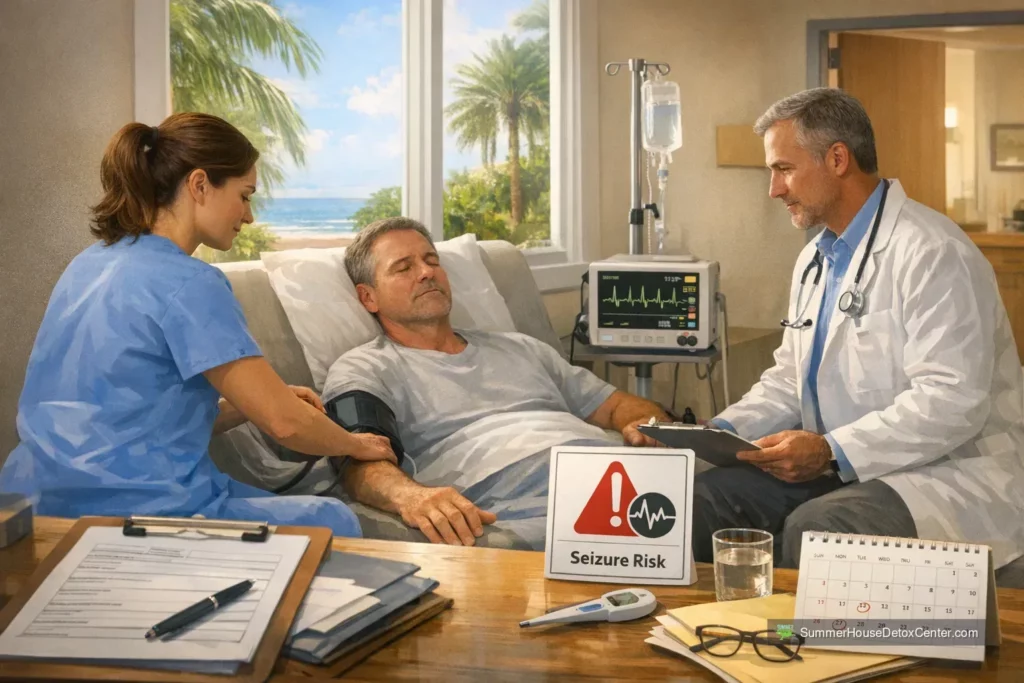
Stopping benzodiazepines suddenly can be more dangerous than many people realize. Medications such as Xanax, Valium, Ativan, Klonopin, and similar drugs affect the central nervous system, and when the body has become dependent on them, abrupt withdrawal can trigger serious symptoms that may require immediate medical care. For people in West Palm Beach, Delray Beach, and across South Florida, understanding when benzo withdrawal becomes risky is an important first step toward safer care.
This article explains why severe benzodiazepine withdrawal can become a medical emergency, what red-flag symptoms to watch for, when home detox is not appropriate, and how medically supervised care can help stabilize someone safely. If you are researching florida drug detox options for yourself or a loved one, the goal is not to panic. The goal is to recognize when symptoms need prompt professional attention.
Why Severe Benzodiazepine Withdrawal Can Become a Medical Emergency
Benzodiazepines work by slowing certain types of activity in the brain and nervous system. Over time, the brain may adapt to their presence. If the medication is suddenly stopped or reduced too fast, the nervous system can become overactive. That overactivity is what makes benzodiazepine withdrawal symptoms potentially dangerous.
Some people expect withdrawal to mean only anxiety, trouble sleeping, or feeling uncomfortable. Those symptoms can happen, but severe withdrawal can go much further. In some cases, people may develop intense agitation, severe confusion, panic, tremors, dangerous blood pressure changes, hallucinations, or seizures. This is one reason medical detox for benzos is often recommended when dependence is significant or symptoms are escalating.
The risk is not limited to people using very high doses. Danger can depend on several factors, including:
- How long the person has been taking benzodiazepines
- Whether the medication was taken exactly as prescribed or misused
- Whether multiple substances are involved, including alcohol or opioids
- Whether the person has had withdrawal complications before
- How quickly the dose was reduced or stopped
- Whether there are underlying medical or mental health concerns
In South Florida, people often delay care because they hope symptoms will pass at home. That can be risky with benzodiazepines. Alcohol and benzodiazepine withdrawal share some high-risk features because both can affect the nervous system in ways that may lead to dangerous instability during withdrawal. At the same time, each person needs individualized assessment. What looks manageable one day can worsen the next, especially after a sudden dose reduction.
Families in Delray Beach and nearby communities should know that severe benzo withdrawal is not just a comfort issue. It can become a safety issue. When symptoms involve confusion, seizure activity, severe agitation, or unstable vital signs, the need for urgent evaluation becomes much more serious.
Warning Signs That Mean Someone May Need Immediate Detox Care
Not every symptom means an emergency, but some signs should never be brushed aside. If someone is withdrawing from Xanax, Valium, Ativan, Klonopin, or another benzodiazepine and symptoms are intensifying, it may be time to seek immediate detox care.
Red-flag symptoms to take seriously
- Seizures or seizure-like activity
- Severe agitation or inability to calm down
- Confusion, disorientation, or unusual behavior
- Hallucinations or signs the person is not in touch with reality
- Marked tremors that are getting worse
- Rapid heartbeat or dangerous blood pressure changes
- Severe insomnia combined with escalating mental distress
- Vomiting, dehydration, or inability to keep fluids down
- Worsening symptoms after cutting down or stopping use
- Mixing benzodiazepines with alcohol or other sedatives
These symptoms can point to a withdrawal process that needs professional monitoring rather than home management. If someone is having a seizure, becomes unresponsive, is severely confused, has chest pain, has trouble breathing, or seems medically unstable, call 911 or go to the nearest emergency room right away.
In less immediate but still urgent situations, contacting a detox center quickly can help determine the safest next step. A qualified team can help assess whether the person may need inpatient monitoring, emergency evaluation, or a structured detox setting. For many people in Delray Beach, Boca Raton, West Palm Beach, and Fort Lauderdale, that call is what prevents a worsening crisis.

When home detox is not appropriate
Home detox is not appropriate when there is a known or suspected benzo withdrawal seizure risk, a history of severe withdrawal, polysubstance use, unstable medical symptoms, suicidal thoughts, psychosis, or poor ability to follow through with a safe plan. It may also be the wrong setting if the person lives alone, has limited support, or keeps relapsing because symptoms become overwhelming.
Families often ask whether “watching closely at home” is enough. In many benzo withdrawal cases, it is not. Symptoms can change quickly, and the safest environment may be one with ongoing observation and medical supervision during detox.
Why Quitting Benzodiazepines Suddenly Is Risky
Quitting abruptly is risky because the body may not be able to adjust safely all at once. Benzodiazepine dependence can develop even when the medication started for a legitimate reason, such as anxiety, panic attacks, insomnia, or muscle spasms. Dependence does not mean a person failed. It means the brain and body may have adapted to the drug.
When that adaptation is interrupted too fast, the nervous system can rebound hard. That rebound may show up as panic, shaking, sweating, racing thoughts, and severe insomnia. In more serious cases, it can lead to neurological and cardiovascular complications that should not be managed casually.
This is why taper planning matters. A safe benzodiazepine detox approach is not the same as deciding one day to stop and “push through it.” The process should be evaluated by qualified professionals who can consider the person’s use pattern, current symptoms, other substances, health history, and level of risk. This article is not a substitute for medical advice, and it does not provide taper schedules or medication instructions. The key point is that sudden stopping can be dangerous, especially when dependence is established.
People sometimes underestimate the risk because they compare benzodiazepines to other medications or assume prescribed use means withdrawal will be mild. That is not always true. The U.S. Food and Drug Administration and addiction medicine organizations have emphasized that abrupt discontinuation can be associated with serious withdrawal effects. In practical terms, if symptoms are already building after a dose reduction, the next move should be professional evaluation, not guessing.
If you want a deeper look at one common benzodiazepine, Summer House Detox Center has a related resource on The Valium Withdrawal Journey: Understanding Symptoms and Safe Detox. For many readers, that helps connect broad withdrawal concerns to a specific medication experience.
What Medically Supervised Benzo Detox Looks Like in South Florida
For adults seeking inpatient detox South Florida services, medically supervised detox is designed to do two things at once: improve safety and create a clearer plan for what comes next. The process is not about dramatic promises. It is about evaluation, monitoring, stabilization, and helping the person move into an appropriate level of care.
What evaluation usually involves
When someone reaches out for help, the first step is typically a screening or admissions conversation. The team may ask about:

- Which benzodiazepine was used
- How often it was taken and for how long
- When the last dose was used
- Whether alcohol, opioids, stimulants, or other drugs are involved
- Current withdrawal symptoms
- History of seizures or severe withdrawal
- Medical and psychiatric concerns
- Support at home and ability to stay safe
That initial review helps determine whether the person may need emergency care, detox admission, or another level of support. This is one reason many families prefer a professional screening instead of trying to judge severity on their own.
What monitoring and stabilization may include
In a supervised detox setting, the focus is on watching for complications and responding quickly if symptoms intensify. That may involve:
- Observation for changes in orientation, agitation, tremors, and vital signs
- Ongoing assessment of withdrawal severity
- Monitoring for seizure activity or other complications
- Supportive care to improve comfort and reduce risk
- Clinical review of co-occurring substance use
- Planning for transition into inpatient rehab or ongoing addiction treatment if needed
Realistic expectations matter here. Detox is not the full recovery process by itself. It is the stabilization phase that helps a person get through withdrawal more safely and become ready for the next stage of care. For some, that next stage is inpatient rehab. For others, it may involve continued substance abuse treatment, therapy, relapse prevention planning, and family support.
If you are exploring local options, Summer House Detox Center also offers information about Delray detox services, which can help readers in Delray Beach better understand the regional care landscape.
For a broader look at why supervision matters in early recovery, see Why medical detox Florida is the smartest move you will ever make. That resource complements the decision-making process for people comparing home detox with monitored care.
Who Is Most Likely to Need Inpatient Monitoring
Not every person stopping benzodiazepines will need the same level of support, but some situations strongly suggest that inpatient monitoring should be considered. This is especially true when symptoms are already active or risk factors are stacking up.
Higher-risk situations include:
- Previous withdrawal seizures or severe withdrawal episodes
- Long-term benzodiazepine use
- High-dose use or escalating misuse
- Recent abrupt stopping after regular use
- Use of alcohol along with benzodiazepines
- Use of opioids, stimulants, or other substances at the same time
- Older adults or people with significant medical conditions
- Severe anxiety, panic, depression, or other mental health instability during withdrawal
- Confusion, hallucinations, or severe sleep deprivation
- Lack of reliable support or an unsafe home setting
In these cases, safe benzodiazepine detox often means choosing an environment where someone can be observed closely rather than trying to power through symptoms alone. Families often ask how to tell if the person is “bad enough” for detox. A better question is whether symptoms or history suggest meaningful risk if care is delayed. If the answer might be yes, an evaluation is worth doing now.
People in Miami, Fort Lauderdale, Pompano Beach, Boca Raton, Delray Beach, and West Palm Beach frequently travel for the right level of detox care. The important factor is not convenience alone. It is whether the setting matches the risk.
What Families in Delray Beach Should Do Right Now
When a loved one appears to be in benzodiazepine withdrawal, families often feel stuck between overreacting and waiting too long. A practical approach can help.

Step 1: Look for emergency signs
If the person is having a seizure, is not making sense, becomes extremely confused, cannot stay awake, is having trouble breathing, has chest pain, or seems medically unstable, call 911 or go to an ER immediately.
Step 2: Do not assume home monitoring is enough
If symptoms are escalating after a dose reduction or missed doses, do not assume the person can safely “sleep it off.” Benzodiazepine withdrawal can worsen over time, and severe symptoms may emerge after an initially milder phase.
Step 3: Gather basic information for a screening call
Before calling a detox center, it helps to know:
- The name of the benzodiazepine involved
- Approximate amount and frequency used
- When the last dose was taken
- Other substances used recently, including alcohol
- Current symptoms
- Any history of seizures or prior detox attempts
You do not need perfect information to ask for help. Even partial details can help a qualified team guide the next step.
Step 4: Ask whether immediate detox evaluation is recommended
For a family in Delray Beach, the most useful question is often not “Can we handle this ourselves?” but “Does this symptom pattern suggest a need for medically supervised detox right now?” That question keeps the focus on safety and fit.
If you are still comparing programs, Summer House Detox Center has another helpful resource: Your First Step: Choosing the Right Drug Detox Facility. It can help families think through practical selection factors without getting lost in generic rehab marketing.
How to Decide on the Next Safe Step
If you suspect benzodiazepine withdrawal is becoming dangerous, the next safe step depends on current severity.
Choose 911 or the ER if:
- A seizure has happened or seems to be happening
- The person is severely confused or hallucinating
- Breathing, consciousness, or chest symptoms are concerning
- The person appears medically unstable
Choose a prompt detox screening if:
- Symptoms are worsening after stopping or cutting back
- There is marked agitation, tremor, panic, or insomnia
- Alcohol or other drugs are also involved
- There is prior history of difficult withdrawal
- The home setting is not safe or reliable
The most helpful mindset is simple: do not wait for a preventable crisis to prove that the withdrawal was serious. A timely screening can clarify whether medical detox for benzos is appropriate and whether inpatient care makes sense in the current situation.
Frequently Asked Questions
What symptoms of benzodiazepine withdrawal mean you should seek medical detox right away?
Seek urgent medical evaluation if there are seizures, severe confusion, hallucinations, extreme agitation, dangerous blood pressure changes, severe tremors, or rapidly worsening symptoms after stopping or reducing use. If there is immediate danger or medical instability, call 911 or go to the ER.

Can benzodiazepine withdrawal cause seizures or other life-threatening complications?
Yes, it can. Benzo withdrawal seizure risk is one of the main reasons abrupt stopping can be dangerous. Severe withdrawal may also involve confusion, agitation, hallucinations, and unstable vital signs. Risk varies by the individual, which is why professional assessment is important.
Is it safe to detox from Xanax, Valium, or Ativan at home?
Not always. Home detox is often not appropriate if there is heavy or long-term use, a prior history of severe withdrawal, co-use of alcohol or other drugs, significant medical or psychiatric concerns, or worsening symptoms after a dose reduction. A qualified detox team can help determine whether home management is unsafe.
How long does medically supervised benzodiazepine detox usually last?
The timeline varies based on the medication involved, duration of use, other substances, and the person’s clinical status. Some people need brief stabilization, while others require a longer monitored withdrawal process. The safest way to estimate timing is through an individual assessment rather than assuming a standard schedule.
How can families in Delray Beach tell whether inpatient detox is the right fit?
Inpatient detox may be the right fit when symptoms are active, risk factors are present, or the person cannot be safely managed at home. A family should consider inpatient care if there is seizure history, confusion, polysubstance use, severe agitation, or no dependable support system. A professional admissions screening can help determine fit more clearly.
Get a Screening Before Withdrawal Symptoms Escalate
If benzodiazepine withdrawal symptoms are starting to build, waiting to see what happens can raise the risk of avoidable complications. In West Palm Beach, Delray Beach, and across South Florida, one of the most practical next steps is to have the situation screened by a detox admissions team that understands when symptoms may be moving toward a medical emergency.
Call Summer House Detox Center at (800) 719-1090 for an admissions screening focused on whether the person may need medical detox for benzos now rather than trying to manage symptoms at home. This is especially important if there is confusion, shaking, severe anxiety, panic, vomiting, a history of heavy or long-term benzo use, mixing benzodiazepines with alcohol or other drugs, or any concern about benzo withdrawal seizure risk. If home detox is not appropriate, the screening can help clarify whether a higher level of care, including inpatient detox South Florida, is the safer path.
The goal is not to guess. It is to get a plain-language explanation of seizure and complication risk, realistic expectations for evaluation and stabilization, and clear guidance on what should happen next. For families comparing options near Delray Beach, this can make the difference between delaying care and getting someone into a safe benzodiazepine detox setting before symptoms worsen.
If you want more context before you call, review Delray detox services or read The Valium Withdrawal Journey: Understanding Symptoms and Safe Detox. But if the concern is immediate, the better move is to call (800) 719-1090 now and describe what is happening, when the last dose was taken, what medication was used, and whether alcohol or other substances are involved. That screening can help determine whether florida drug detox with medical supervision is the right next step and how quickly care should begin.
