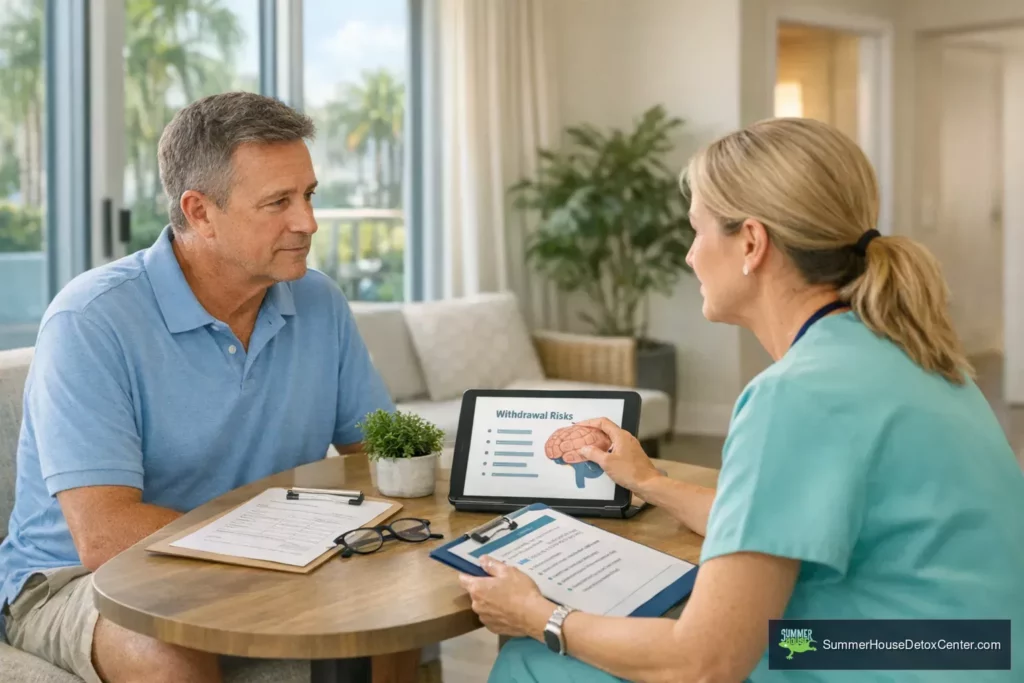
Drug Detox in West Palm Beach: Understanding Benzodiazepine Withdrawal Risks
Benzodiazepines are often prescribed for anxiety, panic symptoms, sleep problems, or certain seizure-related conditions. Medications in this category can include drugs such as Xanax, Ativan, Klonopin, and Valium. Even when they were originally taken as prescribed, the body can become dependent on them over time. That is why benzodiazepine withdrawal risks West Palm Beach residents face should never be brushed off as a simple matter of stopping and “pushing through it.”
For many adults in West Palm Beach and across South Florida, quitting benzos suddenly can be physically risky and emotionally overwhelming. Families may not realize that what looks like anxiety, insomnia, agitation, or confusion can quickly become a much more serious withdrawal issue. If there is any concern about stopping benzos safely, a licensed detox setting with medical supervision may be the safer next step.
This guide explains what benzodiazepine withdrawal can look like, who may face higher risk, and how to decide when professional detox evaluation should happen without delay.
Why Quitting Benzodiazepines Suddenly Can Be Dangerous
Benzodiazepines affect the central nervous system. Over time, the brain and body can adjust to the presence of the medication. When someone stops abruptly, especially after regular use, the nervous system may become overactive. This can lead to a range of withdrawal symptoms that may start as uncomfortable and become dangerous.
One of the biggest concerns with sudden withdrawal is that symptoms are not always mild or predictable. A person might expect restlessness and poor sleep, but then develop severe panic, trembling, disorientation, or seizure activity. In some cases, symptoms may escalate rapidly. In others, they may build over time after the person assumes they are “doing okay.”
This is one reason many people seeking benzo detox West Palm Beach options need more than home support or willpower. Withdrawal from benzodiazepines is different from simply discontinuing a medication with no physical dependence. It can involve real medical risk.
Another problem is that people often stop benzos while also dealing with other substances, prescription medications, alcohol use, dehydration, poor nutrition, or underlying mental health stress. That combination can make the withdrawal picture more complicated. A person may think they are only dealing with one issue, when in reality several risk factors are interacting at once.
For individuals in Palm Beach County who are trying to sort out next steps, a professional review of symptoms, medication history, and recent use patterns can help determine whether detox should be medically supervised instead of attempted alone.
Common Benzodiazepine Withdrawal Symptoms and Red Flags
Benzodiazepine withdrawal symptoms can range from moderate discomfort to urgent medical concerns. The exact pattern varies from person to person, which is another reason self-detox can be risky. Common symptoms may include:
- Heightened anxiety or panic
- Insomnia or severely disrupted sleep
- Restlessness and agitation
- Irritability
- Sweating
- Tremors or shaking
- Nausea
- Muscle pain or stiffness
- Difficulty concentrating
- Sensitivity to light, sound, or touch
- Rapid heart rate
- Elevated blood pressure
Those symptoms alone can be hard to manage. But the more serious red flags are what make sudden withdrawal especially concerning. These can include:

- Seizures
- Hallucinations
- Severe confusion
- Extreme agitation that feels out of control
- Chest pain
- Fainting
- Severe vomiting or inability to keep fluids down
- Thoughts of self-harm or inability to stay safe
Families in West Palm Beach often search for withdrawal symptoms because they are trying to figure out whether what they are seeing is “normal” or dangerous. The practical answer is this: if symptoms are escalating, feel intense, involve confusion, or include seizure risk, it is time to seek immediate medical help. Waiting to see if things settle down can be unsafe.
It is also important to remember that symptoms do not always begin at the same speed for every person. Depending on the specific benzodiazepine, dose pattern, and other health factors, withdrawal may appear sooner or later than expected. That unpredictability is part of the reason medical detox for benzos is often recommended when dependence is likely.
Who Faces the Highest Risk During Benzo Withdrawal
Not everyone experiences withdrawal the same way, but some people are at clearly higher risk and should be especially cautious about attempting to stop on their own.
People Taking Benzodiazepines Regularly
Daily or near-daily use can increase the likelihood of physical dependence. This includes people who started with a legitimate prescription and never intended to misuse the medication. Dependence is not a moral failure. It is a clinical issue that needs a safe plan.
People Using High Doses or Using for a Long Time
Longer duration of use and higher amounts may increase withdrawal severity. Even when the person feels functional in daily life, the body may still be highly adapted to the drug.
People Mixing Benzos with Alcohol or Other Drugs
This is a major concern in drug detox West Palm Beach admissions. If someone has been using benzodiazepines with alcohol, opioids, stimulants, or other sedating medications, withdrawal and stabilization can become more medically complex. Clinicians need the full picture to watch for overlapping risks.
People with Prior Withdrawal Complications
If someone has ever had seizures, hallucinations, delirium, or severe destabilization during withdrawal from alcohol, benzos, or other substances, that history matters. It can signal increased risk during future attempts to stop.
People with Co-Occurring Health or Mental Health Concerns
Heart issues, seizure history, significant anxiety, depression, trauma-related symptoms, sleep disorders, or other medical concerns can complicate the detox process. That does not mean detox cannot happen safely. It means a medically supervised setting may be more appropriate.
Older Adults
Older adults may be more vulnerable to confusion, falls, medication interactions, and complications during withdrawal. Families helping an older loved one stop benzodiazepines should not assume a home taper attempt is the safest option.
For many families, concerns about cost can lead to delay. But delaying evaluation can allow the situation to become more unstable. A screening with a qualified team can help clarify whether detox, inpatient care, or another level of support makes sense before symptoms become more serious.

Why Medical Detox Is Often Safer Than Quitting Alone
When people look up a safe benzodiazepine taper, what they usually need first is not internet advice. They need a clinical assessment. There is no universal withdrawal schedule that is safe for every person, and this article is not a substitute for individualized medical guidance.
What a licensed detox center can offer is structure, observation, and informed decision-making. In a medically supervised environment, the team can monitor vital signs, assess symptom progression, review medication history, and respond if complications begin to develop.
That matters because benzodiazepine withdrawal is not only about discomfort. Clinicians watch for complications such as:
- Seizure risk
- Autonomic instability, such as rising pulse and blood pressure
- Worsening confusion or altered mental status
- Dehydration and nutritional issues
- Severe rebound anxiety or panic
- Sleep deprivation that worsens instability
- Complications related to other substances or prescriptions
Medical detox also differs from quitting alone because the admission process should include a detailed medication review. Full disclosure matters. That means prescribed benzodiazepines, non-prescribed use, alcohol intake, sleep medications, antidepressants, pain medications, supplements, and any recent changes. The more complete the history, the safer the planning can be.
For those comparing options, it may help to review choosing the right drug detox facility. Looking for a licensed detox center South Florida residents can trust is especially important when withdrawal may involve medical risk rather than simple discomfort.
What Benzodiazepine Detox May Look Like in West Palm Beach
If you are exploring local options, it helps to know what the process may involve. Benzodiazepine detox is not one-size-fits-all, but there are common elements people in West Palm Beach should expect when seeking help.
Initial Screening
The first step is usually a confidential screening. This often covers what substance is involved, how long it has been used, how much, whether other substances are part of the picture, current symptoms, and any history of medical or psychiatric concerns. The goal is to determine whether medically supervised detox is appropriate.
Assessment at Admission
Once admitted, the clinical team may gather a fuller history. This is where details matter. The exact benzodiazepine used, the most recent dose, prescription history, alcohol use, and any prior detox attempts can affect safety planning. Honest information helps the team identify risks early.
Monitoring and Stabilization
In a supervised setting, staff can observe for changing withdrawal symptoms and respond if symptoms intensify. This is one of the main differences between trying to stop at home and receiving professional support. The plan is based on the individual, not on a generic online timeline.
Planning Beyond Detox
Detox is often the first step, not the full solution. Once a person is stable, continuing treatment may be recommended depending on their situation. That can include inpatient rehab, addiction treatment planning, relapse-prevention support, and coordination around co-occurring mental health needs.

Readers researching local help can explore West Palm Beach detox programs and Florida drug detox options to better understand how higher-acuity withdrawal issues may be addressed in South Florida.
If the person will likely need ongoing structured care after detox, West Palm Beach drug rehab services may also be part of the next-stage discussion.
How to Decide When to Seek Immediate Professional Help
Some people know right away that they need medical help. Others minimize symptoms, delay care, or hope they can get through the worst of it at home. With benzodiazepine withdrawal, delay can be risky.
Seek immediate professional help if any of the following are happening:
- The person may be in withdrawal after stopping benzodiazepines suddenly
- There is a history of heavy, regular, or long-term benzo use
- Alcohol or other drugs are also involved
- The person is shaking, highly agitated, confused, or not acting like themselves
- There are hallucinations, severe panic, or signs of psychosis
- A seizure has happened or seems possible
- There is chest pain, collapse, or inability to keep fluids down
- The person is talking about self-harm or cannot be safely supervised at home
If there is an active emergency, call 911 or go to the nearest emergency room immediately. A website article cannot determine whether someone is medically stable. Urgent symptoms should be treated as urgent.
If the situation is not yet an emergency but there is clear concern about dependence or worsening symptoms, an admissions screening with a detox provider can help determine the safest level of care. This can be especially valuable for families in West Palm Beach trying to act before symptoms spiral into a crisis.
The Next Step if You or a Loved One Is Considering Stopping Benzos
If someone is thinking about stopping benzodiazepines, the safest first move is usually not to guess. It is to get evaluated. That is true whether the person has been taking benzos recreationally, through a prescription, or in combination with alcohol or other drugs. What matters most is identifying withdrawal risk before a dangerous reaction develops.
A good next step is to gather practical information before calling for help:
- The name of the benzodiazepine involved
- How often it has been used
- Approximate dose pattern
- When it was last taken
- Whether alcohol, opioids, stimulants, or other medications are involved
- Any prior withdrawal symptoms or seizures
- Current symptoms that are already happening
This is not about blame. It is about giving the clinical team the details they need to assess whether withdrawal may require medical supervision.
Families can help by staying calm, avoiding arguments, and focusing on safety. Instead of debating whether the person should be able to “handle it,” it is usually more productive to ask a simple question: Is this something that should be medically evaluated before it gets worse?

Frequently Asked Questions About Benzodiazepine Withdrawal
Can stopping benzodiazepines cold turkey cause seizures or other emergencies?
Yes, abrupt discontinuation can lead to serious complications in some people, including seizures and severe mental or physical instability. The risk depends on factors such as the type of benzo, length of use, amount used, other substances involved, and the person’s health history. Because of that risk, sudden withdrawal should be taken seriously.
How do I know if benzodiazepine withdrawal requires medical detox in West Palm Beach?
If there has been regular use, long-term use, high-dose use, prior withdrawal problems, or use with alcohol or other drugs, medical detox may be the safer option. The right way to know is through a professional screening, not guesswork. A qualified team can review symptoms and history and help determine whether a supervised setting is appropriate.
What symptoms should make someone seek help right away during benzo withdrawal?
Seek urgent help for seizures, hallucinations, severe confusion, extreme agitation, chest pain, fainting, severe vomiting, inability to stay hydrated, or any thoughts of self-harm. If symptoms feel severe or rapidly worsening, do not wait for them to become unmanageable.
Is tapering off benzodiazepines safer than quitting suddenly?
In many situations, tapering is considered safer than abrupt cessation, but the correct approach depends on the individual and should be determined by a qualified medical professional. This article does not provide taper instructions, because withdrawal planning needs to reflect the person’s actual medication and health history.
Will insurance usually help cover benzodiazepine detox or inpatient treatment?
Coverage varies by plan, provider network, medical necessity criteria, and level of care. Many people are surprised to learn that detox or inpatient treatment may have some insurance benefits available. The practical next step is to ask a treatment provider to review your information and discuss likely options based on your situation.
Local Perspective for West Palm Beach and South Florida Families
In West Palm Beach, Boca Raton, Delray Beach, Pompano Beach, Fort Lauderdale, and Miami, families often face the same urgent question: is it safe to try to stop at home, or is this a situation that needs licensed detox support? With benzodiazepines, that question should be answered early rather than after symptoms escalate.
South Florida offers access to detox and inpatient treatment pathways, but not every situation should be handled the same way. The important thing is matching the level of care to the risk. A person with mild concerns and no history of dependence may need different support than someone with prolonged benzo use, mixed-substance use, or prior withdrawal complications. The value of a screening is that it helps sort out that difference before the person ends up in crisis.
Conclusion
Benzodiazepine withdrawal can be more dangerous than many people expect. Anxiety, insomnia, tremors, and panic may be the first signs, but seizures, confusion, hallucinations, and other serious complications are possible in some cases. That is why benzodiazepine withdrawal risks West Palm Beach readers are researching should not be handled casually or left to trial and error at home.
If you or someone you love is considering stopping benzos, call Summer House Detox Center at (800) 719-1090 for an admissions screening focused on one key question: should this withdrawal be managed with medically supervised detox instead of attempting to quit alone? That evaluation can help identify the level of risk, clarify whether urgent intervention is needed, and keep the situation from getting worse before the right plan is in place.
