Understanding What Happens When You Stop Taking Xanax
Xanax withdrawal symptoms can be severe and even life-threatening without medical supervision. If you’re considering stopping Xanax, here’s what you need to know:
- Physical symptoms: Insomnia, tremors, sweating, headaches, muscle pain, heart palpitations, nausea, and seizures.
- Psychological symptoms: Intense anxiety, panic attacks, irritability, confusion, depression, and hallucinations.
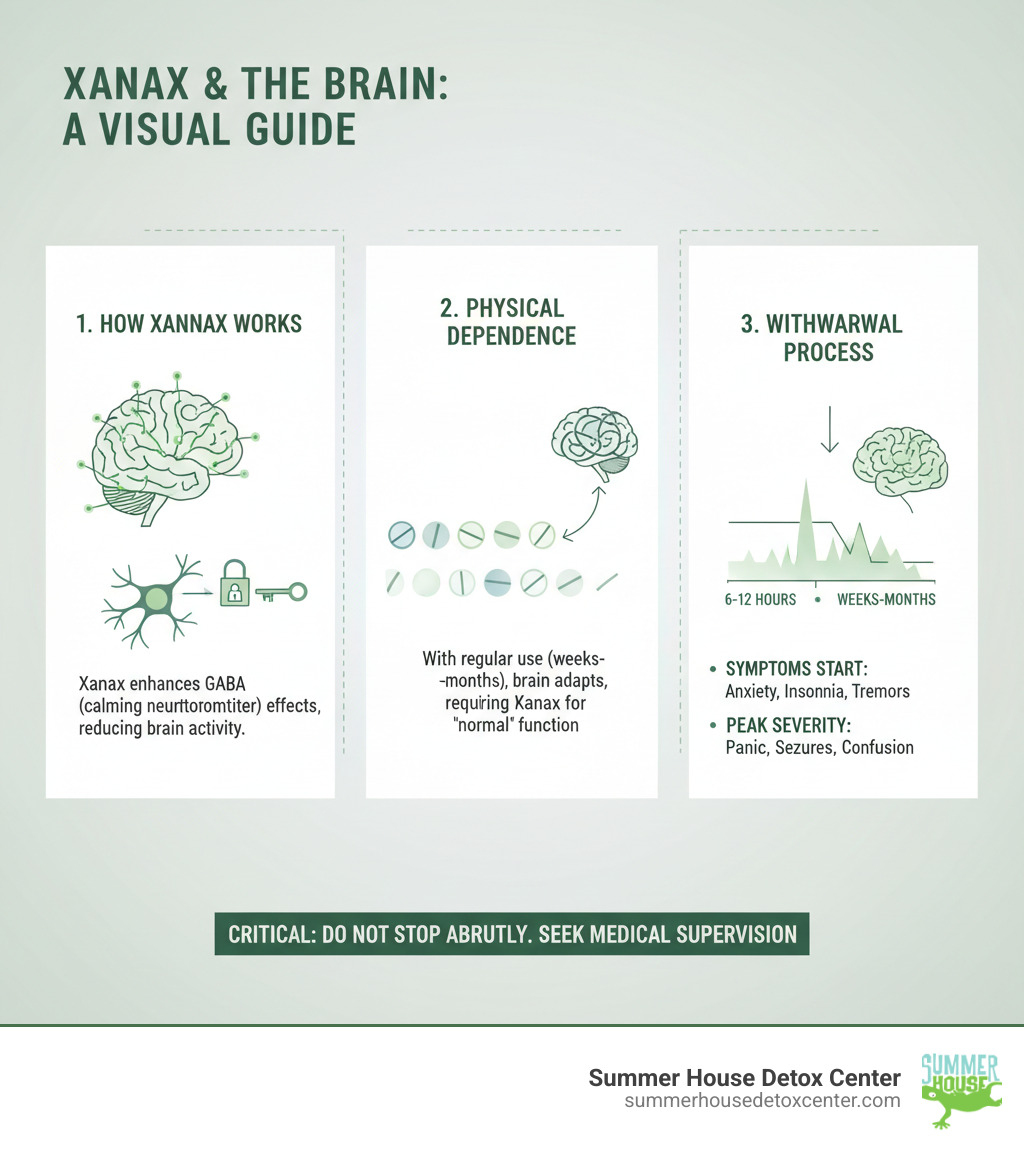
- Timeline: Symptoms often begin 6-12 hours after the last dose, peak around days 2-4, and can last for weeks or months.
- Severity: Approximately 40% of people experience severe symptoms, while 60% experience mild to moderate symptoms.
Critical warning: Abruptly stopping Xanax can cause fatal seizures. Medical supervision is essential for a safe withdrawal.
Xanax (alprazolam) is a commonly prescribed benzodiazepine in Florida. It works by enhancing GABA, a neurotransmitter that calms the central nervous system. While effective for anxiety, the brain can adapt to it in as little as 3-4 weeks, leading to physical dependence.
When you stop taking Xanax, your brain, now reliant on the drug, struggles to function. This imbalance triggers withdrawal symptoms. Many in Miami and across Florida feel overwhelmed by the fear of withdrawal, especially concerns about seizures or unbearable anxiety. These fears are valid.
However, withdrawal doesn’t have to be faced alone. With proper medical detox, Xanax withdrawal can be managed safely and with far less discomfort. Professional supervision and gradual tapering are key to a supported recovery.
What is Xanax and Why Does Withdrawal Occur?
Xanax, or alprazolam, is a benzodiazepine commonly prescribed in Florida for anxiety and panic disorders. It’s a central nervous system (CNS) depressant that works by enhancing GABA (gamma-aminobutyric acid), your brain’s natural calming chemical. This provides immediate relief from anxiety by slowing overactive brain activity.
However, the brain adapts to this consistent GABA boost by reducing its own natural production or sensitivity. This adaptation is called tolerance, where the same dose becomes less effective. This leads to physical dependence, where the brain now requires Xanax to maintain balance. Physical dependence is not the same as addiction (compulsive use despite harm), but they often coexist.
When you stop taking Xanax, especially abruptly, the brain loses its chemical support, and the nervous system goes into overdrive. This triggers Xanax withdrawal symptoms as your body tries to rebalance itself during detox. You can learn more about The Science of Detox: How Your Body Eliminates Toxins During Recovery.
From Use to Dependence
Most people develop dependence after starting with a legitimate prescription for anxiety. As tolerance builds, you might take more than prescribed just to feel normal, slipping into misuse. What many in Florida don’t realize is that dependence can develop in as little as 3 to 6 weeks of regular use, even at prescribed doses. You may not know you’re dependent until you miss a dose and withdrawal symptoms begin.
This is part of The Dark Side of Benzos that isn’t always discussed when a prescription is written. The good news is that with medical support, this dependence can be safely addressed.
A Comprehensive Look at Xanax Withdrawal Symptoms
Stopping Xanax can cause a wide range of reactions. Research shows about 40% of people face severe withdrawal symptoms, while 60% experience milder ones. A common and distressing symptom is rebound anxiety, which is often far more intense than the anxiety you had before taking the medication. This is especially common with short-acting benzos like Xanax.

Xanax withdrawal symptoms can affect your physical and mental health, ranging from uncomfortable to life-threatening. Understanding these potential symptoms highlights why professional support is essential. For a broader overview, see our page on Withdrawal Symptoms.
Common Physical Xanax Withdrawal Symptoms
Physical symptoms often appear within hours of the last dose. The most dangerous is seizures (specifically grand mal seizures), which can be fatal and are a primary reason to avoid abrupt cessation. Other common physical symptoms include:
- Insomnia: Severe difficulty falling or staying asleep.
- Tremors and Muscle Issues: Shaking hands, muscle spasms, stiffness, and aches.
- Cardiovascular Symptoms: Heart palpitations, rapid heartbeat, and profuse sweating.
- Headaches and Nausea: Persistent headaches, vomiting, and significant weight loss. For more on this, see Why Do I Experience Stomach and Digestive Problems When Quitting Benzos?
- Sensory Issues: Tingling or numbness, and hypersensitivity to light, sound, and touch.
Psychological and Emotional Xanax Withdrawal Symptoms
The mental toll can be just as challenging as the physical one. These symptoms are your brain struggling to rebalance and can be managed with medical support.
- Increased Anxiety and Panic Attacks: Rebound anxiety and sudden, intense panic attacks are nearly universal.
- Mood Swings and Depression: Irritability, anger, and feelings of hopelessness are common.
- Cognitive Impairment: Difficulty concentrating, mental fog, and confusion.
- Severe Symptoms: In some cases, withdrawal can cause hallucinations, delirium, or psychosis, especially with abrupt cessation from high doses.
Protracted and Post-Acute Withdrawal Syndrome (PAWS)
For 10% to 25% of chronic users, symptoms don’t end with acute withdrawal. Post-Acute Withdrawal Syndrome (PAWS) is an extended recalibration period for the brain. Symptoms like lingering anxiety, mood swings, cognitive issues, and intense cravings can come and go in waves. PAWS can last for months or even over a year, making ongoing support after detox crucial. It does eventually resolve with patience and professional care. Learn more about the timeline at How Long Does Benzo Withdrawal Last?
The Xanax Withdrawal Timeline and Influencing Factors
One of the first questions we hear in Miami is, “How long will this last?” While the Xanax withdrawal symptoms timeline is unique to each person, it follows a general pattern.

Typical Withdrawal Timeline
Because Xanax is short-acting, withdrawal begins quickly.
- First 6-12 Hours: Early symptoms like rebound anxiety and insomnia appear.
- Days 2-4: This is the peak of acute withdrawal. Physical symptoms like tremors, sweating, and nausea are at their most intense.
- Weeks 1-4: Acute physical symptoms begin to subside, often within 4-5 days. However, psychological symptoms like anxiety and depression may persist or intensify. The full acute phase typically lasts 10-14 days.
- After 1 Month: Most have passed acute withdrawal, but some may experience Post-Acute Withdrawal Syndrome (PAWS), with lingering symptoms that can last for months.
For a detailed guide on the crucial early phase, read The First 72 Hours of Detox: What to Expect and How to Prepare.
Factors Affecting Severity and Duration
Several factors influence your individual withdrawal experience:
- Dosage and Duration: Higher doses (especially over 4 mg/day) and longer-term use lead to more intense withdrawal.
- Co-occurring Substance Use: Using other substances, particularly alcohol, complicates withdrawal. Learn why at What Happens If I Drink Alcohol While Using Benzos?
- Mental Health: Pre-existing conditions like anxiety can worsen psychological symptoms.
- Individual Biology: Age, metabolism, and liver health affect how your body processes Xanax.
- Method of Cessation: Quitting “cold turkey” is the most dangerous approach and dramatically increases the severity of symptoms, including the risk of seizures. A medically supervised, gradual taper is safest.
The Dangers of Quitting and the Role of Medical Detox
The decision to stop taking Xanax is brave, but quitting without support carries serious risks. Going “cold turkey” can be catastrophic because your brain has no time to adjust.

Seizures are the most serious risk. Grand mal seizures can occur within hours of the last dose and can be fatal. This makes Xanax withdrawal one of the few types that can be directly deadly. Other severe risks include psychosis and delirium, dangerous mental states that require immediate medical help. The psychological distress alone can be unbearable, often leading to relapse.
Why You Should Never Detox from Xanax at Home
Detoxing from Xanax at home in Florida is dangerous. We stress this for your safety.
- Life-threatening complications like seizures can happen without warning. If you’re alone, you can’t get help.
- Unmanaged symptoms become so intense that relapse feels like the only option, trapping you in the cycle of dependence.
- There is no safety net. At home, you lack access to emergency medications and the constant monitoring needed to prevent a medical crisis.
This is why we’ve written about The Importance of Medically Supervised Detox: Why DIY Detox Can Be Dangerous.
How Medical Detox Provides a Safe Withdrawal
Medical detox at a facility like Summer House Detox Center in Miami transforms a dangerous process into a safe, manageable one.
- 24/7 Medical Monitoring: Our team tracks your vital signs continuously to prevent complications before they become emergencies.
- Personalized Tapering: We never use a “cold turkey” approach. We create a gradual tapering schedule, often using a longer-acting benzodiazepine, to minimize Xanax withdrawal symptoms and reduce risks. This is a common question we answer: Why Are Benzos Used in Drug Detox If They’re So Addictive?
- Symptom Management: We use medications to prevent seizures, calm your heart rate, and stabilize your mood.
- Supportive Environment: Our Miami facility provides nutritional support and a peaceful environment away from triggers, allowing you to focus on healing.
Our goal is to guide you through withdrawal safely and with dignity. Learn more about Managing Withdrawal Symptoms: How Summer House Detox Center Helps You Through the Hardest Days.
Treatment and Life After Xanax Withdrawal
Completing medical detox is a monumental first step, but it’s the start of your recovery, not the end. After managing the physical Xanax withdrawal symptoms, the next phase is addressing the underlying reasons for your dependence and learning to live without it. Continuing care is essential to prevent relapse.
Finding the Right Treatment in Florida
Florida offers quality treatment options to support your long-term recovery. The key is finding a program that fits your needs.
- Inpatient Care: A structured, residential environment offering 24/7 support. It’s ideal for those with severe dependence or co-occurring mental health conditions.
- Outpatient Care: A flexible option allowing you to attend therapy while maintaining daily responsibilities, suitable for those with strong home support.
- Behavioral Therapy: Cognitive Behavioral Therapy (CBT) is highly effective. It helps you change the thought patterns that led to Xanax use and teaches healthier coping skills.
- Holistic Therapies: Practices like yoga, meditation, and mindfulness are powerful tools for managing anxiety naturally.
A strong aftercare plan with ongoing therapy and support groups is crucial for long-term success. Our Xanax Addiction Withdrawal Treatment program is designed to provide this comprehensive support.
Building a Foundation for Lasting Recovery
Recovery is about building a life so fulfilling that you don’t want to return to substance use. This involves:
- Developing Healthy Coping Strategies: Learn new ways to manage anxiety and stress, such as deep breathing, hobbies, and problem-solving skills.
- Stress Management: Identify your personal stress triggers and create a plan to address them. Mindfulness can help you observe anxious thoughts without being overwhelmed.
- A Healthy Lifestyle: Regular exercise, a balanced diet, and good sleep are fundamental for stabilizing your mood and energy.
- Peer Support: Connecting with others who understand your journey provides encouragement and accountability. Find out more in our Benzo Addiction Recovery resources.
Frequently Asked Questions about Xanax Withdrawal
We hear many questions about Xanax withdrawal symptoms from people in Miami and across Florida. Here are answers to some of the most common concerns.
Can Xanax withdrawal be fatal?
Yes, Xanax withdrawal can be fatal without medical supervision. The primary danger is from grand mal seizures, which can occur during abrupt cessation (“cold turkey”). These are medical emergencies. This is why attempting to detox at home is so risky and professional help is critical.
How much Xanax causes withdrawal symptoms?
Withdrawal can develop even at prescribed therapeutic doses. Physical dependence can form in as little as 2 to 4 weeks of regular use. One study found that even a single week of use produced withdrawal symptoms. Higher doses (over 4 mg daily for 12+ weeks) significantly increase the risk of severe withdrawal, but no amount is without risk.
What is rebound anxiety?
Rebound anxiety is when the anxiety you originally took Xanax for returns, but often much stronger and more intense than before. It’s a common and very distressing part of Xanax withdrawal symptoms. This happens because your brain has come to rely on the drug’s calming effects. When the drug is removed, the system rebounds, causing heightened anxiety. It’s a key sign of physical dependence.
Your Path to a Safe Recovery in Miami
Facing Xanax withdrawal symptoms is overwhelming, and the fear of quitting is valid. Detoxing from Xanax alone is dangerous due to the risk of seizures and severe psychological distress.
But recovery is absolutely possible. With professional medical supervision, Xanax withdrawal becomes a safe, manageable process. You do not have to do this alone.
Here in Miami, Summer House Detox Center specializes in guiding people through benzodiazepine withdrawal safely. Our medical team understands the challenges of Xanax withdrawal, and some of our staff have walked this path themselves. We provide personalized tapering plans, 24/7 medical monitoring, and a compassionate environment where you can heal.
Your life free from dependence is waiting. Your recovery can begin today.
