Why So Many People Find Recovery at Rehabilitation Facilities in Florida

Rehabilitation facilities in Florida offer some of the most comprehensive addiction and mental health treatment options in the United States — from medical detox and inpatient care to outpatient programs and long-term sober living.
If you need a quick answer, here are the main types of rehab facilities available in Florida:
| Type of Facility | What It Offers | Best For |
|---|---|---|
| Medical Detox Center | 24/7 supervised withdrawal management | First step in addiction recovery |
| Residential Inpatient | Round-the-clock care, structured programming | Severe addiction, early recovery |
| Partial Hospitalization (PHP) | Intensive daily treatment, sleep at home | Step-down from inpatient |
| Intensive Outpatient (IOP) | 3-5 days/week treatment | Moderate support needs |
| Outpatient Program | Flexible scheduled sessions | Stable home environment |
| Sober Living | Peer support, transitional housing | Community reintegration |
| Dual Diagnosis Center | Addiction + mental health treatment | Co-occurring disorders |
| Specialty Rehab | Brain injury, spinal cord, neurological | Complex medical recovery |
Florida has become one of the country’s most popular states for seeking treatment — and for good reason. The warm climate, access to experienced clinical teams, and wide range of specialized programs make it an ideal place to focus on healing.
About 50% of people with substance use disorders also live with a co-occurring mental health condition — such as anxiety, depression, or PTSD. Florida’s rehab landscape has grown to meet that need, with many facilities now offering integrated dual diagnosis care alongside traditional addiction treatment.
Whether you’re in Miami, Tampa, Jacksonville, or West Palm Beach, there are options designed to meet you where you are — medically, emotionally, and geographically.
Rehabilitation facilities in florida word list:
Understanding Addiction & Mental Health Rehabilitation Facilities in Florida
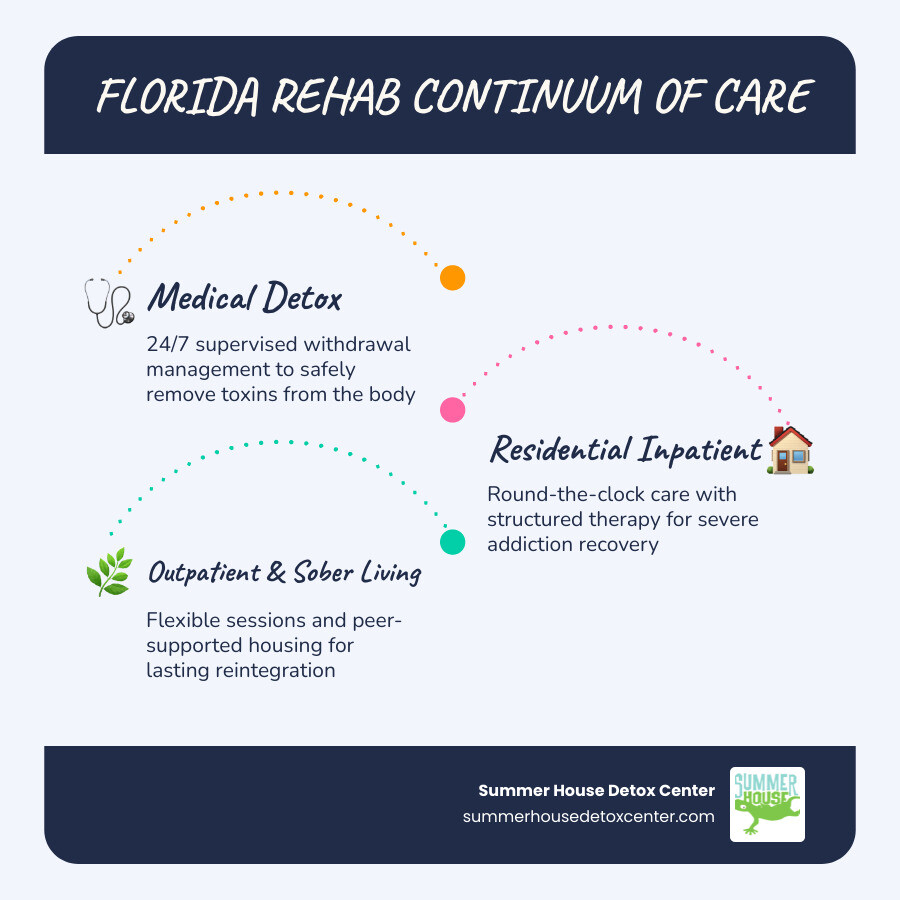
Navigating rehabilitation can feel like trying to read a map in a hurricane. In Florida, the system is designed as a “continuum of care.” This means you don’t just “go to rehab” and leave; you move through different levels of support as you get stronger.

For many, the journey begins at a treatment-center-in-florida that specializes in medical detox. This is where the body is cleared of substances under strict medical supervision. From there, most people transition into residential inpatient programs, which offer a 24/7 structured environment.
If you need a high level of care but have a stable place to sleep, Partial Hospitalization Programs (PHP) provide intensive daily therapy. As you progress, you might move to an Intensive Outpatient Program (IOP), which usually involves 9 to 20 hours of therapy per week, or a standard outpatient program. Finally, sober living environments provide a peer-supported bridge back to “real life,” ensuring you aren’t thrown back into old triggers without a safety net.
Clinical Focus of Addiction Rehabilitation Facilities in Florida
The best rehabilitation facilities in Florida don’t just rely on “willpower.” They use evidence-based therapies that are scientifically proven to work. This includes Cognitive Behavioral Therapy (CBT), which helps you identify and change negative thought patterns, and Dialectical Behavior Therapy (DBT), which focuses on emotional regulation.
For those dealing with deep-seated trauma, many facilities offer Eye Movement Desensitization and Reprocessing (EMDR). florida-drug-detox-575585 programs often integrate these therapies with Medication-Assisted Treatment (MAT) to manage cravings and multidisciplinary teams that look at your health from every angle—physical, mental, and nutritional.
Choosing Between Inpatient and Outpatient Care
How do you know which level of care is right? Think of it like a safety harness.
Inpatient care provides 24/7 support and is essential for those with acute needs, such as severe withdrawal risks or a high likelihood of relapse in their current home environment. It offers a “bubble” where you can focus entirely on yourself.
Outpatient care, on the other hand, offers flexibility. It’s designed for those who have already stabilized and are ready to practice their new skills in the real world while still receiving professional guidance. The goal of florida-detox-centers-575591 is often to prepare you for this functional independence, ensuring you can manage daily life without returning to old habits.
Specialized Programs for Complex Recovery Needs
Recovery isn’t one-size-fits-all. Some people carry extra weight, whether it’s a co-occurring mental health disorder or the unique trauma of a high-stress career.
Dual diagnosis treatment is perhaps the most critical specialized service. Since two-thirds of individuals struggling with addiction also have co-occurring mental health needs, treating the substance use without addressing the underlying depression, anxiety, or bipolar disorder is like trying to fix a leaky pipe by just mopping the floor. You have to shut off the valve.
Support for Veterans and First Responders
Veterans and first responders face unique challenges, including high rates of PTSD and the difficulty of readjusting to civilian life. Many rehabilitation facilities in Florida offer florida-alcohol-rehab programs specifically tailored to these heroes. These programs emphasize peer support—because sometimes, the only person who truly understands what you’ve been through is someone who has worn the same uniform.
Programs for Healthcare Professionals
It’s a heavy irony that the people who take care of us often struggle to take care of themselves. Nurses, doctors, and therapists face immense job stress and easy access to medications. Specialized alcohol-treatment-in-florida programs for impaired professionals focus on confidential recovery and licensure protection, helping these essential workers heal so they can safely return to the careers they love.
Navigating Regulations and Accreditation for Florida Addiction Rehabs
When you’re looking for a facility, you want to know they meet high standards. In Florida, addiction treatment centers are licensed by the Agency for Health Care Administration (AHCA) and must comply with the Health Care Clinic Act.
Look for facilities with “gold seal” accreditations from organizations like CARF (Commission on Accreditation of Rehabilitation Facilities) or The Joint Commission. These aren’t just fancy stickers; they mean the facility has undergone rigorous third-party inspections to ensure they provide top-tier care and maintain civil rights compliance. drug-treatment-centers-in-florida-10641 that hold these accreditations are generally held to much higher clinical and safety standards.
Initial Certification and Address Changes for Addiction Treatment Providers
For those starting new detox-facilities-in-florida-10631, the regulatory path is steep. Providers must go through CMS enrollment for Medicare/Medicaid and pass on-site surveys. Even moving a facility to a new address requires notifying the state and undergoing new inspections. This bureaucracy might seem boring, but it’s actually your best friend—it’s what keeps the “Florida Shuffle” at bay and ensures that the facility you choose is legitimate and safe.
Addiction and Mental Health Treatment Approaches in Florida
The modern approach to recovery in Florida is holistic. We don’t just look at the substance; we look at the person.
With a 50% co-occurrence rate between addiction and mental health issues, the “integrated model” has become the standard. This means your therapist and your doctor are talking to each other, ensuring your treatment for anxiety doesn’t conflict with your rehabilitation for alcohol.
Holistic and Evidence-Based Therapies
The best-drug-rehab-florida-575590 centers combine clinical “heavy hitters” like CBT and EMDR with wellness practices. This might include:
- Mindfulness and Meditation: To help manage the “racing thoughts” that often lead to relapse.
- Experiential Therapies: Such as art therapy, music therapy, or even adventure-based recovery.
- Nutritional Counseling: Because addiction often leaves the body depleted of essential vitamins and minerals.
Family Reintegration and Life Skills
Addiction is a family disease. It ripples outward, affecting parents, children, and spouses. That’s why many treatment-center-in-florida options include family workshops and reintegration programs.
Beyond the emotional work, recovery requires practical skills. Vocational support, academic coaching for younger adults, and detailed relapse prevention planning are the “boots on the ground” tools that help you stay sober once the initial glow of rehab wears off.
Planning Your Recovery: Costs, Insurance, and Locations
One of the biggest hurdles to getting help is the “how do I pay for this?” question. The good news is that under the Affordable Care Act (ACA), addiction treatment is considered an essential health benefit.
Whether you have private insurance, Medicare, or Medicaid, there are florida-drug-detox-575585 options available. Many facilities also offer self-pay rates for those who prefer maximum privacy or don’t have traditional coverage.
Verifying Insurance for Addiction Rehabilitation Facilities in Florida
The insurance process can be a headache, which is why most facilities have admissions navigators. These specialists do the heavy lifting for you—contacting your provider to check in-network benefits, handling pre-authorizations, and explaining your coverage limits. If you’re looking for florida-alcohol-rehab, the first step is usually a quick, confidential insurance verification call.
Finding Rehabilitation Facilities in Florida Near Major Cities
Location matters. You might want to be close to home for family support, or you might need to get away from old “people, places, and things.”
- Miami & South Florida: Known as the recovery capital of the world, offering everything from luxury retreats to community-based clinics.
- Tampa & West Palm Beach: Hubs for specialized alcohol-treatment-in-florida and high-end residential care.
- Jacksonville & Orlando: Home to massive networks of outpatient clinics and specialized neurological rehab centers.
Frequently Asked Questions about Florida Addiction Rehab
How do inpatient and outpatient addiction rehabilitation facilities in Florida differ?
Inpatient care requires you to live at the facility 24/7, providing a highly structured environment and constant medical support. Outpatient care allows you to live at home while attending therapy sessions during the day or evening. Inpatient is usually recommended for the early stages of recovery or for those with severe addictions.
Does insurance cover addiction rehabilitation facilities in Florida?
Yes, most private insurance plans, as well as Medicare and Medicaid, provide some level of coverage for addiction treatment. The extent of coverage depends on your specific plan, the length of stay, and whether the facility is in-network.
What is dual diagnosis treatment in Florida rehabs?
Dual diagnosis treatment addresses both a substance use disorder and a co-occurring mental health disorder (like depression or PTSD) simultaneously. Since these conditions often fuel one another, treating them together is essential for long-term success.
Conclusion
At Summer House Detox Center, we believe that the first step is often the hardest, but it doesn’t have to be the scariest. As a Miami-based in-patient drug and alcohol detox facility, we focus on providing a personalized experience that prioritizes your comfort and dignity.
Our experienced staff—many of whom are in recovery themselves—understand exactly what you’re going through. We provide the medical supervision necessary to keep you safe and the compassionate support needed to help you start your journey toward a healthier, happier life.
If you are looking for detox-facilities-in-florida-10631 that treat you like a human being rather than a number, we are here to help you navigate the roadmap to recovery. Your new life starts with a single phone call. Reach out to us today and let’s take that first step together.
