
Understanding Your Chances: The Truth About Methadone Detox Success
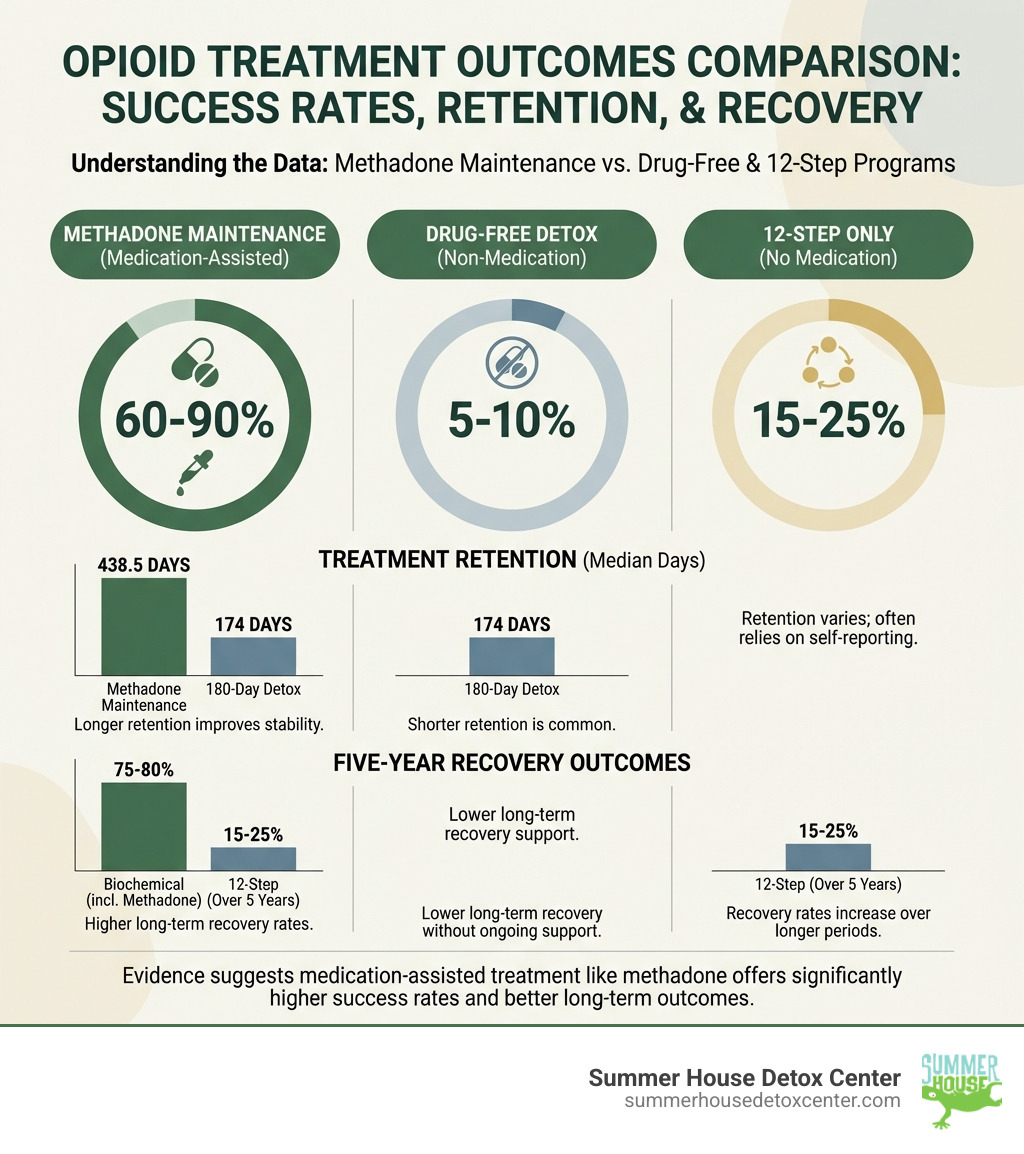
Methadone detox success rate varies significantly based on the treatment approach you choose. If you’re searching for quick answers, here’s what the research shows:
Key Success Rate Statistics:
- Methadone maintenance programs: 60-90% success rate
- Drug-free detox methods: 5-10% success rate
- 12-step programs without medication: 15-25% success rate over 5 years
- Biochemical treatment (including methadone): 75-80% recovery rate within 5 years
Treatment Retention:
- Methadone maintenance: Median of 438.5 days in treatment
- 180-day detox programs: Median of 174 days in treatment
- Early discontinuation increases overdose risk by 24 times
If you’ve tried to break free from opioid addiction before, you know how overwhelming the fear of withdrawal can be. Maybe you’ve attempted detox in the past and found yourself back where you started, feeling defeated and hopeless.
You’re not alone in this struggle. The reality is that opioid use disorder is a medical condition that affects brain chemistry—and treating it effectively often requires more than willpower alone.
The good news? The right treatment approach can dramatically improve your chances of success. Research shows that medication-assisted treatment programs deliver significantly better outcomes than going it alone or relying solely on counseling.
In Miami and throughout Florida, evidence-based treatment options are available that combine medical supervision with compassionate care. Understanding the real success rates—and the factors that influence them—can help you make informed decisions about your path to recovery.
This isn’t about replacing one addiction with another. It’s about using proven medical tools to give your body and mind the stability needed for lasting healing.
Methadone detox success rate terms to know:
What is the Real Methadone Detox Success Rate?
When we talk about the methadone detox success rate, it’s crucial to understand what success truly means in the context of opioid use disorder (OUD). For many, success isn’t just about getting through withdrawal; it’s about achieving sustained recovery, improved quality of life, and reduced harm. Methadone, a synthetic opioid painkiller, plays a significant role in Medication-Assisted Treatment (MAT) for OUD, and its effectiveness has been researched since the early 1960s.
The overall success rate of methadone treatment programs for opioid addiction is fairly good, ranging from 60% to 90%. This rate refers to treatment programs that integrate methadone as a core component, often in combination with counseling and behavioral therapies. For instance, clinical data suggests that a biochemical treatment of addiction, like methadone, can deliver a 75% to 80% recovery rate within a span of 5 years. This long-term perspective is vital because OUD is a chronic condition, and healing the damage to both body and mind takes time. The benefits of methadone treatment can be achieved if a patient stays in the program anywhere from 42 to 90 days, though longer durations often lead to better outcomes.
While research consistently points to methadone’s efficacy, it’s also important to acknowledge limitations in current data. Many studies focus on specific outcomes like retention or illicit drug use, and there’s always a need for further research into patient-reported quality of life, long-term functional improvements, and the specific needs of diverse populations. However, the existing evidence strongly supports methadone as a cornerstone of effective OUD treatment. As a leading detox center in Miami, Florida, we see how medically supervised methadone treatment can provide a stable foundation for recovery.
How Methadone Compares to Abstinence-Only Methods
The contrast between methadone treatment and abstinence-only approaches is stark. While the idea of a “drug-free” recovery can be appealing, the reality is that detoxification and drug-free techniques alone yield a significantly lower methadone detox success rate, typically only 5% to 10%. This is largely because opioid addiction profoundly alters brain chemistry, and simply removing the substance without addressing these physiological changes often leads to immediate relapse.
Traditional 12-step programs or strictly counseling approaches, without the benefit of biochemical treatment like methadone, also show substantially lower recovery rates. These methods typically yield a 15% to 25% recovery rate in 5 years. Compare this to the 60% to 90% methadone treatment program success rate, and it becomes clear why methadone has become an international standard for opioid addiction treatment.
A randomized controlled trial comparing methadone maintenance with psychosocially enriched detoxification highlights this difference. Methadone maintenance was found to be more effective for treatment retention for opioid dependence than psychosocially enriched detoxification. This demonstrates that while psychosocial support is critical, the medical component of methadone maintenance provides a stability that significantly improves the odds of staying in treatment and reducing illicit drug use.
Long-Term Abstinence and Recovery Outcomes
For individuals who commit to methadone treatment, the long-term outcomes are promising. The goal isn’t just short-term abstinence but sustained recovery and a return to a fulfilling life. As mentioned, biochemical treatment, which includes methadone, can lead to a 75% to 80% recovery rate within 5 years. This level of success reflects methadone’s ability to stabilize brain chemistry, reduce cravings, and prevent withdrawal symptoms, allowing individuals to focus on rebuilding their lives.
Sustained methadone treatment offers numerous benefits beyond just reducing opioid use. It is associated with decreased illicit drug use, a reduction in drug-related HIV risk behaviors, and even lower rates of criminal activity. For instance, one study found that methadone maintenance therapy resulted in a lower rate of drug-related HIV risk behaviors and lower legal problem severity scores compared to a 180-day detoxification program. These benefits contribute to a more stable and healthier life, addressing not only the addiction but also many of its devastating consequences.
The chronic course of opioid use disorder is well-documented, meaning it’s often a lifelong condition requiring ongoing management. Methadone maintenance provides that ongoing support, enabling individuals to manage their condition effectively and achieve long-term stability.
Methadone Maintenance vs. Methadone Detox: Choosing the Right Path

When considering treatment for opioid use disorder, understanding the distinction between methadone maintenance therapy (MMT) and methadone-assisted detoxification is crucial. It’s like standing at a fork in the road, with each path leading to different outcomes depending on your individual needs and treatment goals. Whether your goal is long-term stability or eventual total abstinence, the path you choose will significantly impact your methadone detox success rate.
At Summer House Detox Center in Miami, we believe in tailoring treatment to the individual. Our approach considers your specific situation, addiction history, and personal goals to recommend the most effective path. You can find more information about our comprehensive opioid detox services.
Methadone Maintenance Therapy (MMT): The Gold Standard for Stability
Methadone Maintenance Therapy (MMT) is often considered the gold standard for opioid use disorder treatment dueand offers significant advantages for those seeking long-term stability. MMT involves taking a daily prescribed dose of methadone to prevent withdrawal symptoms, reduce cravings, and block the euphoric effects of other opioids. This allows individuals to stabilize their lives, engage in counseling, and address underlying issues without the constant preoccupation with drug seeking.
The outcomes for MMT are compelling. Studies consistently show that MMT leads to significantly greater treatment retention and lower illicit opioid use compared to detoxification alone. For example, one randomized controlled trial found that MMT participants remained in treatment for a median of 438.5 days, compared to just 174.0 days for those in a 180-day psychosocially enriched detoxification program. This longer retention directly correlates with a higher methadone detox success rate in terms of sustained recovery.
Beyond retention, MMT is associated with lower heroin use rates and a reduced incidence of drug-related HIV risk behaviors. A systematic review concluded that methadone maintenance therapy is statistically significantly more effective than non-pharmacological approaches in retaining patients in treatment and in the suppression of heroin use. Critically, individuals in MMT also face a significantly lower mortality risk compared to those out of treatment.
Methadone-Assisted Detoxification: A Short-Term Taper
Methadone-assisted detoxification, on the other hand, is a shorter-term process aimed at achieving total abstinence from all opioids, including methadone itself. This involves a medically supervised taper where the methadone dose is gradually reduced over a period of weeks or months until the individual is completely off the medication.
While the goal of total abstinence is admirable, research indicates that methadone-assisted detoxification alone, especially shorter programs, carries a higher risk of relapse post-detox. A systematic review on methadone at tapered doses for the management of opioid withdrawal noted that despite reducing withdrawal severity, the majority of patients relapsed to heroin use. This underscores the critical importance of robust aftercare and ongoing support following detoxification.
For those in Florida considering methadone-assisted detoxification, it is essential to understand that detox is merely the first step. Without a comprehensive long-term plan that includes counseling, behavioral therapy, and robust support systems, the likelihood of sustained recovery decreases significantly.
Maximizing Success: Key Factors in Methadone Tapering

Achieving a high methadone detox success rate isn’t just about the medication itself; it’s about the entire treatment journey. Several factors significantly influence outcomes, with personalization, medical supervision, and psychological support topping the list. At Summer House Detox Center, our medically supervised detox programs in Miami are designed to integrate these crucial elements, recognizing that each individual’s path to freedom is unique. You can learn more about our approach to medically-supervised detox.
The Importance of Treatment Duration
The duration of methadone treatment plays a pivotal role in its success. While some benefits can be seen within 42 to 90 days, longer treatment durations are consistently linked to better long-term outcomes. Rushing the process or experiencing premature discharge significantly diminishes the chances of sustained recovery.
A randomized trial comparing six-month methadone maintenance with 21-day methadone detoxification clearly showed the advantage of longer treatment. The six-month maintenance program resulted in fewer opiate-positive urine tests and reduced self-reported heroin and alcohol use compared to the short detoxification. This highlights that giving the body and mind adequate time to heal and adjust is paramount. The role of counseling, even minimal, within these longer programs further supports positive outcomes, providing essential coping mechanisms and relapse prevention strategies.
Patients often express a desire to discontinue methadone as soon as possible, sometimes viewing it as a “temporary bridge.” However, education about the benefits of sustained treatment and addressing concerns about perceived side effects can improve retention. The longer individuals remain in a supportive, medically supervised program, the better their chances of achieving lasting freedom from opioid dependence.
The Tapering Process: A Key to a High Methadone Detox Success Rate
The recommended approach for safely getting off methadone is through a carefully managed, medically supervised taper. This process involves gradually reducing the methadone dose over an extended period. We often describe it like “stepping down a staircase rather than jumping off a cliff.” Each small reduction gives your body time to adjust, minimizing the severity of withdrawal symptoms and reducing the shock to your system.
Research consistently shows that longer tapers have substantially higher success rates. For instance, a person on 60mg of methadone might take around 9 weeks for the quickest taper, but 6 months could be recommended for the highest success rates. For someone on 120mg, a minimum of 16 weeks might be necessary, with 10 months being a more realistic timeframe for lasting success. This slow, deliberate approach is critical because methadone has a long half-life, meaning it stays in your system for an extended period, and your brain chemistry needs time to re-normalize. This gradual reduction, combined with comfort medications and psychological support, allows for a much smoother transition to a methadone-free life.
How Repeated Detox Attempts Affect Outcomes
It’s not uncommon for individuals to require repeated attempts at detoxification and medication treatments before achieving sustained remission from opioid use disorder. However, the impact of these repeated attempts varies significantly based on whether they are linked to medication-assisted treatment (MAT).
Repeated attempts at detoxification without subsequent linkage to medication were associated with continuously decreasing odds of successful completion of detoxification. In other words, if you just keep detoxing “cold turkey” or without MAT, your chances of success get worse each time.
Conversely, the duration of medication-assisted treatment retention increased with each attempt. This suggests a powerful “learning process” where individuals, through multiple experiences, may come to understand the necessity and benefits of MAT. For those in Florida struggling with repeated cycles of detox and relapse, this insight is crucial: the path to freedom often involves embracing MAT as a vital component of long-term recovery. It’s about finding the right tools and sticking with them, not just enduring withdrawal.
The Methadone Withdrawal Experience: What to Expect in Florida
Detoxing from methadone can be a challenging experience, but understanding what to expect and having the right support can make all the difference. At Summer House Detox Center in Miami, we provide a calm, supportive clinical environment designed to help you steer this process safely and as comfortably as possible.
Methadone Withdrawal Timeline and Symptoms
Methadone withdrawal is unique compared to other opioids due to its long half-life. While withdrawal from short-acting opioids like heroin typically peaks within a few days, methadone withdrawal can have a delayed onset, with symptoms often not appearing until 24-60 hours after the last dose. The acute phase of withdrawal usually lasts 3 to 6 weeks, but for those with severe addictions or co-occurring substance use, the process can take even longer.
Common symptoms of methadone withdrawal are often described as flu-like and can include:
- Anxiety and irritability
- Insomnia and other sleep disturbances
- Muscle aches and bone pain
- Nausea, vomiting, and diarrhea
- Chills and sweating
- Runny nose and excessive yawning
- Rapid heartbeat
- Stomach cramps
- Paranoia and intense drug cravings
Beyond the acute phase, many individuals experience Post-Acute Withdrawal Syndrome (PAWS). PAWS symptoms are primarily psychological and emotional, such as depression, mood swings, anhedonia (inability to feel pleasure), chronic fatigue, and cognitive difficulties. These symptoms can persist for months, and in some cases, up to two years after acute withdrawal. Our Florida-based treatment centers are equipped to manage both acute withdrawal and the longer-term challenges of PAWS.
The Dangers of Quitting ‘Cold Turkey’ vs. Medically Supervised Detox
The thought of quitting methadone “cold turkey” might seem appealing to some who wish to be completely free from all medication. However, this approach carries significant risks and is strongly discouraged by medical professionals.
Quitting methadone abruptly can lead to severe and prolonged withdrawal symptoms, potentially causing dehydration, dangerous blood pressure changes, and even seizures. More critically, when individuals quit methadone cold turkey, their tolerance to opioids drops dramatically. If a relapse occurs after this period, even a dose that was once manageable can lead to a fatal overdose. Research indicates that when out of treatment, individuals with opioid use disorder are at an liftd risk for mortality that is 24 times greater than when in treatment.
A medically supervised taper, like those offered at Summer House Detox Center in Miami, provides a safe and effective alternative. Under the care of our experienced medical team, your methadone dose is gradually reduced, and comfort medications are administered to manage withdrawal symptoms. This approach not only makes the detox process more tolerable but also significantly reduces the risk of relapse and overdose, setting the stage for a safer, more sustainable recovery.
Begin Your Path to Freedom in Miami
Understanding the methadone detox success rate and the factors influencing it can empower you to make informed decisions about your recovery journey. We’ve seen that methadone treatment programs offer significantly higher success rates compared to abstinence-only approaches, providing a stable foundation for long-term recovery. The importance of personalized care, adequate treatment duration, and a medically supervised tapering process cannot be overstated.
While the path to freedom from opioid dependence can be challenging, recovery is absolutely possible. In Miami, Summer House Detox Center is dedicated to providing compassionate, evidence-based care that respects your individuality and supports your goals. Our team understands the unique struggles associated with methadone detox and is here to guide you every step of the way.
If you or a loved one in Florida are ready to explore a personalized detox program that maximizes your chances of success, we invite you to reach out. Take the first step with our personalized detox programs.
