
The Clock’s Ticking: Understanding Your Alcohol Detox Timeline
Understanding the Alcohol Detox Timeline
Alcohol detox timeline symptoms follow a predictable pattern that begins within hours of your last drink and can last up to two weeks or longer. If you’re considering stopping alcohol after heavy use, knowing what to expect can help you prepare for a safer recovery.
Quick Timeline Overview:
- 6-12 hours: Mild symptoms begin (headache, anxiety, tremors, nausea)
- 12-24 hours: Symptoms intensify; some experience hallucinations
- 24-72 hours: Peak severity (seizures, delirium tremens, high blood pressure)
- 3-7 days: Physical symptoms start to subside for most people
- 1-2 weeks: Most physical symptoms resolve; psychological symptoms may persist
The truth is, alcohol withdrawal can be dangerous. Between 5% and 15% of people who experience delirium tremens die without medical intervention. That’s why understanding the timeline matters—and why medical supervision in a place like Miami, where Summer House Detox Center provides 24/7 care, can literally save your life.
Your body has adapted to alcohol’s presence. When you stop drinking, your brain chemistry goes into overdrive trying to rebalance itself. This creates withdrawal symptoms that range from uncomfortable to life-threatening.
The severity depends on several factors: how much you’ve been drinking, how long you’ve been drinking, your age, overall health, and previous withdrawal experiences. In Florida’s heat and humidity, dehydration can make symptoms worse—another reason medical supervision matters.
You don’t have to face this alone. Medically supervised detox provides medication to ease symptoms, 24/7 monitoring to catch complications early, and experienced staff who understand what you’re going through.
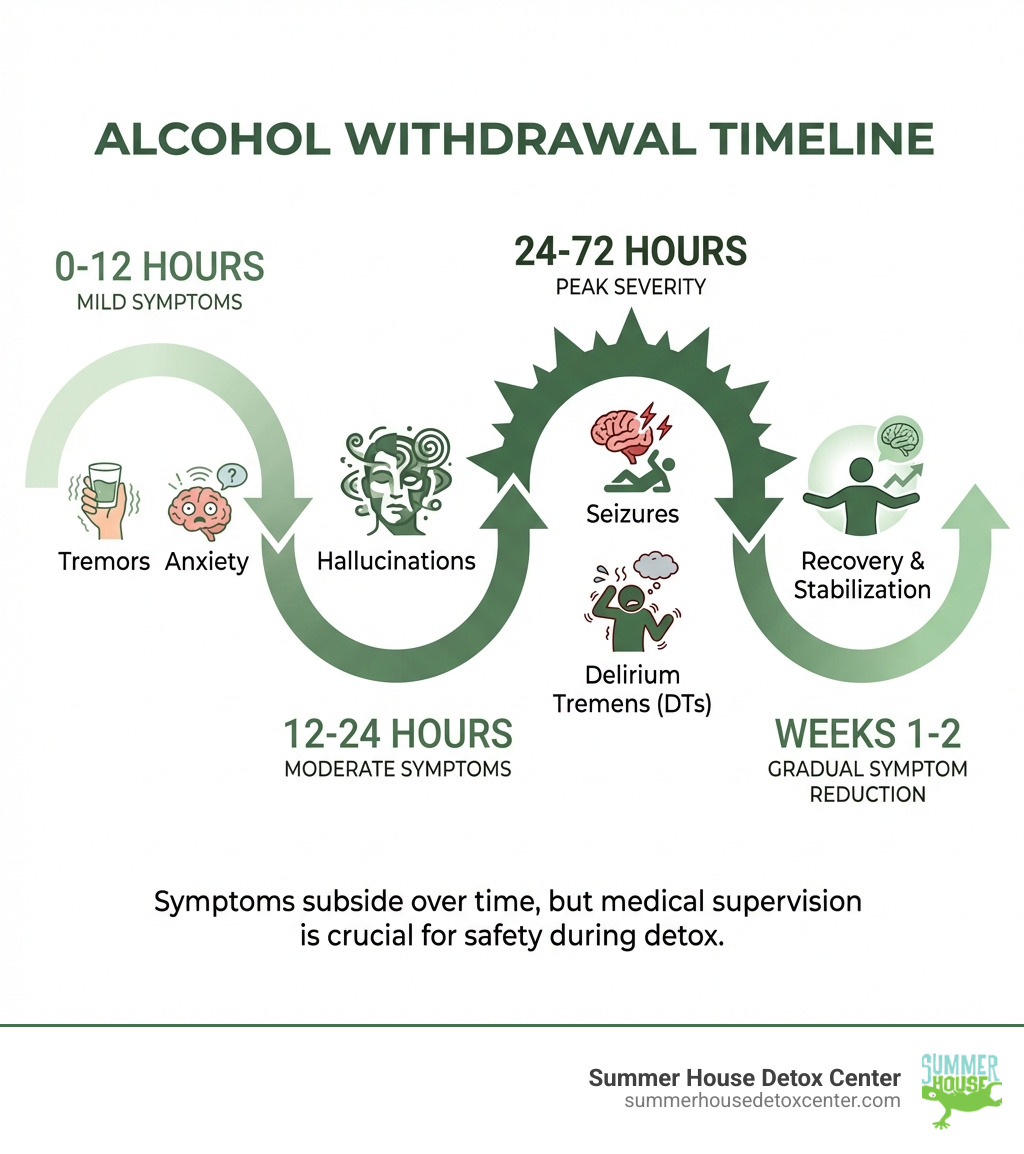
Alcohol detox timeline symptoms terms made easy:
The Physiology of Alcohol Withdrawal
To understand why alcohol detox timeline symptoms occur, we have to look at what’s happening inside your brain. Alcohol is a central nervous system depressant. When you drink consistently, your brain tries to maintain homeostasis—a fancy word for balance—by working extra hard to stay “awake.”
Specifically, alcohol increases the activity of GABA, a neurotransmitter that makes you feel calm and relaxed. At the same time, it suppresses glutamate, which is responsible for excitability. Over time, your brain adapts by reducing its natural GABA production and cranking up its glutamate receptors. Essentially, your brain is “stepping on the gas” to compensate for alcohol “stepping on the brakes.”
When you suddenly stop drinking, the brakes are removed, but the brain is still floored on the accelerator. This suppresses Alcohol suppresses brain activity while present, but its absence leaves you in a hyper-aroused state. This neurological “rebound” is what causes the shakes, anxiety, and in severe cases, seizures. Your central nervous system is essentially screaming because it hasn’t yet figured out how to function without its chemical “crutch.”
Alcohol Detox Timeline Symptoms: A Comprehensive Breakdown

Every person’s journey through detox is unique, but most follow a standard 14-day calendar. While it might feel like time is standing still when you’re in the thick of it, remembering that these symptoms are temporary can help you push through. can happen The peak of withdrawal often occurs after about 48–72 hours after your last drink. This is generally the “make or break” period where medical intervention is most critical.
Early Alcohol Detox Timeline Symptoms (6–24 Hours)
The first stage of withdrawal usually begins while you still have a small amount of alcohol in your system. For most, six hours after the last drink Alcohol withdrawal will begin once the levels of alcohol in the bloodstream drop below what has become “normal” for you.
During this window, you’ll likely experience:
- Anxiety and Irritability: You might feel “on edge” or jumpy.
- Insomnia: Falling and staying asleep becomes difficult as your brain stays in high gear.
- Physical Tremors: Often called “the shakes,” these usually affect the hands first.
- Nausea: Stomach upset and a loss of appetite are very common early on.
Peak Alcohol Detox Timeline Symptoms (24–72 Hours)
This is the phase where things get serious. It is considered The peak of withdrawal often occurs after about 48–72 hours because this is when the brain’s excitability is at its highest point.
- Hallucinations: Within 12 to 24 hours, some people experience visual, auditory, or tactile hallucinations (feeling things crawl on the skin).
- Seizures: The risk of “grand mal” seizures is highest between 24 and 48 hours. This is a major medical emergency.
- Vital Sign Spikes: Your heart rate and blood pressure may skyrocket, putting immense strain on your cardiovascular system.
- Disorientation: You may lose track of where you are or what day it is.
Severe Complications: Delirium Tremens and Seizures
When we talk about the dangers of alcohol detox timeline symptoms, we are primarily concerned with Delirium Tremens (DTs). DTs are the most severe form of ethanol withdrawal. It’s fatal in 5% to 15% of cases Delirium tremens (DTs), or “alcohol withdrawal delirium,” is one of the more extreme symptoms that can occur, especially in those with a long history of heavy use.
| Withdrawal Stage | Typical Symptoms | Onset Time |
|---|---|---|
| Mild | Anxiety, tremors, insomnia, headache | 6–12 Hours |
| Moderate | Hallucinations, high blood pressure, confusion | 12–48 Hours |
| Severe (DTs) | Seizures, extreme fever, severe agitation, delirium | 48–72 Hours |
DTs usually appear 48 to 72 hours after the last drink but can sometimes wait up to 10 days to show up. Symptoms include profound confusion, hallucinations, and “autonomic hyperactivity”—meaning your body’s “automatic” functions like heart rate and temperature regulation go haywire. Because of the risk of heart failure or stroke, we strongly advise against attempting to detox from heavy use without a medical team by your side.
Factors Affecting Severity and Long-Term Benefits
Why does one person have a mild headache while another faces life-threatening seizures? Several factors influence your specific alcohol detox timeline symptoms:
- Drinking History: The more you drink and the longer you’ve done it, the more your brain has adapted, leading to harsher withdrawal.
- Age and Health: Older adults (over 65) often face more complications. Existing liver or heart issues also increase risk.
- Hydration: This is huge in Florida. leading to Alcohol causes you to produce excessive amounts of urine, leading to dehydration. Chronic dehydration makes withdrawal symptoms feel much more intense and can lead to electrolyte imbalances that trigger seizures.
- Liver Function: cause Alcohol can cause inflammation and damage to your liver, which affects how your body processes toxins during detox.
While the first few days are tough, the rewards start almost immediately. Within the first week, you’ll notice keeps you Alcohol might help you get to sleep faster, but it keeps you from reaching the deepest stages of sleep. Once the alcohol is gone, your sleep becomes restorative again. By week two, your blood pressure stabilizes, your skin begins to clear, and your brain fog starts to lift.
Frequently Asked Questions about Alcohol Detox
How long do alcohol withdrawal symptoms last?
For most people, it’s seven to 10 days The duration of alcohol withdrawal will be different for everyone. Physical symptoms like tremors and nausea usually resolve within that first week. However, “post-acute” symptoms—like mood swings, anxiety, and cravings—can persist for several weeks or even months as your brain continues to heal.
Can you detox from alcohol at home safely?
It is very risky. Because you can create When you quit alcohol after using it consistently, your body spends about a week to a week and a half adjusting to its absence, you cannot always predict when a seizure might strike. In a Miami inpatient facility like Summer House, we use medications to prevent these dangerous spikes, ensuring you stay safe and comfortable.
What are the first signs of alcohol withdrawal?
The very first signs are usually “minor” but telling. You’ll likely notice a mild headache, a sense of inner shakiness or anxiety, and a total inability to get a good night’s sleep. Sweating and a slight “racing” heart are also common early indicators that your body is beginning to crave the substance.
Conclusion
The clock is ticking, but it’s ticking toward a better life. Understanding the alcohol detox timeline symptoms is the first step in taking your power back. At Summer House Detox Center in Miami, we believe that detox shouldn’t just be about survival—it should be about dignity and comfort.
Our experienced staff provides personalized, medically supervised care in a supportive environment, helping you steer the toughest 72 hours and beyond. Whether you are in Miami-Dade or traveling from elsewhere in Florida, we are here to ensure your first step into sobriety is a safe one. Start your journey to sobriety at Summer House Detox Center today—we’re ready when you are.
