
Why One-Size-Fits-All Treatment Fails Most People
If you’ve tried to quit before and it didn’t stick, you’re not alone. The truth is, addiction affects each person differently—shaped by a unique combination of genetics, trauma, environment, and mental health. Yet for decades, many treatment programs have relied on the same rigid, one-size-fits-all approach for every individual who walks through their doors. This outdated model often leads to a frustrating cycle of relapse, leaving people feeling hopeless.
Research now confirms what many have learned the hard way: addiction is far too complex for cookie-cutter solutions. Your brain chemistry, personal history, and path forward are yours alone. According to the National Institute on Drug Abuse, a leader in addiction science, effective treatment must be individualized to address the multiple needs of the person, not just the addiction itself. This principle is the foundation of modern, successful recovery.
Personalized addiction treatment is a comprehensive, evidence-based approach that tailors every aspect of recovery—from detox and therapy to aftercare planning—to your unique history, needs, and goals. It moves beyond a standardized curriculum to create a truly individual path to healing.
In a place like Miami, where cultures, careers, and lifestyles are incredibly diverse, personalized care becomes even more important. Someone working in the nightlife scene on South Beach will likely face very different triggers and stresses than a retiree living on the Gulf Coast or a college student in Central Florida. Effective treatment has to reflect those real-world differences if it is going to last.
What Makes Personalized Treatment Different?
Instead of forcing you into a pre-set box, personalized care builds the program around you. Here’s how:
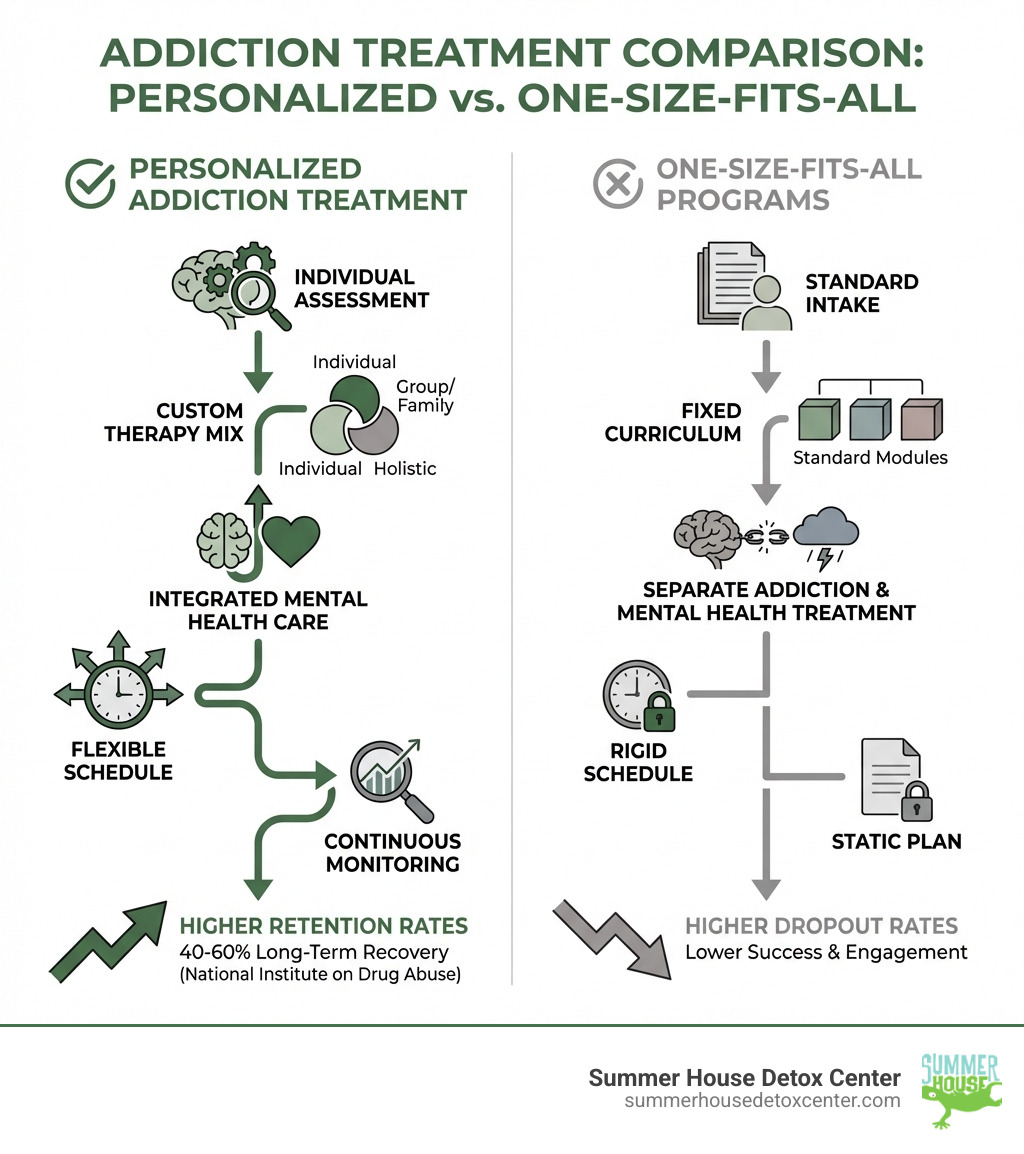
- Deep, Custom Assessment: This goes far beyond a simple intake form. A thorough evaluation explores your complete substance use history, underlying mental health conditions (like anxiety or PTSD), past traumas, physical health status, family dynamics, and personal recovery goals. For Floridians, that may also mean talking about hurricane-related stress, seasonal work in tourism, or family living in other states. This holistic view is the blueprint for your entire treatment journey.
- Flexible and Diverse Therapy Mix: A generic program might mandate the same therapy for everyone. Personalized care, however, combines different modalities based on what will work for you. This could mean a blend of individual counseling (like Cognitive Behavioral Therapy), specialized group therapy, family counseling to mend relationships, and holistic approaches such as mindfulness or yoga to heal the whole person. In Miami and South Florida, this often includes culturally sensitive support that respects language, spiritual beliefs, and family traditions.
- Truly Integrated Care for Co-Occurring Issues: It’s extremely common for addiction to coexist with mental health disorders like depression, anxiety, or bipolar disorder. Personalized treatment addresses these issues simultaneously. Treating the addiction while ignoring the underlying anxiety is a recipe for relapse. Integrated care ensures both are managed together for lasting stability, which is especially critical in high-pressure environments like hospitality, healthcare, or finance that are so common across Florida.
- Adaptive and Evolving Planning: Recovery is not a straight line; it’s a dynamic process. A personalized treatment plan is a “living document” that is continuously monitored and adjusted as your needs change. As you make progress or face new challenges, your clinical team adapts your plan to ensure it remains effective and relevant. For example, as a Miami patient prepares to return to a job near bars or cruise ports, their plan may shift to focus more on relapse prevention and stress management in those specific settings.
Here in Miami and across Florida, more leading treatment centers are embracing this reality. The diverse population and unique social pressures of South Florida make a standardized approach particularly ineffective. Personalized addiction treatment acknowledges the specific cultural backgrounds, career demands, and environmental triggers that residents face—from tourist-driven nightlife and seasonal employment to long commutes and cost-of-living stress. It’s the critical difference between feeling like a number in a system and feeling truly seen, heard, and understood.
The numbers back this up. Studies consistently show that personalized treatment programs see 40-60% of participants maintain long-term recovery—a rate significantly higher than standardized approaches. When a treatment plan resonates with your real-life struggles and goals, you are more engaged, more motivated, and ultimately, more likely to succeed.
For people seeking help in Miami or elsewhere in Florida, choosing a program that prioritizes individualized, medically supervised detox and custom follow-up care can set the tone for a safer, more comfortable start to recovery—and make it more realistic to sustain sobriety once you return to your day-to-day life.
Similar topics to personalized addiction treatment:
Understanding Personalized Addiction Treatment: Beyond One-Size-Fits-All
Addiction is a profoundly intricate condition, recognized by medical science as a chronic, relapsing brain disorder. It is not a moral failing or a simple lack of willpower. It’s a complex disease that physically alters brain function and behavior, shaped by a unique interplay of biological, psychological, and social factors. This complexity is precisely why a “one-size-fits-all” approach to treatment often falls short, much like a doctor prescribing the same medicine for every patient, regardless of their specific illness.
For decades, much of addiction care operated without a strong scientific foundation. However, the last 25 years have witnessed a “quantum leap” in our understanding of addiction’s psychological and neural underpinnings. We now have detailed knowledge of how addictive substances hijack the brain’s reward system, flood it with dopamine, and rewire crucial circuits involved in judgment, learning, and impulse control. This scientific progress has illuminated a crucial truth: every person’s biological and psychological makeup is different. Therefore, it would be nothing short of a miracle if a single, standardized treatment strategy worked for everyone.
This growing understanding has propelled the addiction treatment field toward the paradigm of personalized medicine, a concept that has already revolutionized other medical fields like oncology. Just as cancer treatment is custom to the genetic makeup of a specific tumor, addiction treatment must be custom to the individual. The National Institute on Drug Abuse (NIDA) unequivocally states that effective treatment must be individualized to address the multiple needs of the person, not just the addiction. This personalized approach is not merely a preference; it is a clinical necessity that improves engagement, increases retention in treatment programs, and significantly boosts long-term recovery outcomes.
In Florida, this individualized model also helps close the gap between the large number of people who need help and the smaller number who actually receive it. Many Miami and South Florida residents hesitate to seek treatment because they worry they will be judged, misunderstood, or forced into a rigid system that doesn’t fit their life. A personalized approach sends a different message: your story matters, and your care will be built around it.
Consider the scale of the problem: In 2020 alone, over 40 million people in the United States struggled with a substance use disorder, yet only a small fraction received any form of treatment. This staggering “treatment gap” exists partly because generic programs fail to meet individual needs, leading to poor outcomes and a reluctance to seek help. When treatment is custom-built for you, it acknowledges that your specific struggles, triggers, co-occurring disorders, and life goals are valid and central to your healing.
In a metropolitan area like Miami, that can mean factoring in long work hours, caregiving responsibilities, immigration-related stress, or the pressure of working in tourism, nightlife, or high-stress professional fields. In other parts of Florida, it may involve addressing isolation in rural communities, transportation challenges, or seasonal employment patterns. Personalized addiction treatment makes space for all of these realities instead of ignoring them.
| Aspect | Personalized Addiction Treatment | Standard One-Size-Fits-All Treatment |
|---|---|---|
| Assessment | Comprehensive biopsychosocial evaluation, including medical, psychological, and social history. | Basic intake form focused primarily on substance use history. |
| Treatment Plan | Dynamic, flexible, and collaborative. Adjusted based on patient progress and evolving needs. | Fixed, rigid curriculum. All patients follow the same predetermined path. |
| Therapy | Customized mix of evidence-based therapies (CBT, DBT, etc.), group, and holistic options. | Mandatory, uniform therapy sessions for all participants. |
| Dual Diagnosis | Integrated care model that treats addiction and co-occurring mental health issues simultaneously. | Separate or sequential treatment; mental health may be overlooked or addressed later. |
| Patient Role | Active collaborator in their own recovery planning and goal-setting. | Passive recipient of a pre-set program. |
| Pacing | Paced to the individual’s unique needs and readiness for each stage of recovery. | Rigid schedule that everyone must follow, regardless of personal progress. |
| Focus | Holistic well-being, addressing mental, physical, and emotional health for a sustainable future. | Primarily focused on achieving abstinence as the sole metric of success. |
The Benefits of Personalized Addiction Treatment
Personalized addiction treatment offers a range of benefits that directly impact your chances of long-term success, especially when combined with medically supervised detox:
- Increased program retention: When care feels relevant and respectful, people are far more likely to stay through the difficult early days of detox and beyond. In a supportive setting like an inpatient detox center in Miami, individualized comfort measures and close medical attention can make the process safer and more tolerable.
- Higher long-term recovery rates: Custom plans that evolve over time help people maintain sobriety once they leave treatment. Coping strategies can be designed around specific Florida-related triggers, such as social drinking on the beach, boating culture, or workplace events.
- Improved patient engagement: Being invited into the decision-making process encourages honesty and collaboration. You are more invested when your goals—such as repairing relationships, returning to school, or protecting a professional license—are front and center.
- Care for the whole person, not just the substance: Addiction rarely exists in isolation. Personalized treatment takes into account physical health issues, mental health conditions, spiritual needs, and practical concerns like housing or employment.
- Empowerment and self-confidence: When your treatment team listens and responds to your feedback, you begin to rebuild trust in yourself. Over time, this sense of agency helps you steer triggers and stressors without returning to alcohol or drugs.
How Patient History and Goals Shape Recovery
No two recovery journeys look exactly alike, and that’s by design. Your history, values, and future plans all shape the most effective treatment path.
- The role of personal history: A thorough assessment explores when and how substance use began, what substances are involved, and how they have affected your life. For many people in South Florida, this may include a history of using substances in social or work-related environments, or escalations during stressful life events such as storms, job loss, or family separation.
- Trauma-informed care: Many individuals living in Miami and across Florida have experienced trauma—from childhood abuse or community violence to natural disasters and accidents. Trauma-informed care ensures that treatment does not re-traumatize you and instead creates a safe environment where you can process what happened at a pace that feels manageable.
- Aligning treatment with individual goals: Your goals might include rebuilding trust with family, keeping your job, staying out of the legal system, or being present for your children. Personalized addiction treatment prioritizes these goals in your plan. For example, if you live in Florida but have family support in another state, aftercare planning might incorporate virtual family therapy or support groups.
- The importance of a strong support system: Recovery is easier when you don’t have to do it alone. Personalized treatment looks at who is in your corner—family, friends, coworkers, faith communities, or recovery peers—and helps you strengthen that support. In Miami, this might include connecting you to local 12-step meetings, outpatient programs, or sober living options that fit your cultural and language needs.
- Patient collaboration in planning: Instead of being told what to do, you work side-by-side with clinicians to shape your recovery roadmap. You can speak up about what has and hasn’t worked in previous attempts, discuss your comfort level with different therapies, and adjust the pace as you progress.
By centering your story and your goals, personalized addiction treatment—especially when it begins with compassionate, medically monitored detox—gives you a stronger foundation for long-term recovery, whether you call Miami home or live elsewhere in Florida.
