
Understanding Klonopin Withdrawal: A Critical First Step
Symptoms of Klonopin withdrawal can range from uncomfortable to life-threatening, making it crucial to understand what to expect before stopping this medication.
Common symptoms of Klonopin withdrawal include:
- Physical symptoms: Headaches, muscle aches, tremors, sweating, nausea, heart palpitations, dizziness, and extreme fatigue
- Psychological symptoms: Severe anxiety, panic attacks, irritability, insomnia, depression, mood swings, confusion, and memory problems
- Dangerous symptoms: Seizures, hallucinations, psychosis, delirium, and suicidal thoughts
The severity and duration of these symptoms depend on several factors: how long you’ve taken Klonopin, your dosage, use of other substances, your age, metabolism, and overall health.
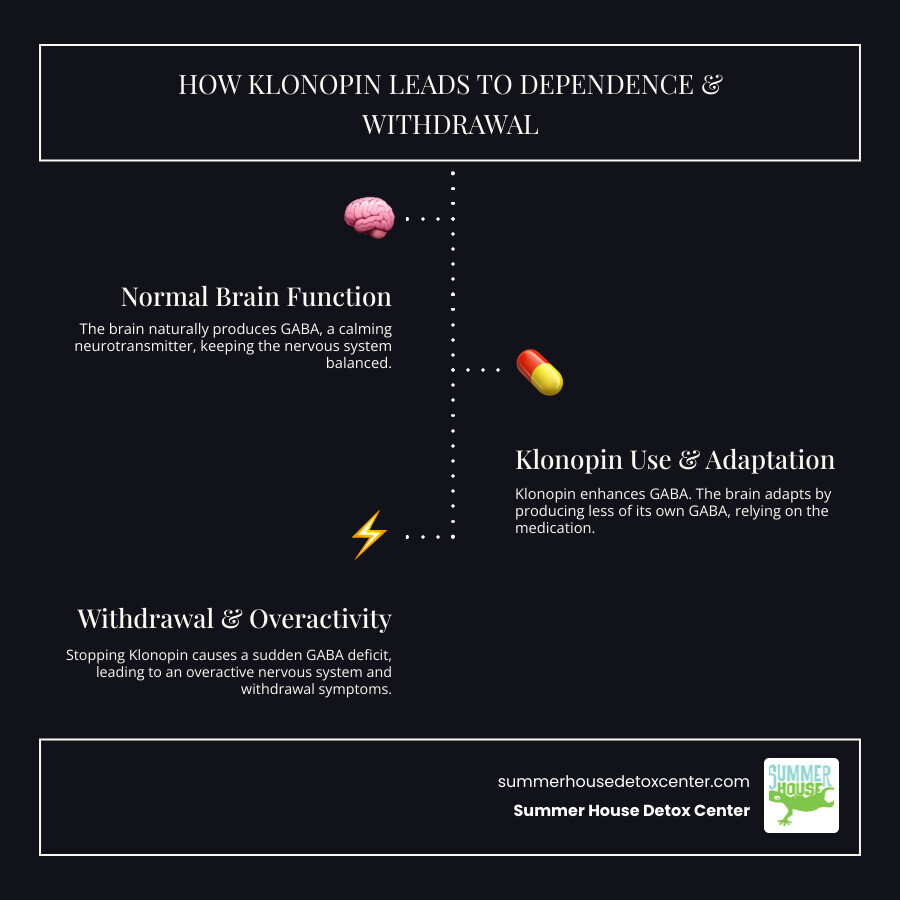
Klonopin (clonazepam) is a benzodiazepine that works by enhancing the brain chemical GABA (gamma-aminobutyric acid), which calms the nervous system. With regular use, the brain adapts by producing less GABA on its own, learning to rely on the medication to maintain calm.
This adaptation is called physical dependence, which is different from addiction. You can become physically dependent on Klonopin even when taking it exactly as prescribed. In Florida, where benzodiazepine prescriptions are common, many people don’t realize they’re dependent until they try to stop.
When Klonopin is reduced or stopped, the brain suddenly lacks the GABA it needs. The nervous system becomes overactive, leading to withdrawal symptoms. The FDA classifies Klonopin as a Schedule IV controlled substance due to this dependence risk.
Here in Miami and throughout Florida, understanding this process is the first step toward safe recovery. Never attempt to stop Klonopin suddenly or “cold turkey.” The risks are real and potentially fatal, particularly the danger of seizures.
A Comprehensive Guide to the Symptoms of Klonopin Withdrawal
Symptoms of Klonopin withdrawal are not one-size-fits-all; your experience can differ greatly from someone else’s. This unpredictability is why professional guidance is essential.
You may have heard of the “rebound effect,” where the original symptoms Klonopin treated—anxiety, insomnia, panic—return with greater intensity. This isn’t a personal failure; it’s your brain recalibrating after relying on the medication.
Ignoring these symptoms or trying to “white-knuckle” through them is not just uncomfortable—it’s dangerous. Here in Miami, we’ve seen many people require emergency care because they underestimated the severity of withdrawal.

Common Physical Symptoms
As your nervous system kicks into overdrive, you’ll likely experience physical symptoms ranging from annoying to debilitating.
- Headaches and Muscle Pain: Persistent tension headaches, migraines, and muscle aches or stiffness are common. Some people experience muscle spasms or restless legs.
- Tremors and Sweating: Shaking hands and profuse sweating are classic signs of an overactive nervous system trying to rebalance.
- Digestive Issues: Nausea, vomiting, stomach pain, and diarrhea can make it difficult to eat when your body needs nutrition most. Our article on Why Do I Experience Stomach and Digestive Problems When Quitting Benzos? explains this further.
- Cardiovascular Symptoms: Heart palpitations and dizziness can be frightening, reinforcing the need for medical supervision.
- Fatigue and Sensory Sensitivity: Despite the internal hyperactivity, you may feel profound exhaustion. Lights may seem too bright, sounds too loud, and some people report unsettling “brain zaps”—brief, electric shock-like sensations in the head.
Managing Psychological Symptoms of Klonopin Withdrawal
For many, the psychological symptoms of Klonopin withdrawal are the most challenging part. Removing the medication can leave you feeling exposed and vulnerable.
- Rebound Anxiety and Panic Attacks: The anxiety Klonopin treated often returns stronger than before, accompanied by intense worry and a sense of impending doom. Sudden panic attacks can also occur.
- Irritability and Mood Swings: You may find yourself with a very short fuse, snapping at loved ones over minor issues. Moods can swing unpredictably from anger to sadness.
- Insomnia and Nightmares: Exhaustion is compounded by the inability to fall or stay asleep. When sleep does come, it’s often plagued by disturbing dreams.
- Depression and Anhedonia: A deep sense of hopelessness can set in, along with an inability to feel pleasure (anhedonia), making recovery feel even harder.
- Cognitive Issues: Brain fog, confusion, and short-term memory problems can make it difficult to concentrate or follow conversations.
The psychological toll of benzodiazepine withdrawal is a real phenomenon we discuss in our article about The Dark Side of Benzos.
Severe and Dangerous Symptoms of Klonopin Withdrawal
This is why we insist on medical supervision for Klonopin withdrawal: some symptoms are not just uncomfortable, but life-threatening.
- Grand Mal Seizures: This is the most serious risk, especially with abrupt cessation (“cold turkey”). These full-body convulsions can cause permanent injury or death, a risk the FDA specifically warns about.
- Psychosis and Hallucinations: You may see, hear, or feel things that aren’t there (hallucinations) or experience a complete break from reality (psychosis), including delusions.
- Delirium and Catatonia: Severe confusion and disorientation (delirium) can occur. In rare cases, a person may enter a state of catatonia, becoming unable to move or communicate.
- Suicidal Thoughts: The combination of depression, anxiety, and hopelessness can lead to suicidal ideation. The FDA added warnings about this risk to Klonopin labels in 2009.
Attempting to quit Klonopin on your own dramatically increases the risk of these severe complications. Whether you’re in Miami or elsewhere in Florida, professional help is essential for safety. We address similar risks in our article on Xanax Addiction Withdrawal Treatment.

The Klonopin Withdrawal Timeline: What to Expect
One of the first questions people ask is, “How long will this last?” While everyone’s journey is unique, we can provide a general roadmap.
The timeline for symptoms of Klonopin withdrawal is shaped by several factors: your dosage, the duration of use, and any polydrug use (mixing with alcohol or other drugs). Your age, metabolism, and overall health also play a role. Most importantly, how you stop—a medically supervised taper versus quitting “cold turkey”—makes the biggest difference.
The Typical Timeline and Phases
Klonopin is a long-acting benzodiazepine, meaning its half-life is 18-50 hours. This causes a delayed onset of withdrawal compared to shorter-acting drugs like Xanax.
-
Early Withdrawal (Days 1-4): The first few days can be deceptive. Symptoms typically appear around day 2 or 3, often starting with a rebound of the anxiety or insomnia that Klonopin was originally prescribed to treat. You might also feel a general sense of discomfort or heightened sensory perception.
-
Acute Withdrawal (Weeks 1-4): This is typically the most challenging phase, with symptoms of Klonopin withdrawal peaking around the second week. During this period, you may experience the full spectrum of physical and psychological symptoms, including severe anxiety, panic attacks, tremors, sweating, nausea, and mood swings. This phase generally lasts 2-4 weeks but can be longer for those on high doses or with a long history of use.
-
The Post-Acute Phase (Weeks 4+): For many, the most intense symptoms begin to fade after the first month. However, some individuals may face a different, longer-term challenge.
For more context, our article How Long Does Benzo Withdrawal Last? provides additional perspective.
Understanding Post-Acute Withdrawal Syndrome (PAWS)
Just when they think they’re in the clear, about 10-15% of people who’ve used benzodiazepines encounter Post-Acute Withdrawal Syndrome (PAWS). These are lingering symptoms that can persist for months after the acute phase has ended.
PAWS symptoms tend to come and go in waves, which can be discouraging. Common symptoms include:
- Waves of intense anxiety
- Cognitive issues like brain fog and memory problems
- Persistent sleep disturbances
- Depression and anhedonia (inability to feel pleasure)
- Mood swings and irritability
- Chronic fatigue
- Lingering physical sensations like nerve tingling
These symptoms can feel identical to a relapse of an underlying anxiety disorder, making professional guidance crucial for navigating this phase. The good news is that PAWS is not permanent. With time, therapy, and support, the brain continues to heal, and these symptoms gradually diminish.
Navigating Klonopin Detox Safely: The Importance of Medical Supervision
Let’s be clear: quitting Klonopin on your own is dangerous. The unpredictability of symptoms of Klonopin withdrawal can be life-threatening, with the primary risk being grand mal seizures, which can be fatal. This is why professional medical oversight isn’t just recommended—it’s essential.
When Klonopin is removed, the nervous system can go into overdrive. In a medical detox setting like our center in Miami, professionals can monitor your vital signs 24/7 and intervene before symptoms become a medical emergency. You may wonder, Why Are Benzos Used in Drug Detox If They’re So Addictive? The answer lies in safe, controlled medical protocols.
The Gold Standard: Medically-Assisted Tapering
Instead of stopping Klonopin abruptly, the safest method is a medically-assisted taper. This involves gradually reducing your dosage, giving your brain time to adjust at each step.
Your tapering schedule is designed specifically for you, based on your usage history, dosage, and overall health. At Summer House Detox Center, our staff monitors you 24/7. Many of our team members are in recovery themselves and understand exactly what you’re experiencing, offering both medical expertise and genuine empathy.
We also use carefully selected medications to manage symptoms and ensure your safety and comfort. These may include:
- Anticonvulsants (like Keppra) to prevent seizures.
- Blood pressure medications (like Clonidine or propranolol) to calm anxiety, reduce tremors, and stabilize heart palpitations.
- Antidepressants or mood stabilizers to ease psychological distress.
- Non-addictive sleep aids (like melatonin) to help restore healthy sleep patterns.
This comprehensive approach is the standard of care for all benzodiazepine withdrawal, including what we outline in our Beat Xanax Addiction at Summer House Detox Center in Miami program.
Beyond Detox: Building a Foundation for Recovery
Detox is the beginning, not the end. Lasting recovery means addressing the reasons you started using Klonopin and building new coping skills.
- Therapy: Counseling helps you explore underlying issues like chronic anxiety or trauma and learn healthier coping mechanisms.
- Cognitive Behavioral Therapy (CBT): This approach is highly effective for challenging the negative thought patterns that fuel anxiety. Research shows that combining CBT with a taper program significantly improves success rates.
- Support Groups: Groups like Narcotics Anonymous provide a community of people who understand your journey and can offer accountability and hope.
- Relapse Prevention: You’ll learn practical skills to identify triggers, manage cravings, and steer high-risk situations.
- Co-occurring Disorders: Effective treatment must address both substance use and any underlying mental health conditions like depression or anxiety disorders simultaneously.
At Summer House Detox Center, our goal is to equip you for a fulfilling, drug-free life. Our approach to Benzo Addiction Recovery addresses the whole person—body, mind, and spirit.
Frequently Asked Questions about Klonopin Withdrawal
It’s natural to have questions when facing Klonopin withdrawal. Here are answers to some of the most common concerns we hear from individuals and families in Miami and across Florida about the symptoms of Klonopin withdrawal.
Can Klonopin withdrawal be fatal?
Yes, in rare cases, Klonopin withdrawal can be fatal. The primary danger comes from quitting suddenly (“cold turkey”) without medical supervision, which can trigger life-threatening grand mal seizures. Other serious risks include severe delirium and psychosis. This is why medical detox is considered essential for safely stopping Klonopin.
How long do the most intense Klonopin withdrawal symptoms last?
The most intense period, known as the acute withdrawal phase, typically peaks around the second week after the last dose. This phase, where symptoms are at their most severe, usually lasts from one to four weeks. While challenging, these intense symptoms do gradually subside over time.
Is it possible to have withdrawal symptoms even when taking Klonopin as prescribed?
Yes. This is a crucial point. Physical dependence can develop even when you take Klonopin exactly as your doctor prescribed. This is not addiction, but a natural adaptation of your body. If the medication is stopped or the dose is reduced too quickly, your system can react with withdrawal symptoms because it hasn’t had time to readjust. This is why you should always consult a healthcare provider before changing your Klonopin dosage.
Begin Your Recovery Journey in Miami
If you’ve read this far, you understand that the symptoms of Klonopin withdrawal are serious. But the most important message is this: recovery is absolutely possible, and you don’t have to face it alone.
While the risks of withdrawal are significant, they are manageable with professional, medically supervised care. Here in Miami, we’ve helped countless individuals safely steer withdrawal and reclaim their lives.
At Summer House Detox Center, our program is built to address the unique challenges of benzodiazepine withdrawal. We create individualized detox plans because we know every person’s journey is different. Our team provides 24/7 medical supervision, and many of our staff are in recovery themselves. They offer a unique combination of medical expertise and personal empathy, creating an environment where healing can truly begin.
We manage withdrawal symptoms through safe tapering schedules and symptom-specific medications, ensuring your comfort and dignity. Detox is just the first step; we also help you build a foundation for lasting recovery by connecting you with therapy and teaching relapse prevention skills.
If you or someone you love in Florida is struggling with Klonopin dependence, please reach out. That first call is the most important step toward a healthier, Klonopin-free future. Learn more about our specialized Detox Services: Benzo Detox and take that courageous step today.
