Understanding the Suboxone Withdrawal Timeline
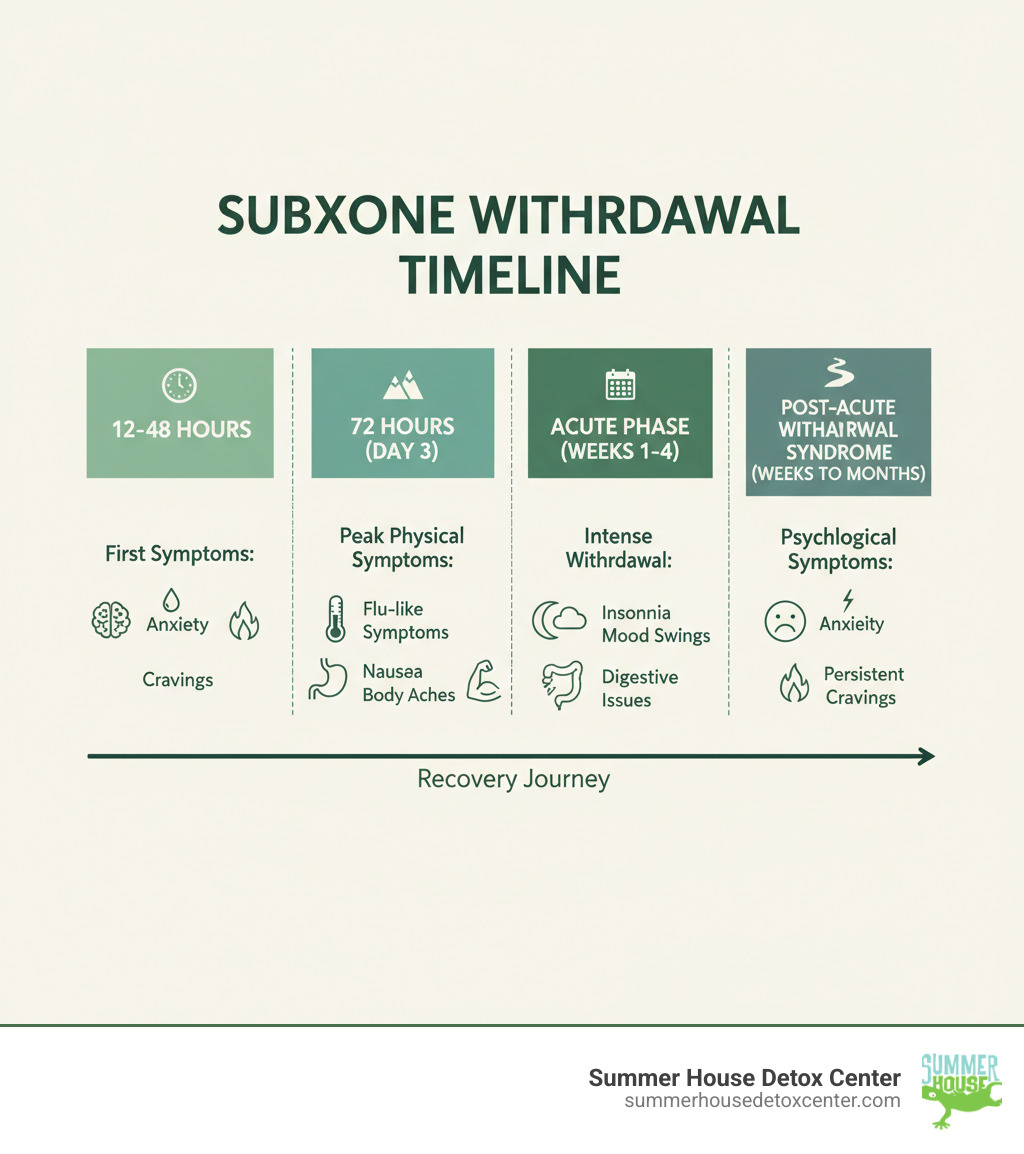
The Suboxone withdrawal timeline typically begins 12-48 hours after your last dose, peaks during the first week, and can last up to a month or longer for psychological symptoms. Here’s a quick overview:
- 0-12 hours: No symptoms yet due to Suboxone’s long half-life.
- 12-48 hours: First symptoms appear (anxiety, sweating, cravings).
- 72 hours (Day 3): Peak physical symptoms (flu-like symptoms, nausea, body aches).
- Week 1: Most intense physical withdrawal (insomnia, mood swings, digestive issues).
- Weeks 2-4: Physical symptoms ease as psychological symptoms emerge (depression, anxiety, persistent cravings).
- Beyond 1 month: Post-Acute Withdrawal Syndrome (PAWS) may continue for weeks or months.
If you’ve been taking Suboxone for opioid use disorder, you might be wondering what happens when you stop. Withdrawal can feel overwhelming, but knowing what to expect makes it manageable.
Suboxone contains buprenorphine (a partial opioid agonist) and naloxone (an opioid antagonist) to reduce cravings. Because buprenorphine has a long half-life (up to 42 hours), your body becomes physically dependent over time. When you stop, your brain needs time to readjust its chemistry. This is a normal biological response, not a sign of failure.
Many people in Miami and across Florida fear withdrawal, often due to past failed attempts. But with medical supervision, it doesn’t have to derail your recovery. At Summer House Detox Center, we help Florida residents steer this process safely and with dignity, supported by experienced staff who understand what you’re going through.
You don’t have to do this alone.
The Suboxone Withdrawal Timeline: What to Expect Day-by-Day
The Suboxone withdrawal timeline varies, but a general pattern exists. Your experience depends on your dosage, duration of use, and individual metabolism. Because Suboxone’s main ingredient, buprenorphine, has a long half-life (up to 42 hours), withdrawal starts later but lasts longer than with short-acting opioids. You might feel fine for a day or two before symptoms appear, which can be misleading. Understanding this timeline helps you prepare and get the right support.
Early Stage: First 72 Hours
The first signs of withdrawal usually appear 12 to 48 hours after your last dose. This stage feels like the flu, starting with anxiety, irritability, and restlessness. You’ll likely experience a runny nose, watery eyes, yawning, mild nausea, headaches, and persistent muscle aches. Cravings may begin, and by the 72-hour mark, these symptoms intensify as your body begins to readjust.
Peak Acute Stage: Week 1
This is often the toughest part, as physical symptoms hit their hardest. Expect intensified flu-like symptoms, including severe nausea, vomiting, and diarrhea, which can lead to dehydration. Muscle and body pains deepen, and insomnia becomes a major issue. You may also experience overwhelming mood swings, digestive distress, alternating sweating and chills, and intense cravings. Having support during this stage is critical.
At our Miami center, we manage these symptoms with comfort medications and 24/7 support so you don’t have to go through it alone.
Late Acute Stage: Weeks 2-4
In weeks two through four, the most severe physical symptoms usually fade. However, psychological symptoms often take their place. You may experience lingering fatigue, depression, and persistent anxiety. Cravings may change but still linger, especially when triggered by stress. Mental fog, difficulty concentrating, and sleep disturbances are also common as your brain works to rebalance itself.
This phase highlights the need for comprehensive care. Summer House Detox Center supports both physical and psychological healing, helping you build a foundation for lasting recovery.
Understanding Common Suboxone Withdrawal Symptoms
Suboxone withdrawal includes a range of temporary and treatable physical and psychological symptoms. Physical issues usually appear first, while psychological ones can emerge later and last longer. At Summer House Detox Center in Miami, our experience with Florida residents shows that proper symptom management is key to a successful detox.

Common Physical Symptoms
Your body’s reaction to the absence of Suboxone can be intense, but it’s a sign that healing is beginning. Common physical symptoms include:
- Nausea, vomiting, and diarrhea: This digestive distress can lead to dehydration and electrolyte imbalances, requiring professional monitoring.
- Muscle and body aches: A deep, throbbing discomfort often described as a severe, full-body flu.
- Headaches: Ranging from dull aches to severe migraines.
- Sweating and chills: Your body struggles to regulate its temperature, causing uncomfortable fluctuations.
- Insomnia and fatigue: Extreme exhaustion combined with the inability to get restful sleep makes other symptoms feel worse.
- Other classic signs: You may also notice dilated pupils, excessive yawning, and a runny nose.
Persistent Psychological Symptoms
As physical symptoms subside, psychological challenges often take center stage. These can be harder to endure because they affect your thoughts and emotions.
- Anxiety: An overwhelming sense of worry or dread, often with physical signs like a racing heart.
- Depression: Feelings of hopelessness and a loss of interest in activities you once enjoyed, especially after the first week.
- Irritability and mood swings: You may snap at loved ones or swing from anger to sadness without warning.
- Drug cravings: Intense urges to use can persist for a month or longer, often triggered by stress.
- Difficulty concentrating: Frustrating “brain fog” that makes it hard to focus or remember things.
- Anhedonia: A temporary inability to feel pleasure, which can be very discouraging.
These symptoms show why comprehensive care is vital. Our Miami facility provides emotional support and therapy to address these challenges. Recovery is about rebuilding your emotional well-being, and our experienced staff are here to guide you.
Factors That Influence Your Withdrawal Experience
While there’s a general Suboxone withdrawal timeline, your journey is unique. Several factors influence the intensity and duration of your symptoms. At Summer House Detox Center, we assess these factors to create a personalized detox plan that works for you.
- Dosage Level: Higher doses can lead to a more pronounced withdrawal as your body adjusts to a larger chemical change.
- Duration of Use: Long-term use gives your body more time to adapt, so it needs more time to readjust to functioning without the medication.
- Individual Metabolism: Your unique body chemistry, including liver and kidney health, affects how quickly Suboxone is processed and eliminated.
- Co-occurring Disorders: Conditions like anxiety, depression, or PTSD can amplify psychological withdrawal symptoms. Our Miami team addresses your mental and physical health together for better outcomes.
- Polysubstance Use: Using alcohol, benzodiazepines, or other drugs alongside Suboxone creates a more complex and potentially dangerous withdrawal that requires careful medical supervision.
- Overall Physical Health: A healthier body is more resilient. We focus on nutrition and hydration to support your physical recovery.
- Psychological Support System: A strong network of family, friends, or our experienced staff in Miami provides crucial encouragement. Some of our team members are in recovery and offer unique empathy and understanding.
Safely Managing Withdrawal: Tapering vs. “Cold Turkey”
How you stop taking Suboxone significantly impacts your withdrawal timeline and overall recovery. Quitting abruptly (“cold turkey”) is dangerous, while a medically supervised taper is safer and more effective. At Summer House Detox Center, we provide the professional support available here in Miami to ensure your safety and success.
The Dangers of Quitting Suboxone Abruptly
Quitting “cold turkey” might seem like the fastest way, but it is dangerous. Abruptly stopping shocks your system, leading to:
- Severe withdrawal symptoms: The physical and psychological pain is often unbearable, far worse than with a taper.
- Increased relapse risk: Intense suffering makes relapse more likely to relapse as a way to stop the pain.
- Precipitated withdrawal: Using a full opioid too soon after stopping Suboxone can trigger an immediate, even more severe withdrawal.
- Overdose risk: If you relapse after your tolerance has dropped, your previous dose could be fatal. This is a tragic reality we see too often in Florida.
The Benefits of a Medically Supervised Taper
A medically supervised taper is a much safer and more comfortable approach.
- Gradual Dose Reduction: We slowly decrease your dosage according to a therapeutic treatment plan, allowing your brain to adjust with far more manageable symptoms.
- Symptom Management: Our team provides 24/7 comfort medications to ease discomfort. This can include Lucemyra (lofexidine hydrochloride) or clonidine for withdrawal symptoms, anti-nausea medications, non-habit-forming sleep aids, and non-addictive pain relievers.
- Emotional Support: Our compassionate staff, some in recovery themselves, provide vital emotional and psychological support.
- Safe Environment: Our Miami in-patient facility offers 24/7 medical monitoring to manage any complications immediately, keeping you safe and comfortable.
This method makes the withdrawal timeline more bearable and sets you up for long-term success.
Beyond the Acute Phase: Post-Acute Withdrawal Syndrome (PAWS)
Even after acute withdrawal ends, some people experience Post-Acute Withdrawal Syndrome (PAWS). This is an extended healing period where your brain’s chemistry continues to rebalance, which can last for weeks or months. Unlike acute withdrawal, PAWS symptoms are mostly psychological and emotional. They can come and go unexpectedly, with periods of feeling fine followed by sudden struggles.
Common PAWS symptoms include:
- Intermittent Cravings: Cravings during PAWS are less constant but can be triggered unexpectedly by stress or other cues.
- Sleep Disturbances: Persistent insomnia, vivid dreams, or non-restful sleep can affect your mood and energy.
- Emotional Dysregulation: You may feel like you’re on an emotional roller coaster, with small setbacks feeling overwhelming. This is your brain relearning to manage neurotransmitters.
- Cognitive Issues: “Brain fog,” difficulty concentrating, and memory problems are common.
- Anhedonia: A frustrating inability to feel pleasure from activities you once enjoyed.
Feeling “normal” again is possible, but PAWS highlights why aftercare is essential. Detox is just the beginning. At Summer House Detox Center, we help you prepare for what’s next by connecting our Florida clients with comprehensive aftercare, including therapy and support groups. We provide the tools to manage PAWS and build a foundation for sustainable, long-term recovery.
Frequently Asked Questions about the Suboxone Withdrawal Timeline
We know you’re looking for clear answers about what to expect during your Suboxone withdrawal timeline. These are the questions we hear most often from people in Miami and throughout Florida who are considering detox.
How does the Suboxone withdrawal timeline compare to other opioids?
The Suboxone withdrawal timeline is unique due to buprenorphine’s longer half-life (up to 42 hours). Compared to short-acting opioids like heroin, this causes:
- Delayed Onset: Withdrawal begins later, typically 12-48 hours after the last dose.
- Milder but Longer Duration: The peak is often less intense than with full opioids, but the overall process is more drawn out. Physical symptoms can last for weeks, and the psychological phase is often more pronounced. Our Miami team understands this unique timeline and tailors care accordingly.
How long do cravings last after stopping Suboxone?
Cravings are highly individual. While intense physical cravings peak in the first week, psychological cravings can linger for weeks or months, often triggered by stress, environmental cues, or even strong emotions. Over time, with strong coping strategies, cravings become less frequent and intense. At Summer House Detox Center, we equip you with the relapse prevention tools to manage cravings long after you leave our Miami facility.
What medications can help manage Suboxone withdrawal symptoms?
Medically supervised detox provides access to comfort medications that make withdrawal safer and more tolerable. Based on your specific needs, our medical team may use:
- Clonidine or Lucemyra (lofexidine hydrochloride): To reduce general withdrawal symptoms like anxiety and restlessness.
- Anti-nausea medications: To manage vomiting and diarrhea, preventing dehydration.
- Non-habit-forming sleep aids: To help with insomnia and allow your body to rest and heal.
- Non-addictive pain relievers: For muscle aches and headaches.
At our Miami facility, our experienced staff continuously monitor your response and adjust your treatment plan to ensure your comfort and safety.
