
Understanding Your Suboxone Detox Journey
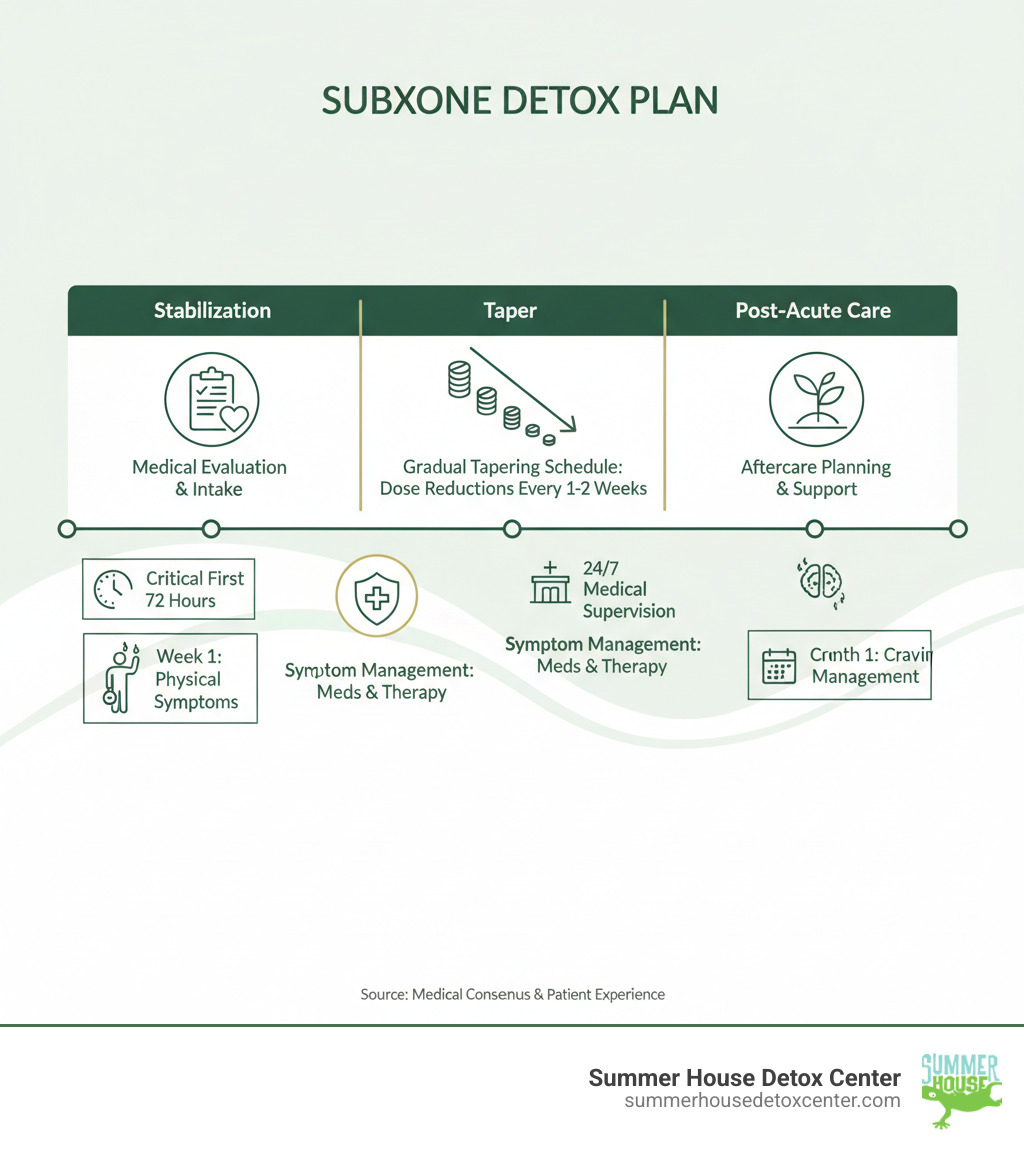
A suboxone detox plan is a structured, medically supervised approach to safely tapering off Suboxone (buprenorphine/naloxone) while managing withdrawal symptoms and reducing relapse risk. Here’s what you need to know:
Key Components of a Safe Suboxone Detox Plan:
- Medical Evaluation – Comprehensive assessment of your dosage history, health status, and individual needs
- Gradual Tapering Schedule – Slow dose reduction (typically 5-10% every 1-2 weeks, never exceeding 25% at once)
- Symptom Management – Non-opioid comfort medications, therapy, and holistic support
- Professional Supervision – 24/7 medical monitoring in a licensed detox facility
- Aftercare Planning – Long-term relapse prevention and continued therapeutic support
Typical Timeline: 6-12 weeks for short-term users, 3-6 months for 1-2 year use, or 6-12+ months for long-term cases.
If you’ve been taking Suboxone for opioid use disorder, you might be wondering when and how to stop. Maybe you’re tired of the daily cycle, or you’re worried about long-term dependence. The truth is, stopping Suboxone isn’t something you should do alone.
Suboxone contains buprenorphine and naloxone, and it’s designed to help manage opioid cravings and withdrawal. But because buprenorphine has a long half-life of around 36 hours, withdrawal can last longer than other opioids. Research shows symptoms can persist for weeks, with the first 72 hours being the most intense.
Here in Miami and across Florida, many people attempt to quit “cold turkey” only to face severe withdrawal symptoms, relapse, and dangerous overdose risk. A structured detox plan makes all the difference.
Why a plan matters: Going it alone increases your risk of relapse by up to 70%. With medical supervision, comfort medications, and therapeutic support, you can taper safely while maintaining your dignity and hope for recovery.
Understanding Suboxone Withdrawal: Symptoms, Timeline, and Risks
When you’re ready to step away from Suboxone, understanding what lies ahead can make all the difference between success and setback. Let’s talk honestly about what withdrawal looks like and why having a solid suboxone detox plan isn’t just helpful—it’s essential.
Suboxone combines buprenorphine (a partial opioid agonist) with naloxone (an opioid antagonist), and it’s FDA-approved for treating opioid use disorder through Medication-Assisted Treatment (MAT). While it’s incredibly effective at reducing cravings and preventing relapse, your body does develop a physical dependence on it. This isn’t a moral failing or a sign of weakness—it’s simply how our bodies work. When you stop taking Suboxone, your body needs time to adjust, and that adjustment period comes with withdrawal symptoms.
Here’s what makes Suboxone different: buprenorphine has a half-life of about 36 hours. That means it takes roughly a day and a half for just half of the medication to leave your system. This long-acting nature is both a blessing and a challenge. On one hand, it means withdrawal symptoms tend to be less intense than with shorter-acting opioids. On the other hand, they can last significantly longer. Think of it like a slow fade rather than an abrupt cutoff. You can learn more about how your body processes and eliminates substances by reading about The Science of Detox: How Your Body Eliminates Toxins During Recovery.
The dangers of quitting cold turkey cannot be overstated. We’ve seen too many people in Miami and throughout Florida attempt to stop Suboxone abruptly, thinking they can power through. Unfortunately, this approach typically backfires. Without a gradual tapering process, your body gets thrown into acute withdrawal, making symptoms far more intense and difficult to manage. The physical discomfort combined with psychological distress creates the perfect storm for relapse.
And here’s the scary part: if you’ve been off opioids for even a short time, your tolerance drops. Returning to previous doses of illicit opioids can lead to overdose. Studies consistently show that people who quit Suboxone cold turkey face relapse rates as high as 70%. There’s also the risk of precipitated withdrawal—a sudden, severe onset of symptoms—and the crushing psychological toll of trying to white-knuckle your way through unmanaged withdrawal.
This is exactly why The Importance of Medically Supervised Detox: Why DIY Detox Can Be Dangerous matters so much. A professional suboxone detox plan allows your body to adjust gradually, minimizing discomfort while maximizing your chances of lasting success.
The Withdrawal Timeline
Every person’s withdrawal experience is unique, influenced by factors like your dosage, how long you’ve been taking Suboxone, your metabolism, and your overall health. That said, there’s a general pattern we see at Summer House Detox Center that can help you know what to expect.

The first 72 hours are typically the most challenging. Because buprenorphine has that long half-life, symptoms usually begin within 24 to 72 hours after your last dose. This is when physical symptoms hit hardest. You might feel like you have a terrible flu—nausea, vomiting, body aches, sweating, and chills are common. Restlessness and anxiety often accompany these physical symptoms. Our team understands that The First 72 Hours of Detox: What to Expect and How to Prepare can feel overwhelming, which is why we provide 24/7 medical support during this critical window.
During week one, physical symptoms typically reach their peak intensity before gradually improving. You might still experience general aches throughout your body, digestive issues, trouble sleeping, and mood swings. Many people describe feeling exhausted but unable to rest comfortably. This is normal, and it will pass.
Week two often brings a shift. Most of the intense physical symptoms start to fade, but psychological symptoms can become more prominent. Depression, in particular, tends to emerge or worsen during this period. You might feel lethargic, irritable, or have difficulty concentrating. Your emotions may feel raw and unpredictable.
By month one, the majority of physical withdrawal symptoms have significantly improved or disappeared entirely. However, this is when the psychological challenge really sets in. Intense cravings and depression become the primary concerns, and these can pose a serious relapse risk. Some people experience what’s called Post-Acute Withdrawal Syndrome (PAWS), where psychological symptoms come and go in waves for weeks or even months.
This timeline is a roadmap, not a guarantee. Some people move through these phases more quickly, while others need more time. Our goal here in Miami is to support you through every stage, making the process as comfortable and safe as possible. For a deeper understanding of what you might experience, visit our page on What are the Symptoms of Opiate Withdrawal?.
Common Withdrawal Symptoms
When you’re going through a suboxone detox plan, knowing what symptoms might arise helps you feel more prepared and less frightened. These symptoms are your body’s way of adjusting to life without the medication—uncomfortable, yes, but temporary and manageable with proper support.
Physical symptoms can include nausea and vomiting, diarrhea with abdominal cramping, and muscle aches that seem to settle deep in your joints and bones. Many people experience headaches, excessive sweating alternating with chills, and that classic runny nose with watery eyes. You might find yourself yawning constantly, getting goosebumps, and feeling exhausted yet unable to sleep. Restless legs syndrome—that uncomfortable urge to constantly move your legs—is also common.
Psychological symptoms often feel even more challenging than the physical ones. Intense drug cravings can hit you out of nowhere, making it hard to think about anything else. Anxiety and panic attacks may occur, along with waves of depression and sadness. Irritability and agitation can strain your relationships, and mood swings might make you feel like you’re on an emotional roller coaster. Many people struggle with concentration and experience a general feeling of unease or dysphoria—a sense that nothing feels quite right.
While Suboxone withdrawal is often described as milder than withdrawal from full opioid agonists like heroin or fentanyl, that doesn’t mean it’s easy. The symptoms can still be incredibly uncomfortable and distressing. The good news? You don’t have to face them alone. Our experienced team in Miami specializes in managing these symptoms with comfort medications, therapeutic support, and the kind of compassionate care that makes a real difference. For more comprehensive information about withdrawal, visit our Withdrawal Symptoms page.
Creating Your Medically Supervised Suboxone Detox Plan
If you’re ready to step away from Suboxone, you might be wondering if you can do it on your own. Maybe you’ve thought about slowly cutting down your dose at home, or even just stopping altogether. Here’s the truth: a medically supervised suboxone detox plan isn’t just helpful—it can be the difference between success and a dangerous relapse.
Suboxone withdrawal is tricky. Because buprenorphine has such a long half-life, symptoms can last for weeks, and they can be more intense than you expect. When you’re in the thick of it—exhausted, anxious, unable to sleep, and craving relief—it’s incredibly hard to stick to your plan. That’s when many people reach for what they know will make the discomfort stop, even if it means going backward.
At Summer House Detox Center here in Miami, we’ve seen what happens when people try to detox alone. We’ve also seen the relief and hope that comes when someone walks through our doors and says, “I need help.” Our team provides personalized care that’s built around your unique situation—your dosage, how long you’ve been on Suboxone, your health history, and what you need to feel safe and supported.
A DIY detox lacks three critical things that could save your recovery. First, 24/7 medical monitoring means our experienced staff are always watching over you, checking your vital signs, and ready to step in if anything goes wrong. Second, immediate symptom management means you don’t have to white-knuckle your way through withdrawal—we have medications and therapies to ease your discomfort in real time. Third, relapse prevention happens naturally when you’re in a controlled, supportive environment without access to substances and surrounded by people who understand what you’re going through.
Our team in South Florida includes staff members who are in recovery themselves. They know the journey. They know the fears. And they know that recovery is possible when you have the right support. As we discuss in The Importance of Medically Supervised Detox: Why DIY Detox Can Be Dangerous and Why Medical Detox Is a Vital First Step in Recovery, professional care dramatically increases your chances of making it through detox and building a foundation for lasting sobriety.
Key Components of a Comprehensive Suboxone Detox Plan
A real suboxone detox plan is so much more than just “take less medicine.” It’s a carefully coordinated effort that addresses every part of your well-being—physical, emotional, and psychological. At Summer House Detox Center, we’ve designed our approach to give you the best possible chance at success.
Everything starts with a thorough medical evaluation. When you arrive at our Miami facility, our medical team sits down with you to understand your full story. How much Suboxone are you taking? How long have you been on it? Do you have any other health conditions or mental health challenges? What’s your support system like? This comprehensive assessment gives us the information we need to create a safe, individualized plan that’s just for you.
From there, we develop your personalized tapering schedule. This isn’t a one-size-fits-all approach. Our doctors carefully map out specific dose reductions over a set period, designed to minimize withdrawal symptoms while giving your body time to adjust. And here’s what makes it truly personalized: we monitor your response continuously. If you’re struggling, we slow down. If you’re doing well, we stay the course. Your comfort and safety guide every decision.
While you’re tapering, we implement advanced symptom management protocols. We use FDA-approved medications like Lucemyra (lofexidine hydrochloride) and other options such as clonidine to manage the physical discomforts—muscle aches, nausea, anxiety, insomnia. These aren’t masking the problem; they’re giving your body the support it needs to heal without unnecessary suffering.
But physical comfort is only part of the picture. That’s why we provide integrated therapeutic support throughout your stay. Individual counseling gives you a private space to process your feelings and learn coping strategies. Group sessions connect you with others who understand exactly what you’re going through. This therapeutic work addresses the psychological side of dependence and helps you build the resilience you’ll need for long-term recovery.
Finally, before you leave our facility, we work with you on robust aftercare planning. Detox is just the beginning of your journey, not the end. We connect you with outpatient programs, therapists, support groups like 12-Step meetings right here in the Miami area, and other community resources that will support your continued sobriety. This transition plan is critical—it’s your roadmap for the weeks and months ahead.
At Summer House Detox Center, we live by The Importance of Personalized Care in Detox. We know that your path to recovery is yours alone, and our comprehensive approach honors that reality every step of the way.
Recommended Tapering Methods
The way you taper off Suboxone can make all the difference in how you feel and whether you succeed. There’s no rushing this process—your body needs time to adjust, and your suboxone detox plan needs to respect that.
The gold standard is gradual dose reduction, and it’s the foundation of any safe taper. Our medical team typically recommends reducing your dose by no more than 25% at a time. Why? Because larger cuts can shock your system, triggering intense withdrawal symptoms and overwhelming cravings that make relapse much more likely. Let’s say you’re currently taking 8mg of Suboxone. Your next step might be 6mg. You’d stay at that 6mg dose for at least two weeks—sometimes longer—giving your body a chance to adapt before making another reduction.
As you get down to lower doses, we often slow things down even more. Some people need to reduce by just 5% or 10% at a time, especially in those final stages. It might feel slow, but this patience pays off in comfort and success.
Some people benefit from an alternating dose strategy as part of their taper. This approach involves taking your regular dose one day, then a slightly lower dose the next day (maybe 1 or 2mg less), and repeating that pattern. It can smooth out the adjustment period and help your body ease into the change more gently.
How long does a taper take? That’s the question everyone asks, and the honest answer is: it depends. Your starting dosage, how long you’ve been on Suboxone, your overall health, and how your body responds to reductions all play a role. For someone who’s been on Suboxone for less than six months, a taper might take 6 to 12 weeks. If you’ve been on it for one to two years, you’re looking at more like 3 to 6 months. And for people with multi-year use or complex medical situations, a taper can extend to 6 to 12 months or even longer. There’s no prize for finishing fastest. Slow and steady is how you win this race.
Here’s what a gradual tapering schedule might look like, though remember—your plan will be customized by our medical team based on your specific needs:

Research has compared different tapering approaches, and the results are eye-opening. When we look at short tapers (like 7 days) versus longer tapers (like 28 days), here’s what the data shows:
| Feature | Short Taper (e.g., 7-day) | Long Taper (e.g., 28-day) |
|---|---|---|
| Opioid-Free Urine Results | Lower success rates | Higher success rates |
| Withdrawal Symptom Severity (COWS Score) | More intense symptoms | Milder, more manageable symptoms |
| Patient Satisfaction | Lower satisfaction due to discomfort | Higher satisfaction and comfort |
| Completion Rate | Lower (more dropouts) | Higher (better adherence) |
| Best For | Rare emergency situations | Most patients seeking sustainable recovery |
The message is clear: a longer, more gradual taper is usually the better choice. Yes, it takes more time. But you’re far more likely to complete it, experience less suffering along the way, and build a solid foundation for long-term recovery. At our Florida facility, we’re committed to helping you find the pace that works for you—one that honors your body’s needs and sets you up for success.
