
Why Choosing the Right Alcohol Detox Program Matters
Alcohol detox program options vary widely in approach, setting, and level of care. If you’re comparing treatment programs in Florida, here’s what you need to know:
Main Types of Alcohol Detox Programs:
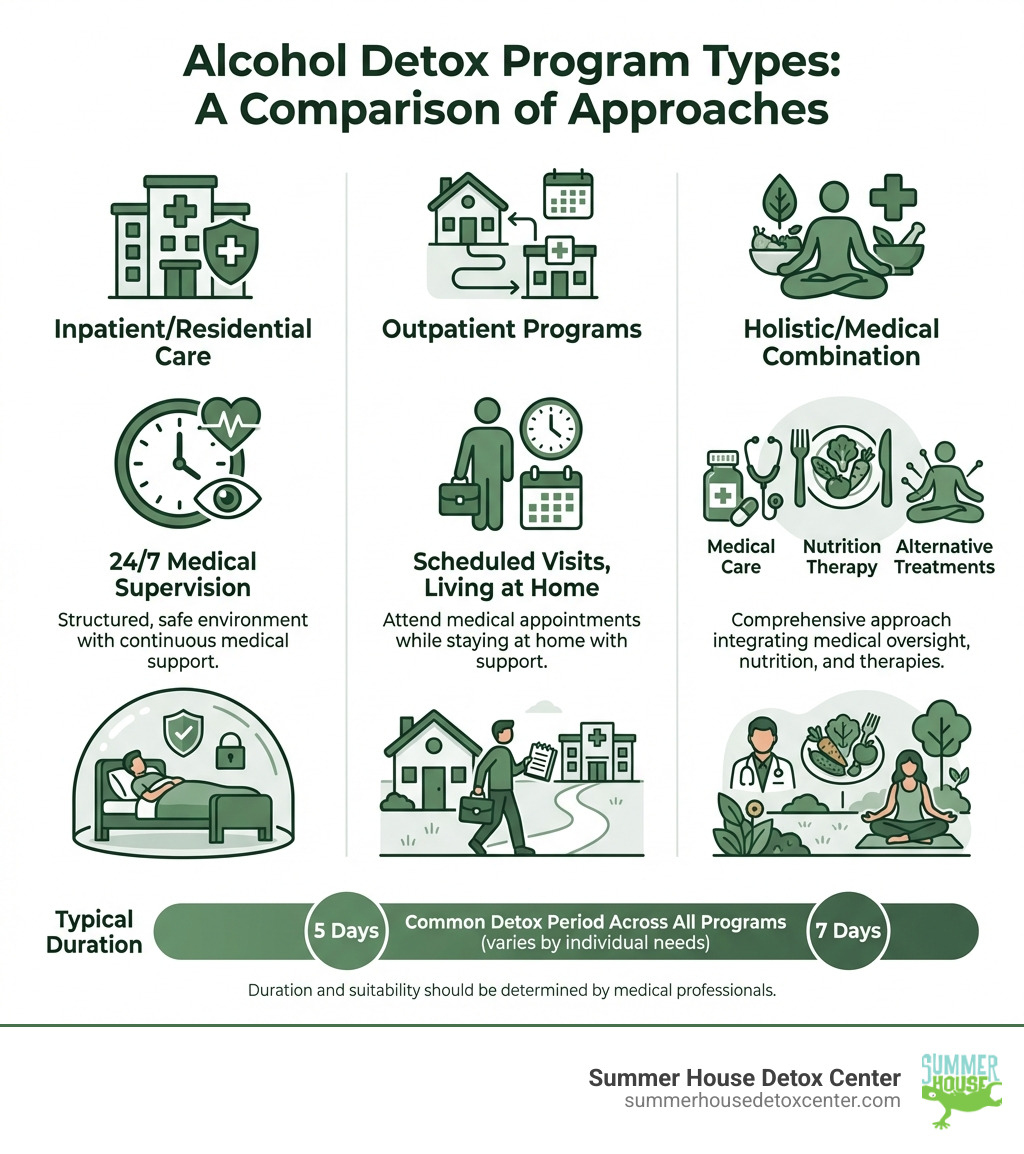
| Program Type | Best For | Key Features |
|---|---|---|
| Inpatient/Residential | Moderate to severe withdrawal, history of complications | 24/7 medical supervision, safe environment, structured care |
| Outpatient | Mild withdrawal, strong home support, stable health | Live at home, attend scheduled appointments, lower cost |
| Holistic/Medical Combination | Those seeking comprehensive care | Medical oversight plus nutrition, therapy, alternative treatments |
Critical factors when comparing programs:
- Level of medical supervision (24/7 vs. scheduled)
- Staff qualifications and experience
- Medication availability for withdrawal symptoms
- Treatment philosophy and approach
- Location and environment
- Insurance acceptance and cost
When someone uses alcohol regularly, their body adapts. The brain changes how it works to compensate for alcohol’s effects. Stopping suddenly can be dangerous—even life-threatening. That’s why medical supervision during detox isn’t optional.
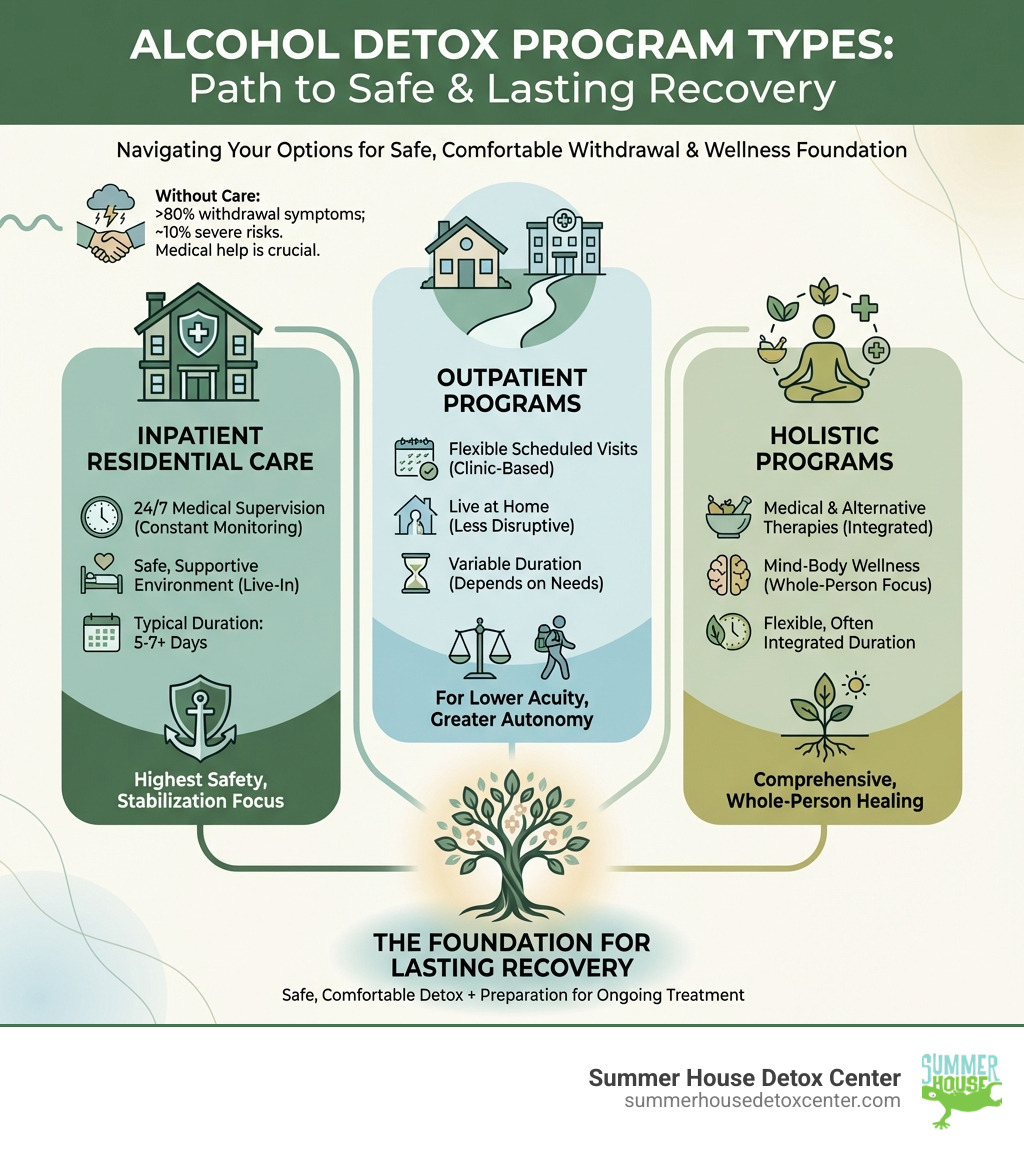
More than 80% of people with alcohol use disorder experience withdrawal symptoms. About 10% face severe complications like seizures or delirium tremens, which has a mortality rate of 1-4% without proper medical care.
The good news? With the right program, detox can be safe, comfortable, and the foundation for lasting recovery. Whether you’re in Miami, elsewhere in Florida, or considering traveling for treatment, understanding your options helps you make the best choice for your situation.
South Florida has become a premier destination for addiction treatment, offering warm weather, experienced facilities, and comprehensive care options that support both your physical safety and emotional well-being during this critical first step.
Alcohol detox program terminology:
What is Alcohol Detox and Why is it Crucial?
Alcohol detoxification, often simply called “detox,” is the essential first step in overcoming alcohol dependence. It’s the process by which our body rids itself of alcohol, managing the acute physical symptoms that arise when someone stops or significantly reduces heavy drinking. For those who have developed a physical dependence on alcohol, this process is not just a choice, but a necessity for safe and effective recovery.
When we consume alcohol regularly, our central nervous system (CNS) adapts to its presence. Alcohol acts as a depressant, slowing down brain activity. Over time, our brain compensates by increasing its excitatory activity to maintain a sense of balance. When alcohol is suddenly removed, this overactivity in the brain goes unchecked, leading to uncomfortable and potentially dangerous withdrawal symptoms. This is why alcohol withdrawal symptoms are often the opposite of alcohol’s effects—instead of feeling relaxed, we feel stimulated, anxious, and agitated.
Detox is more than just getting alcohol out of our system. It’s a medically supervised process aimed at achieving several crucial goals:
- Medical Stabilization: Our primary goal is to safely manage the acute physical symptoms of withdrawal, preventing severe complications and ensuring our physical well-being.
- Comfort and Dignity: We strive to make the withdrawal process as comfortable and dignified as possible, easing discomfort and supporting our emotional state.
- Preparation for Ongoing Treatment: Detox is just the beginning. A successful detox prepares us for the next crucial stages of recovery, such as therapy and rehabilitation, which address the underlying causes of addiction.
Understanding the science behind how our body eliminates toxins during recovery can be empowering. The body is an incredible machine, and with the right support, it can begin to heal. You can learn more about this intricate process by visiting our page on The Science of Detox: How Your Body Eliminates Toxins During Recovery.
Navigating Alcohol Withdrawal: Symptoms, Timeline, and Risks
Navigating alcohol withdrawal can be a challenging and potentially dangerous experience. The symptoms, their timeline, and associated risks underscore why medical supervision is not just recommended, but often non-negotiable for a safe detox.

Alcohol withdrawal symptoms can begin surprisingly quickly and intensify over several days. Here’s a typical timeline:
- 6-12 Hours After Last Drink: Mild symptoms often begin. These can include anxiety, headaches, tremors (shakiness), insomnia, nausea, vomiting, and cravings. Some individuals may even experience symptoms while alcohol is still in their system.
- 12-24 Hours After Last Drink: Symptoms can worsen. Hallucinations (auditory, visual, or tactile) may occur, though these typically resolve within 48 hours.
- 24-48 Hours After Last Drink: This period carries the highest risk for seizures, especially for those with a history of severe withdrawal. Symptoms tend to peak during this time.
- 48-72 Hours After Last Drink: The most severe form of withdrawal, Delirium Tremens (DTs), may appear. DTs is characterized by severe confusion, disorientation, rapid heart rate, high blood pressure, fever, and intense hallucinations or delusions.
It’s important to recognize these signs early. Our page on Alcohol Withdrawal Signs: How to Know You Need Professional Alcohol Detox Treatment provides more detailed information.
The risks associated with unsupervised alcohol withdrawal are significant and can be life-threatening. MedlinePlus highlights the dangers of Alcohol withdrawal , emphasizing that it’s a serious medical condition. Beyond the discomfort, severe risks include:
- Seizures: These can occur suddenly and without warning, particularly during the 24-48 hour mark.
- Hallucinations: While often not life-threatening themselves, they can be terrifying and lead to dangerous behaviors.
- Delirium Tremens (DTs): This is the most severe manifestation of alcohol withdrawal. Without proper medical care, DTs has a mortality rate of 1% to 4%. It’s a medical emergency requiring immediate attention.
Statistics show just how prevalent and serious alcohol withdrawal can be:
- More than 80% of those with an alcohol use disorder may experience withdrawal symptoms.
- Roughly 10% of people undergoing detox treatment experience severe alcohol-withdrawal symptoms.
- The severity of alcohol withdrawal depends on many factors such as age, drinking patterns, genetics, and biological sex.
Given these risks, medical supervision during detox is absolutely non-negotiable. Attempting to detox “cold turkey” at home can be extremely dangerous. As we emphasize in The Importance of Medically Supervised Detox: Why DIY Detox Can Be Dangerous, professional medical care ensures that any complications are managed promptly and effectively, keeping you safe and as comfortable as possible. Our experienced team in Florida is equipped to handle the complexities of alcohol withdrawal, ensuring a secure and supportive environment for your recovery journey.
Types of Alcohol Detox Programs: Finding the Right Fit in Florida
Choosing the right type of alcohol detox program is a deeply personal decision, influenced by the severity of your dependence, your medical history, and your support system. Fortunately, Florida, particularly the Miami area, offers a variety of options designed to meet diverse needs.
Inpatient/Residential Programs
These programs provide 24/7 medical care and supervision in a dedicated facility. Patients live on-site, receiving round-the-clock monitoring, medication management, and therapeutic support. Inpatient programs are often the best choice for individuals with:
- Moderate to severe alcohol dependence.
- A history of complicated withdrawal, including seizures or DTs.
- Co-occurring medical or mental health conditions.
- A lack of a stable or supportive home environment.
The structured and safe environment removes access to alcohol and other triggers, allowing for complete focus on physical stabilization. Our article on Inpatient vs. Outpatient Programs at Miami Alcohol Treatment Centers digs deeper into these differences.
Outpatient Programs
Outpatient detox allows individuals to live at home while attending scheduled appointments at a clinic or facility. This option is generally suitable for those with:
- Mild alcohol withdrawal symptoms.
- A strong, supportive home environment.
- Good overall physical and mental health.
- The ability to commit to regular appointments and follow medical instructions.
While offering more flexibility, outpatient detox still requires consistent engagement and a high level of personal responsibility.
Holistic Detox Programs
Many modern alcohol detox program facilities, including ours in Florida, integrate a holistic approach. This means combining traditional medical care with complementary therapies that support overall well-being—mind, body, and spirit. Holistic programs might include:
- Nutritional Support: Custom meal plans to replenish vital nutrients and support physical healing.
- Therapy: Individual counseling, group sessions, and family therapy.
- Alternative Practices: Mindfulness, yoga, meditation, art therapy, or fitness activities.
This comprehensive approach aims to heal the whole person, not just the addiction. You can explore more about this approach on our page, Holistic Approaches to Detox: Combining Traditional and Alternative Therapies Introduction.
Here’s a quick comparison of inpatient and outpatient programs:
| Feature | Inpatient/Residential Alcohol Detox Program | Outpatient Alcohol Detox Program |
|---|---|---|
| Medical Supervision | 24/7 doctors and nurses | Scheduled physician visits, nurses available |
| Living Arrangement | On-site at facility | At home |
| Environment | Structured, alcohol-free, supportive | Home environment, potential triggers |
| Severity of Withdrawal | Moderate to severe, high-risk | Mild to moderate, low-risk |
| Support System | Built-in, professional | Relies on home support, family |
| Therapeutic Intensity | High, daily sessions | Moderate, scheduled sessions |
South Florida has emerged as a premier destination for recovery, attracting individuals from across the country. The region’s warm climate, serene beaches, and abundance of high-quality treatment centers create an ideal environment for healing. From the initial detox to long-term rehabilitation, Florida offers a continuum of care that supports both physical safety and emotional well-being. We highlight the many advantages in Six Benefits to Choosing an Alcohol Detox in Florida. The combination of expert medical care, beautiful surroundings, and a strong recovery community makes Florida an excellent choice for starting your journey.
The Medically Supervised Alcohol Detox Program Experience
When you choose a medically supervised alcohol detox program, you’re opting for safety, comfort, and professional support throughout one of the most critical stages of recovery. Our approach at Summer House Detox Center in Miami is designed to provide just that.
The core of any effective detox program is the team of dedicated medical professionals. Our facility is staffed by experienced doctors, nurses, and addiction counselors who are present 24/7. This constant oversight means that any changes in your condition, whether physical or emotional, can be addressed immediately. We understand that some of our staff are in recovery themselves, bringing an invaluable layer of empathy and understanding to your journey.
The process begins with a thorough intake and evaluation. Upon arrival, our medical team conducts a comprehensive assessment of your physical and mental health, your history of alcohol use, and any co-occurring conditions. This detailed evaluation allows us to understand your unique needs and risks. Based on this, we create a personalized treatment plan—because we know that there’s no one-size-fits-all solution for recovery. This personalized care is paramount to your success, as detailed in The Importance of Personalized Care in Detox.
How a Professional Alcohol Detox Program Manages Symptoms
Managing the often intense and uncomfortable symptoms of alcohol withdrawal is where medical expertise truly shines. We use Medication-Assisted Treatment (MAT) to safely alleviate withdrawal symptoms, reduce cravings, and prevent dangerous complications.
Common medications used in an alcohol detox program include:
- Benzodiazepines: Medications like Librium (Chlordiazepoxide) or Valium (Diazepam) are frequently prescribed. They help to calm the overactive central nervous system, reducing anxiety, preventing seizures, and promoting relaxation during withdrawal.
- Anticonvulsants: In some cases, anticonvulsant medications may be used to further reduce the risk of seizures, especially for individuals with a history of alcohol-related seizures.
- Nutritional Supplements: Heavy alcohol use often depletes essential nutrients. Thiamine (Vitamin B1) is particularly crucial, as deficiency can lead to serious neurological issues. We ensure you receive the necessary vitamins and minerals to support your body’s healing.
Our medical team carefully monitors your response to these medications, adjusting dosages as needed to ensure both safety and comfort. For a deeper dive into the types of medications used, you can refer to What Type of Medications Are Used in Alcohol Treatment?.
Beyond physical symptoms, we also recognize the critical importance of managing co-occurring mental health conditions. Many individuals struggling with alcohol dependence also experience anxiety, depression, or other mental health disorders. Our integrated approach means we address these conditions concurrently, providing comprehensive care that supports your mental and emotional well-being alongside your physical detox. Our dual diagnosis program is designed to provide specialized care for these complex needs, which you can read more about at Dual Diagnosis Rehab.
What to Expect During Your Stay
At Summer House Detox Center in Miami, we believe that a supportive and nurturing environment is key to a successful detox. From the moment you arrive, you can expect a safe, clean, and comfortable setting where your dignity is respected. Our facility is designed to be a peaceful haven, allowing you to focus entirely on your healing without external distractions.
Therapeutic support is an integral part of your detox experience. While the primary focus during detox is physical stabilization, we also introduce elements of therapy to begin addressing the emotional and psychological aspects of addiction. This often includes:
- Individual Counseling: One-on-one sessions with an experienced therapist provide a confidential space to process emotions, understand the roots of your addiction, and develop coping strategies.
- Group Sessions: Sharing experiences with peers who are on a similar journey can be incredibly validating and empowering. Group therapy fosters a sense of community and reduces feelings of isolation.
The role of therapy in detox is profound, setting the stage for deeper work in subsequent treatment. You can find more information on this at The Role of Therapy in Detox.
Furthermore, nutritional support plays a vital role in physical healing during detox. Alcohol abuse can severely impact your body’s ability to absorb nutrients, leading to deficiencies. Our dedicated team provides wholesome, balanced meals designed to replenish your body, boost your energy, and support your overall recovery. This focus on physical nourishment is crucial for restoring health and preparing you for the next steps. Learn more about The Role of Nutrition in Detox: How a Balanced Diet Supports Recovery. We aim to make your detox experience as supportive and comprehensive as possible, as outlined in What to Expect During Your Detox Experience at Summer House.
Planning for Recovery: Costs, Insurance, and Life After Detox
Starting on an alcohol detox program is a significant decision, and understanding the practical aspects like choosing the right facility, managing costs, and planning for post-detox life is essential for a successful journey to lasting recovery.
Choosing the Best Alcohol Detox Program for Your Needs
When selecting an alcohol detox program in Florida, several key factors should guide your decision. We encourage you to be an informed advocate for your own health.
- Accreditation: Look for facilities accredited by reputable organizations like CARF International. Accreditation signifies a commitment to high standards of care, continuous improvement, and organizational excellence.
- Staff Credentials: Ensure the medical and clinical staff are highly qualified and experienced in addiction medicine and withdrawal management. At Summer House Detox Center, our team includes doctors, nurses, and counselors, some of whom are in recovery themselves, offering both professional expertise and lived experience.
- Treatment Philosophy: Does the program’s approach resonate with your values? Do they offer personalized care, a holistic approach, or specific therapeutic modalities that appeal to you?
- Location: For many, a serene and supportive environment away from triggers is beneficial. South Florida offers beautiful settings that can contribute to a peaceful healing process.
- Questions to Ask: Don’t hesitate to ask a potential facility about their detox protocols, staff-to-patient ratio, post-detox planning, and family involvement options.
Our guide on Finding the Right Detox Centers in South Florida: What to Look For provides a comprehensive checklist to help you make this crucial choice.
Understanding Costs and Insurance
The cost of an alcohol detox program can vary widely based on the type of program (inpatient vs. outpatient), length of stay, services provided, and location. While we cannot provide specific pricing, we can help you understand how to steer the financial aspects.
Many insurance providers, including major carriers, cover all or a portion of alcohol addiction treatment costs, including medical detox. The best way to understand your coverage is to:
- Verify Your Benefits: Contact your insurance provider directly. Ask about your specific plan’s coverage for addiction treatment, deductibles, co-pays, and any pre-authorization requirements.
- Consult with the Facility: Our admissions team can assist you in verifying your insurance benefits and understanding what your policy will cover.
- Explore Other Options: For those without insurance or with limited coverage, federal resources like FindTreatment.gov: Home can help you locate state-funded programs or facilities that offer sliding scale fees.
Investing in your health and sobriety is one of the most important decisions you can make.
What Happens After Alcohol Detox?
Detox is a vital first step, but it’s rarely enough on its own for long-term sobriety. The typical duration of an alcohol detox program at a medical facility is usually between 5-7 days, though this can vary depending on individual needs and the severity of withdrawal. As we discuss in Alcohol Detox: How Long Does It Take?, the goal is to stabilize you physically before transitioning to the next level of care.
This transition is crucial for building a strong foundation for lasting recovery. Options for continued treatment include:
- Residential Rehab: After detox, many individuals transition to an inpatient residential program. These programs typically last 1-3 months and provide intensive therapy, counseling, and a structured living environment to address the psychological and behavioral aspects of addiction.
- Partial Hospitalization Programs (PHP): PHPs offer a high level of structured care, similar to inpatient, but allow you to return home in the evenings. They are a good step-down option or for those needing intensive support without 24/7 residency.
- Intensive Outpatient Programs (IOP): IOPs provide therapy and support several days a week, for a few hours each day, allowing you to maintain daily responsibilities like work or school while receiving treatment.
The goal after detox is to equip you with the coping skills, support systems, and tools necessary to maintain sobriety. Our page, Life After Detox: Building a Strong Foundation for Long-Term Sobriety, offers valuable insights into this ongoing journey. We believe that true recovery is a lifelong process, and we are committed to helping you lay the groundwork for a future free from alcohol dependence.
Conclusion: Start Your Recovery Journey at a Florida Detox Center
The decision to seek help for alcohol dependence is a courageous one, marking the beginning of a transformative journey. As we’ve explored, an alcohol detox program is a vital first step, safely guiding you through the challenging initial phase of withdrawal. Medical supervision is not just a preference; it’s an essential safeguard for your health, ensuring comfort, preventing severe complications, and setting the stage for successful long-term recovery.
A new beginning is absolutely possible with the right support. At Summer House Detox Center in Miami, we are dedicated to providing a personalized, dignified, and compassionate approach to medical detox. Our experienced team, some of whom have walked the path of recovery themselves, are here to offer 24/7 medical oversight, custom treatment plans, and a supportive environment where you can heal. We understand the unique challenges of alcohol withdrawal and are committed to helping you steer them safely and effectively.
If you or a loved one are ready to take this brave step towards a healthier, sober life, we are here to help. Learn more about the next steps in your rehabilitation journey and how we can support you by visiting our rehabilitation page. Your future of lasting recovery starts now, and we are honored to be a part of it.
