
Facing Opiate Withdrawal After Relapse: What You Need to Know
Experiencing opiate withdrawal after relapse can feel overwhelming, like a step backward in your journey to recovery. But it’s important to understand what happens and how to get help.
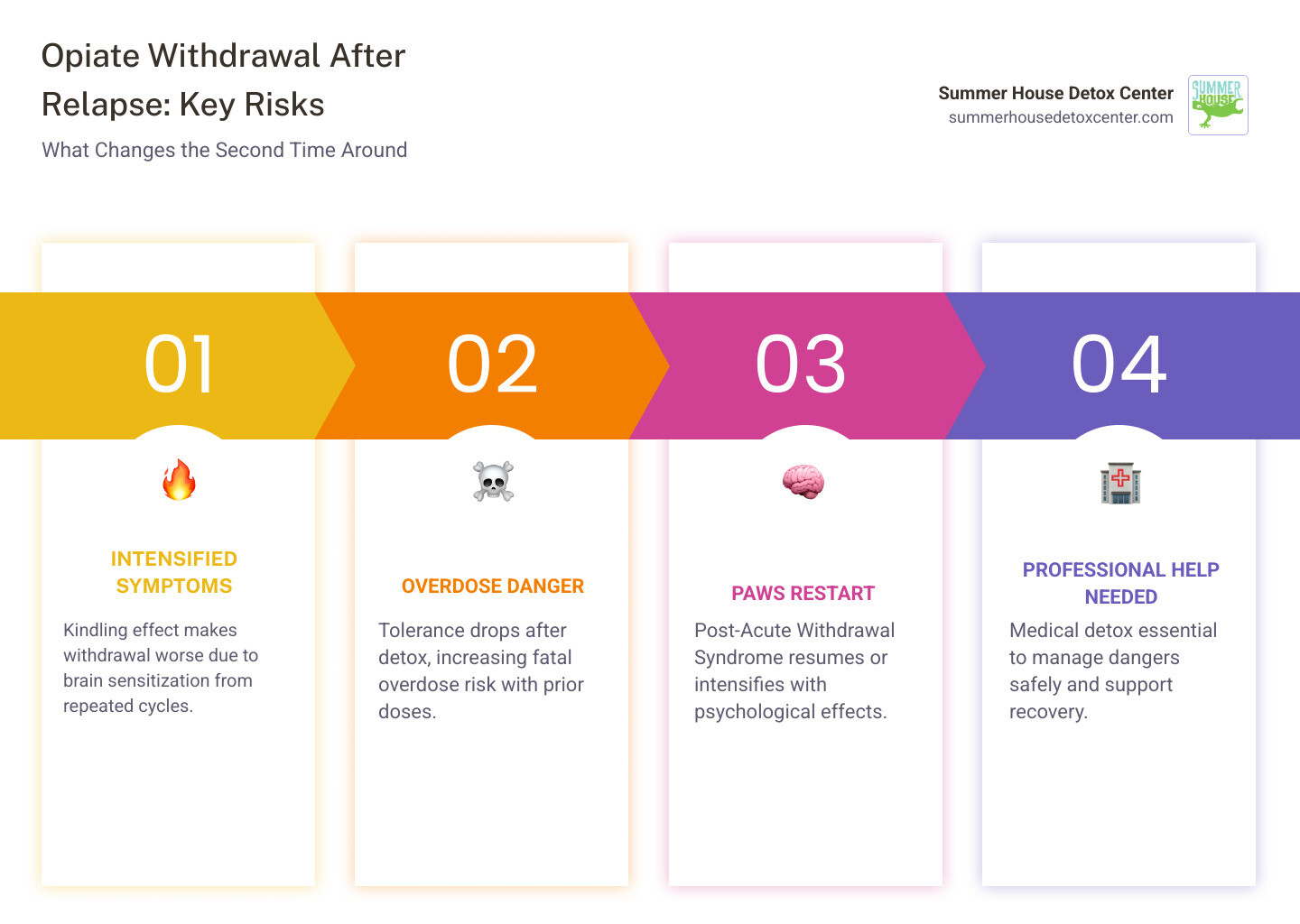
If you’re facing opiate withdrawal after a relapse, here’s a quick overview of what to expect:
- Intensified Withdrawal: Relapse often makes withdrawal symptoms worse than before. This is due to something called the “kindling effect,” where your brain becomes more sensitive to withdrawal with each attempt to stop.
- Higher Overdose Risk: After a period of sobriety, your body loses its tolerance to opioids. If you use the same amount you did before, the risk of a fatal overdose is much, much higher.
- Restarted PAWS: Post-Acute Withdrawal Syndrome (PAWS), with its psychological and emotional symptoms, can definitely restart or become more severe after a relapse.
- Professional Help is Crucial: Trying to manage withdrawal after relapse on your own is dangerous. Medical detox and ongoing support are essential for safety and long-term recovery.
Relapse is common in the journey to recovery. In fact, studies show that up to 91% of people in opioid recovery experience a relapse at some point. This isn’t a sign of failure, but rather a common — and often learning — part of dealing with a chronic illness. It means your brain chemistry has been changed, and it needs time and support to heal.
You might feel fear, shame, or hopelessness, especially if you’ve been through withdrawal before. But recovery is always possible, and every step taken toward sobriety is a step in the right direction. Summer House Detox Center, right here in Miami, FL, understands these challenges. We provide a safe, compassionate environment to help you get back on track.
This guide will help you understand why withdrawal might be different this time and how to navigate it safely, giving you hope for a fresh start.
Key opiate withdrawal after relapse vocabulary:
- coping with opiate withdrawal
- how long does withdrawal symptoms last from opiates
- opiate withdrawal symptoms
What is Opiate Withdrawal After Relapse?

When we talk about opiate withdrawal after relapse, we are referring to the physical and psychological distress that occurs when someone who has achieved a period of sobriety returns to opioid use and then stops again. While the symptoms may look similar to your first detox, the biological context has changed. Your brain is no longer a “blank slate”; it has been sensitized by previous cycles of use and abstinence.
The process typically begins with the acute phase—the immediate physical “crash”—followed by a much longer, more subtle period known as Post-Acute Withdrawal Syndrome (PAWS). Understanding these two distinct stages is the first step in preparing for the journey ahead.
Defining the Acute Phase
The acute phase is what most people think of when they hear the word “detox.” It is the period where your body screams for the substance it has become physically dependent on. This happens because opioids hijack the brain’s mu-opioid receptors, which regulate pain and reward. When the drug is removed, the brain’s “emergency brake” (the noradrenergic system) goes into overdrive.
Common signs of opiate addiction and subsequent withdrawal include:
- Severe muscle and bone aches
- Nausea, vomiting, and diarrhea
- Excessive sweating and “goosebumps” (piloerection)
- Uncontrollable yawning and runny nose
- Intense drug cravings
If you are wondering what are the symptoms of opiate withdrawal, think of it as a “super-flu” that attacks both your body and your mind simultaneously.
The Reality of Post-Acute Withdrawal Syndrome (PAWS)
While the physical symptoms usually peak within a few days, the psychological battle is just beginning. There is a staggering 90% chance of experiencing PAWS in early recovery from opioid use disorder. Unlike the acute phase, PAWS is primarily emotional and neurological. It’s the brain’s way of trying to recalibrate its chemical levels, specifically dopamine and endorphins.
Symptoms of PAWS include:
- Brain Fog: Difficulty concentrating or making decisions.
- Irritability: Sudden, unexplained mood swings.
- Anhedonia: An inability to feel pleasure from normal activities.
- Sleep Disturbances: Many patients ask how can I cope with insomnia after opiate detox, as the brain struggles to regulate its circadian rhythms without the sedative effect of opioids.
| Feature | Acute Withdrawal | Post-Acute Withdrawal (PAWS) |
|---|---|---|
| Primary Symptoms | Physical (Nausea, pain, sweating) | Psychological (Anxiety, brain fog, depression) |
| Onset | 6–24 hours after last dose | Weeks to months after detox |
| Duration | 5–10 days | 6 months to 2 years |
| Cause | Physical dependence/System shock | Brain chemistry recalibration |
The Science of Why Relapse Restarts the Withdrawal Process
Many people hope that a “short slip” won’t put them back at square one. Unfortunately, addiction is a chronic medical condition that leaves lasting imprints on the brain’s circuitry. When you relapse, you aren’t just “restarting” a habit; you are re-triggering a complex neurobiological cascade.
Recent research, such as studies published in Addiction Neuroscience, suggests that the nitric oxide system plays a major role in protracted withdrawal behaviors. When opioids are reintroduced, they cause “adenylyl cyclase superactivation,” which leads to central nervous system excitation. This is why you might feel more anxious or “wired” during a second withdrawal than you did during the first.
Does a slip restart opiate withdrawal after relapse?
The answer depends on several factors: the quantity consumed, the duration of the relapse, and your previous history of use. However, even a one-day relapse can trigger the Kindling Effect. This phenomenon describes how each successive withdrawal episode becomes more severe and easier to trigger. Think of it like a path through the woods; once the path is cleared, it takes very little effort to walk it again.
This is one of the primary what are the risks of quitting opiates cold turkey. Trying to white-knuckle through an intensified withdrawal can lead to dangerous complications, including dehydration, heart failure, or a rapid return to use to escape the pain. To understand the timeline better, you can review how long does it take to withdraw from opiates.
Factors influencing withdrawal severity in Florida patients
In our Miami facility, we see how individual factors play a role in the detox experience. Several elements can make opiate withdrawal after relapse more difficult:
- Genetics: Some people are biologically predisposed to more intense withdrawal symptoms.
- Age: Older adults may experience more physical strain during detox.
- Co-occurring Disorders: If you struggle with depression or PTSD, PAWS symptoms are often magnified.
- Polysubstance Use: Mixing opioids with alcohol or benzodiazepines significantly complicates the withdrawal process.
Knowing who needs opiate detox in Florida is vital. If you have relapsed and find that your symptoms are hitting harder and faster than before, professional intervention is no longer optional—it is a necessity.
Navigating PAWS and Physical Symptoms the Second Time Around
The second time around, the psychological weight of relapse can make withdrawal-symptoms feel insurmountable. You might experience heightened anxiety, intense guilt, and a feeling of “here we go again.” This emotional distress isn’t just in your head; it’s a physiological response to stress reactivity.
Managing PAWS during opiate withdrawal after relapse
Because PAWS is a long-term challenge, you need a long-term toolkit. At Summer House Detox Center, we emphasize holistic management:
- Journaling: Tracking your symptoms helps you see that PAWS comes in waves. When you’re in a “low,” looking back at your journal can remind you that a “high” is coming.
- Medical Support: Many patients find relief through non-opioid medications. For example, some wonder does gabapentin help with opiate withdrawal symptoms? While it must be used under strict medical supervision, it can help stabilize the overactive nervous system.
- Exercise Therapy: Physical activity releases natural endorphins, helping to “jump-start” the brain’s reward system.
- Social Support: Isolation is the enemy of recovery. Re-engaging with support groups or a therapist is essential to manage the mood swings associated with opiate withdrawal after relapse.
The timeline of protracted withdrawal
Protracted withdrawal can last for six months or even longer. During this time, your brain is physically rebuilding its ability to manage stress. This is a delicate period where the risk of relapse remains high because the brain is still “hungry” for the chemical shortcut opioids provide.
While some people look into herbal remedies for opiate withdrawal symptoms, these should only be used as a supplement to professional care. The focus during this 6-month window must be on neurobiological recovery—giving your brain the rest, nutrition, and support it needs to heal.
The Critical Danger: Overdose Risk and Lost Tolerance
This is the most important section of this guide. The risk of a fatal overdose is highest in the first four weeks after a relapse. Why? Because of lost tolerance.
When you are using opioids regularly, your body builds up a “shield” (tolerance) that allows you to survive doses that would be fatal to a non-user. After a period of detox and sobriety, that shield disappears. If you relapse and attempt to use the same amount you were using at the height of your addiction, your body cannot handle it.
Why tolerance drops after detox
Detox is a biological reset. Within just a few days of abstinence, your mu-opioid receptors begin to return to a more sensitive state. This is a good thing for recovery, but a deadly thing for relapse.
The modern “Opioid Crisis” has made this even more dangerous. In Miami-Dade County and across Florida, the prevalence of Fentanyl (50–100x stronger than morphine) and Carfentanil (10,000x stronger than morphine) means that even a tiny “slip” can lead to immediate respiratory suppression and death. If you are worried about a family member, knowing how do I know my loved one is addicted to opiates can save their life.
The first 90 days of recovery
Statistics show that relapse rates can be as high as 65–70% within the first 90 days after detox. Furthermore, 59% of those who relapse do so within the first week of sobriety. This is why medical monitoring and a solid aftercare plan are so critical.
We strongly advise against “DIY” recovery. Many people ask are at home opiate detox kits safe? The reality is that they lack the medical supervision necessary to manage the high risk of overdose and the severe physical complications that can arise during an intensified second withdrawal.
Treatment Strategies for Withdrawal and Relapse Prevention
If you have relapsed, the goal is to get back into a safe environment as quickly as possible. Modern medicine offers several tools to make the transition back to sobriety more comfortable and sustainable.
Medication-Assisted Treatment (MAT)
MAT is considered the “gold standard” for treating opioid use disorder. It involves using FDA-approved medications to manage cravings and withdrawal symptoms. You might be curious about which medications are used in opiate detox. Common options include:
- Buprenorphine: A partial agonist that “fills” the receptors enough to stop withdrawal without producing a high.
- Suboxone: A combination of buprenorphine and naloxone. Many patients ask does suboxone help with opiate withdrawal symptoms, and the answer is a resounding yes—it is one of the most effective tools for stabilizing patients after a relapse.
- Clonidine: A non-opioid medication that helps with physical symptoms like sweating, racing heart, and anxiety.
- Naltrexone: A blocker that prevents you from getting high if you do use, though it must be started after detox is complete.
Finding the right opiate detox centers—how to find the best support for your needs involves looking for facilities that offer these medical interventions in a supervised setting.
Long-term aftercare and support
Detox is only the beginning. To prevent another relapse, you need a comprehensive plan. Florida is a premier destination for this kind of work. When considering why choose Florida for opiate detox, the answer lies in the robust network of aftercare, including:
- Individual Therapy: To address the “why” behind the relapse.
- Group Counseling: To build a community of peers who understand the struggle.
- Relapse Prevention Plans: Identifying your specific triggers (stress, old friends, specific locations) and creating a step-by-step plan for when cravings hit.
Frequently Asked Questions about Opiate Relapse
How common is opioid relapse in early recovery?
It is incredibly common. 91% of those in opioid recovery will experience a relapse at some point. Furthermore, 80% of those who relapse do so within a month after discharging from a detox program. This is why we treat addiction as a chronic, relapsing disease—not a lack of willpower. If you have relapsed, you are in the majority, and you deserve help, not judgment. You can also read about alcohol rehab after a relapse to see how different substances share similar recovery challenges.
Does a one-day relapse restart opiate withdrawal after relapse?
While a one-day slip might not cause the same level of physical illness as years of use, it can absolutely restart the psychological symptoms of PAWS and trigger the Kindling Effect. Because of the chemical imbalance in the brain, even a small amount of an opioid can “remind” the brain of its dependency, leading to immediate cravings and a return of anxiety or insomnia.
What are the warning signs of an impending relapse?
Relapse usually happens in three stages: emotional, mental, and physical.
- Emotional: Isolation, not going to meetings, and poor self-care.
- Mental: Glamorizing past use, lying to others, and “bargaining” (thinking you can use “just once”).
- Physical: The actual act of using. Recognizing these signs early allows you to reach out for support before the physical relapse occurs.
Conclusion
At Summer House Detox Center in Miami, FL, we know that opiate withdrawal after relapse is a heavy burden to carry. But we also know that a relapse is not the end of your story—it’s a chapter that can lead to a deeper understanding of your recovery needs.
We provide personalized, medically supervised detox with a focus on dignity and comfort. Our staff includes experts who are in recovery themselves, offering a level of empathy and support that you won’t find elsewhere. We are here to help you build life after detox—building a strong foundation for long-term sobriety.
Don’t let the fear of withdrawal or the shame of relapse keep you from the life you deserve. Reach out to our opiate detox center today. We are ready to help you turn this detour into a fresh start.
