Understanding Methadone’s Dual Role
Methadone detox and rehab is a critical path for individuals dependent on this medication, whether from prescribed pain management or as part of opioid use disorder treatment. If you’re searching for answers, here’s what you need to know:
Quick Answer: What is Methadone Detox and Rehab?
- Methadone Detox: A medically supervised process to safely withdraw from methadone by gradually tapering doses over weeks or months.
- Withdrawal Timeline: Symptoms typically begin 24-60 hours after the last dose, peak around days 3-8, and can last 3-6 weeks or longer.
- Professional Treatment: Medical detox provides 24/7 monitoring, comfort medications, and symptom management to ensure safety.
- Rehab Options: Inpatient and outpatient programs in Florida combine detox with therapy, counseling, and long-term recovery support.
- Why It Matters: Methadone’s long half-life makes withdrawal uniquely challenging, with a high relapse risk without proper medical supervision.
Methadone occupies a unique space in addiction medicine. It’s both a solution and, for some, a new challenge.
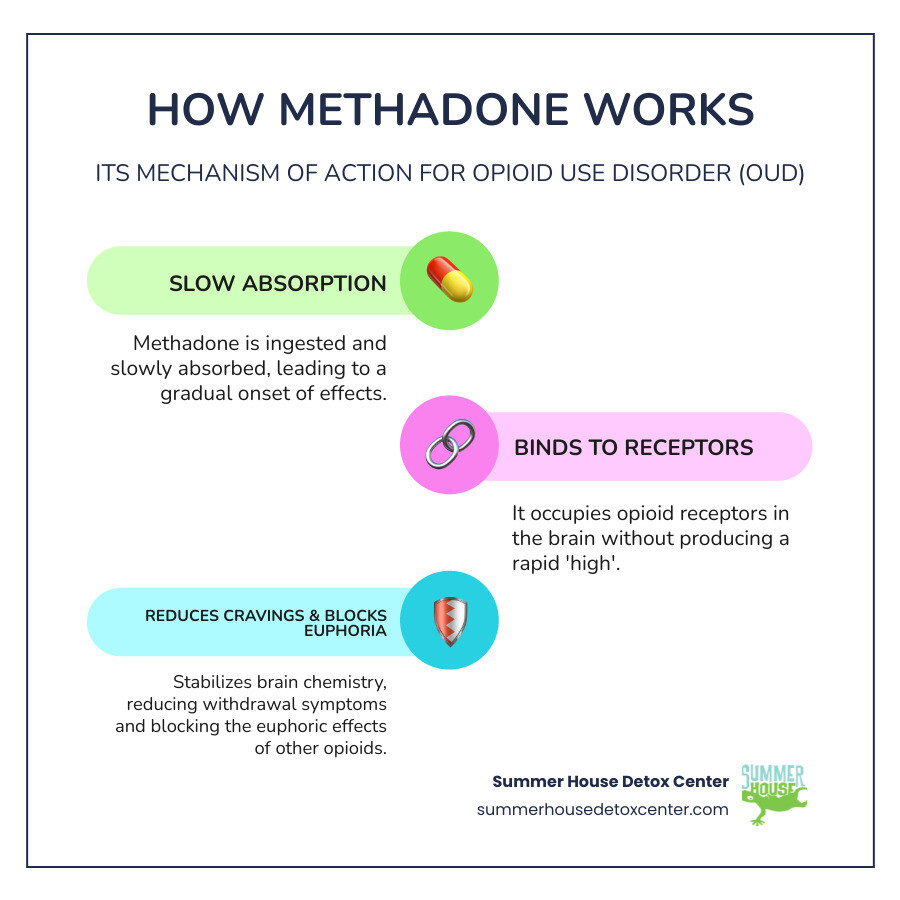
Originally a pain medication, methadone became a cornerstone of Medication-Assisted Treatment (MAT) for opioid use disorder. It attaches to the same opioid receptors in the brain as other opioids but acts slowly and steadily. When taken as prescribed, it reduces cravings and blocks the euphoric effects of other opioids without producing a high.
This makes methadone highly effective for managing Opioid Use Disorder (OUD), helping people stay in treatment and preventing overdose deaths.
The challenge is that methadone itself is a long-acting opioid. Regular use leads to physical dependence. This is not the same as addiction, but it means stopping methadone—whether you’re ready to move beyond maintenance or have been misusing it—requires careful medical management.
For residents in Miami and throughout Florida, understanding methadone’s benefits and challenges is the first step toward making informed decisions about your recovery.
Find more about methadone detox and rehab:
The Challenge of Methadone Withdrawal
Methadone is a powerful tool against opioid addiction, but its long-acting nature presents unique withdrawal challenges. Because it stays in the body longer than other opioids, withdrawal symptoms start later and last longer—a frustrating reality for those trying to quit.
Physical dependence means your body has adapted to methadone. When you stop, it must readjust, causing uncomfortable physical and psychological withdrawal symptoms. The physical symptoms are often flu-like but can be severe, while the psychological toll, including intense emotional distress and cravings, can feel overwhelming.
Here is a list of common methadone withdrawal symptoms we observe:
- Muscle aches and bone pain
- Nausea or vomiting
- Diarrhea
- Insomnia and restlessness
- Fever and chills
- Sweating
- Runny nose and watery eyes
- Rapid heartbeat and high blood pressure
- Anxiety and depression
- Irritability and mood swings
- Difficulty concentrating
- Intense cravings for opioids
While these symptoms are rarely dangerous on their own, managing them without professional support significantly increases the risk of relapse. For those ready for a change, understanding how to get off methadone safely is the crucial first step.
The Methadone Withdrawal Timeline
Methadone withdrawal has an extended timeline due to its long half-life, meaning it takes a long time for the drug to leave your system.
Here’s a general timeline of what to expect:
- Onset (24-60 hours after last dose): Unlike short-acting opioids, methadone withdrawal symptoms typically don’t start for 1 to 2.5 days. This delay can create a false sense of security before symptoms appear.
- Peak Symptoms (Days 3-8): The first week to 10 days are often the most intense. Physical symptoms like muscle aches, nausea, and diarrhea are at their worst, accompanied by severe anxiety, insomnia, and cravings.
- Lingering Symptoms (Weeks 2-6): After the peak, physical symptoms subside, but psychological discomfort can persist for weeks. Low energy, anxiety, depression, and sleep issues can make it hard to maintain abstinence without support.
- Post-Acute Withdrawal Syndrome (PAWS): For some, psychological and emotional symptoms can persist for months in a condition known as Post-Acute Withdrawal Syndrome (PAWS). These symptoms, including mood swings, anxiety, and fatigue, often come and go, making professional supervision essential for navigating this prolonged timeline.

The Core of Recovery: Professional Methadone Detox and Rehab
When ending methadone dependence, your approach determines the outcome. We strongly advocate for professional, medically supervised detox for a safe and comfortable experience.
| Approach | Risks | Benefits |
|---|---|---|
| Quitting Cold Turkey | – Severe and prolonged withdrawal symptoms, often described as excruciating – High risk of relapse due to unbearable discomfort and cravings – Potential for medical complications (dehydration, seizures in extreme cases, though rare for methadone alone) – Psychological distress, including severe anxiety, depression, and suicidal ideation – Increased risk of overdose if relapse occurs (due to lost tolerance) |
– None, effectively. The perceived “benefit” of getting it over with quickly is almost always outweighed by the severe risks and low success rate. |
| Self-Tapering | – Difficulty in accurately reducing doses, often leading to inconsistent tapering and prolonged suffering – Lack of medical oversight to manage unexpected symptoms or complications – High risk of relapse, as the individual is managing intense cravings and discomfort without professional support – Psychological burden of managing withdrawal alone – Risk of misusing other substances to cope |
– Allows for a more gradual reduction than cold turkey, theoretically reducing immediate shock to the system (if done correctly) – Some level of control over the process (though often ineffective in practice) |
| Medically Supervised Detox | – Minimal risks when conducted by professionals. Potential for discomfort, but it is managed. | – Safety and comfort: Medical staff monitor vital signs and administer comfort medications (e.g., Lucemyra, buprenorphine) to alleviate withdrawal symptoms, making the process significantly more manageable. – 24/7 medical monitoring: Constant oversight ensures any complications are addressed immediately. – Personalized tapering schedules: Doses are gradually reduced at a pace custom to your needs, minimizing discomfort. – Reduced relapse risk: A supportive, drug-free environment combined with symptom management dramatically lowers the chance of returning to methadone or other opioids. – Foundation for long-term recovery: Detox is the first step, preparing you for comprehensive rehab and therapy. |
Unsupervised detox is dangerous. The notoriously difficult withdrawal from methadone often leads to relapse, which is especially risky due to lowered tolerance and the potential for overdose.
At Summer House Detox Center, we provide a safe, comfortable, and medically supervised environment. Our experienced medical team is available 24/7 to:
- Ensure Safety: We provide 24/7 monitoring of your vital signs and overall health.
- Manage Symptoms: We use FDA-approved comfort medications to alleviate withdrawal discomfort.
- Provide Support: Our compassionate staff offers consistent encouragement and emotional support.
- Reduce Relapse Risk: Our structured, drug-free environment eliminates relapse opportunities during this vulnerable phase.
Our goal is to make detox as smooth as possible, setting the stage for long-term recovery. This is why inpatient methadone detox is often the recommended path.
What to Expect from Methadone Detox and Rehab in Florida
Choosing a professional methadone detox and rehab program in Florida, like Summer House Detox Center in Miami, means choosing a compassionate and comprehensive approach.
Here’s what you can expect:
- Personalized Treatment Plans: Your treatment begins with a thorough evaluation to create a personalized plan custom to your unique health and life situation.
- Medical Evaluation and Monitoring: Our expert-led detox includes continuous monitoring of your vital signs to ensure your safety and comfort throughout withdrawal.
- Gradual Tapering Schedules: We work with you to gradually reduce your methadone dosage, preventing the severe shock of quitting “cold turkey” and allowing your body to adjust slowly.
- Comfort Medications: We use comfort medications like Lucemyra or buprenorphine to ease withdrawal symptoms, allowing you to focus on healing.
- Nutritional Support: We provide balanced, healthy meals to support your body’s healing process.
- A Serene and Dignified Environment: Our Miami facility offers a peaceful setting that promotes healing. We believe a comfortable environment, combined with dignity and respect from our empathetic staff, is crucial for success.
Charting Your Course: Methadone Addiction Treatment Options
Detox is the first step. Once you are medically stable, the real work of addressing the root causes of addiction begins. This is where a continuum of care becomes essential.
The levels of care for methadone detox and rehab vary to meet your needs at each stage of recovery:
- Inpatient Treatment: Ideal for moderate to severe dependence, this offers the highest level of care. You reside at our facility with 24/7 medical supervision and intensive therapy in a trigger-free environment. This is especially beneficial for those with co-occurring mental health disorders or unstable home environments.
- Outpatient Programs: As you progress, outpatient options provide continued support while you live at home.
- Partial Hospitalization Programs (PHPs): Also known as “day treatment,” PHPs offer a high level of structure with treatment several hours a day, multiple days a week.
- Intensive Outpatient Programs (IOPs): A step down from PHP, IOPs involve fewer hours but still provide significant therapeutic support.
- Standard Outpatient Programs (OPs): The least intensive option, typically involving weekly therapy sessions as you reintegrate into daily life.
This step-down care approach, moving from more to less intensive care, helps you build confidence and apply recovery strategies to your life. Throughout this process, building a strong support system with peers, counselors, and family is paramount. Recovery thrives in community.

Finding the Right Methadone Detox and Rehab Program
Choosing the right methadone detox and rehab program is a personal decision that impacts your recovery. In a state like Florida with many options, here’s what to look for:
- Licensed Facilities in Florida: Choose a center fully licensed by the state of Florida, which guarantees high standards for safety and care. Summer House Detox Center proudly exceeds these standards in Miami.
- Verifying Insurance: Addiction treatment is an essential health benefit, but coverage varies. Our admissions team can quickly and confidentially verify your insurance benefits to make the financial aspect as stress-free as possible.
- Staff Credentials and Experience: Look for a team with specific experience in opioid addiction and methadone detox. Our team at Summer House Detox Center includes qualified professionals, many with personal recovery experience, who bring both clinical expertise and profound empathy.
- Individualized Care Approach: The best programs offer personalized treatment plans. We tailor detox protocols and therapy to your unique history, needs, and goals.
- Holistic Therapies: Effective recovery is about more than physical withdrawal. Look for programs that integrate holistic therapies like nutritional counseling and mindfulness to promote overall well-being.
If you’re searching for “inpatient methadone detox near me” in Florida, connect with us. We’re here to answer your questions and help you take the courageous step toward a methadone-free life.
Life After Detox: Building a Foundation for Lasting Sobriety
Completing methadone detox is a huge achievement, but it’s the beginning of your recovery journey. Lasting sobriety requires continued dedication to therapy and support.
Counseling and therapy are essential to methadone detox and rehab. They help you understand the root causes of dependence, develop healthy coping mechanisms, and prevent relapse.
- Cognitive Behavioral Therapy (CBT): This therapy is a cornerstone of treatment, teaching you to identify and change negative thought patterns and behaviors linked to substance use, replacing them with healthier coping skills.
- Group Counseling: Sharing with others who understand your journey is incredibly powerful. Group therapy builds a supportive community, reduces isolation, and offers diverse strategies for navigating recovery.
- Individual Therapy: One-on-one sessions provide a confidential space to explore personal issues, trauma, and co-occurring mental health concerns like anxiety, depression, or PTSD that may underlie your dependence.
- Addressing Co-Occurring Disorders: We ensure that any co-occurring mental health issues are identified and treated concurrently with substance use, which is crucial for stable, long-term recovery.
Building a life free from methadone means learning new ways to manage emotions and find joy. Therapy provides the tools to reconstruct your life on a solid foundation.
Navigating Post-Acute Withdrawal Syndrome (PAWS) and Long-Term Effects
As mentioned, the journey doesn’t always end with acute withdrawal. Many people experience Post-Acute Withdrawal Syndrome (PAWS), a set of fluctuating psychological and emotional symptoms that can last for months or even years.
PAWS symptoms include:
- Persistent mood swings
- Anxiety and panic attacks
- Depression
- “Brain fog” and concentration issues
- Sleep disturbances and fatigue
- Heightened sensitivity to stress
- Intermittent cravings
The duration of PAWS is individual, but being aware of these symptoms is key to long-term recovery.
Coping strategies for PAWS are built through the therapeutic work done in rehab:
- Continued Therapy: Ongoing therapy is vital for managing PAWS symptoms.
- Mindfulness and Stress Reduction: Practices like meditation and yoga help regulate mood and reduce anxiety.
- Healthy Lifestyle: A balanced diet, regular exercise, and consistent sleep are foundational for brain health.
- Support Networks: Leaning on peer support groups provides encouragement and reduces isolation.
Long-term methadone use can have other effects, which is why professional guidance is vital when planning your recovery journey. Effective relapse prevention planning is integral to navigating PAWS and other challenges. Our aftercare support programs are designed to provide continued guidance as you build a fulfilling life in recovery.
Frequently Asked Questions about Methadone Detox
Is it dangerous to mix methadone with other drugs?
Yes, mixing methadone with other drugs is extremely dangerous, especially with other central nervous system (CNS) depressants. The combination amplifies their effects, leading to a high risk of fatal respiratory depression and overdose.
Key substances to absolutely avoid mixing with methadone include:
- Alcohol: Even small amounts can dangerously increase sedation.
- Benzodiazepines: Drugs like Xanax, Valium, and Klonopin are a leading cause of overdose deaths when mixed with methadone.
- Other Opioids: Taking heroin, fentanyl, or other painkillers with methadone dramatically increases overdose risk.
- Muscle Relaxants and Sedatives: Any medication that causes drowsiness is dangerous with methadone.
If you or someone you know is mixing methadone with other substances, it’s crucial to seek immediate medical help.
Does insurance cover methadone detox and rehab?
Yes, most insurance plans cover methadone detox and rehab. Under the Affordable Care Act (ACA), addiction treatment is an essential health benefit. However, coverage details vary by plan, including in-network vs. out-of-network costs, deductibles, and the level of care covered.
At Summer House Detox Center in Miami, our admissions team is dedicated to helping you verify your insurance benefits quickly and confidentially. We will work with you to understand your coverage and explore all available options, including private pay, to ensure you can access the care you need. Don’t let cost concerns prevent you from seeking life-saving treatment.
What is the difference between Methadone and Suboxone?
Methadone and Suboxone are both FDA-approved medications for Medication-Assisted Treatment (MAT), but they work differently.
-
Methadone (Full Opioid Agonist):
- Mechanism: Fully activates opioid receptors to reduce cravings and withdrawal. It effectively blocks the effects of other opioids.
- Regulation: Must be dispensed daily at federally regulated Opioid Treatment Programs (OTPs), with take-home doses earned over time.
- Application: Often used for severe, long-term opioid dependence.
-
Suboxone (Partial Opioid Agonist):
- Mechanism: Contains buprenorphine, which partially activates opioid receptors. This creates a “ceiling effect” that lowers the risk of respiratory depression and overdose. It also contains naloxone to deter misuse.
- Regulation: Can be prescribed by certified doctors in an office setting, offering more flexibility and privacy.
- Application: Effective for a wide range of individuals with OUD, often preferred for its safety profile and convenience.
The choice between them depends on your individual needs, medical history, and treatment goals. Our medical professionals can help you determine the best path. For a deeper dive, read our article on Methadone vs Suboxone: How Do They Differ?.
Conclusion: Your Path to Freedom Starts in Miami
Navigating methadone detox and rehab can feel overwhelming, but recovery is an achievable reality. Whether you’ve used methadone for pain management or opioid use disorder, deciding to move forward without it is a courageous step.
Professional help is key to a safe, comfortable, and successful detox. Attempting to withdraw from methadone alone can lead to severe discomfort and a high risk of relapse. Everyone deserves a path to recovery that prioritizes their well-being and dignity.
At Summer House Detox Center in Miami, Florida, we are committed to providing that path. Our approach is founded on personalized care, combining medically supervised detox with a warm, supportive environment. Our experienced staff, many in recovery themselves, create the ideal setting for healing.
Your journey to freedom from methadone dependence can begin today. We are here to support you with the medical expertise and compassionate care you deserve.
Take the first step towards a healthier, methadone-free life. Contact us today to learn more about our comprehensive detox services, including our specialized Detox Services: Methadone Detox program. Your path to recovery starts here, in sunny Miami.
