
Understanding Medication Assisted Treatment: A Proven Path to Recovery
Medication assisted treatment (MAT) combines FDA-approved medications with counseling and behavioral therapies to treat substance use disorders—particularly opioid and alcohol addiction. It’s not about replacing one drug with another. It’s a medically supervised approach that helps your brain heal while you rebuild your life.
What MAT Does:
- Normalizes brain chemistry disrupted by addiction
- Reduces or eliminates withdrawal symptoms that make quitting so difficult
- Blocks the euphoric effects of opioids and alcohol
- Decreases cravings that lead to relapse
- Combines medication with therapy for lasting recovery
The opioid crisis has left over 6.1 million Americans struggling with Opioid Use Disorder (OUD). In 2017 alone, nearly 47,600 people died from opioid overdoses. Yet only 11% of those who need it receive MAT—despite decades of research proving it works.
If you’ve tried to quit before and failed, you’re not alone. Withdrawal is brutal. The fear is real. But MAT changes the equation. It addresses the physical dependence while therapy helps you heal emotionally and build new coping skills.
This isn’t weakness. It’s medicine.
MAT treats both:
- Opioid Use Disorder (OUD) – heroin, fentanyl, prescription painkillers
- Alcohol Use Disorder (AUD) – chronic alcohol dependence
Research shows MAT reduces overdose deaths by over 50%, keeps people in treatment longer, and helps them return to work and family life. In Florida, where the opioid crisis has hit hard, access to quality MAT programs can be life-saving—especially in areas like Miami where treatment centers offer comprehensive care.
You deserve compassionate, evidence-based treatment that gives you a real chance at recovery.
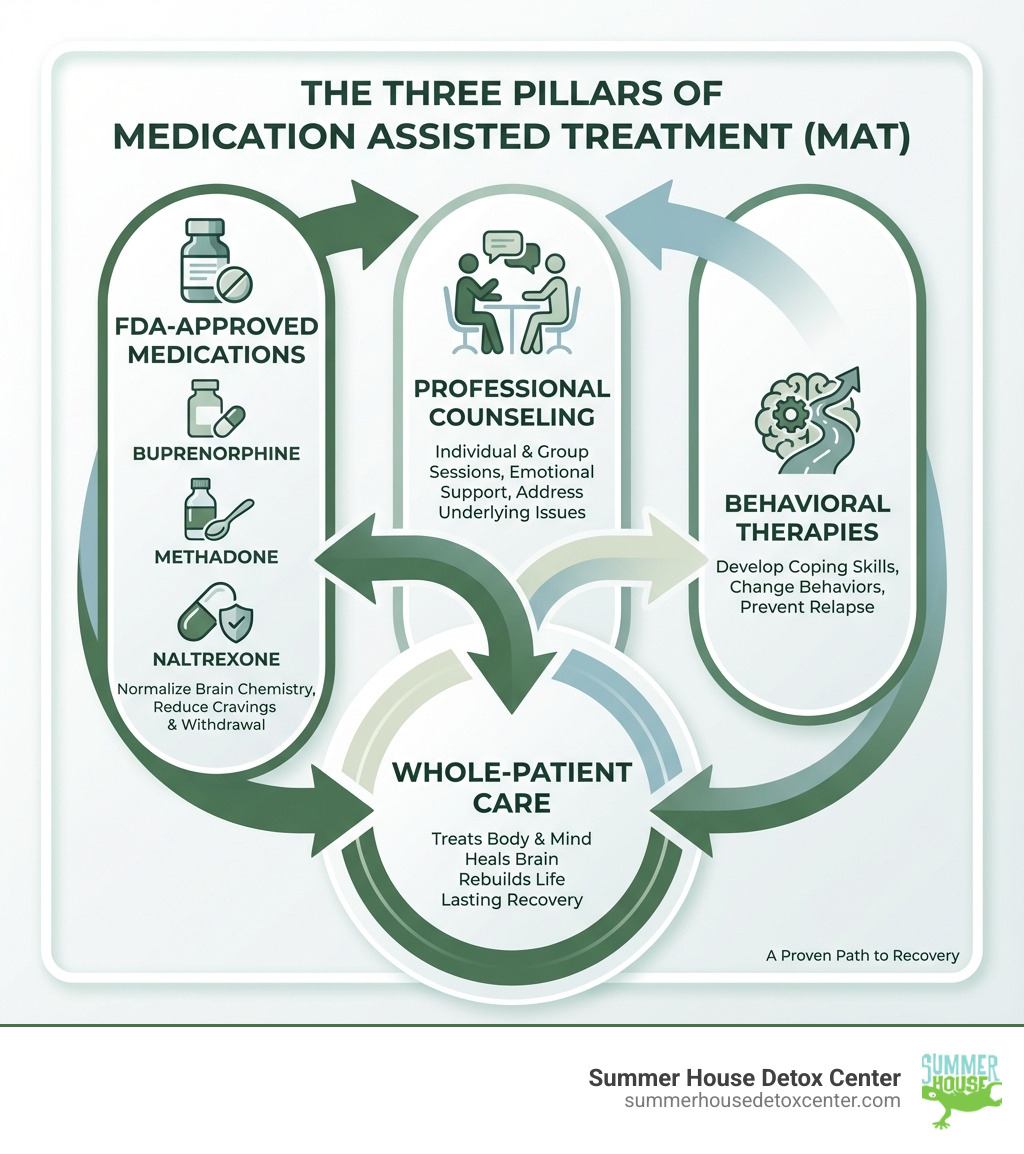
What is Medication Assisted Treatment (MAT) and How Does It Work?
Medication assisted treatment is a comprehensive, evidence-based approach to treating substance use disorders (SUDs). At its core, MAT uses FDA-approved medications in combination with counseling and behavioral therapies to provide a “whole-patient” approach to recovery. We understand that addiction is a complex disease, affecting not just the body but also the mind and spirit. MAT addresses these multiple facets to offer a truly holistic path to healing.
So, how does it work its magic? The prescribed medications in medication assisted treatment function by normalizing your brain chemistry, which has been thrown out of balance by prolonged substance use. They work to relieve the intense physiological cravings that can make sustained recovery feel impossible, and they can also block the euphoric effects of opioids and alcohol. This normalization of body functions, without the negative consequences of the abused drug, creates a stable foundation for recovery.
The medication component is just one piece of the puzzle. Counseling and behavioral therapies are equally vital. These therapies help you explore the underlying causes of your addiction, develop healthy coping mechanisms, and build a supportive network. The combination of medication and therapy means we’re not just treating the symptoms; we’re helping you heal from the inside out. You can learn more about The Role of Therapy in Detox in our other resources.
One of the most common misconceptions about medication assisted treatment is that it’s simply “substituting one drug for another.” We want to unequivocally state that this is not true. MAT medications are carefully chosen and dosed to relieve withdrawal symptoms and psychological cravings caused by chemical imbalances in the body. They don’t produce the “high” associated with illicit drug use. Instead, they provide a safe and controlled level of medication that allows you to stabilize, engage in therapy, and work towards long-term sobriety. This approach helps to dismantle the harmful idea that Why Addiction Is Not a Moral Failing, recognizing it as a medical condition requiring medical solutions. For a broader understanding, refer to Information about Medication-Assisted Treatment (MAT).
FDA-Approved Medications Used in MAT
The U.S. Food and Drug Administration (FDA) plays a crucial role in ensuring that the medications used in medication assisted treatment are safe and effective. All medications used in MAT programs are FDA-approved, meaning they have undergone rigorous testing and evaluation. This provides a layer of confidence that the treatments we offer are backed by science and clinical research.
At Summer House Detox Center, we understand that every individual’s journey to recovery is unique. Therefore, our MAT programs are clinically driven and custom to meet your specific needs. This personalized approach ensures that the right medication, at the proper dose, is chosen to support your recovery without adverse effects on your intelligence, mental capability, physical functioning, or employability. It’s all part of our philosophy that Medications and Recovery can work hand-in-hand.
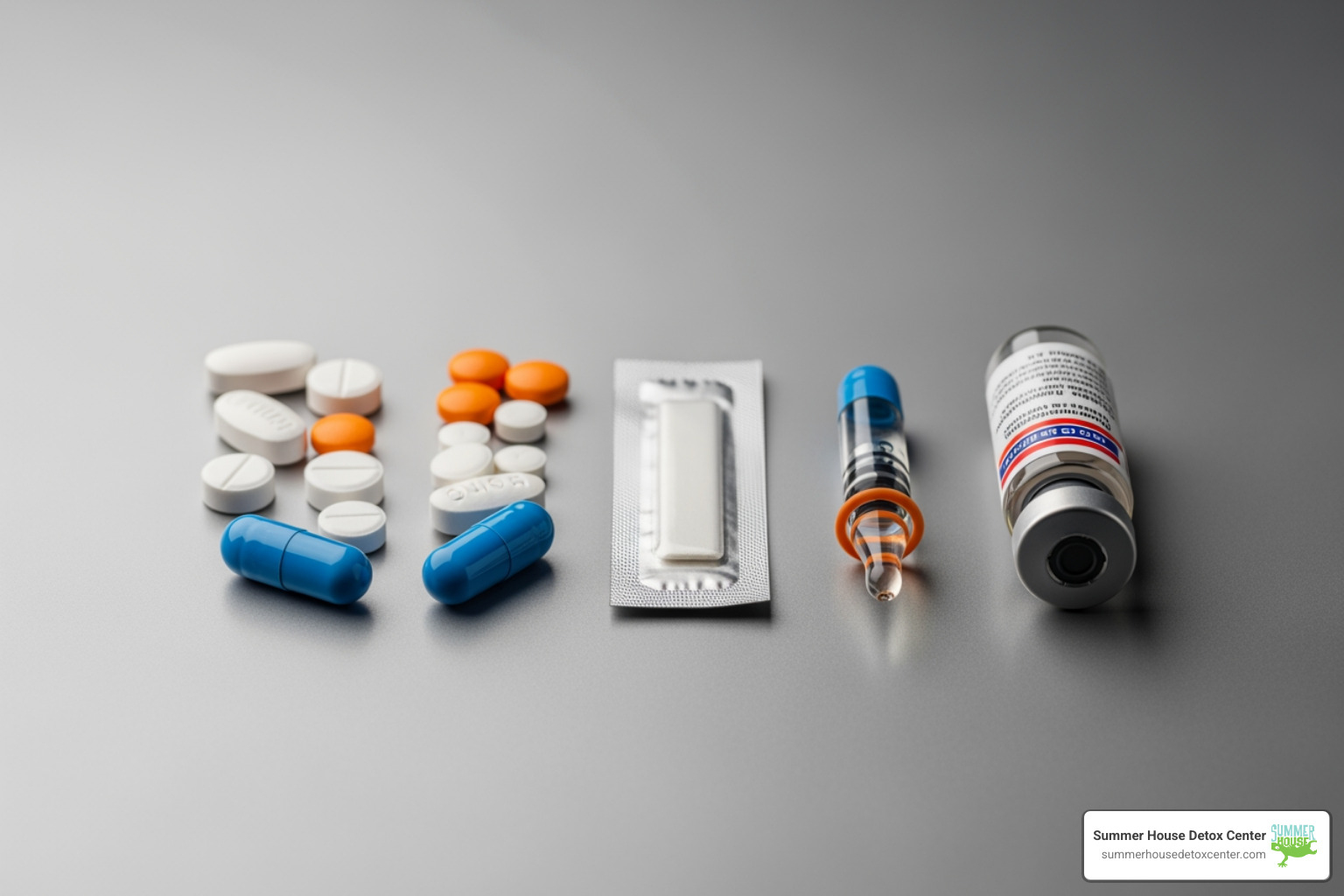
Medications for Opioid Use Disorder (OUD)
For individuals struggling with Opioid Use Disorder, there are three primary FDA-approved medications that we use in medication assisted treatment:
- Buprenorphine (often combined with Naloxone as Suboxone): This medication is a partial opioid agonist. What does that mean? It partially activates opioid receptors in the brain, which helps to reduce cravings and withdrawal symptoms without producing the full euphoric effects of other opioids. Buprenorphine is particularly significant because it can be prescribed or dispensed in physician offices, making treatment more accessible. The combination with naloxone in Suboxone is designed to prevent misuse; if someone tries to inject or snort it, the naloxone triggers withdrawal. If you’re wondering Does Suboxone Help With Opiate Withdrawal Symptoms?, the answer is a resounding yes, by stabilizing your system.
- Methadone: As a full opioid agonist, methadone works by binding to opioid receptors and preventing withdrawal symptoms while also reducing cravings. When taken as prescribed, it can block the euphoric effects of other illicit opioids. Methadone has been used for over 50 years in OUD treatment and is highly effective. However, it must be dispensed daily through federally regulated and licensed Opioid Treatment Programs (OTPs), ensuring strict medical supervision. To understand how it compares, consider Methadone vs. Suboxone: How Do They Differ?.
- Naltrexone: Unlike buprenorphine and methadone, naltrexone is an opioid antagonist. This means it blocks opioid receptors entirely, preventing any euphoric or sedating effects from opioids. It is non-addictive and has no potential for abuse. Naltrexone is available as a daily pill or a monthly injectable (Vivitrol). A critical point for naltrexone is that individuals must be abstinent from opioids for 7-10 days before starting treatment to avoid sudden, severe withdrawal. This makes it a powerful tool for preventing relapse once detox is complete. For more on this, see Which Medications Are Used in Opiate Detox?.
Medications for Alcohol Use Disorder (AUD)
Medication assisted treatment is also highly effective for Alcohol Use Disorder (AUD). The medications approved for AUD help reduce cravings, ease withdrawal symptoms, and deter alcohol consumption.
- Naltrexone: Similar to its use in OUD, naltrexone for AUD blocks the rewarding effects of alcohol, making drinking less pleasurable and reducing cravings. It can be taken as a daily pill or a monthly extended-release injection.
- Acamprosate: This medication helps individuals maintain sobriety by reducing post-acute withdrawal symptoms, such as anxiety, insomnia, and restlessness, that can persist after initial detox. It’s thought to restore the balance of brain chemicals disrupted by chronic alcohol use.
- Disulfiram: Disulfiram works as a deterrent. If you consume alcohol while taking disulfiram, it causes an unpleasant physical reaction, including nausea, vomiting, heart palpitations, and headaches. This strong negative association helps to discourage drinking.
These medications, combined with therapy, provide a robust framework for overcoming AUD. To learn more about What Type of Medications Are Used in Alcohol Treatment? and the process of Alcohol Detox Treatment, we have extensive resources available.
The Proven Benefits and Success of MAT
The evidence is clear: medication assisted treatment is not just an option; it’s a game-changer in the fight against substance use disorders. The benefits extend far beyond simply stopping drug or alcohol use, paving the way for a healthier, more fulfilling life.

One of the most profound benefits of MAT is the dramatic improvement in patient survival rates. Research indicates that MAT can reduce overdose deaths by over 50%. Considering that 47,600 overdose deaths occurred in 2017, this is a life-saving intervention. We believe that everyone deserves the chance to live, and MAT provides that chance.
Furthermore, MAT significantly increases retention in SUD treatment. When individuals feel stable and their cravings are managed, they are more likely to stay engaged in counseling and behavioral therapies, which are crucial for long-term recovery. This sustained engagement lays a Life After Detox: Building a Strong Foundation for Long-Term Sobriety.
The impact of MAT also reaches into the community:
- Decreased illicit opiate use: By addressing the physical drivers of addiction, MAT helps individuals break free from the cycle of illicit drug seeking.
- Reduced criminal activity: Studies show a direct correlation between MAT and a decrease in criminal behavior, as individuals are less driven by the need to acquire illegal substances.
- Lowered risk of HIV and Hepatitis C transmission: Reduced illicit drug use, particularly injection drug use, directly translates to a lower risk of contracting and transmitting infectious diseases like HIV and Hepatitis C. This is a critical public health benefit, as explored in Drug Use Viral Infections HIV Hepatitis.
- Increased ability to gain and maintain employment: With stability in their recovery, individuals on MAT are better equipped to re-enter the workforce, sustain jobs, and contribute to their families and communities. Employers may even save up to $2,607 per worker annually by getting workers into treatment.
Overall, MAT contributes to a ‘whole-patient’ approach, helping individuals regain their health, restore social functions, and build a solid foundation for lasting recovery. It’s about more than just abstinence; it’s about rebuilding a life.
Accessing MAT: Insurance, Duration, and Finding Care in Florida
Despite the proven efficacy of medication assisted treatment, there are still challenges and barriers to access for many individuals. Stigma surrounding addiction and MAT can lead to misconceptions among policymakers, healthcare providers, and communities, hindering its wider adoption. Additionally, some areas, particularly rural ones, face provider shortages, making it difficult for people to find qualified MAT providers.
However, in Florida, and especially in vibrant areas like Miami, we are committed to expanding access to this life-saving treatment. Finding quality care in South Florida is paramount, and resources are available to help you steer your options. Our facility, Summer House Detox Center, is dedicated to providing comprehensive and accessible MAT services right here in Miami, FL. We believe that geographical location should not be a barrier to receiving the best possible care. For those seeking immediate assistance, SAMHSA offers a SAMHSA’s Treatment Locator to help you find treatment options.
How long does medication assisted treatment last?
The duration of medication assisted treatment is highly individualized and varies significantly from person to person. There’s no one-size-fits-all answer, as it depends on factors such as the severity of the substance use disorder, individual response to medication, clinician recommendations, and your personal recovery progress.
For some, MAT may be a short-term intervention to stabilize during acute withdrawal and detox. For others, particularly those with Opioid Use Disorder, it can be a long-term treatment, lasting months, years, or even indefinitely. The medications used for OUD, such as buprenorphine and methadone, are safe for long-term use and can be continued for as long as they are beneficial to your recovery journey. The decision to discontinue or taper off MAT medications should always be made in consultation with your doctor. This commitment to The Importance of Personalized Care in Detox is a cornerstone of our approach.
Does insurance cover medication assisted treatment?
We understand that concerns about cost can be a significant barrier to seeking treatment. The good news is that medication assisted treatment is typically covered by most health insurance plans, at least in part, if not entirely. This is largely due to federal mandates like the Mental Health Parity and Addiction Equity Act (MHPAEA) of 2008. This act requires group health insurance plans to provide the same level of benefits for substance use disorders as they do for medical or surgical care.
In Florida, many private insurance plans and state Medicaid programs offer coverage for MAT. However, coverage details can vary widely depending on your specific plan and provider. We strongly encourage you to verify your benefits directly with your insurance company. Our admissions team at Summer House Detox Center is also here to help you understand your coverage options. You can easily find out if Contact Us: Am I Covered? by reaching out to us.
Frequently Asked Questions about Medication Assisted Treatment
How does MAT contribute to a ‘whole-patient’ approach to addiction treatment?
Medication assisted treatment integrates medication with counseling and behavioral therapies to address the physical, psychological, and social aspects of addiction. This comprehensive strategy supports long-term recovery by treating the entire person, not just the symptoms of substance use. It acknowledges that addiction is a complex disease affecting brain chemistry, behavior, and life circumstances, and therefore requires a multifaceted solution.
What is the difference between MAT and simply substituting one drug for another?
This is a critical distinction. Medication assisted treatment uses FDA-approved medications in a controlled, prescribed manner to normalize brain chemistry and relieve cravings without providing a “high.” These medications are therapeutic tools, carefully administered under medical supervision. Unlike substance abuse, where individuals seek euphoria or escape, MAT medications work to stabilize the body and mind, allowing individuals to engage in meaningful therapy and rebuild a healthy, sober life. It’s about healing, not replacing.
What are the potential outcomes and success rates associated with MAT?
MAT is a highly effective, evidence-based treatment with robust success rates. Studies consistently show that it significantly improves patient survival, increases retention in treatment programs, decreases illicit drug use, and helps people return to productive lives. For Opioid Use Disorder, in particular, MAT is considered the gold standard of care due to its proven ability to reduce overdose deaths and support long-term recovery. It empowers individuals to regain control over their lives and achieve sustainable sobriety.
Begin Your Recovery with Medically Supervised Treatment
Medication assisted treatment stands as a guide of hope for countless individuals battling substance use disorders. It’s a life-saving, evidence-based approach that combines the best of medical science with compassionate therapeutic support, offering a real chance at lasting recovery. We firmly believe that embracing MAT is a powerful step towards healing and reclaiming your life.
At Summer House Detox Center, we understand that Why Medical Detox Is a Vital First Step in Recovery. That’s why we provide personalized, medically supervised detox programs right here in the Miami area. Our expert team is dedicated to creating a safe, comfortable, and dignified environment where you can begin your journey to sobriety with confidence. We offer comprehensive Detox Services: Medication-Assisted Treatment custom to your unique needs, ensuring you receive the highest standard of care as you take this courageous step. If you or a loved one are ready to explore the benefits of MAT and start a new chapter, we are here to support you every step of the way.
