
Understanding MAT for Opioid Addiction: A Path to Real Recovery
MAT for opioid addiction combines FDA-approved medications with counseling and behavioral therapies to treat opioid use disorder. It’s a comprehensive approach designed to heal your brain, body, and life.
Quick Answer: What You Need to Know About MAT
- What it is: A whole-patient treatment approach using medication, therapy, and support.
- How it helps: Reduces cravings, blocks opioid effects, and prevents withdrawal symptoms.
- Proven benefits: 50% lower risk of overdose death, better treatment retention, and improved quality of life.
- Duration: Varies from months to years based on individual needs.
- Available in Florida: Multiple options, including Miami-area facilities with insurance coverage.
If you’re reading this in Miami or anywhere in Florida, you’re not alone. The opioid crisis has touched thousands of families, but recovery is possible.
You might have tried to quit before, be terrified of withdrawal, or worry that you’ve failed too many times. These feelings are normal, and they’re exactly why MAT exists. It treats addiction as the medical condition it is, not a moral failing, giving your brain a chance to heal while you learn new ways to live.
As former U.S. Health and Human Services Secretary Alex Azar II put it: “Medication-assisted treatment works. The evidence on this is voluminous and ever growing… failing to offer MAT is like trying to treat an infection without antibiotics.”
At Summer House Detox Center in Miami, we’ve seen MAT change lives. It provides the foundation people need to rebuild. Let’s break down what MAT really is and why it might be the answer you’ve been looking for.
What is Medication-Assisted Treatment (MAT) and How Does It Work?
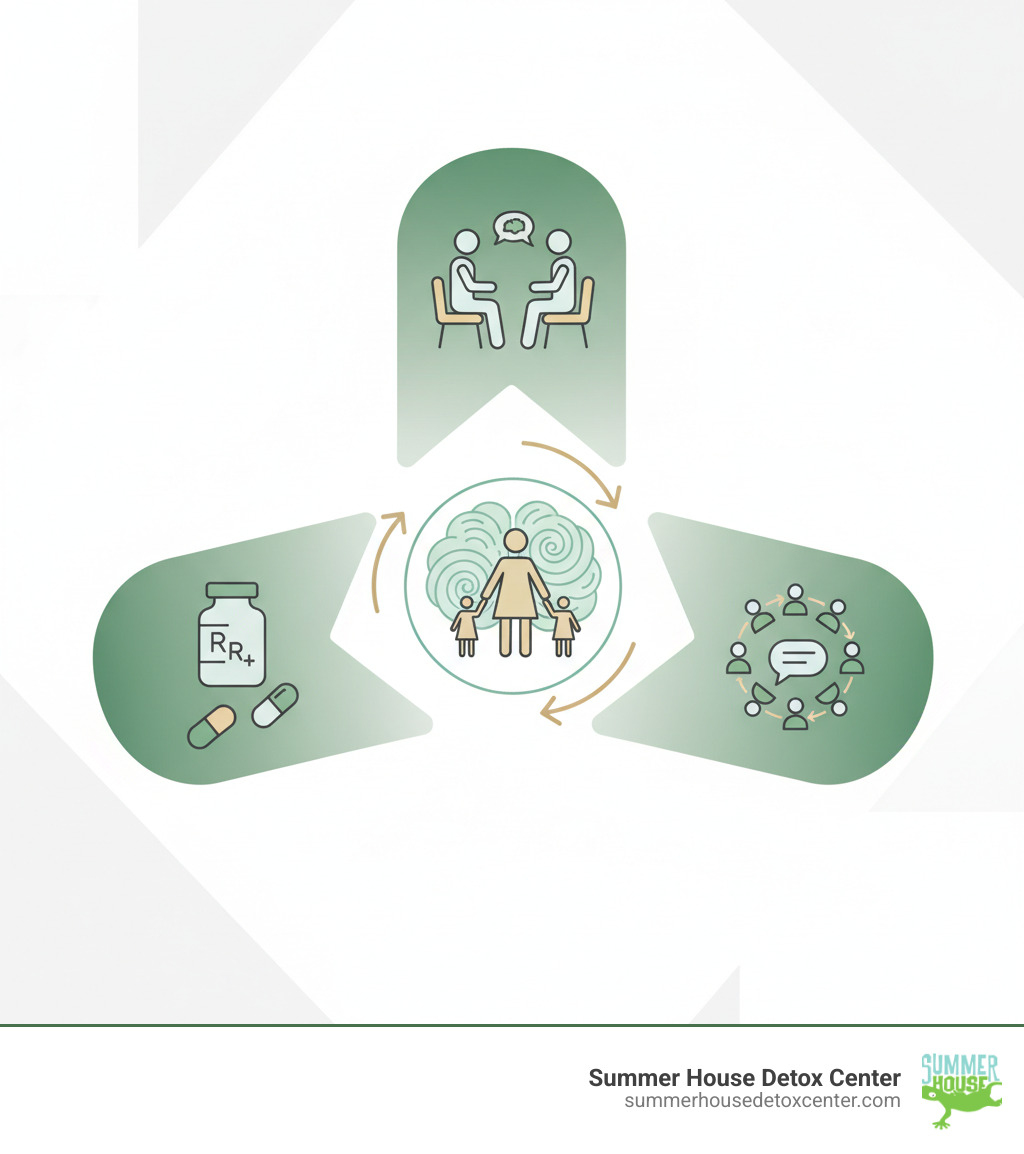
MAT for opioid addiction is a comprehensive, “whole-patient” approach that treats opioid use disorder like other chronic medical conditions, such as diabetes or heart disease. At Summer House Detox Center in Miami, we combine FDA-approved medications with counseling to give our clients the best chance at lasting recovery. You can explore our page on Understanding Medication-Assisted Treatment for more details.
Opioid use physically changes your brain’s chemistry, disrupting its natural reward system. When you stop using, the brain struggles to function, causing intense withdrawal and cravings. This isn’t a lack of willpower; it’s a physiological response.
MAT medications address this by:
- Normalizing brain chemistry: The medications restore balance to brain circuits, allowing your natural chemistry to heal. This helps you focus on recovery instead of just surviving cravings.
- Relieving physical cravings: They activate opioid receptors in a controlled way or block them entirely, significantly reducing the physical urge to use.
- Blocking euphoric effects: Some MAT medications prevent other opioids from producing a “high,” which breaks the cycle of relapse.
MAT quiets the noise of addiction in your brain, giving you the mental space to engage in therapy and rebuild your life.
FDA-Approved Medications for Opioid Use Disorder
The FDA has approved several medications for MAT for opioid addiction, but the best choice depends on your individual needs. At Summer House Detox Center in Miami, we primarily use Methadone and Buprenorphine (often known as Suboxone).
Methadone is a full opioid agonist that binds to opioid receptors to prevent withdrawal and cravings. It has been used successfully for decades but is highly regulated. In Florida, it must be dispensed daily at a federally regulated clinic, especially at the start of treatment. Over time, stable patients may earn take-home doses.
Buprenorphine is a partial opioid agonist, which means it has a “ceiling effect” that lowers the risk of misuse and overdose. Products like Suboxone also contain naloxone to deter injection. Buprenorphine offers more flexibility, as it can be prescribed by qualified providers in office-based settings, including detox centers like ours. It comes in sublingual films, tablets, or as an extended-release injection.
Both medications are effective for detox and long-term maintenance. The choice often comes down to the level of structure a person needs versus flexibility. Our team will help you decide which is right for you. For more details, visit our pages on Which Medications Are Used in Opiate Detox and Methadone vs. Suboxone: How Do They Differ?.
The Essential Role of Counseling and Therapy
Medication is just one piece of the MAT for opioid addiction puzzle. Counseling and behavioral therapies are what turn recovery into a new way of life.
While medication stabilizes your brain, therapy helps you address the underlying reasons for your substance use, such as trauma or untreated pain. At Summer House Detox Center, we integrate several approaches:
- Cognitive-Behavioral Therapy (CBT) helps you identify and change negative thought patterns and behaviors, teaching you practical coping skills to manage triggers.
- Group therapy provides a sense of belonging and a support network of peers who understand what you’re going through. It fosters accountability and shared encouragement.
- Individual counseling offers a private space to work on personal challenges and develop customized strategies for long-term recovery.
Therapy helps you build a life that feels fulfilling without substances. Since many people with OUD also have co-occurring conditions like depression or anxiety, our dual diagnosis programs treat both issues simultaneously. Learn more at The Role of Therapy in Detox and Dual Diagnosis Rehab.
Understanding the Terminology: MAT vs. MOUD
You may see treatment referred to as “Medication-Assisted Treatment” (MAT) or “Medications for Opioid Use Disorder” (MOUD). They describe the same approach, but the language is evolving.
The term MAT was created to show that medication assists therapy. However, the word “assisted” can imply that medication is a crutch rather than a primary medical treatment, which contributes to stigma.
Many experts now prefer MOUD to emphasize that these medications are a first-line, evidence-based medical intervention for a chronic brain disease, just like insulin for diabetes. There is no shame in treating a medical condition with medicine.
At Summer House Detox Center, we use both terms, reflecting the field’s evolution. What matters most is that we provide effective, compassionate care. The core message is the same: combining medication with counseling is the most effective path to recovery.
The Proven Benefits of MAT for Opioid Addiction
The evidence supporting MAT for opioid addiction is overwhelming. It’s not just effective—it’s a lifesaver. At Summer House Detox Center, we see these profound improvements in the lives of our clients from Miami and across Florida every day.

Here are the key, evidence-based benefits:
-
Increased Patient Survival: The most critical benefit is that MAT saves lives. Studies consistently show that people receiving methadone or buprenorphine are 50% less likely to die of an overdose. The CDC’s Evidence-Based Strategies for Preventing Opioid Overdose confirms how MAT directly reduces this risk.
-
Increased Treatment Retention: Patients in MAT programs are more likely to stay in treatment longer. This extended engagement is vital for developing the skills and support systems needed for long-term recovery.
-
Decreased Illicit Opioid Use: By stabilizing brain chemistry and minimizing cravings, MAT makes it easier to abstain from illicit opioids. This breaks the exhausting cycle of drug-seeking behavior.
-
Reduced Disease Transmission: Illicit opioid use, especially via injection, is a major driver of infectious diseases like HIV and Hepatitis C. By reducing this behavior, MAT helps decrease the spread of these serious infections. Learn more on our page about Drug Use, Viral Infections: HIV, Hepatitis.
-
Improved Social Functioning: With their health stabilized, individuals in MAT programs are better able to gain employment, rebuild relationships, and become active members of their families and communities. We’ve seen clients return to work, coach their kids’ sports teams, and reclaim their lives with purpose.
These benefits prove that MAT for opioid addiction is a robust strategy that offers a path to lasting recovery and a dramatically improved quality of life.
Navigating a MAT Program: What to Expect
Starting MAT for opioid addiction can feel daunting, but knowing the path ahead helps. At Summer House Detox Center in Miami, we guide you through each step to make your recovery as safe and effective as possible.
Your journey typically follows these phases:
- Comprehensive Initial Assessment: We start by getting to know you—your medical history, substance use, and mental health needs. This allows us to create a personalized treatment plan.
- Medically Supervised Detoxification: This phase safely manages withdrawal symptoms with 24/7 medical monitoring and medications to ease discomfort. Trying to detox alone can be dangerous, which is why Medical Detox is a Vital First Step in Recovery.
- Medication Induction: Your prescribed MAT medication (Methadone or Buprenorphine) is carefully introduced and adjusted to find the right dose that eliminates cravings without causing a high.
- Rehabilitation Phase: With your medication stabilized, you’ll engage in individual and group therapy to address the root causes of addiction and learn healthy coping skills.
- Maintenance Phase: Recovery is a long-term process. You’ll continue your medication and therapy to maintain stability and prevent relapse, just as you would for any other chronic medical condition.
- Tapering Off Medication: If and when the time is right, this decision is made collaboratively with your medical team. The process is managed carefully to minimize discomfort and protect your recovery. Our resource on How to Get Off Methadone offers more insight.
Insurance Coverage and Patient Rights in Florida
Many people worry about the cost of MAT for opioid addiction. The good news is that federal laws like the Mental Health Parity and Addiction Equity Act and the Affordable Care Act require most insurance plans, including Florida Medicaid, to cover substance use disorder treatment. While plans vary, significant coverage is available.
At Summer House Detox Center, we can help you steer your benefits. Visit our Am I Covered? page to verify your insurance.
You also have legal protections. The Americans with Disabilities Act (ADA) prohibits discrimination against people in recovery or receiving MAT. The Family and Medical Leave Act (FMLA) may allow you to take job-protected leave for treatment. The U.S. Department of Justice actively enforces these rights.
Managing Side Effects and Work Activities
Like any medication, those used in MAT for opioid addiction can have side effects, such as nausea, constipation, or drowsiness. These are typically manageable and far less severe than the consequences of untreated addiction. Our medical team works with you to adjust your dosage and manage any discomfort, reflecting The Importance of Personalized Care in Detox.
When taken at the proper, stable dose, MAT medications do not impair your ability to work or function normally. The goal is to stabilize you so you can lead a productive life. During the initial adjustment phase, you may feel drowsy, so it’s important to be cautious with driving. Communicate any side effects to your provider immediately. With the right support, you can manage both your recovery and your responsibilities.
Accessing MAT in Florida: Challenges and Solutions
While MAT for opioid addiction is a proven treatment, accessing it in Florida can present challenges. Understanding these barriers is the first step to overcoming them.

The most significant barriers include stigma against MAT, transportation issues, and difficulty navigating insurance. Access can be particularly difficult in rural parts of Florida, where there are fewer providers. Nearly 30% of rural residents nationwide live in counties without a buprenorphine provider, a challenge mirrored in parts of our state.
Fortunately, Florida is actively working to expand access. Initiatives from Florida’s State Opioid Response Project Resources are increasing treatment capacity. Key solutions include:
- Telehealth: Video calls with providers have become a game-changer, reducing the need for long drives and making treatment more accessible.
- Mobile MAT Clinics: These mobile units bring medication and counseling directly to underserved communities.
- Hub and Spoke Model: This system connects specialized treatment programs (hubs) with community clinics (spokes) to create a coordinated care network across the state.
At Summer House Detox Center in Miami, we are part of the solution. We understand the local landscape and are here to help you steer any barriers to receiving life-saving care.
How to Find MAT Treatment in the Miami Area
If you’re in the Miami area and ready to start MAT for opioid addiction, here are a few simple steps you can take:
- Talk to Your Doctor: Your primary care physician can be a great starting point for a referral, even if they don’t prescribe MAT themselves.
- Use a Treatment Locator: Confidential tools like the federal locator at FindTreatment.gov can help you find nearby facilities offering MAT.
- Call Us Directly: The simplest path is often a direct call. Our admissions team at Summer House Detox Center knows the Miami treatment landscape and can answer your questions, verify your insurance, and get you started right away.
- Ask About Integrated Care: When evaluating programs, ensure they offer a whole-patient approach that combines medication with counseling, not just medication dispensing.
Making the call takes courage. We’re here in Miami, ready to walk this path with you from day one.
Frequently Asked Questions about MAT
We understand you have questions about MAT for opioid addiction. Here are answers to some of the most common concerns.
Does MAT just substitute one addiction for another?
No. This is a common and harmful misconception. Addiction involves compulsive, uncontrolled drug use despite negative consequences. MAT for opioid addiction is a prescribed medical treatment.
When taken as directed, MAT medications are given at a therapeutic dose that normalizes brain chemistry, reduces cravings, and prevents withdrawal without causing a “high.” It’s similar to how a person with diabetes uses insulin to manage a chronic condition. The goal is to provide stability so you can engage in therapy and rebuild your life. OUD is a medical condition, not a moral failing, and MAT is a legitimate medical treatment. Learn more about this on our page, Why Addiction is Not a Moral Failing.
What is the success rate of MAT for opioid addiction?
MAT has a very high success rate when measured by key health outcomes. It consistently outperforms abstinence-only approaches.
- Reduced Overdose Risk: Individuals on MAT are 50% less likely to die of an overdose, a life-saving benefit confirmed by a National Institutes of Health study.
- Increased Treatment Retention: Patients on MAT stay in treatment longer, which is a strong predictor of long-term success.
- Improved Functioning: Success also means reduced illicit drug use, decreased criminal activity, and a better ability to work and maintain healthy relationships.
Success is personal. MAT provides the foundation for real, measurable improvements in quality of life.
What is the first step to starting MAT for opioid addiction?
The first step is acknowledging you need help and reaching out to a qualified facility. The process begins with a comprehensive medical assessment.
- Find a Qualified Facility: Look for a reputable detox and treatment center that offers MAT, like Summer House Detox Center in Miami.
- Undergo a Comprehensive Assessment: Our medical staff will conduct a thorough evaluation of your physical and mental health to create a safe and effective plan.
- Begin Medically Supervised Detox: For most, this is the initial phase. It ensures your safety and comfort as opioids leave your system. Our page, The First 72 Hours of Detox: What to Expect and How to Prepare, explains this crucial period.
- Start Your Personalized Plan: Based on your assessment, our team will develop a plan that includes the right medication, counseling, and therapy for your unique needs.
Taking this first step can be hard, but our team at Summer House Detox Center is here to support you.
Conclusion
Recovery from opioid use disorder is challenging, but with the right support, it is absolutely possible. MAT for opioid addiction is not just another option; it’s a proven, evidence-based lifeline that has transformed countless lives in Miami and across Florida.

MAT works by combining medication to stabilize your brain chemistry with therapy to help you heal emotionally. This integrated approach gives you the best chance at lasting recovery. The results are clear: people on MAT are 50% less likely to die from overdose, stay in treatment longer, and successfully rebuild their lives.
Here at Summer House Detox Center in Miami, we’ve witnessed these changes firsthand. Our team understands that every person’s journey is unique, which is why we provide personalized care with the dignity and compassion you deserve.
If you’re wondering if treatment could work for you or a loved one, know that it can. The first step is the hardest, but you don’t have to take it alone. Our experienced staff is ready to guide you through every phase of your recovery.
A new chapter of your life, free from addiction, is within reach. Learn more about our compassionate approach to Medication-Assisted Treatment (MAT) and let us help you take the next step together.
