
Why Inpatient Care is Essential for Safe Alcohol Withdrawal
How to manage alcohol withdrawal in hospital involves 24/7 medical supervision, medication protocols, continuous symptom monitoring, nutritional support, and immediate intervention for life-threatening complications like seizures or delirium tremens.
Key components of hospital-based alcohol withdrawal management:
- Initial Assessment: Screening tools and lab work to determine severity.
- Medication Protocol: Benzodiazepines dosed based on symptoms.
- Continuous Monitoring: Vital signs and CIWA-Ar scoring every 1-4 hours.
- Nutritional Support: IV thiamine, multivitamins, and electrolyte replacement.
- Complication Prevention: ICU-level care for severe cases.
- Discharge Planning: Connection to ongoing recovery programs.
Stopping alcohol abruptly after heavy, prolonged use isn’t just uncomfortable—it can be deadly. Your central nervous system, adapted to constant alcohol exposure, can become dangerously hyperactive upon sudden cessation. This condition, Alcohol Withdrawal Syndrome (AWS), can lead to fatal complications like seizures and delirium tremens without proper medical management.
In Florida, particularly in Miami, medical detox facilities provide the safest environment for this critical first step. You don’t have to face the dangers of quitting “cold turkey” alone.
This guide explains what happens during inpatient alcohol withdrawal management—from admission at a detox center to your transition to ongoing recovery support.
Understanding Alcohol Withdrawal Syndrome (AWS): Why Hospitalization is Crucial
When you stop drinking after developing a physical dependence, your brain chemistry is thrown into chaos. This explains why understanding how to manage alcohol withdrawal in hospital settings is so critical.
Alcohol is a depressant that improves the calming neurotransmitter GABA while suppressing the excitatory neurotransmitter NMDA. Over time, your brain adapts by becoming less sensitive to GABA and more sensitive to NMDA. When alcohol is suddenly removed, the result is severe central nervous system hyperexcitability. This neurological rebound is Alcohol Withdrawal Syndrome (AWS), and it’s why quitting “cold turkey” is so dangerous.
Clinical Manifestations of AWS
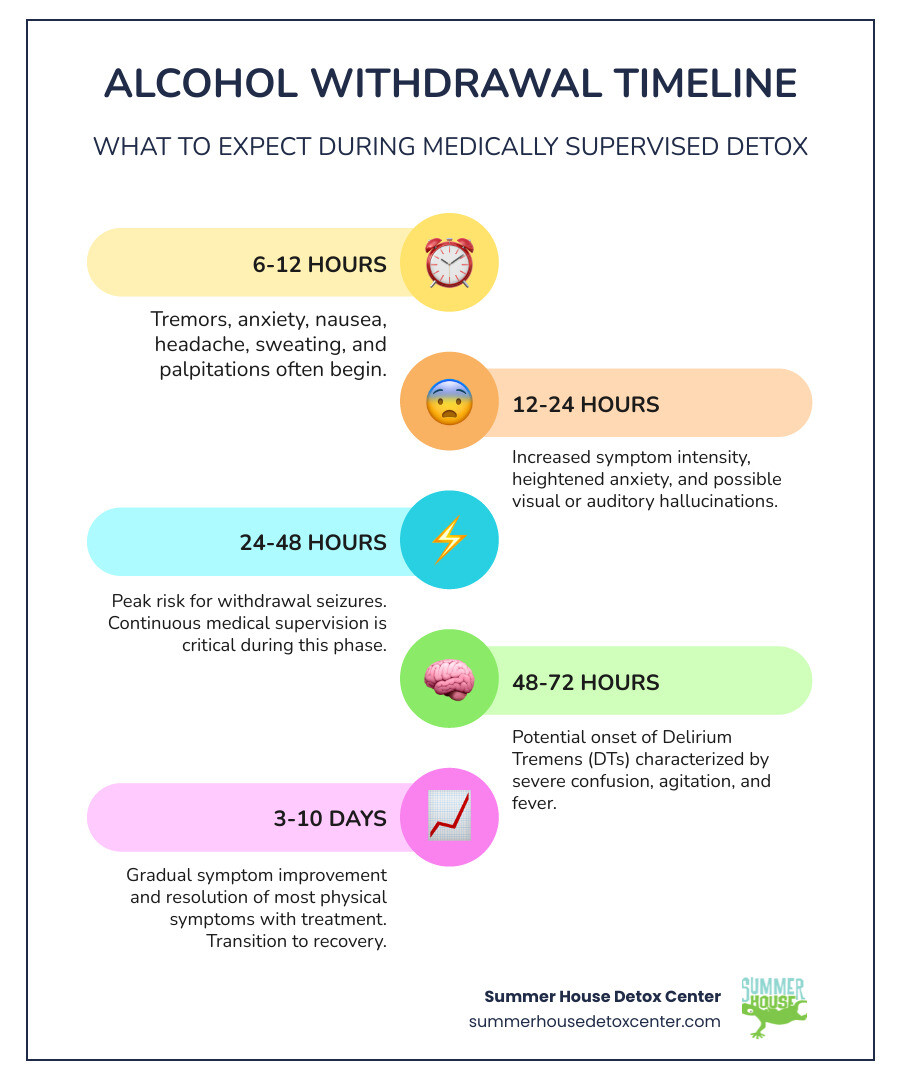
AWS symptoms unfold in stages and vary in severity.
-
Minor Symptoms (6-12 hours): The first stage often involves autonomic hyperactivity, including a racing heart, high blood pressure, and sweating. Tremors, anxiety, agitation, nausea, and insomnia are also common.
-
Major Symptoms (12-48 hours): Symptoms can intensify, leading to hallucinations (seeing or feeling things that aren’t there). This period also carries the highest risk for withdrawal seizures, which can occur without warning.
-
Delirium Tremens (DTs) (48-72 hours): The most severe form of AWS, DTs involves profound confusion, severe agitation, high fever, and extreme instability in heart rate and blood pressure. Without immediate treatment, DTs can be fatal.
Severe Complications
AWS can trigger several dangerous complications requiring expert medical intervention:
- Delirium Tremens: Affects up to 20% of people with severe AWS and is a medical emergency. Modern hospital care has dramatically reduced its mortality rate, but only with swift treatment.
- Withdrawal Seizures: Can occur even without DTs, creating risks of injury from falls or aspiration.
- Wernicke-Korsakoff Syndrome: Caused by a severe thiamine (Vitamin B1) deficiency. The acute phase, Wernicke’s encephalopathy, involves confusion, loss of coordination, and abnormal eye movements. If not treated with thiamine, it can lead to Korsakoff syndrome, a permanent and severe memory impairment.
- Cardiac Arrhythmias: The stress on the cardiovascular system can cause irregular heartbeats that may be life-threatening.
Why Inpatient Care is Necessary
AWS is unpredictable. You cannot know in advance if your withdrawal will be mild or a life-threatening crisis. This is why inpatient care at a facility like Summer House Detox Center in Miami is the safest option.
In a medical detox setting, you receive 24/7 medical supervision from professionals who can spot warning signs and provide immediate intervention for complications like seizures or DTs. The safe, controlled environment removes access to alcohol and external stressors, allowing you to heal in a calm, supportive setting.
Understanding the science behind detox is crucial. The Science Behind Detox: How the Body Heals from Substance Abuse explores this process further, and Why Medical Detox is a Vital First Step in Recovery explains how it sets the foundation for long-term success.
Initial Assessment and Diagnosis in a Hospital Setting
When you arrive at a medical detox facility, the first step is a comprehensive assessment. This evaluation is the foundation of your treatment plan, helping our team determine the potential severity of your withdrawal and create a personalized approach to how to manage alcohol withdrawal in hospital care that is specific to you.

Diagnostic Process
Our diagnostic process combines standardized tools, a physical exam, and lab work to get a complete picture of your health.
-
Screening Tools: We use tools like the AUDIT (Alcohol Use Disorders Identification Test) to understand your drinking patterns and the PAWSS (Prediction of Alcohol Withdrawal Severity Scale) to predict your risk for severe complications. A PAWSS score of 4 or higher indicates a high risk, requiring closer monitoring. Honest answers are crucial for your safety.
-
Patient History and Physical Exam: Our medical team will discuss your medical and psychiatric history and conduct a thorough physical exam, checking vital signs and looking for any signs of alcohol-related health issues.
-
Laboratory Tests: Blood work is essential. We check your blood alcohol content, liver function, and electrolyte levels (magnesium, potassium). We also test for vitamin deficiencies, especially thiamine (Vitamin B1), to prevent neurological complications.
Identifying High-Risk Patients
Our primary job is to identify who is at the highest risk for severe withdrawal. Key risk factors include:
- A history of delirium tremens or withdrawal seizures.
- A long history of heavy, daily alcohol consumption.
- Co-occurring medical conditions (e.g., heart disease, COPD) or psychiatric disorders.
- A PAWSS score of 4 or higher.
Monitoring and Surveillance
Once admitted to our Miami facility, continuous monitoring is central to keeping you safe.
We use the CIWA-Ar scale (Clinical Institute Withdrawal Assessment of Alcohol Scale, Revised) to measure 10 common withdrawal symptoms. Your score guides our symptom-triggered protocol, meaning you receive medication based on your current symptoms, not a rigid schedule. This approach keeps you comfortable without over-sedating you.
Your vital signs are checked frequently, often every one to four hours. In rare, severe cases, a transfer to an intensive care unit (ICU) may be necessary for more advanced monitoring and intervention.
Recognizing the need for help is the first step. Learn more about Alcohol Withdrawal Signs: How to Know You Need Professional Alcohol Detox Treatment. At Summer House Detox Center, we’re prepared to guide you through The First 72 Hours of Detox: What to Expect and How to Prepare with expertise and compassion.
How to Manage Alcohol Withdrawal in Hospital: Key Treatment Protocols
Once your assessment is complete, the active phase of treatment begins. This is where how to manage alcohol withdrawal in hospital comes to life through a combination of medication, monitoring, and support. Our goals are to ease your discomfort, prevent dangerous complications, and ensure you feel safe.
How to manage alcohol withdrawal in hospital: The role of benzodiazepines
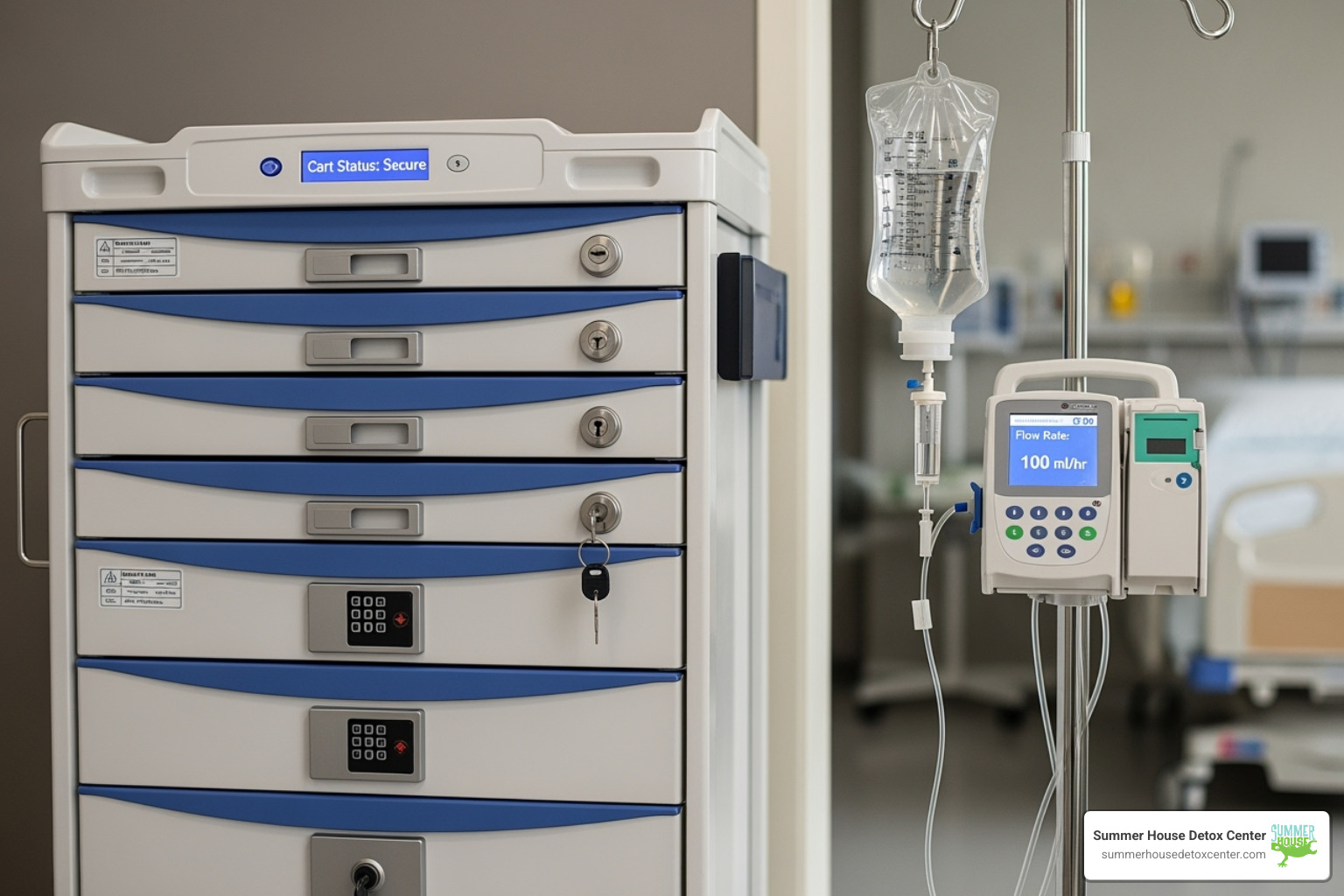
Benzodiazepines are the first-line, gold-standard treatment for alcohol withdrawal. They work by enhancing GABA activity in the brain, which calms the overactive nervous system, reduces anxiety, and prevents seizures.
-
Preferred Agents: The choice of medication depends on your liver function. Long-acting options like diazepam are effective for most patients. For those with liver impairment, shorter-acting benzodiazepines like lorazepam are safer. Lorazepam can also be given intravenously (IV) for rapid intervention.
-
Dosing Strategies: At Summer House Detox Center in Miami, we primarily use symptom-triggered therapy. Medication is administered based on your CIWA-Ar score, ensuring you get the right dose when you need it. This personalized approach can reduce total medication use and shorten the detox duration. Other strategies, like front-loading or fixed-schedule tapers, may be used depending on your history and condition.
Learn more about the various medications used in alcohol treatment and their role in recovery.
Alternative and Adjunctive Medications
In some cases, especially severe or benzodiazepine-refractory AWS, other medications may be used:
- Phenobarbital: A barbiturate used for extra seizure prevention or in severe cases not responding to benzodiazepines alone.
- Gabapentin: An anticonvulsant that can help manage milder symptoms, anxiety, and insomnia.
- Dexmedetomidine (Precedex) & Propofol: Used in ICU settings for severe, refractory DTs to provide sedation without suppressing breathing (Dexmedetomidine) or for deep sedation when necessary (Propofol).
How to manage alcohol withdrawal in hospital: Addressing complications like DTs and seizures
Our Miami team is always prepared for complications. This is why 24/7 medical supervision is non-negotiable.
-
Withdrawal Seizures: If a seizure occurs, we administer IV benzodiazepines (lorazepam or diazepam) to stop it immediately and prevent more from occurring.
-
Delirium Tremens (DTs): This is a medical emergency requiring aggressive treatment, often in an ICU. High doses of IV benzodiazepines are used to control severe agitation and autonomic instability. Adjunctive medications may be added to achieve stabilization.
Our protocols are guided by the latest evidence, including The ASAM Clinical Practice Guideline on Alcohol Withdrawal Management, to provide the highest standard of care.
Supportive and Holistic Care During Inpatient Detox
While medication is crucial, our philosophy at Summer House Detox Center involves caring for the whole person. Our approach to how to manage alcohol withdrawal in hospital includes comprehensive nutritional support and a healing environment.
Nutritional and Electrolyte Support
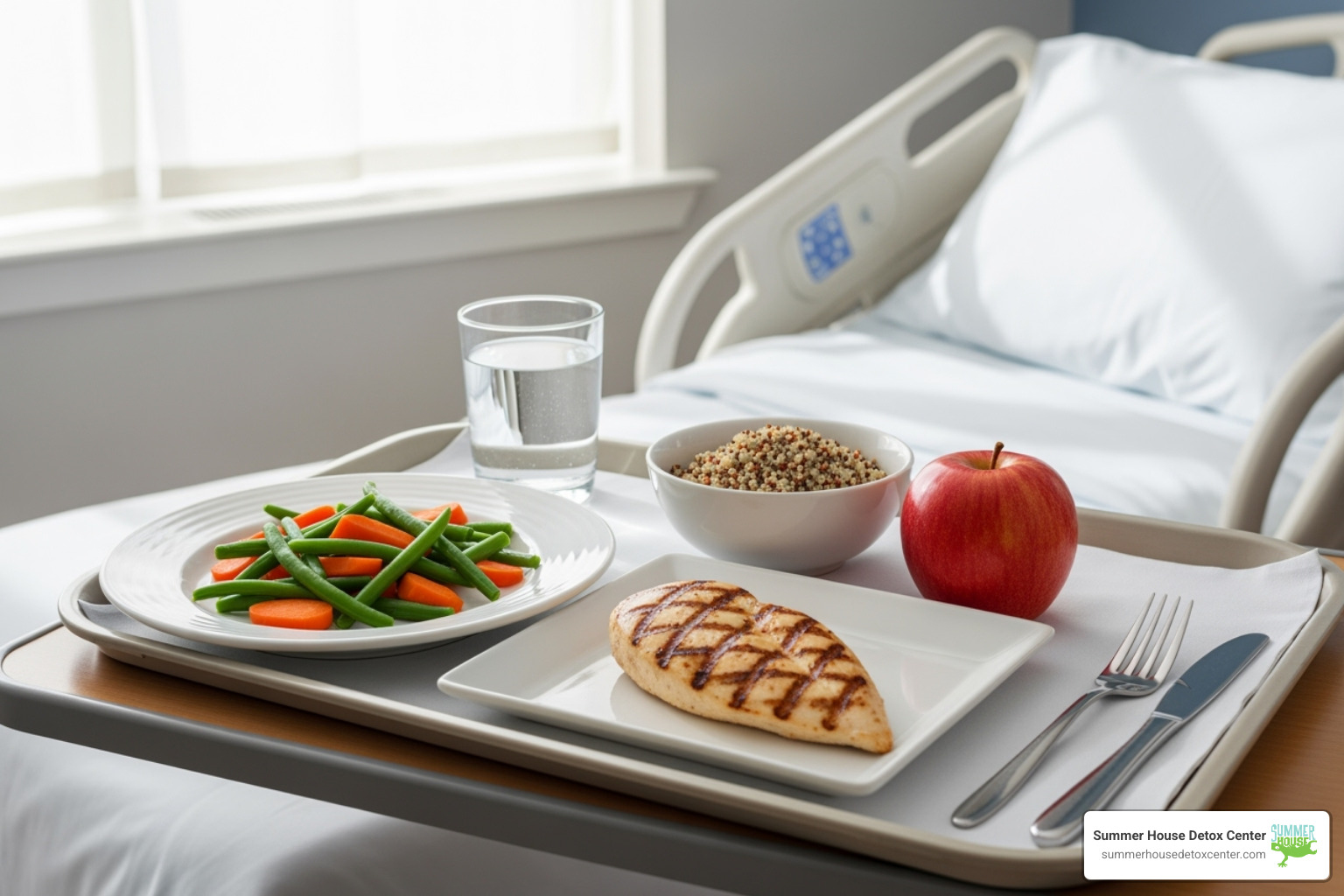
Chronic drinking depletes the body of essential nutrients, which can worsen withdrawal. We address these deficiencies immediately.
- Thiamine (Vitamin B1): This is the most critical nutrient. We administer it to every patient, often intravenously, to prevent Wernicke-Korsakoff syndrome, a serious and potentially permanent brain disorder.
- Other Nutrients: We also provide folic acid, a comprehensive multivitamin, and manage key electrolytes like magnesium, potassium, and phosphate to support heart and muscle function and reduce seizure risk.
- “Banana Bag”: This is a common term for an IV solution containing thiamine, folic acid, and multivitamins, delivering these essential nutrients directly into your bloodstream for rapid absorption.
Non-Pharmacologic Measures
Simple interventions can make a huge difference in your comfort and safety:
- Quiet, Low-Stimulus Environment: Our calm Miami facility helps reduce agitation and anxiety.
- Frequent Reorientation: Our staff gently reminds you of where you are and what is happening to reduce confusion.
- Hydration and Support: We ensure you are well-hydrated and provide constant emotional support and reassurance, reminding you that you are not alone.
The Multidisciplinary Team
Your care at Summer House Detox Center is coordinated by a team of experts. Physicians manage your medical treatment, while our nurses provide 24/7 hands-on care and monitoring. Many of our staff are in recovery themselves, offering a unique level of empathy. Addiction specialists, social workers, and therapists work together to address your physical, emotional, and social needs, planning for your successful transition to the next stage of recovery from day one.
Nutrition and therapy are key components of this holistic approach. Explore The Role of Nutrition in Detox: How a Balanced Diet Supports Recovery and The Role of Therapy in Detox to learn more.
Beyond Detox: Transitioning to Long-Term Recovery in Florida
Completing medical detox is a monumental achievement, but it’s the first step, not the final destination. At Summer House Detox Center, we emphasize that the real work of recovery begins after stabilization. We are dedicated to helping you transition smoothly into the next phase of your journey, right here in Florida.
Discharge Planning and Referral to Treatment
Discharge planning starts on day one. Our social workers and case managers collaborate with you to create a clear, supportive path forward. They are experts on the South Florida treatment landscape and will help you find the right level of continuing care.
Post-detox options include:
- Inpatient Rehabilitation: A structured, residential environment for intensive focus on recovery.
- Partial Hospitalization (PHP): Intensive daytime therapy with the flexibility to return to a sober living environment at night.
- Intensive Outpatient (IOP): Allows you to maintain work or family commitments while attending regular, structured therapy.
- Outpatient Therapy: Ongoing individual or group counseling to support early recovery.
Medication-Assisted Treatment (MAT) for Alcohol Use Disorder
FDA-approved medications can be a powerful tool for preventing relapse. MAT helps reduce cravings and normalize brain chemistry.
- Naltrexone: Blocks the rewarding effects of alcohol, reducing the desire to drink. Available as a daily pill or a monthly injection (Vivitrol).
- Acamprosate: Helps reduce post-acute withdrawal symptoms like anxiety and insomnia.
- Disulfiram: Acts as a deterrent, causing unpleasant physical reactions if alcohol is consumed.
Our medical team will discuss if MAT is a good option for you.
Building a Relapse Prevention Plan
A solid relapse prevention plan is your roadmap for a new life in sobriety. With our counselors, you will learn to identify personal triggers (people, places, emotions) and develop healthy coping strategies to manage them without alcohol. Connecting with support groups like Alcoholics Anonymous (AA) or SMART Recovery provides a crucial sense of community and accountability.
To understand what comes next, read What Happens After Alcohol Detox? and From Detox to Recovery: The Next Steps After Completing a Detox Program. Our Alcohol Rehab Miami program offers comprehensive care to help you build a lasting recovery.
Frequently Asked Questions about Inpatient Alcohol Withdrawal Management
It’s natural to have questions when considering alcohol detox. Here are straightforward answers to some of the most common ones we hear at Summer House Detox Center.
How long does hospital detox for alcohol last?
Most patients complete alcohol detox in 3 to 7 days. However, the exact timeline is unique to each person and depends on factors like the severity of alcohol dependence, your individual response to treatment, and whether any complications arise. Our medical team will monitor your progress and adjust your care plan accordingly. While acute physical symptoms usually resolve within a week, some effects like mood changes or sleep issues can linger. Learn more in Alcohol Detox: How Long Does It Take?.
Is inpatient alcohol detox better than at-home detox?
For anyone with moderate to severe alcohol dependence, inpatient detox is significantly safer and more effective. The primary reason is 24/7 medical supervision. In a facility, professionals monitor your vital signs and can immediately intervene for life-threatening complications like seizures or delirium tremens, which can occur without warning. At home, these emergencies can be catastrophic. Furthermore, a medical team can properly manage medications to keep you comfortable and safe, and the alcohol-free environment removes temptation and provides crucial emotional support. Read more at Why You Should Choose Alcohol Detox at Rehab vs. At-Home Detox.
What is the first step to getting help for alcohol withdrawal in Miami?
The first step is reaching out. The simplest way is to contact a medical detox facility directly, like Summer House Detox Center. Our admissions coordinators are available for a confidential, no-judgment call to discuss your needs. We can often arrange for same-day admission, getting you into a safe environment within hours.
Once you arrive at our Miami facility, you’llundergo a comprehensive assessment to create your personalized treatment plan. If you are currently experiencing severe symptoms like seizures, hallucinations, or extreme confusion, go to the nearest hospital emergency room immediately. They can stabilize you and arrange a transfer to a specialized detox center. Taking this step is an act of courage. Find out how we can help at our Alcohol Detox Center Miami.
Conclusion: Your Path to a Safe and Supported Recovery in Miami
You’ve made it through this comprehensive guide, and if you’re reading this, chances are you or someone you love is considering taking that brave first step toward sobriety. We want you to know something important: you’re not alone, and there is hope.
Throughout this article, we’ve walked through exactly how to manage alcohol withdrawal in hospital—from the initial assessment and diagnosis to the careful medication protocols, nutritional support, and the compassionate, round-the-clock care that makes safe detox possible. We’ve explored why inpatient management isn’t just a preference—it’s often the safest, most effective choice for anyone facing moderate to severe alcohol withdrawal.
The truth is, alcohol withdrawal can be dangerous, even life-threatening, when not properly managed. But in a medically supervised setting like Summer House Detox Center here in Miami, those risks are dramatically reduced. Our comprehensive approach combines evidence-based medication protocols (primarily benzodiazepines custom to your specific needs), vital nutritional support including thiamine and electrolyte replacement, and the expertise of a dedicated multidisciplinary team. Many of our staff members have walked the path of recovery themselves, bringing not just professional skill but genuine empathy and understanding to your care.
What we’ve outlined here—the CIWA-Ar monitoring, the symptom-triggered medication protocols, the 24/7 supervision, the preparation for potential complications—isn’t just medical jargon. It’s a carefully designed system built around one central goal: your safety and comfort during one of the most vulnerable times in your life.
But here’s something equally important to remember: detox is just the beginning. The physical withdrawal symptoms typically resolve within three to seven days, but lasting recovery requires ongoing support, therapy, and connection. That’s why discharge planning begins the moment you walk through our doors. Whether it’s connecting you to inpatient rehab, a partial hospitalization program, intensive outpatient services, or support groups right here in South Florida, we’re committed to ensuring you have a clear path forward.
Recovery is absolutely possible. We’ve seen it happen countless times in our Miami facility—individuals who arrived feeling hopeless, scared, and physically dependent on alcohol, who left with renewed health, dignity, and a realistic plan for staying sober. The journey isn’t always easy, but with the right medical support, compassionate care, and ongoing treatment, people do recover and go on to live fulfilling, alcohol-free lives.
At Summer House Detox Center, we provide more than just medical detoxification. We offer a supportive environment where you’re treated with the respect and care you deserve, where your questions are answered honestly, and where your individual needs guide every aspect of your treatment. Our personalized approach means your detox experience is custom specifically to you—your medical history, your symptoms, your goals, and your concerns.
If you’re ready to take that first step, we’re here for you. Our admissions team is available to answer your questions, address your concerns, and help you understand what to expect. You can call us any time, and in many cases, we can facilitate same-day admission. There’s no judgment here, just support and expert medical care in a comfortable setting.
The path to recovery starts with a single decision—the decision to reach out for help. Let us guide you safely through detox and connect you to the resources you need for lasting sobriety. Your new life is waiting.
Contact our Alcohol Detox Center to learn more about our programs and start your journey.
