
Understanding Heroin Withdrawal: What You Need to Know
Heroin withdrawal symptoms occur when a person with physical dependence on heroin stops or reduces their use. The body must then adjust to the drug’s absence, causing a range of uncomfortable and distressing symptoms.
Common Heroin Withdrawal Symptoms:
- Physical: Nausea, vomiting, diarrhea, muscle and bone pain, abdominal cramps, sweating, chills, goosebumps, runny nose, and watery eyes.
- Psychological: Intense cravings, anxiety, irritability, restlessness, depression, and insomnia.
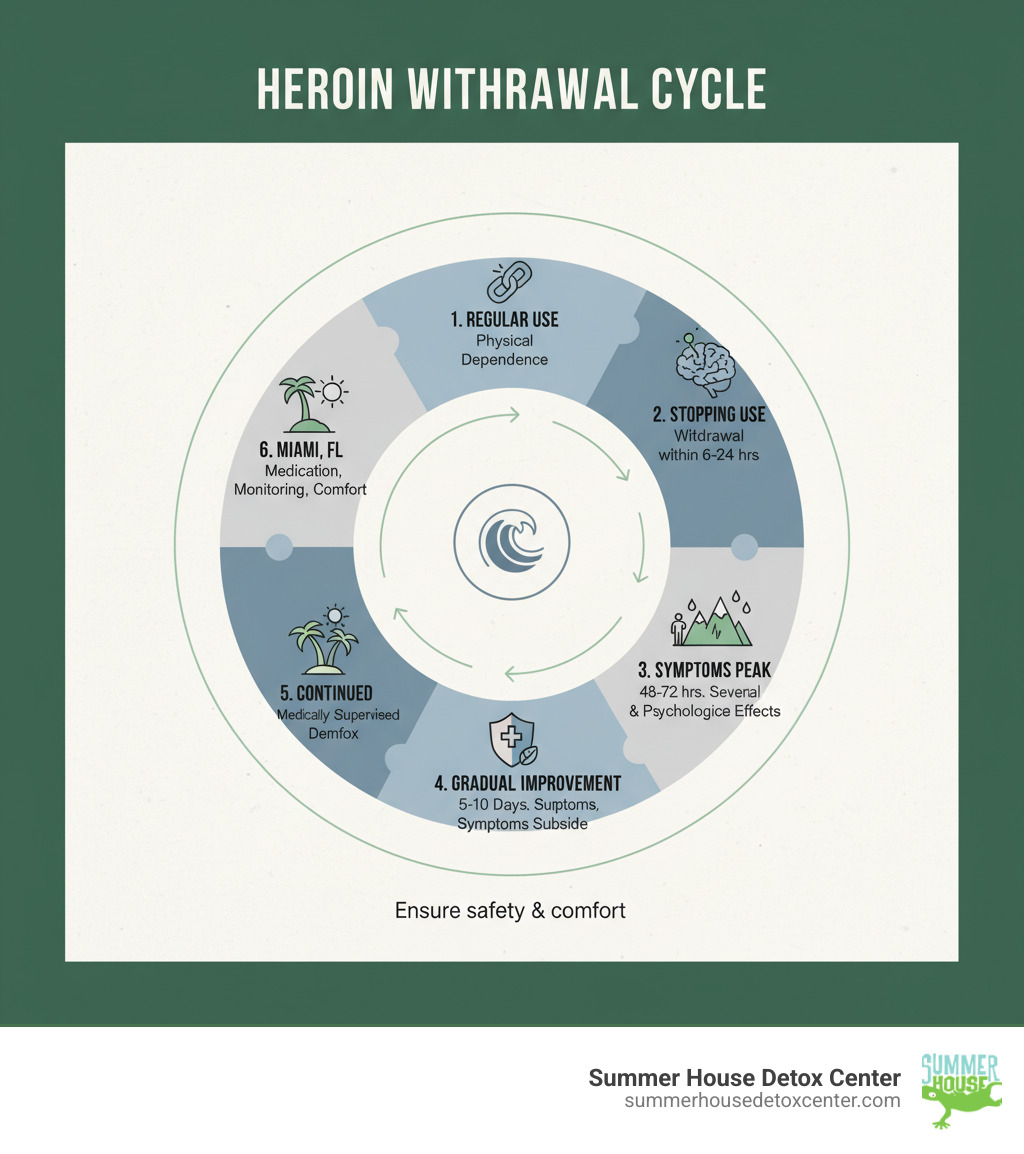
- Timeline: Symptoms usually start 6-24 hours after the last use, peak at 48-72 hours, and last for 5-10 days. Some effects, like mood changes, can persist for weeks or months.
For those struggling with heroin dependence in Miami or anywhere in Florida, withdrawal can feel overwhelming. Many describe it as the worst flu imaginable, coupled with severe emotional distress. However, it’s crucial to remember: withdrawal is temporary, and recovery is possible.
Trying to quit “cold turkey” at home is dangerous. It often leads to relapse, and because tolerance drops quickly during detox, the risk of a fatal overdose is extremely high if use resumes. This is why medically supervised detox is so critical.
At Summer House Detox Center in Miami, our medical team provides 24/7 care to manage your symptoms safely and comfortably. You don’t have to face this alone. With professional support, you can steer withdrawal and begin building a new life.
Understanding Heroin Withdrawal: What Happens to Your Body and Mind?
Regular heroin use changes your brain chemistry. The drug binds to opioid receptors, creating euphoria while suppressing your body’s natural pain-relieving chemicals. Over time, your brain adapts and relies on heroin to function normally, leading to physical dependence.
When you stop using, your central nervous system rebounds. Your body scrambles to recalibrate without the drug it depends on, triggering the intense physical and psychological process of heroin withdrawal. This is not a sign of weakness but a predictable physiological response. Understanding this process can help you face it with confidence. You can learn more about the general symptoms of opiate withdrawal and recognize the signs of opiate addiction on our site.

Immediate Physical Symptoms
Physical heroin withdrawal symptoms are often compared to a severe case of the flu, but they are typically much more intense. Common symptoms include:
- Gastrointestinal distress: Severe nausea, vomiting, diarrhea, and sharp abdominal cramps are common and can lead to dehydration.
- Pain and discomfort: Deep muscle aches and bone pain create a pervasive, whole-body discomfort.
- Flu-like symptoms: You may experience sweating, chills, fever, goosebumps (piloerection, the origin of “cold turkey”), a runny nose (rhinorrhea), and watery eyes (lacrimation).
- Neurological symptoms: Uncontrollable yawning, restlessness, and severe insomnia are frequent, leaving you exhausted but unable to sleep.
While these symptoms are rarely life-threatening on their own, they can lead to dangerous complications like severe dehydration, making unsupervised detox in Miami risky.
Psychological and Emotional Symptoms
The psychological toll of heroin withdrawal can be just as challenging as the physical symptoms.
- Intense cravings: An overwhelming urge to use again is a primary feature of withdrawal and a major driver of relapse.
- Mood disturbances: Severe anxiety, agitation, irritability, and restlessness are common. A deep depression or general feeling of unhappiness (dysphoric mood) can also set in as brain chemistry rebalances.
- Anhedonia: This is the inability to feel pleasure from activities you once enjoyed. It’s a temporary but distressing symptom caused by changes in the brain’s reward system.
These emotional changes are a direct result of withdrawal, not a personal failing. If you’re concerned about a loved one, learning how to identify opiate addiction in someone you care about can be a helpful step. At Summer House Detox Center in Miami, we address both the physical and psychological aspects of withdrawal with comprehensive medical and emotional support.
The Heroin Withdrawal Timeline: A Day-by-Day Guide
Knowing what to expect during heroin withdrawal can make the process less frightening. While the exact timeline varies based on factors like usage frequency, dosage, and individual health, most people follow a general pattern. Typically, heroin withdrawal symptoms begin within 6-24 hours, peak around 48-72 hours, and last 5-10 days. For more information, you can read about general withdrawal symptoms on our site.

The First 24 Hours: Onset of Symptoms
Symptoms start subtly within 6-12 hours, often feeling like the flu. You may notice muscle aches, yawning, sweating, a runny nose, and watery eyes. As the 24-hour mark approaches, these symptoms intensify. Anxiety, restlessness, and insomnia set in, and cravings begin to build. This early stage can be psychologically challenging as the discomfort grows. If you struggle with sleeplessness, learn about coping with insomnia after opiate detox.
Days 2-3: The Peak of Withdrawal
This period marks the peak intensity of heroin withdrawal symptoms. Physical symptoms become severe, including abdominal cramps, constant nausea, vomiting, and diarrhea. You may experience goosebumps, uncontrollable leg movements (“kicking the habit”), a rapid heart rate, and swings between fever and chills. The psychological symptoms also peak, with overwhelming anxiety, depression, and powerful cravings. This is the most dangerous time to detox without supervision, as complications like dehydration can occur. At Summer House Detox Center in Miami, we provide close medical monitoring to ensure your safety during this critical phase.
Days 4-10: Symptoms Begin to Subside
After day three, the most severe physical symptoms start to ease. Nausea, vomiting, and body aches gradually lessen, though you will likely still feel weak and fatigued. While sleep may improve, some insomnia can persist. During this phase, the focus often shifts to managing the lingering psychological symptoms, such as anxiety, low mood, and cravings, as your body continues to heal.
Post-Acute Withdrawal Syndrome (PAWS)
Even after acute withdrawal ends, some symptoms can linger for weeks or months. This is known as Post-Acute Withdrawal Syndrome (PAWS), and it occurs as your brain continues to heal and rebalance its chemistry. PAWS symptoms can include:
- Mood swings, anxiety, and depression
- Sleep disturbances
- Lingering cravings
- Fatigue and low energy
- Difficulty with concentration
These symptoms are a normal part of the long-term healing process. They are not a sign of failure but underscore the importance of ongoing support through therapy and peer groups in the South Florida recovery community to prevent relapse and build a lasting recovery.
Dangers and Complications of Unsupervised Heroin Withdrawal
Attempting to quit heroin “cold turkey” at home is extremely risky. While heroin withdrawal symptoms may not seem directly life-threatening, the complications that can arise during an unsupervised detox are serious and can be fatal. In Miami and across Florida, many who try to detox alone face medical emergencies. Products like at-home opiate detox kits are not a substitute for professional medical care and can create a false sense of security.

Medical Complications: Dehydration and Beyond
Severe vomiting and diarrhea can quickly lead to dehydration and a dangerous electrolyte imbalance. Electrolytes are crucial for heart, nerve, and muscle function. An imbalance can cause irregular heart rhythms, cardiac arrest, or seizures. Another risk is aspiration pneumonia, a serious lung infection caused by inhaling vomit. The process also puts immense cardiac stress on the body, increasing heart rate and blood pressure, which is especially dangerous for those with underlying heart conditions. So, is opiate withdrawal deadly? While the process itself is rarely fatal, these complications absolutely can be.
The Overdose Risk: Why Relapse After Detox is So Dangerous
One of the greatest dangers of unsupervised detox is the high risk of a fatal overdose upon relapse. During withdrawal, your body’s tolerance to heroin plummets. If you relapse and use the same amount you did before detoxing, your body can no longer handle it, leading to respiratory depression and death. The intense physical and psychological pain of withdrawal makes relapse a constant temptation. A medically supervised environment removes access to drugs and provides symptom management to reduce the overwhelming urge to use.
Special Risks: Pregnancy and Polysubstance Use in Florida
Certain situations make unsupervised withdrawal even more hazardous.
- Pregnancy: Heroin withdrawal can cause severe fetal distress, premature labor, or miscarriage. Babies born to mothers who used heroin often suffer from Neonatal Abstinence Syndrome (NAS), a painful withdrawal condition requiring specialized medical care. Learn more about what happens to babies exposed to heroin in the womb.
- Polysubstance Use: Many people in Florida use heroin along with other substances like benzodiazepines or alcohol. Withdrawing from multiple substances at once is complex and dangerous, as withdrawal from alcohol or benzos can cause life-threatening seizures.
- Fentanyl: Much of the heroin supply in Florida is contaminated with fentanyl, an opioid 50-100 times more potent. This increases the risk of overdose during active use and makes withdrawal unpredictable and more dangerous. Our Kendale Lakes facility specializes in breaking free from fentanyl with the necessary medical expertise.
How to Safely Manage Heroin Withdrawal Symptoms
When managing heroin withdrawal symptoms, the safest and most effective approach is professional medical support. The process of coming off heroin is far more manageable and successful in a medical setting compared to going it alone.
| Feature | Medically Supervised Detox at Summer House Detox Center | Unsupervised (“Cold Turkey”) Withdrawal |
|---|---|---|
| Safety | High – 24/7 medical monitoring, complication management | Low – High risk of medical complications |
| Comfort | High – Medications and supportive care for symptom relief | Very Low – Intense, unmanaged suffering |
| Success Rate | Higher – Decreased relapse risk, entry to ongoing treatment | Very Low – High likelihood of relapse |
| Relapse Risk | Lower – Managed cravings, supportive environment | Very High – Overwhelming symptoms, no support |
| Emotional Support | Comprehensive counseling and peer support | None |
The table clearly shows that medically supervised detox provides the safety, comfort, and support necessary for a successful start to recovery. If you’re considering your options, learning about opiate detox centers and how to find the best support is a crucial step.
Medically Supervised Detox: The Gold Standard of Care in Miami, FL
Medically supervised detox is the gold standard for managing heroin withdrawal symptoms. At Summer House Detox Center in Miami, Florida, our program is built on providing dignified, comfortable, and expert care. Our 24/7 on-site medical staff monitors your vital signs, manages complications immediately, and uses proven medications to ease your symptoms. This allows you to focus on healing in a safe, drug-free, and supportive environment, away from daily triggers. People who complete medical detox have a much higher chance of long-term success, and choosing Florida for opiate detox can provide a healing start. Our opiate detox center in Miami is here to provide that.
Medications Used to Ease Heroin Withdrawal Symptoms
Medication is a key tool for managing withdrawal. Our medical team creates a personalized plan for each client. Common medications include:
- Buprenorphine (Suboxone) and Methadone: These opioid agonists reduce cravings and withdrawal severity without producing a high. They are highly effective, and you can learn how Suboxone helps with opiate withdrawal symptoms.
- Clonidine and Lofexidine: These non-opioid medications calm the overactive nervous system, reducing symptoms like anxiety, sweating, and muscle aches.
- Symptomatic Medications: We also use targeted treatments like anti-emetics for nausea, anti-diarrheals, and non-opioid pain relievers to maximize your comfort.
Understanding which medications are used in opiate detox can explain the process. Other medications like Gabapentin for opiate withdrawal symptoms may also be used under medical supervision.
The Role of Counseling and Peer Support
Detox is just the first step; healing the mind and emotions is also vital. We integrate therapy from day one.
- Individual and Group Therapy: Counseling provides a safe space to explore the root causes of addiction and build coping skills. Cognitive Behavioral Therapy (CBT) helps you identify and change negative thought patterns. Group sessions connect you with peers who understand your struggle, reducing isolation and fostering community.
- Ongoing Support: Long-term recovery depends on a strong support network. We encourage connecting with resources like Narcotics Anonymous (NA), which has meetings throughout Miami, the SAMHSA National Helpline, SMART Recovery, and the 988 Suicide & Crisis Lifeline for crisis support.
Conclusion: Your First Step Towards a New Life in Miami
Understanding heroin withdrawal symptoms is a crucial first step. While the process can seem overwhelming, remember this: withdrawal is temporary, and recovery is absolutely possible.
Detox is the beginning of your journey. Lasting change comes from building a new life in recovery through continued therapy and support groups. In Miami and throughout Florida, you do not have to do this alone.
At Summer House Detox Center, our compassionate team, many with their own recovery experience, understands your struggle. We provide personalized, medically supervised detox in a comfortable and dignified environment. We know it’s hard to reach out, but the best time to start is now. A life free from the cycle of addiction is waiting for you.
If you are ready to break free from heroin dependence and take control of your future, our Miami facility is here to help you take that brave first step with expert, compassionate care.
Begin your recovery journey with a safe and comfortable heroin detox
