
Understanding Heroin Detox and Finding the Right Treatment Center
A heroin detox treatment center provides medically supervised withdrawal management to safely guide individuals through heroin withdrawal. If you or a loved one is struggling with heroin addiction in Miami or South Florida, finding the right detox program is the critical first step toward recovery.
Heroin addiction has deeply affected communities across Florida. The 2022 National Survey on Drug Use and Health reported that approximately 900,000 people nationwide had a heroin use disorder. In Miami and throughout South Florida, the opioid crisis continues to impact thousands of families, but recovery is absolutely possible with professional help.
Heroin changes brain chemistry, creating a powerful physical dependence that makes quitting alone incredibly difficult and dangerous. Withdrawal symptoms can begin within 6-12 hours, peak around 48-72 hours, and include severe pain, nausea, anxiety, and intense cravings. Attempting to detox “cold turkey” at home often leads to relapse. After detox, tolerance drops significantly, making a fatal overdose much more likely if you use again.
This is why medically supervised detox is crucial. A quality heroin detox treatment center in Miami provides the medical monitoring, medication, and compassionate care needed to get through withdrawal safely and comfortably. You don’t have to face this alone.
What to Look for in a Heroin Detox Treatment Center:
- 24/7 medical supervision to manage complications
- Medication-Assisted Treatment (MAT) to ease withdrawal symptoms
- Accredited facility with Joint Commission or CARF certification
- Experienced, licensed staff trained in opioid addiction treatment
- Individualized care plans custom to your needs
- Insurance verification and payment options
- Aftercare planning for long-term treatment
Understanding Heroin Addiction and the Need for Professional Detox
Heroin is a powerful and highly addictive opioid derived from morphine. Its initial euphoric rush quickly fades, but the brain adapts rapidly, creating physical dependence and psychological addiction. In Florida, we’ve seen the devastating impact of this cycle. The 2022 National Survey on Drug Use and Health found that about 900,000 people struggled with heroin use disorder, representing real people in Miami and across our state.
Heroin addiction is a chronic medical condition that physically changes the brain, impairing decision-making and impulse control. This makes it incredibly difficult to simply “choose” to stop. Recognizing the signs of opiate addiction—such as drug paraphernalia, track marks, persistent nausea, or slowed movements—is the first step toward seeking medical care. addiction is not a moral failing; it’s a disease that requires compassionate, expert treatment.
Why Medical Detox is Crucial for Heroin Withdrawal
When you stop using heroin, withdrawal begins within 6 to 12 hours. The opiate withdrawal symptoms are often described as the worst flu imaginable, with severe muscle and bone pain, abdominal cramps, vomiting, diarrhea, and overwhelming anxiety. While not typically fatal on its own, withdrawal carries serious risks. Severe vomiting and diarrhea can lead to dangerous dehydration, and the psychological distress can feel unbearable.
Attempting to detox “cold turkey” at home is extremely risky. The discomfort often leads to relapse, which is especially dangerous because your tolerance to heroin drops significantly after just a few days of abstinence. Using the same amount you did before detox can easily lead to a fatal overdose. The Importance of Medically Supervised Detox: Why DIY Detox Can Be Dangerous cannot be overstated. A professional heroin detox treatment center provides the 24/7 medical care needed to manage symptoms and keep you safe.
The Heroin Withdrawal Timeline and PAWS
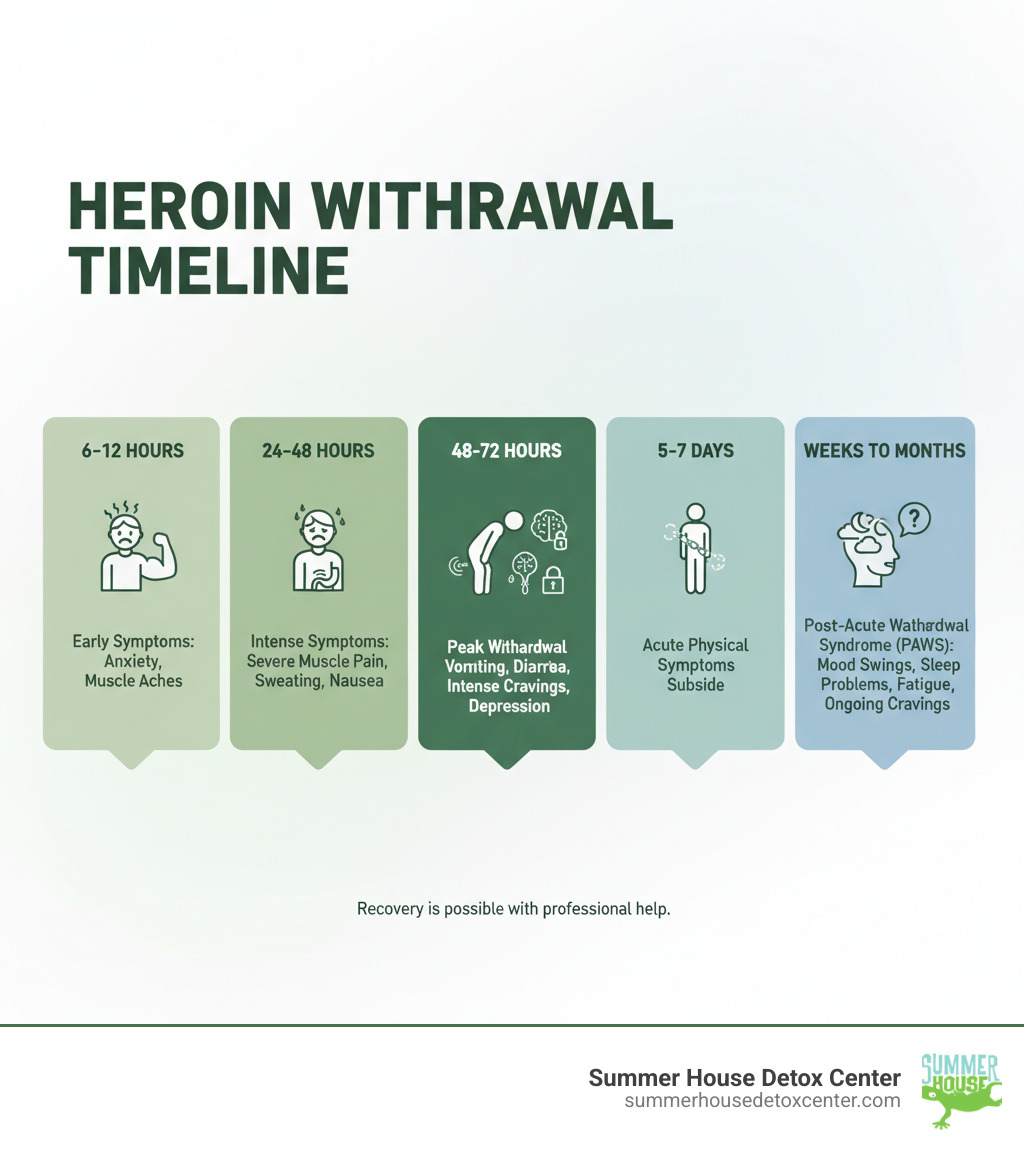
While everyone’s experience is unique, the withdrawal timeline generally follows a predictable pattern. Early symptoms begin within 6-12 hours, intensify over 24-48 hours, and reach their peak between 48-72 hours. During this peak, physical and psychological symptoms are at their most severe. After about 5-7 days, the acute physical symptoms begin to subside.
However, recovery continues with Post-Acute Withdrawal Syndrome (PAWS), where psychological and emotional symptoms like mood swings, sleep issues, and cravings can linger for weeks or months. Understanding this full timeline, including how long does it take to withdraw from opiates, helps you see that these challenges are temporary and manageable with the right support.
The Medically Supervised Detox Process
When you arrive at a professional heroin detox treatment center like Summer House Detox Center in Miami, your safety and comfort are our top priorities. The process begins with a comprehensive assessment to create a personalized care plan that addresses your unique medical history and addiction severity.

Throughout your stay, you’ll receive 24/7 medical monitoring from our experienced staff, many of whom are in recovery themselves and truly understand what you’re going through. We focus on symptom management, using proven medications and supportive care to ease the muscle aches, nausea, and anxiety of withdrawal. Our serene, comfortable facility provides a peaceful environment far from the triggers of daily life, allowing you to focus on healing. We also emphasize The Role of Nutrition in Detox: How a Balanced Diet Supports Recovery to help your body regain its strength. Knowing what to expect during The First 72 Hours of Detox: What to Expect and How to Prepare can also help you feel more confident as you begin.
Medication-Assisted Treatment (MAT) and Behavioral Therapies
Medication-Assisted Treatment (MAT) is a cornerstone of modern heroin detox. This evidence-based approach combines FDA-approved medications with therapy to normalize brain chemistry, relieve cravings, and block the euphoric effects of opioids. You can learn more by Understanding Medication-Assisted Treatment. Key medications are used in opiate detox, including:
- Buprenorphine (Suboxone): Reduces cravings and withdrawal symptoms without a strong euphoric effect.
- Methadone: A long-standing treatment that reduces cravings and blocks the effects of other opioids.
- Naltrexone (Vivitrol): Blocks the euphoric effects of opioids, helping to prevent relapse.
While MAT addresses the physical side of addiction, behavioral therapies address the psychological roots. The Role of Therapy in Detox is vital for long-term success. Through Cognitive Behavioral Therapy (CBT), individual counseling, and group therapy, you’ll learn to identify triggers, develop healthy coping skills, and build a supportive community. For those with co-occurring mental health conditions like anxiety or depression, our Dual Diagnosis Rehab program provides integrated care to treat both conditions simultaneously.
How to Choose the Right Heroin Detox Treatment Center in Miami, Florida
Choosing the right heroin detox treatment center is a critical decision. Here in Miami and South Florida, our vibrant recovery community and serene coastal environment provide a powerful setting for healing. Many people find hope here, which is one reason Why choose Florida for opiate detox?.

Whether you’re in Miami or Fort Lauderdale, finding a quality program is key. Our guide on Finding the Right Detox Centers in South Florida: What to Look For can help you steer your options.
Key Factors to Consider When Choosing a Program
- Accreditation and Licensing: Look for facilities accredited by the Joint Commission or CARF and licensed by the state of Florida. This ensures they meet high standards for safety and quality.
- Staff Qualifications: The team should have deep expertise in opioid addiction. At Summer House, our staff’s blend of professional training and personal recovery experience provides unique insight and compassion.
- Evidence-Based Treatment: A quality program offers medically supervised detox, MAT, and behavioral therapies like CBT and group counseling.
- Individualized Plans: Your treatment plan should be customized to your specific history, needs, and goals. A one-size-fits-all approach is ineffective.
- Dual Diagnosis Care: If you struggle with mental health issues like depression or anxiety, ensure the center offers integrated Dual Diagnosis Rehab to treat both conditions.
- Aftercare Planning: Detox is the first step. The center should help you create a clear plan for continuing care, such as transitioning to an inpatient or outpatient program.
Finding and Comparing Treatment Options
To find a reputable heroin detox treatment center, start with resources like SAMHSA’s National Helpline (1-800-662-HELP) or its online locator at FindTreatment.gov. For local support in South Florida, organizations like 211 Broward are also valuable.
Don’t hesitate to call centers directly to ask about their programs and philosophy. To understand your financial options, use online tools to verify your insurance. You can check your coverage with us on our Contact Us: Am I Covered? page.
TABLE: Inpatient Heroin Detox vs. Supportive Outpatient Services
Deciding between inpatient and outpatient care depends on your addiction severity and support system. Here’s a comparison:
| Feature | Inpatient Heroin Detox (Residential at Summer House Detox Center) | Supportive Outpatient Services (referral or step-down care as appropriate) |
|---|---|---|
| Environment | 24/7 structured, safe, and sober living environment. | Live at home, attend scheduled appointments at a facility. |
| Medical Supervision | Constant, round-the-clock medical monitoring and care. | Regular check-ups, but not continuous medical presence. |
| Intensity of Care | High-intensity, comprehensive, and immersive. | Lower intensity, less time commitment. |
| Withdrawal Management | Immediate and continuous medication and support for severe symptoms. | Medications managed on an outpatient basis, may not be suitable for severe withdrawal. |
| Success Rate for Severe Addiction | Generally higher due to constant support and removal from triggers. | Lower, especially for severe addiction or unstable home environments. |
| Co-occurring Disorders | Ideal for individuals with dual diagnosis or complex medical needs. | May require additional specialized care for co-occurring disorders. |
| Support System | Built-in community, group therapy, and staff support. | Relies heavily on a strong, sober home support system. |
At Summer House Detox Center in Miami, we specialize in inpatient medical detox because it provides the safest and most effective foundation for those battling heroin addiction.
Life After Detox: Building a Foundation for Lasting Recovery

Completing detox at a heroin detox treatment center is a monumental achievement, but it’s the first step, not the final destination. Detox clears your body of the substance, but long-term recovery requires addressing the underlying psychological and behavioral patterns of addiction.
After detox, it’s critical to transition to a continuing care program. Options include inpatient residential rehab, a Partial Hospitalization Program (PHP), or an Intensive Outpatient Program (IOP). These programs help you build relapse prevention skills, develop healthy coping mechanisms, and heal the root causes of addiction through continued therapy. Our guide on From Detox to Recovery: The Next Steps After Completing a Detox Program can help you understand these options.
The Importance of Aftercare and Ongoing Support
Recovery is an ongoing journey that thrives on connection and support. A quality detox center will work with you on a comprehensive aftercare plan before you leave. Key components include:
- Sober Living Homes: Miami and South Florida have many reputable sober living homes that provide a structured, supportive environment to transition back to daily life.
- Continued Therapy: Regular sessions with a therapist help you steer challenges and reinforce new skills.
- Support Groups: Programs like Narcotics Anonymous (NA) offer a powerful sense of community. You can Find Local NA Meetings easily online. The power of Connecting with Others as a Part of the Recovery Process is immense.
- Family Therapy: Addiction affects the whole family. Involving loved ones in the healing process can mend relationships and build a stronger support system at home.
Paying for Heroin Addiction Treatment
Concerns about cost should not prevent you from seeking life-saving treatment. Thanks to the Affordable Care Act (ACA), most PPO and private insurance plans cover substance use disorder services. Our admissions team is skilled at navigating benefits and can help you understand your coverage.
We work with a wide range of insurance providers to maximize your benefits. You can start the confidential process on our Contact Us: Am I Covered? page. If you lack insurance, payment plans and other options may be available. Investing in treatment is an investment in your future. For more on this topic, read Life After Detox: Building a Strong Foundation for Long-Term Sobriety.
Frequently Asked Questions about Heroin Detox
Deciding to seek help from a heroin detox treatment center brings up many questions. Here are clear, honest answers to some of the most common concerns we hear at our Miami facility.
How long does heroin detox last?
The acute physical withdrawal phase from heroin typically lasts 5 to 7 days. Symptoms usually begin within 6-12 hours of the last use and peak around the 48 to 72-hour mark. While the most intense physical symptoms subside after a week, some psychological symptoms like mood swings and cravings, known as Post-Acute Withdrawal Syndrome (PAWS), can linger for weeks or months. For a detailed timeline, see our guide on how long does it take to withdraw from opiates?.
Is heroin withdrawal deadly?
While heroin withdrawal itself is rarely life-threatening, its complications can be very dangerous. Severe vomiting and diarrhea can lead to dehydration, and the intense psychological distress can be overwhelming. The greatest danger is the significantly increased risk of a fatal overdose if a person relapses after detox due to lowered tolerance. This is why medical supervision is essential for safety. Learn more about the risks at Is opiate withdrawal deadly?.
What happens after detox is complete?
Detox is the crucial first step, but it is not a complete cure for addiction. After your body is stabilized, the real work of recovery begins. It is essential to transition to a continuing care program like inpatient rehab, a Partial Hospitalization Program (PHP), or an Intensive Outpatient Program (IOP). These programs provide the therapy and skills needed to address the root causes of addiction and build a foundation for lasting sobriety. Our article on Life After Detox: Building a Strong Foundation for Long-Term Sobriety explains these next steps in detail.
Take the First Step Toward Healing in Miami
If you’ve read this far, you understand the challenge of heroin addiction. But here is the most important truth: recovery is absolutely possible. Thousands of people in Miami and across Florida are living proof that a new life is achievable.
You don’t have to fight this battle alone. Professional help at a dedicated heroin detox treatment center is not about judgment—it’s about providing the medical expertise, compassion, and support you need to heal.
At Summer House Detox Center in Miami, we understand. Our team combines professional expertise with the lived experience of recovery, ensuring your care is rooted in genuine empathy. We create personalized medical detox plans that prioritize your comfort and dignity, using medication-assisted treatment and 24/7 monitoring to guide you through withdrawal safely.
If you or someone you love is ready to take that courageous first step, we are here to help. Reaching out is an act of incredible strength.
For more information about our Heroin Detox Treatment services, please contact us today. Your path to healing can start right now.
