
Why Klonopin Withdrawal Requires Professional Support
Klonopin withdrawal help is essential for anyone trying to stop using this powerful benzodiazepine medication. Withdrawal from Klonopin (clonazepam) can be dangerous—even life-threatening—without proper medical supervision.
Quick Answer: Essential Klonopin Withdrawal Help
- Medical detox with 24/7 monitoring prevents seizures and severe complications
- Gradual tapering under doctor supervision reduces symptoms safely
- Professional support in Miami and throughout Florida offers personalized care
- Medications and therapy manage symptoms and address underlying anxiety
- Timeline varies but acute withdrawal typically lasts 2-4 weeks
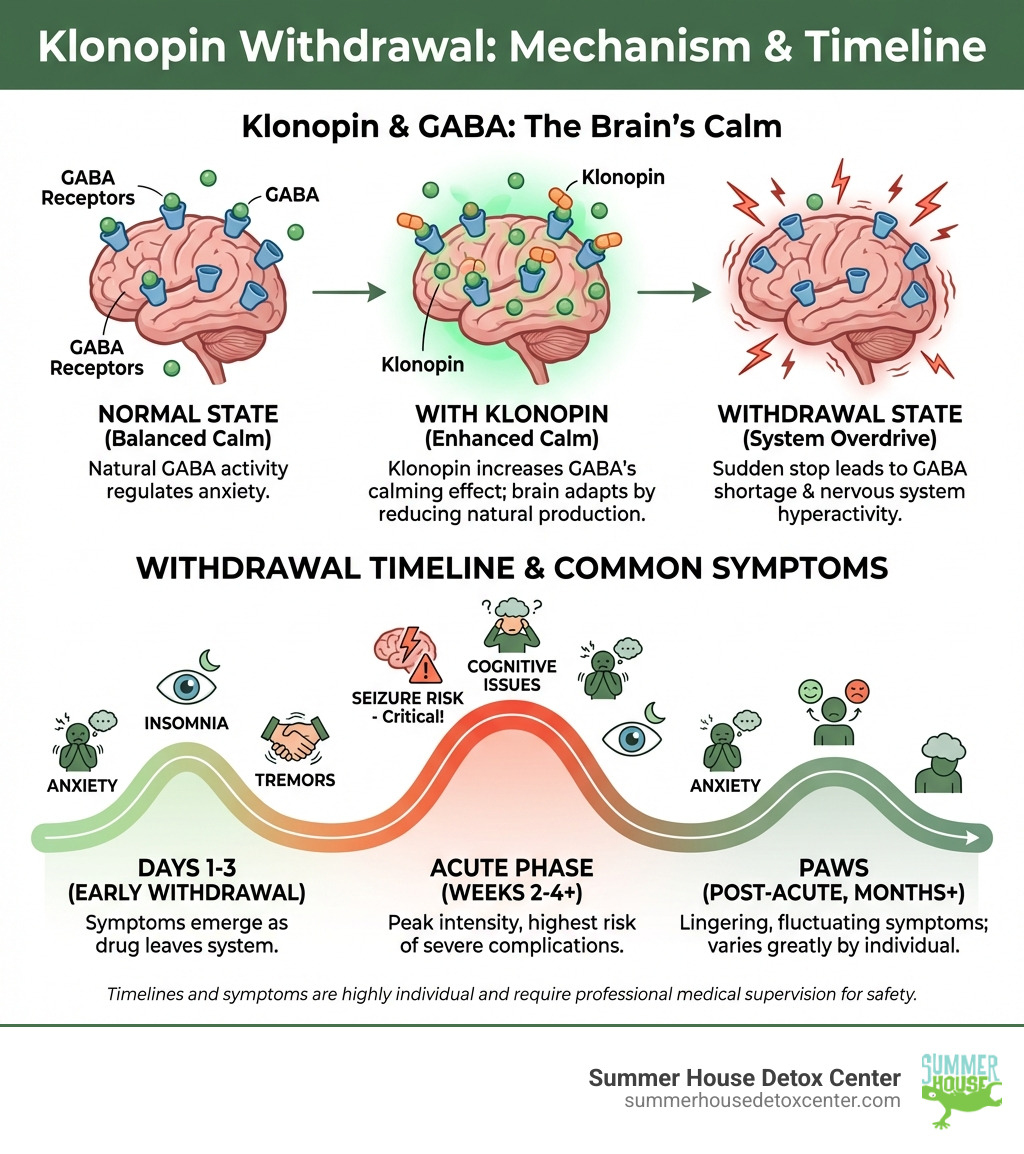
Here’s what makes this so serious: Klonopin works by enhancing GABA in your brain—a chemical that keeps your nervous system calm. When you’ve taken it regularly for as little as two weeks, your brain adapts. It stops making enough GABA on its own.
Stop suddenly, and your brain goes into overdrive. Your central nervous system becomes hyperactive. This isn’t just uncomfortable—it can trigger seizures, hallucinations, and even coma.
Around 17% of people who take benzodiazepines end up misusing them. And roughly 40% of people who’ve used benzos for six months or more experience moderate to severe withdrawal symptoms when they stop.
If you’re in Miami or anywhere in Florida and facing Klonopin dependence, you don’t have to go through this alone. Professional detox programs provide the medical supervision, gradual tapering schedules, and compassionate support that make withdrawal safer and more bearable.
Kelley McMillan, a former Klonopin user, put it this way: “Giving up alcohol was easy and the results were almost immediate, but whenever I lower my Klonopin dose too rapidly, my world starts to teeter out of control.”
That’s why medical help matters. You deserve a path forward that protects your safety and your dignity.
Key terms for Klonopin withdrawal help:
Understanding the Dangers of Benzodiazepine Dependence
Klonopin, the brand name for clonazepam, is a powerful benzodiazepine medication. It’s often prescribed for conditions like panic disorder and seizure disorders because of its ability to calm the central nervous system. However, its effectiveness comes with a significant caveat: the potential for dependence and addiction. The U.S. Food and Drug Administration (FDA) explicitly warns that taking Klonopin can be habit-forming, leading users to become physically and psychologically dependent on the drug. This is why it’s classified as a Schedule IV controlled substance.
So, what exactly is Klonopin withdrawal? At its core, it’s a series of physical and mental symptoms that occur when someone stops taking Klonopin after developing a physical dependence. Our bodies are incredibly adaptable, and when we regularly introduce a substance like Klonopin, our brains adjust to its presence. Klonopin works by enhancing the effects of gamma-aminobutyric acid (GABA), a neurotransmitter that helps calm nerve activity. When Klonopin is consistently present, our brains may slow down their natural GABA production, creating a reliance on the external source.
This physiological dependence can develop surprisingly quickly. Klonopin use or misuse for as little as two weeks can lead to dependence and the associated withdrawal symptoms. While Klonopin is meant for short-term use—typically two to four weeks, and at maximum, four months—many individuals take it for much longer, increasing their risk. Physiological dependence can occur even following prolonged treatment with therapeutic doses, meaning even if you’ve taken it exactly as prescribed, you’re at risk.
When Klonopin is suddenly stopped or significantly reduced, that delicate balance is thrown into chaos. The brain, now accustomed to amplified GABA effects, suddenly finds itself with insufficient natural GABA. This leads to a neurotransmitter imbalance, causing the central nervous system to become overactive and triggering a cascade of uncomfortable, and potentially dangerous, withdrawal symptoms. This is the “why” behind the intense experience of Klonopin withdrawal. We’ve explored the broader implications of these medications in our article, The Dark Side of Benzos, and even how they can be strategically used in detox in Why Are Benzos Used in Drug Detox If They’re So Addictive?.
The Klonopin Withdrawal Timeline and Symptoms
Understanding the Klonopin withdrawal timeline is crucial for anyone seeking Klonopin withdrawal help. It’s not a one-size-fits-all experience, but there are common patterns we observe. Klonopin has a relatively long half-life of 30-40 hours, meaning it takes a day or two for half of the drug to leave your system. This long half-life influences when withdrawal symptoms begin.

Unlike shorter-acting benzodiazepines like Xanax (which has a half-life of around 11 hours and can cause withdrawal symptoms within hours), Klonopin’s effects don’t wear off as quickly. Early Klonopin withdrawal symptoms typically begin within 24 to 48 hours after the last dose, sometimes even up to 7 days.
Here’s a general breakdown of what to expect:
- Early Withdrawal (Days 1-7): This phase is often characterized by the return of anxiety and insomnia, sometimes more than before—what we call “rebound” symptoms. You might also experience nausea, vomiting, headaches, muscle pain, and increased heart rate. Klonopin withdrawal symptoms don’t always follow a linear pattern; they may fluctuate, getting worse or better throughout this period.
- Acute Withdrawal (Weeks 1-4): This is often the most intense phase. Symptoms can peak in the second week and gradually decrease by weeks 3-4. Common symptoms include:
- Psychological: Severe anxiety, panic attacks, irritability, mood swings, depression, difficulty concentrating, memory issues, restlessness, and sometimes hallucinations or psychosis.
- Physical: Muscle cramps, tremors, sweating, liftd blood pressure and heart rate, dizziness, fatigue, blurred vision, loss of appetite, and significant sleep disturbances. One of the most dangerous symptoms during this phase is the risk of seizures, which can be life-threatening.
- Protracted Withdrawal (Months 1-24+): For some individuals, symptoms can linger for an extended period, known as post-acute withdrawal syndrome (PAWS). We’ll dive into PAWS in more detail later, but it can involve intermittent anxiety, depression, insomnia, cognitive issues, and physical discomfort.
The duration and severity of Klonopin withdrawal are influenced by several factors:
- Dosage: Higher doses generally lead to more severe withdrawal.
- Duration of Use: Longer periods of use increase dependence and withdrawal intensity. People who have taken Klonopin for at least three to four weeks are at risk, but those who used it for greater than six months are more likely to experience moderate to severe symptoms.
- Individual Physiology: Metabolism, age, and genetics play a role.
- Polysubstance Use: Using Klonopin with other substances, especially alcohol, can complicate withdrawal.
- Underlying Conditions: Pre-existing anxiety or mental health issues can make symptoms feel more pronounced.
While acute withdrawal usually lasts between 2-4 weeks, Klonopin withdrawal symptoms can last up to 90 days for some. Between 10% and 25% of people who have used benzodiazepines long-term will experience longer than average acute withdrawal symptoms. For more on how long this process can take, see How Long Does Benzo Withdrawal Last?. And if you’re wondering about those tummy troubles, check out Why Do I Experience Stomach and Digestive Problems When Quitting Benzos?.
Here’s a quick comparison of Klonopin versus Xanax withdrawal, highlighting the impact of half-life:
| Feature | Klonopin (Clonazepam) | Xanax (Alprazolam) |
|---|---|---|
| Half-Life | 30-40 hours | Around 11 hours |
| Onset of Withdrawal | 24-48 hours (can be up to 7 days) | 6-12 hours |
| Acute Withdrawal Peak | Typically Week 2 | Days 2-4 |
| Acute Withdrawal Length | 2-4 weeks (can extend up to 90 days) | 5-7 days (can extend to 2 weeks) |
| Severity | Can be severe; seizure risk | Can be very severe due to rapid onset; seizure risk |
| Tapering Approach | Generally slower, more gradual due to longer half-life | Often requires careful, precise tapering |
This table illustrates why Klonopin withdrawal help is so critical: even with a longer half-life, the withdrawal can be prolonged and intense, demanding professional care.
Why You Need Professional Klonopin Withdrawal Help
Given the unpredictable and potentially life-threatening nature of Klonopin withdrawal, attempting to quit without professional Klonopin withdrawal help is simply too risky. The most significant danger is the seizure risk. Abruptly stopping Klonopin, especially after prolonged or high-dose use, can trigger severe seizures that can lead to injury, brain damage, or even death. This is not a scenario for home remedies or “toughing it out.”
Medical detox for Klonopin withdrawal provides the essential safety net needed for a successful and comfortable process. In a professional setting, you receive constant medical supervision, with experienced staff monitoring your vital signs 24/7. This immediate oversight allows for quick intervention if complications like dangerously liftd blood pressure, heart rate, or body temperature arise.
For those of us in Florida, seeking medical detox means adhering to stringent safety protocols. Our facilities, including those in Miami, are equipped to handle the complexities of benzodiazepine withdrawal. We focus on clinical stabilization, ensuring that your body and mind are supported through every phase. This not only mitigates the risk of seizures but also helps prevent other severe symptoms like psychosis, paranoia, hallucinations, or delirium that can occur during unsupervised withdrawal.
The Drug Abuse Warning Network (DAWN) reported that over 61,000 people sought emergency department treatment for a negative reaction involving the recreational, or nonmedical use, of clonazepam in 2011. Furthermore, the National Institute on Drug Abuse (NIDA) reported that benzodiazepine overdose deaths increased fourfold from 2001-2013. While these statistics highlight overdose, they underscore the inherent dangers associated with benzodiazepine misuse and the critical need for medical intervention when attempting to stop.
So, is it safe to quit Klonopin cold turkey? The resounding answer from medical professionals is no. Quitting Klonopin cold turkey is strongly discouraged due to the high risk of severe and potentially fatal withdrawal symptoms. This is not a challenge to undertake alone. Professional medical detox is not just recommended; it’s often considered a necessity for safe Klonopin withdrawal. We dig deeper into our approach to medical detox services in Detox Services: Benzo Detox.
Finding Klonopin Withdrawal Help in Miami
If you’re in Miami-Dade County or anywhere in Florida, access to professional Klonopin withdrawal help is readily available. Our inpatient detox programs offer a structured, supportive environment where you can safely steer withdrawal. This localized medical care means you’re close to home, with resources specifically custom to Florida recovery needs.
We understand the unique challenges faced by individuals in our community, and our compassionate team is here to guide you. For a comprehensive look at how we support individuals through this journey, explore Benzo Addiction Recovery.
Medications and Therapies for Klonopin Withdrawal Help
One of the cornerstones of effective Klonopin withdrawal help is the strategic use of medications and therapies to manage symptoms and support recovery.
Medications to Manage Klonopin Withdrawal Symptoms:
During medical detox, our team may use several medications to ease the discomfort and danger of withdrawal:
- Other Benzodiazepines: Often, a longer-acting benzodiazepine like diazepam (Valium) may be used to substitute Klonopin. This allows for a much slower, more controlled tapering process, as diazepam has a longer half-life and fewer intense peaks and troughs in its effects.
- Anticonvulsants: Medications such as gabapentin (Neurontin), carbamazepine (Tegretol), or valproate can be crucial in preventing seizures, a major risk during Klonopin withdrawal. Research indicates gabapentin’s potential in managing GABA levels during withdrawal.
- Antidepressants/Mood Stabilizers: For psychological symptoms like severe anxiety, depression, or mood swings, non-addictive antidepressants or mood stabilizers may be prescribed to provide relief and support mental well-being.
- Beta-Blockers: Medications like propranolol can help manage physical symptoms such as rapid heart rate, tremors, and high blood pressure, reducing the acute physical stress of withdrawal.
- Melatonin: Insomnia is a common and persistent withdrawal symptom. The hormone melatonin has been found useful in assisting individuals who develop insomnia during the withdrawal process, helping to restore healthy sleep patterns.
- Clonidine: This medication can reduce some of the autonomic nervous system hyperactivity, such as sweating, tremors, and anxiety.
Therapies Helpful During Klonopin Withdrawal and Addiction Treatment:
Beyond medication, therapy plays a vital role in addressing the psychological aspects of dependence and setting the stage for long-term recovery.
- Cognitive Behavioral Therapy (CBT): A 2022 research review found that CBT led to higher treatment success rates for benzodiazepine addiction compared to tapering alone. CBT is a form of talk therapy that helps you identify and challenge negative thought patterns and develop healthier coping mechanisms for anxiety, stress, and cravings.
- Motivational Interviewing (MI): This therapy helps individuals explore and resolve ambivalence about change, strengthening their motivation to pursue and maintain recovery.
- Individual and Group Therapy: These settings provide a safe space to process emotions, learn from others’ experiences, and build a support network.
- Holistic Support: We also incorporate holistic approaches that support overall well-being, such as mindfulness, nutrition guidance, and gentle exercise, all designed to aid in neurological healing and stress reduction.
- Dual Diagnosis Treatment: Many individuals struggling with Klonopin dependence also have co-occurring mental health disorders like anxiety or depression. Our programs address these conditions simultaneously, as treating both is crucial for sustainable recovery.
Our approach to Klonopin withdrawal help is comprehensive, blending medical expertise with therapeutic support. For more on similar treatment strategies, you can read about Xanax Addiction Withdrawal Treatment.
The Safest Way to Quit: Tapering Schedules
The safest and most effective way to stop taking Klonopin is through a medically supervised tapering schedule. What is a Klonopin tapering schedule? It’s a carefully planned, gradual reduction of your Klonopin dosage over an extended period. This method allows your brain and body to slowly adjust to decreasing amounts of the medication, minimizing the shock and severity of withdrawal symptoms.
We cannot stress enough: do not attempt to create your own tapering schedule or quit cold turkey. This is where professional Klonopin withdrawal help becomes absolutely indispensable.
Here’s why tapering is the safest approach:
- Reduces Severity: A gradual reduction significantly lessens the intensity of withdrawal symptoms, making the process more manageable and less distressing.
- Prevents Dangerous Complications: Tapering drastically lowers the risk of severe and life-threatening complications like seizures, delirium, and psychosis.
- Promotes Adherence: By making withdrawal more tolerable, tapering increases the likelihood that you’ll successfully complete the detox process.
A Klonopin tapering schedule is highly individualized. There’s no single “right” schedule, as it depends on factors like your typical dose, how long you’ve been taking Klonopin, your overall health, and how your body responds to reductions. However, a common strategy involves reducing the dose by 5-10% or around 0.25mg every few days to weeks. Longer intervals between reductions often lead to smoother withdrawals. For instance, a 2010 study of 73 long-term Klonopin users found that gradually reducing daily doses by 0.5 milligrams every two weeks, and then by 0.25 milligrams weekly, was an effective strategy.
Sometimes, a medical team might opt for diazepam substitution. This involves switching from Klonopin to an equivalent dose of diazepam (Valium), which is another benzodiazepine but has a much longer half-life. This makes the tapering process even smoother because diazepam leaves the body very slowly, providing a more stable level of medication as the dose is gradually reduced.
LIST of Tapering Best Practices:
- Always Medical Supervision: Tapering should only be done under the direct guidance of medical professionals.
- Personalized Plan: Your doctor will create a schedule custom to your specific needs.
- Small, Gradual Decreases: Doses are reduced incrementally, usually by small percentages, over weeks or even months.
- Listen to Your Body: If withdrawal symptoms become too severe, the reduction can be paused or even temporarily reversed to stabilize you before continuing.
- Consistent Dosing: Stick to the prescribed schedule and timing of doses precisely.
- Avoid Other Sedatives: Refrain from alcohol or other central nervous system depressants, as they can complicate the tapering process and increase risks.
This dose titration process is carefully managed in a medical detox setting. It’s the stark opposite of the dangers of quitting cold turkey, offering a pathway to freedom from Klonopin with dignity and safety. We apply similar meticulous care in helping individuals with other benzodiazepine dependencies, as detailed in Beat Xanax Addiction at Summer House Detox Center in Miami.
Managing Post-Acute Withdrawal Syndrome (PAWS)
While acute Klonopin withdrawal typically subsides within weeks, the journey doesn’t always end there. For a significant number of people, a second, more subtle phase of withdrawal can emerge: Post-Acute Withdrawal Syndrome, or PAWS. Around 10 to 15% of people who stop taking benzodiazepines develop PAWS, which can cause long-term benzodiazepine withdrawal symptoms.
PAWS involves a cluster of symptoms that can wax and wane for an extended period, often lasting 18-24 months or even longer. These symptoms are primarily psychological and cognitive, reflecting the brain’s ongoing process of re-calibrating its neurochemistry after prolonged Klonopin use.
Common symptoms of PAWS include:
- Cognitive Impairment: Difficulty concentrating, memory problems, brain fog, and reduced problem-solving abilities.
- Mood Swings: Episodes of intense irritability, anxiety, depression, anhedonia (difficulty experiencing pleasure), and emotional numbness.
- Sleep Disturbances: Persistent insomnia, fragmented sleep, or unusual dreams.
- Anxiety and Panic: Recurrent anxiety or panic attacks, often triggered by stress.
- Fatigue: Persistent low energy levels.
- Cravings: Intermittent urges to use Klonopin, even long after physical dependence has resolved.
Managing PAWS requires a commitment to long-term recovery strategies. It’s about supporting neurological healing and developing robust coping mechanisms. This includes ongoing therapy, particularly CBT, which can help address persistent cognitive and emotional challenges. Support groups are invaluable for connecting with others who understand these unique struggles.
Lifestyle adjustments also play a crucial role: maintaining a healthy diet, regular exercise, stress reduction techniques like mindfulness or meditation, and ensuring consistent sleep hygiene can all aid in recovery. It’s also vital to be mindful of other substances, as they can exacerbate PAWS symptoms or lead to relapse. For instance, combining alcohol with benzodiazepines can be particularly dangerous, as discussed in What Happens If I Drink Alcohol While Using Benzos?.
Aftercare planning is an essential component of professional Klonopin withdrawal help. It ensures that you have a comprehensive support system in place to steer PAWS and maintain sobriety. This might include continued outpatient therapy, regular check-ins with a medical provider, and participation in recovery communities. We believe in equipping you with all the tools you need for a truly drug-free life.
Frequently Asked Questions about Klonopin Withdrawal
We often hear many questions from individuals and their loved ones seeking Klonopin withdrawal help. Here, we address some of the most common concerns.
Is it safe to quit Klonopin cold turkey?
Absolutely not. We strongly advise against quitting Klonopin cold turkey. As we’ve discussed, abrupt cessation can lead to severe and potentially life-threatening withdrawal symptoms, including seizures, hallucinations, and delirium. The brain’s sudden deprivation of Klonopin’s effects can cause it to become dangerously overactive. Always seek professional medical supervision for Klonopin withdrawal.
How long does the acute phase of Klonopin withdrawal last?
The acute phase of Klonopin withdrawal typically lasts between 2 to 4 weeks. Symptoms usually begin within 24 to 48 hours after the last dose, peak in intensity around the second week, and then gradually subside. However, for some individuals, acute symptoms can persist for up to 90 days. Factors like the dosage, duration of use, and individual physiology can influence this timeline.
Can Klonopin withdrawal cause permanent damage?
While Klonopin withdrawal is incredibly challenging, it does not typically cause permanent physical damage if managed safely under medical supervision. The most significant risk of “damage” comes from the severe symptoms that can occur during unsupervised withdrawal, particularly seizures, which can lead to brain injury or other physical harm. Psychologically, some individuals may experience protracted withdrawal symptoms (PAWS) that can linger for months or even years, but these are generally not considered permanent damage and tend to improve over time with continued support and healthy lifestyle choices. The brain is remarkably resilient and capable of healing.
Conclusion
Navigating Klonopin withdrawal help is a serious undertaking, but it’s a journey you don’t have to face alone. The dangers of unsupervised withdrawal, from severe physical symptoms to life-threatening seizures, underscore the critical importance of professional medical support.
At Summer House Detox Center, we understand the complexities of Klonopin dependence. Located in Miami, Florida, our inpatient facility is dedicated to providing personalized, medically supervised detox with a focus on your comfort, dignity, and long-term recovery. Our experienced staff, some of whom have walked similar paths, offer compassionate care custom to your unique needs. We combine evidence-based medical protocols with therapeutic interventions to ensure a safe and supportive environment for your withdrawal.
If you or a loved one are struggling with Klonopin dependence in Miami or anywhere in Florida, please reach out. We are here to offer the expert Klonopin withdrawal help you deserve. Your path to a healthier, Klonopin-free life begins with safe, professional care.
For more information on how we can help you through this crucial first step, visit our Detox Services: Benzo Detox page. https://summerhousedetoxcenter.com/detox-services/benzo-detox/
