
Navigating Opiate Withdrawal with Medical Support in Florida
Clonidine for opiate withdrawal symptoms is a proven, non-addictive medication that manages the physical discomfort of stopping opioid use. Understanding your medication options is key to a successful detox, especially if you’ve tried to quit before.
Quick Answer: How Clonidine Helps with Opiate Withdrawal
- What it does: Clonidine reduces physical withdrawal symptoms like sweating, anxiety, muscle aches, and rapid heartbeat
- How it works: Blocks chemical messengers in your brain that trigger the “fight or flight” response during withdrawal
- Typical dose: 0.1-0.2 mg taken 2-4 times daily, with a maximum of 1.2 mg per day
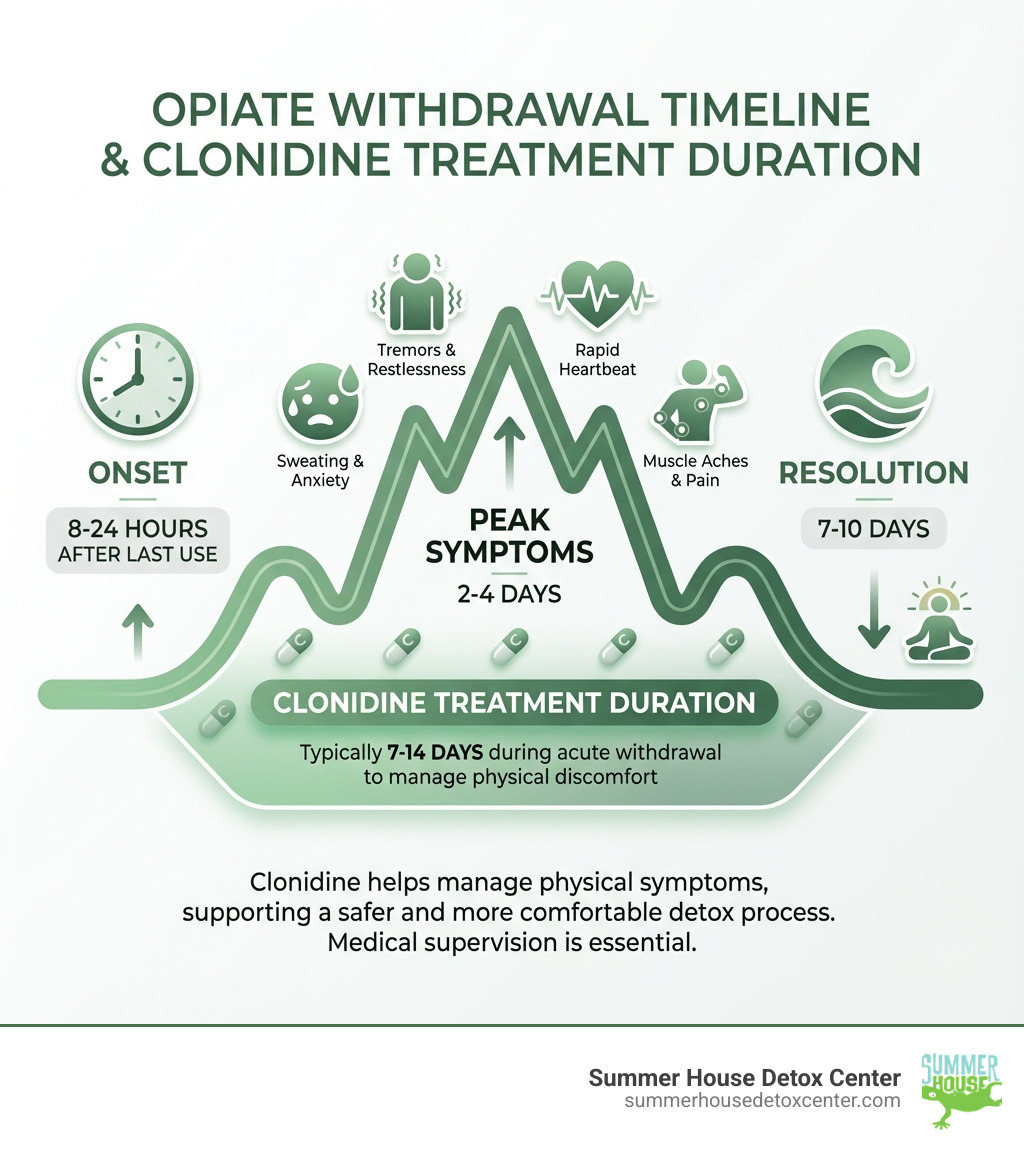
- Treatment length: Usually 7-14 days during acute withdrawal
- Safety: Must be monitored by medical staff due to effects on blood pressure and heart rate
- Not a cure: Clonidine eases symptoms but doesn’t eliminate cravings or treat the underlying addiction
Opiate withdrawal feels like a severe flu, but it’s more complex. After your body adapts to opioids, stopping use sends your nervous system into overdrive. This causes intense physical and psychological symptoms that can derail recovery.
Nearly 80% of detoxes in treatment facilities use medication. At Summer House Detox Center in Florida, our medical detox programs combine medications like clonidine with 24/7 monitoring and compassionate care.
The good news is you don’t have to face withdrawal alone. Medical support makes the process safer, more comfortable, and significantly increases your chance of success.
Used for opiate withdrawal since 1978, clonidine was originally a high blood pressure medication. Doctors found it significantly reduces many uncomfortable physical withdrawal symptoms. Unlike methadone or buprenorphine, it doesn’t act on opioid receptors, so there’s no risk of trading one addiction for another.
This guide covers everything you need to know about using clonidine for opiate detox, including how it works and how it fits into a treatment plan at facilities like Summer House Detox Center in Miami.
Learn more about clonidine for opiate withdrawal symptoms:
- opiate withdrawal symptoms
- easing withdrawal symptoms from opiates
- does gabapentin help with opiate withdrawal symptoms
What Is Clonidine and How Does It Alleviate Withdrawal?
Clonidine is a centrally acting alpha-2 agonist. Originally for high blood pressure (hypertension), its mechanism of action makes it highly effective for managing opiate withdrawal symptoms. As a non-opioid, non-addictive option, it’s a relief for those seeking to break free from opioid dependence.
When a person stops using opioids, their central nervous system’s noradrenergic system goes into overdrive. This “fight or flight” response, when overstimulated, produces many of the uncomfortable physical symptoms of withdrawal.
Clonidine works by calming this overactive system. It targets alpha-2 adrenergic receptors in the brain’s locus coeruleus, an area involved in the stress response. By stimulating these receptors, clonidine for opiate withdrawal symptoms blocks the release of norepinephrine, a key chemical that drives withdrawal. This calms the nervous system and relieves intense physical discomfort.
This calming effect is crucial during detox. It allows you to focus on healing and preparing for the next steps in recovery, rather than being overwhelmed by physical pain and anxiety.

The Science Behind Clonidine’s Effectiveness
During opioid dependence, the brain adjusts to the drug’s presence. When opioids are removed, the noradrenergic system becomes dysregulated, leading to an excessive release of norepinephrine and causing classic withdrawal symptoms.
As an alpha-2 adrenergic agonist, clonidine activates receptors on nerve cells, signaling them to reduce the release of norepinephrine. This dampens the overactive sympathetic nervous system, which is responsible for many physical withdrawal symptoms.
This targeted, non-opiate action doesn’t create euphoria but addresses the physiological imbalance causing distress. Early research highlighted clonidine’s ability to significantly reduce the opiate withdrawal syndrome, establishing it as an effective agent for detoxification. Clonidine and the treatment of the opiate withdrawal syndrome – PubMed.
Specific Withdrawal Symptoms Clonidine Can Manage
Clonidine for opiate withdrawal symptoms is excellent for managing the physical symptoms that make detox so difficult. While it doesn’t eliminate cravings, it significantly alleviates:
- Sweating: Often profuse and uncomfortable.
- Hot flashes and chills: The body struggles to regulate temperature.
- Watery eyes and runny nose: Similar to severe allergies or a bad cold.
- Restlessness: An overwhelming urge to move, making it hard to sit still.
- Anxiety and agitation: Though primarily physical, clonidine’s calming effect on the nervous system can indirectly reduce these.
- Irritability: A common emotional side effect of intense physical discomfort.
- Abdominal cramps: Often described as severe stomach pain.
- Muscle aches and body pain: Widespread discomfort, feeling like the flu.
- Insomnia: The inability to sleep due to physical discomfort and agitation.
By managing these severe physical symptoms, clonidine makes the detox process far more tolerable, allowing individuals to endure the acute phase with greater comfort.
How Is Clonidine Used in a Medically Supervised Detox?
At Summer House Detox Center in Miami, clonidine for opiate withdrawal symptoms is always given under strict medical supervision. Due to its impact on vital signs, it should not be managed on your own. Our medical team monitors each patient to ensure safety and effectiveness.
Medical detox provides a safe environment to focus on recovery. Managing opioid withdrawal is complex and unpredictable. Detoxing at home (“cold turkey”) is extremely uncomfortable and can be dangerous. We strongly advise against at-home detox kits, which lack the necessary medical oversight for a safe withdrawal. Are At Home Opiate Detox Kits Safe?.
In our Florida inpatient detox, a key aspect of using clonidine is continuous monitoring of blood pressure and heart rate. As a blood pressure medication, it can cause hypotension (low blood pressure) and bradycardia (slow heart rate). Our staff measures these vitals before each dose, holding it if blood pressure drops too low (e.g., below 90/50mmHg) to ensure safety.
The duration of opioid withdrawal varies, but the acute phase typically lasts from a few days to two weeks. How Long Does It Take to Withdraw From Opiates?. Clonidine treatment covers this acute period. As you stabilize, our team will gradually taper the dosage to prevent rebound effects.
Typical Dosage for Clonidine for Opiate Withdrawal Symptoms
The dosage of clonidine for opiate withdrawal symptoms is highly individualized at Summer House Detox Center, as each person’s withdrawal experience is unique.
A typical dose is 0.1–0.2 mg, two to four times a day, depending on symptom severity and your response. Our medical team regularly assesses symptoms using tools like the Clinical Opioid Withdrawal Scale (COWS) to gauge progress and tailor your medication. Clinical Opioid Withdrawal Scale.
The maximum daily dose is 1.2 mg. Our team carefully tracks your dosage to manage symptoms effectively without adverse effects, adjusting it downwards as symptoms subside. This careful titration is a hallmark of medically supervised detox.
Duration of Treatment and Discontinuation
Detoxification with clonidine for opiate withdrawal symptoms typically lasts 7 to 14 days, depending on individual needs. The medication’s effects peak within 1 to 5 hours and last 8 to 12 hours, which guides our dosing schedule for consistent symptom relief.
Once the acute phase passes, our medical team begins to gradually taper the clonidine dose over 2 to 4 days. Stopping abruptly is dangerous and can cause rebound hypertension (a sudden spike in blood pressure). This controlled process allows your body to re-regulate safely.
After detox and tapering clonidine, the journey continues with post-detox support. Clonidine manages physical symptoms but not the underlying psychological aspects of addiction, like cravings or lingering insomnia. We offer strategies for these challenges, preparing you for long-term recovery. How Can I Cope With Insomnia After Opiate Detox?.
Risks and Safety of Using Clonidine for Opiate Withdrawal Symptoms
While clonidine for opiate withdrawal symptoms is safe and effective under medical supervision, it has potential side effects. Our medical team at Summer House Detox Center in Miami is skilled in managing these risks to ensure your safety.

Common side effects include:
- Drowsiness: You might feel sleepy or fatigued.
- Dizziness: Especially when standing up quickly (orthostatic hypotension).
- Dry mouth: A frequent complaint, but manageable with hydration.
- Hypotension (low blood pressure): This is the most significant concern. Our team continuously monitors your blood pressure and heart rate, holding doses if they drop too low (e.g., below 90/50mmHg).
- Sedation: Can be more pronounced in some individuals.
These side effects are typically managed by adjusting the dose or with supportive care. In a controlled medical environment like ours, the benefits of relieving severe withdrawal symptoms usually outweigh these manageable side effects.
It’s also important to know about potential drug interactions and which patients should use clonidine with caution. Our intake process includes a thorough medical evaluation to identify any risks.
Who Should and Shouldn’t Use Clonidine?
Clonidine for opiate withdrawal symptoms is effective for many, but not all. Our Florida medical team assesses each patient to determine if it’s the right choice for their detox.
Recommended Patient Profiles:
- Patients with moderate to severe physical withdrawal symptoms.
- Those needing a non-opioid, non-addictive option.
- Patients with hypertension (clonidine can help manage it).
- Individuals in a medically supervised detox where vitals can be monitored.
- Those transitioning to naltrexone, as clonidine can bridge the gap.
Contraindicated Populations (or those requiring extreme caution):
- People with low blood pressure (hypotension) or a very slow heart rate (bradycardia): Clonidine can worsen these conditions.
- Patients with severe heart conditions: Requires close medical consultation.
- Pregnant individuals: Withdrawal management is not typically recommended during pregnancy. Maintenance with methadone or buprenorphine is the standard of care for the safety of both mother and baby, as supported by the ASAM National Practice Guideline. ASAM National Practice Guideline for the Treatment of Opioid Use Disorder.
- People with kidney disease: Dosage may need adjustment as clonidine is cleared by the kidneys.
- Older adults: May tolerate clonidine poorly and require careful monitoring, especially if on other sedating or blood pressure-lowering medications.
Our team ensures every patient receives a personalized treatment plan, weighing the benefits of clonidine against any potential risks.
Potential Drug Interactions to Be Aware Of
When using clonidine for opiate withdrawal symptoms, you must tell our medical team about all medications and substances you take, including prescriptions, over-the-counter drugs, and supplements. Many drugs interact with clonidine, which can increase side effects or reduce its effectiveness.
Here are some key drug interactions to consider:
- Other Blood Pressure Medications: Combining with other antihypertensives can cause an excessive drop in blood pressure.
- Sedatives and CNS Depressants: Benzodiazepines, sleeping pills, some antihistamines, and alcohol can amplify clonidine’s sedative effects, causing extreme drowsiness.
- Antidepressants: Some antidepressants (especially tricyclics) can interfere with clonidine’s effects.
- Beta-blockers: Combining with beta-blockers increases the risk of rebound hypertension if clonidine is stopped suddenly.
- Opioid Substitution Medications: Co-administration with methadone or buprenorphine requires careful medical planning as their mechanisms differ and can lead to complications.
At Summer House Detox Center, our medical team reviews your medication history to manage potential interactions. Open communication is key to a safe detox. Learn more on our page: Which Medications Are Used in Opiate Detox.
Comparing Clonidine to Other Supportive Therapies Used at Summer House Detox Center
While clonidine for opiate withdrawal symptoms is a cornerstone of our Miami detox protocols, it’s part of a broader, holistic approach. We combine non-opioid, non-addictive therapies to provide comprehensive relief for multifaceted withdrawal symptoms.
Here’s a comparison of clonidine with some other supportive therapies we might use at Summer House Detox Center:
| Medication/Therapy | Primary Action | Key Benefits | Potential Side Effects | Role in Detox |
|---|---|---|---|---|
| Clonidine | Alpha-2 Agonist | Reduces physical symptoms (sweating, cramps, anxiety, restlessness, high BP) | Drowsiness, dizziness, dry mouth, low blood pressure | Core medication for physical withdrawal, non-addictive |
| Gabapentin | Anticonvulsant, Neuropathic pain reducer | Helps with nerve pain, restless legs, anxiety, insomnia | Drowsiness, dizziness, coordination problems | Adjunctive for nerve pain, anxiety, sleep disturbances |
| Trazodone | Antidepressant, Sedative | Addresses insomnia and mild anxiety | Drowsiness, dizziness, dry mouth | Primarily for sleep disturbances |
| Hydroxyzine | Antihistamine | Reduces anxiety, agitation, and nausea | Drowsiness, dry mouth | For mild anxiety, agitation, and nausea |
| Loperamide | Anti-diarrheal | Manages severe diarrhea | Constipation, abdominal cramps | Symptomatic relief for gastrointestinal issues |
| Acetaminophen/NSAIDs | Pain Relievers | Alleviates muscle aches and general body pain | Stomach upset (with NSAIDs) | Symptomatic relief for muscle/body aches |
| Zofran (Ondansetron) | Anti-emetic | Prevents and reduces nausea and vomiting | Headache, constipation | Symptomatic relief for nausea/vomiting |
This table highlights our commitment to individualized care. We combine these therapies into a personalized plan to address your specific symptoms, ensuring comfort and safety during your detox in Florida. For more on gabapentin, see Does Gabapentin Help With Opiate Withdrawal Symptoms?.
Why Clonidine Is a Preferred Option for Opiate Withdrawal at Summer House Detox Center
At Summer House Detox Center, we prioritize your safety and comfort. Clonidine for opiate withdrawal symptoms is a preferred option for several reasons that align with our philosophy of personalized, medically supervised care in Miami, FL:
- Non-Opioid and Non-Addictive: This is its most significant advantage. Clonidine doesn’t activate opioid receptors, so there’s no risk of trading one addiction for another.
- Effective for Physical Symptoms: It excels at managing distressing physical symptoms like sweating, cramps, and restlessness, making detox more tolerable.
- Versatile and Combinable: Clonidine integrates well with other non-addictive therapies for sleep, anxiety, or GI issues, allowing for a comprehensive, custom symptom management strategy.
- Improves Safety and Comfort: By reducing physical distress, clonidine helps prevent complications and increases the chances of completing detox successfully.
- Facilitates Transition to Further Treatment: With physical symptoms managed, patients can better engage in counseling and therapy. It also serves as an excellent bridge to starting Naltrexone therapy.
Our personalized approach ensures clonidine is used within a carefully considered plan, overseen by our experienced medical team in Florida.
The Role of Clonidine in a Comprehensive Treatment Plan
Clonidine for opiate withdrawal symptoms effectively manages acute physical discomfort, but it’s only the first step in recovery. At Summer House Detox Center, we see detox as the vital first phase that prepares you for comprehensive treatment addressing the root causes of addiction.
Our philosophy is that medications like clonidine work best within a full continuum of care. Detox stabilizes the body, while true recovery involves healing the mind and spirit.
Here’s how clonidine fits into this plan:
- Initial Stabilization: Clonidine makes you comfortable enough to engage in the therapeutic process.
- Bridge to Longer-Term Treatment: Physical stability prepares you for rehabilitation programs, including counseling and behavioral therapies.
- Facilitating Naltrexone Induction: As a non-opioid, clonidine helps create a safe and effective transition to naltrexone, an opioid blocker that helps prevent relapse.
- Psychosocial Support and Counseling: Our programs include therapy and counseling to help you develop coping skills and address the underlying causes of addiction.
- Aftercare Planning: We help you develop a robust aftercare plan with tools and resources to maintain long-term sobriety.
The detox stage with clonidine for opiate withdrawal symptoms lasts about 7 days, but this is just the beginning. Lasting sobriety requires engaging in a structured opiate detox program that continues after the initial phase. Opiate Detox Program.
Finding the Right Opiate Detox Program in Miami and Florida
Choosing the right detox program is a critical decision. While understanding medications like clonidine for opiate withdrawal symptoms is important, the facility’s environment and expertise are equally vital. In Miami, Florida, Summer House Detox Center offers a unique and effective approach to medical detox.
The importance of medical detox cannot be overstated. Unlike quitting at home, a professional program provides:
- 24/7 Medical Supervision: Our team is on-site around the clock to manage symptoms and ensure your safety and comfort.
- Personalized Care: We customize programs to your unique needs, considering your substance use history and co-occurring conditions.
- Experienced and Compassionate Staff: Our staff, many with personal recovery experience, provide empathetic and non-judgmental support.
- Comfort and Dignity: Our Miami facility is a serene, healing environment where your dignity and comfort are prioritized.
Florida is a leading destination for addiction treatment. Our Miami location provides a peaceful setting for healing, away from daily triggers. The combination of professional expertise, compassionate care, and a supportive environment makes Florida an ideal choice for opiate detox. Why Choose Florida for Opiate Detox?.
Medical detox is the safest first step for dependence on any opioid. If you’re in Florida and need help, learn more about who needs opiate detox and how a professional facility can provide support. Who Needs Opiate Detox in Florida?.
Begin Your Recovery Journey in a Safe, Supportive Environment
Seeking help for opioid dependence is a brave, life-changing decision. While understanding medications like clonidine for opiate withdrawal symptoms is important, true recovery success hinges on comprehensive, professional medical care in a supportive environment.
At Summer House Detox Center in Miami, Florida, we offer personalized detox plans that prioritize your comfort, safety, and dignity. Our experienced team understands the challenges you face and will guide you through the process, combining medications like clonidine with 24/7 medical monitoring and therapeutic support in a serene environment.
Recovery is possible. By choosing a medically supervised detox, you give yourself the best chance to break free from opioid dependence and build a foundation for a healthier life.
Don’t let fear of withdrawal hold you back. Reach out today to learn how our detox services can support you. Finding the right support is the first step. Opiate Detox Centers: How to Find the Best Support for Your Needs. For more details, visit our opiate detox page: Detox Services: Opiate Detox.
