
Understanding the Critical Journey of Benzodiazepine Detox
Benzodiazepine detox is the medically supervised process of safely withdrawing from benzodiazepines (benzos), prescription drugs with a high potential for dependence. If you’re considering detox, understand the process and the risks.
Key Facts About Benzodiazepine Detox:
- Medical supervision is essential to prevent life-threatening seizures and other complications from abrupt cessation.
- Acute detox typically lasts 7-10 days, though some effects can persist.
- Gradual tapering is the safest method, minimizing dangerous withdrawal symptoms.
- Inpatient care is recommended for high-dose users.
Nearly 4 million people in the United States misused prescription benzodiazepines in 2021. Medications like Xanax, Valium, and Klonopin can create physical dependence in as little as two weeks, even when taken as prescribed for anxiety or insomnia.
The fear of withdrawal often traps people in a cycle of use. Previous attempts to quit may have brought on frightening symptoms like a racing heart, sleeplessness, or overwhelming anxiety, reinforcing the dependence.
This guide explains the entire benzodiazepine detox process, from how dependence develops to what to expect during medically supervised withdrawal in Miami, Florida. You’ll learn why professional detox is crucial for your safety and how to build a foundation for lasting recovery.
Detox is challenging, but it is manageable with the right support. With proper medical care, most withdrawal symptoms can be controlled, allowing you to safely begin your journey to freedom from benzodiazepines.
Understanding Benzodiazepines and Dependence
Benzodiazepines, or “benzos,” are powerful central nervous system depressants prescribed since the 1960s. While initially seen as a safer alternative to older sedatives, their significant potential for dependence is now well-understood. You can learn more about the medical perspective on Benzodiazepine Toxicity from NCBI.
Doctors prescribe benzos like Alprazolam (Xanax), Diazepam (Valium), Clonazepam (Klonopin), and Lorazepam (Ativan) for anxiety, insomnia, seizures, and muscle spasms. Many people who take these medications exactly as directed find themselves unable to stop.
How Benzodiazepine Dependence Develops
Benzodiazepines work by enhancing the effects of GABA, your brain’s natural calming neurotransmitter. This produces a feeling of relaxation and relief. However, your brain adapts to this improved effect by reducing its own GABA production and receptors. This adaptation is called tolerance.
Once tolerance develops, you may need a higher dose to achieve the same effect. More importantly, your brain becomes physically dependent on the drug to function normally. This physical dependence can occur in as little as two weeks of regular use, which is why the FDA now requires a black box warning on these medications. To understand how this relates to substance use disorders, you can read more info about what addiction is.
How Dosage and Duration Affect Withdrawal Severity
Your benzodiazepine detox experience is influenced by how much you’ve been taking and for how long. Higher doses taken over longer periods generally lead to more intense withdrawal. For example, taking more than 4 mg of Xanax daily for over three months increases the risk of difficult withdrawal. Our medical team in Miami uses this information to create a safe and personalized tapering schedule for your specific situation.
The Impact of Co-Occurring Mental Health Disorders
Many people are prescribed benzodiazepines for underlying mental health conditions like anxiety or depression. When a substance dependence issue exists alongside a mental health disorder, it’s called a “dual diagnosis” or “co-occurring disorders.” These conditions complicate each other: anxiety may lead to benzo use, but dependence worsens the anxiety, creating a difficult cycle.
Specialized treatment for dual diagnosis is crucial because you cannot effectively treat one condition while ignoring the other. Our team in Miami, Florida, understands these interconnected challenges. We don’t just help you withdraw from benzodiazepines; we also begin addressing the underlying mental health issues. You can learn about our dual diagnosis rehab program to see how we treat both conditions simultaneously, giving you the best chance at lasting recovery.
The Benzodiazepine Withdrawal Process: Timeline and Symptoms
Withdrawing from benzodiazepines is a physically and emotionally challenging process. Understanding the timeline and symptoms helps you prepare and recognize why attempting benzodiazepine detox without medical support is dangerous.

Common Withdrawal Symptoms
When you stop taking benzodiazepines, your nervous system can go into overdrive. The physical effects include nausea, vomiting, headaches, muscle pain, tremors, sweating, and a racing heartbeat. You may also experience high blood pressure, loss of appetite, and visual disturbances.
The psychological effects are often more distressing. These include rebound anxiety (often worse than the original condition), panic attacks, irritability, confusion, depression, and mood swings. Many people feel restless and tense, and some experience depersonalization or derealization. In severe cases, suicidal thoughts can emerge, highlighting the need for professional support. For a broader look at what withdrawal can involve, visit our page on withdrawal symptoms.
Severe Complications: Benzodiazepine Withdrawal Syndrome (BWS)
Benzodiazepine withdrawal can be life-threatening. Stopping “cold turkey” or without supervision can lead to Benzodiazepine Withdrawal Syndrome (BWS).
Grand mal seizures are the most dangerous complication, occurring in a significant percentage of those who attempt unsupervised withdrawal. Other severe risks include psychosis, delirium, and catatonia. In rare cases, these complications can be fatal. This is why medical supervision is not optional—it is essential for your safety.
Phases of Withdrawal
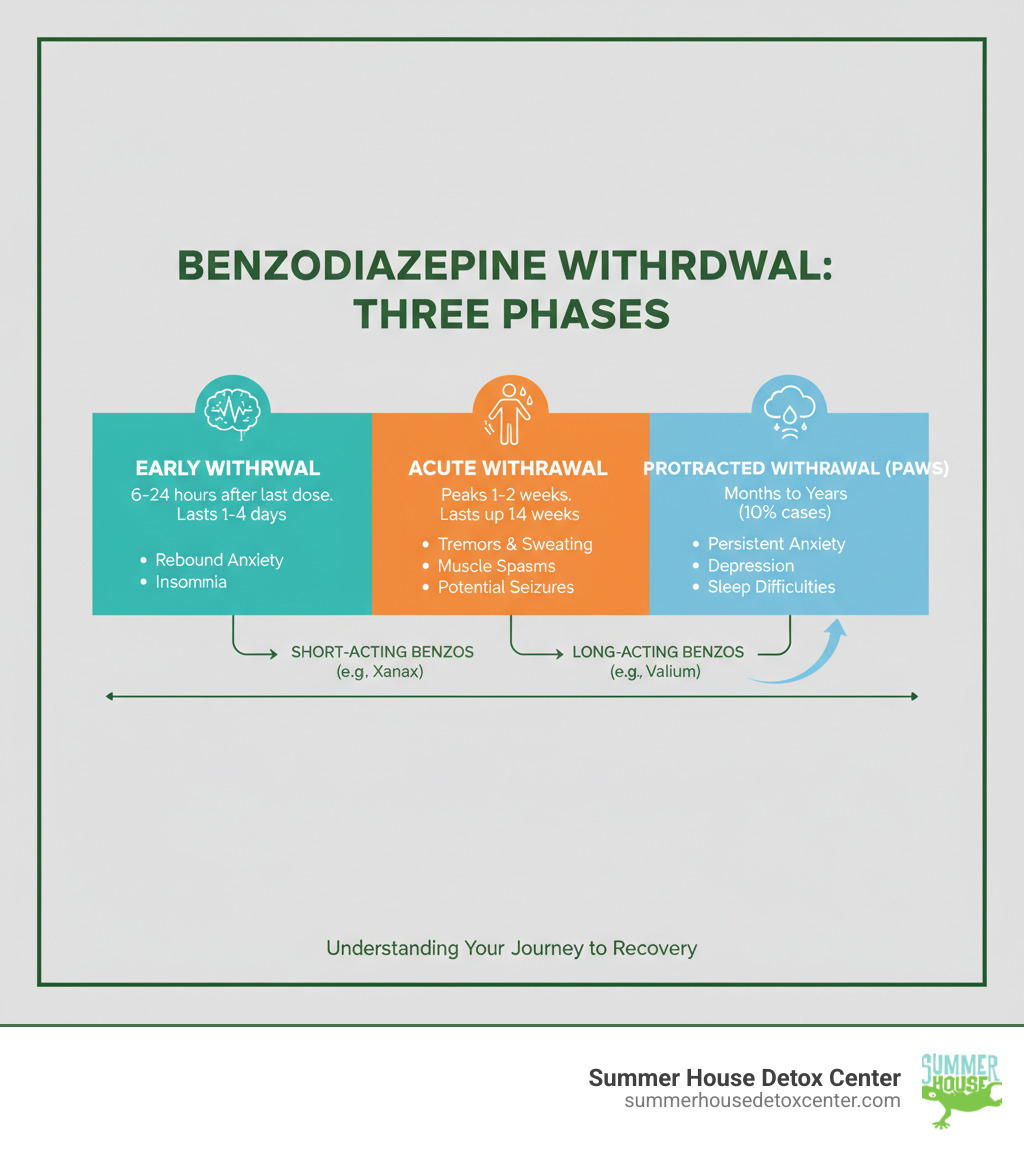
Benzodiazepine detox occurs in three stages:
- Early withdrawal: Begins hours to days after the last dose, with returning anxiety and insomnia.
- Acute withdrawal: The most intense phase, peaking within 1-2 weeks. This is when the full range of symptoms appears and the risk of seizures is highest. This phase can last from weeks to months.
- Protracted withdrawal (PAWS): Affects about 10% of people, who experience lingering symptoms like anxiety, depression, and sleep issues for months or even years. Knowing this is possible helps in planning for long-term support.
The exact timeline varies. For more detail, read our guide on how long benzo withdrawal lasts.
Short-Acting vs. Long-Acting Benzodiazepine Withdrawal
The type of benzodiazepine you’ve been taking affects the withdrawal timeline, based on its “half-life.”
- Short-acting benzos (Xanax, Ativan) leave the system quickly. Withdrawal begins within 6-8 hours, peaks around day 2, and the acute phase often resolves by day 4 or 5.
- Long-acting benzos (Valium, Klonopin) stay in the body longer. Symptoms may not appear for 1-2 days or more. The onset is more gradual, with a less intense peak around the second week. The acute phase is longer but generally smoother.
| Feature | Short-Acting Benzos (Xanax, Ativan) | Long-Acting Benzos (Valium, Klonopin) |
|---|---|---|
| Onset of Symptoms | Rapid (6-8 hours after last dose) | Delayed (12-48 hours, sometimes over a week) |
| Peak Intensity | Intense and abrupt (around day 2) | Generally smoother, less intense initially (around week 2) |
| Typical Duration | Acute phase shorter but more intense (resolves by days 4-5) | Acute phase longer but typically less severe onset (improves by weeks 3-4) |
For specific information on Xanax, see our resource on Xanax addiction withdrawal treatment.
Specific Considerations for Your Benzodiazepine Detox
Your withdrawal experience is unique. Our Miami team considers several factors when creating your personalized detox plan:
- Age: Older adults metabolize drugs more slowly and face higher risks of confusion and delirium.
- Polydrug use: Combining benzos with alcohol or opioids dramatically increases withdrawal risks. Learn what happens if you drink alcohol while using benzos.
- Pre-existing health conditions: Co-occurring mental health disorders, chronic pain, or heart problems must be managed carefully during detox.
- Method of cessation: Stopping “cold turkey” is extremely dangerous and drastically increases the risk of seizures and other complications. A gradual, medically supervised taper is the gold standard for safe benzodiazepine detox.
A personalized detox plan is essential for a safe and successful recovery journey in Florida.
The Importance of Medically Supervised Benzodiazepine Detox
Thinking you can handle benzodiazepine withdrawal on your own is a common but dangerous misconception. This isn’t about willpower; it’s about brain chemistry. Stopping suddenly can trigger medical emergencies without warning.
Why Medical Supervision is Crucial
Attempting a “cold turkey” or at-home detox from benzodiazepines puts your life at risk. Your brain, accustomed to the drug, goes into overdrive when it’s removed. This can lead to:
- Grand mal seizures: These can occur suddenly, even if you’ve never had one, and can cause serious injury or death.
- Cardiovascular distress: Rapid pulse and dangerously high blood pressure can strain your heart.
- Severe psychological symptoms: Psychosis, hallucinations, and severe confusion can occur, making it impossible to care for yourself.
- Relapse and overdose: The intense discomfort often drives people back to using. After a period of abstinence, your tolerance is lower, and taking your usual dose can be fatal.
Benzodiazepine detox should never be a solo journey. The risks are too high. To understand more, read about why DIY detox can be dangerous.
Choosing Between Inpatient vs. Outpatient Programs in Florida
Once you decide to seek help, you’ll choose between inpatient and outpatient care.
Inpatient detox, like the program at Summer House Detox Center in Miami, provides 24/7 medical monitoring in a residential facility. This is the safest and most effective option for most people, and it is essential if you:
- Have been taking high doses (over 50mg of diazepam equivalent daily).
- Have been using for a long time or combining benzos with other substances like alcohol or opioids. Learn what happens if you drink alcohol while using benzos.
- Have co-occurring mental health issues or a history of severe withdrawal.
Outpatient detox involves regular clinic visits while you live at home. This may be suitable for mild dependence but requires a strong support system and strict adherence to the treatment plan.
South Florida is home to leading addiction treatment resources, making it an ideal place for recovery. Find out why South Florida is a leading destination for effective detox programs.
What to Expect During a Professional Benzodiazepine Detox in Miami

At Summer House Detox Center in Miami, we understand the fear and uncertainty of starting detox. Your journey with us begins with a comprehensive assessment to understand your medical history, substance use, and mental health. Based on this, we create a personalized care plan custom to your unique needs. This commitment to individualized treatment is central to our approach. Learn about the importance of personalized care in detox.
Throughout your stay, you’ll receive 24/7 medical monitoring of your vital signs. Our primary goal is managing withdrawal symptoms for comfort and safety, using authorized medications and emotional support to guide you through the hardest days of withdrawal. You’ll rest in a comfortable, private room in a serene setting designed for healing.
The Benzodiazepine Taper and Medication-Assisted Treatment
The foundation of safe benzodiazepine detox is a gradual taper. Instead of stopping abruptly, we slowly reduce your dosage over time, allowing your brain to readjust. This method, outlined in resources like The Ashton Manual for benzodiazepine withdrawal, dramatically reduces withdrawal severity and seizure risk.
Often, we switch patients from a short-acting benzo (like Xanax) to a long-acting one (like diazepam/Valium) to create a smoother, more stable experience. From there, we implement a gradual dose reduction schedule.
We also use adjunctive medications to manage specific symptoms. These may include:
- Clonidine for physical symptoms like a rapid heartbeat and sweating.
- Gabapentin to manage anxiety, insomnia, and nerve discomfort.
- Other comfort medications for nausea or depression.
Our medical team in Miami carefully selects the best combination of treatments for your situation. To understand our approach, learn about our medication-assisted treatment services.
Life After Detox: Building a Foundation for Lasting Recovery
Completing benzodiazepine detox is a monumental first step, but it’s not the finish line. Detox clears the physical dependence, but true recovery involves developing new coping skills to address the underlying reasons for your benzo use. Ongoing support is vital for lasting success. For more on this, read our guide on life after detox and building a strong foundation.
The Role of Therapy in Recovery
Therapy helps you rewire thought patterns and build resilience. At our Miami facility, we integrate therapy during the detox process to build coping skills from day one. Key approaches include:
- Cognitive Behavioral Therapy (CBT): Helps you identify and challenge the negative thought patterns that fueled your benzodiazepine use, providing effective tools for managing anxiety.
- Dialectical Behavior Therapy (DBT): Teaches skills for managing intense emotions, tolerating distress, and building healthier relationships.
Both individual and group therapy sessions are beneficial, offering personalized attention and peer support from others who understand your journey. Learn more about the role of therapy in the detox process.
The Value of Support Groups
Support groups provide a community of people who have walked similar paths, reducing feelings of isolation. Options available throughout Miami and South Florida include:
- 12-Step programs like Narcotics Anonymous (NA): Offer a structured, peer-supported approach to long-term sobriety.
- SMART Recovery: Uses science-based techniques to help you develop self-management skills.
These groups are accessible, free, and offer a powerful source of ongoing support long after you’ve completed your benzodiazepine detox.
Holistic Approaches for Healing the Mind and Body
Holistic approaches support your recovery by addressing your overall well-being.
- Nutrition: A balanced diet rich in B vitamins, omega-3s, and magnesium helps your brain heal, stabilizes mood, and improves sleep. We emphasize the role of nutrition in detox and recovery.
- Exercise: Gentle physical activity, like a walk along Miami’s waterfront, reduces anxiety and improves mood by stimulating natural feel-good chemicals.
- Mindfulness and meditation: These practices help you observe and manage uncomfortable feelings without needing to suppress them, reducing stress and improving focus.
Frequently Asked Questions about Benzodiazepine Detox
Facing benzodiazepine detox brings up many questions. Here are concise answers to some of the most common concerns we hear at our Miami facility.
How is benzo withdrawal different from opioid or alcohol withdrawal?
While all create physical dependence, the primary difference is the risk. Like alcohol withdrawal, benzodiazepine detox can cause life-threatening grand mal seizures because both substances affect the brain’s GABA system. Opioid withdrawal, while uncomfortable with flu-like symptoms, is rarely fatal on its own. The psychological experience of benzo withdrawal is also unique, often characterized by profound rebound anxiety and panic attacks.
How long does a typical benzo detox program last?
Most inpatient benzodiazepine detox programs last 7-10 days for the acute phase. However, the exact duration depends on several factors: the type of benzo used (short-acting vs. long-acting), your dosage, the duration of use, your overall health, and whether you are detoxing from multiple substances. For example, detoxing from both benzos and alcohol can be more complex and may require a longer stay for safety. Learn more about this risk by reading what happens if you drink alcohol while using benzos.
Can you die from benzodiazepine withdrawal?
Yes, you can die from benzodiazepine withdrawal if it is not medically supervised. Abruptly stopping can lead to fatal complications. The primary dangers are:
- Grand mal seizures: These full-body convulsions can cause serious injury or sudden death.
- Cardiovascular events: The stress on your heart can lead to dangerously high blood pressure or heart failure.
- Suicidal ideation: The intense psychological distress, including severe depression and anxiety, can lead to suicidal thoughts and actions.
This is why medically supervised benzodiazepine detox at a professional facility like Summer House Detox Center in Miami is not just about comfort—it’s about keeping you safe and alive.
Begin Your Recovery at Summer House Detox Center in Miami
You’ve learned about the challenges and, more importantly, the path to safely overcoming benzodiazepine dependence. The most critical takeaway is that unsupervised detox is dangerous. You deserve a safe, supportive, and professional environment where you can heal without unnecessary risk or suffering.
At Summer House Detox Center in Miami, Florida, we provide personalized, medically supervised detox that works. We reject one-size-fits-all programs. Instead, we create a benzodiazepine detox plan custom to your specific history, needs, and goals. Our experienced staff, many of whom have walked this path themselves, understand your fears and are here to guide you with compassion and expertise.
Choosing Summer House means choosing a serene Miami setting where you can focus on healing. It means 24/7 medical monitoring for your safety, medication-assisted treatment for your comfort, and therapeutic support for your well-being.
The fear of withdrawal keeps too many people trapped. With our help, it doesn’t have to be a nightmare. Freedom from benzodiazepines is possible, and it starts with one brave decision: to ask for help.
Take the first step and learn more about our benzodiazepine detox services
Call us today. Talk to someone who understands. Your future self will thank you for having the courage to start this conversation.
