
Understanding Your Path Through Alcohol Detox
The alcoholism detox timeline is a roadmap of what to expect as your body heals from alcohol dependence. If you’re considering detox, understanding this timeline can reduce fear and help you prepare for the journey ahead.
Here’s what happens during alcohol withdrawal:
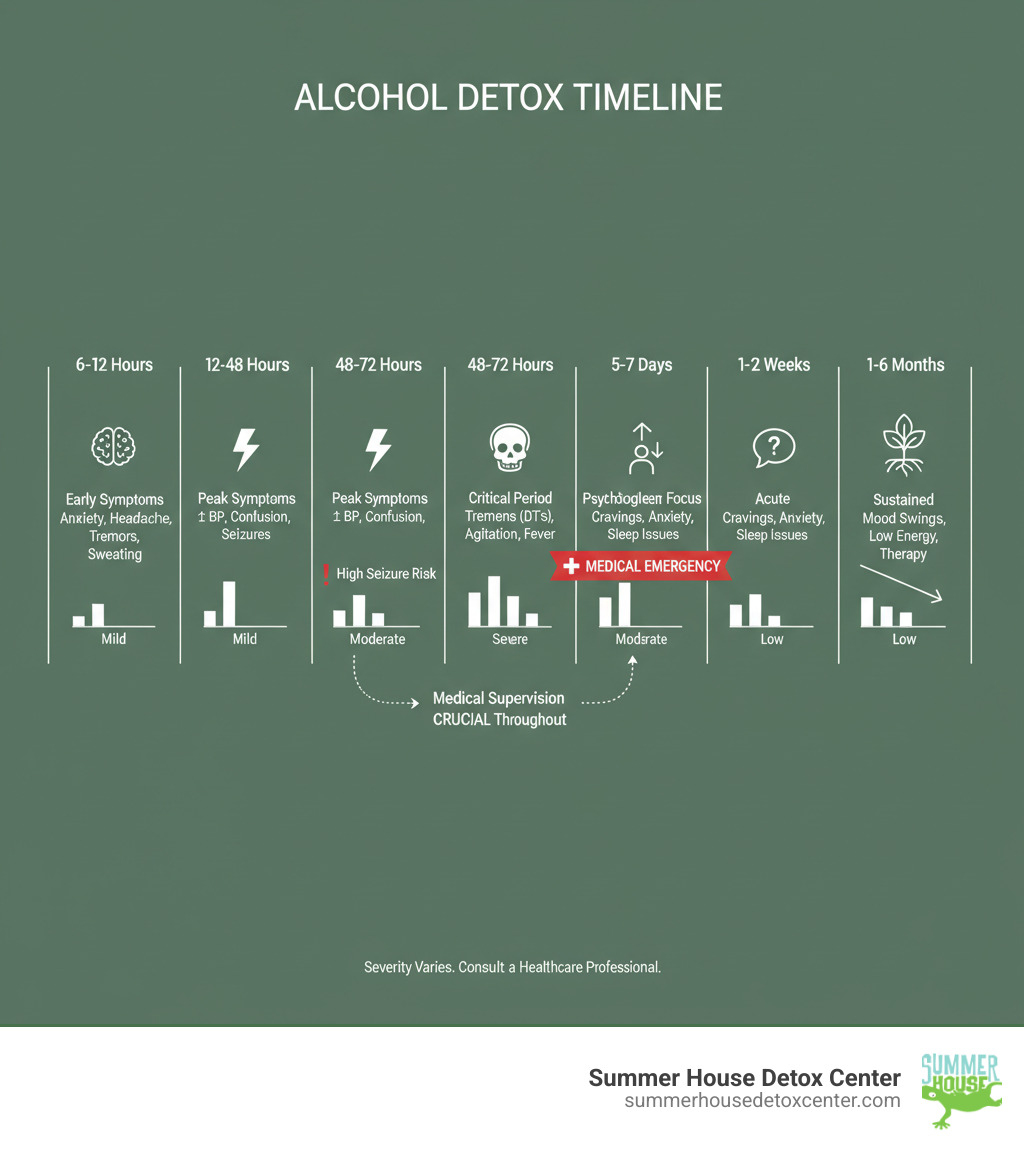
| Timeframe | What to Expect |
|---|---|
| 6-12 hours | Early symptoms begin: anxiety, headache, nausea, tremors, sweating |
| 12-48 hours | Symptoms peak: increased blood pressure, confusion, possible hallucinations, highest seizure risk |
| 48-72 hours | Most dangerous period: risk of Delirium Tremens (DTs), severe agitation, high fever |
| 5-7 days | Acute physical symptoms start to improve for most people |
| Weeks to months | Psychological symptoms like anxiety, cravings, and sleep issues may continue |
Alcohol withdrawal is a pivotal step toward recovery. Over 80% of people with alcohol use disorder experience withdrawal symptoms when they stop drinking. These symptoms can range from uncomfortable to life-threatening, which is why medical supervision is crucial.
When you stop drinking, your body, which has adapted to alcohol, must recalibrate. This process causes withdrawal symptoms. The severity and duration depend on your drinking history, overall health, and other individual factors.
With proper medical care, like that available in our Miami, Florida facility, you can detox safely and comfortably. Professional support dramatically reduces risks and helps manage symptoms as they arise.
Understanding Alcohol Withdrawal Syndrome (AWS)
When you stop heavy, prolonged drinking, your body can go through Alcohol Withdrawal Syndrome (AWS), which can be intense. Your brain has adapted to functioning with alcohol, and when it’s suddenly removed, your central nervous system goes into overdrive.
Think of your brain operating with a heavy blanket on it. When you suddenly remove the blanket (alcohol), everything underneath becomes overstimulated and hyperactive. This is AWS in a nutshell, and it’s why the alcoholism detox timeline involves such a range of symptoms.

What Causes Alcohol Withdrawal?
The root cause of withdrawal is alcohol dependence—a physical adjustment where your body needs alcohol to feel “normal.” Alcohol is a central nervous system (CNS) depressant. It suppresses brain activity by enhancing the calming neurotransmitter (GABA) and suppressing the excitatory one (glutamate).
To compensate, your brain reduces its natural GABA production and increases glutamate receptors. When you stop drinking, the depressant is gone, but your brain is still in this adapted, hyperexcitable state. This “rebound effect” is what causes withdrawal symptoms.
This is a profound physiological change based on the neurobiology of alcohol withdrawal. It’s not about willpower. Medical supervision, like that offered in our Miami, Florida facility, is crucial for managing this complex process, not just the discomfort.
Who Is at Risk for AWS?
Not everyone who drinks will experience severe withdrawal, but certain factors significantly increase your risk.
- Heavy, long-term drinking is the biggest predictor.
- Binge drinking patterns also increase the risk of severe symptoms.
- A previous withdrawal history is a major risk factor. Due to a “kindling” effect, each withdrawal can be more severe than the last.
- Co-occurring health conditions like liver problems, dehydration, and mental health disorders make withdrawal more dangerous. Age over 65 is also a risk factor.
More than 80% of people with alcohol use disorder experience withdrawal symptoms. The process is unpredictable; a mild past experience doesn’t guarantee a safe future one. This is why medically supervised detox in a Miami facility is vital for your safety, allowing for immediate intervention if complications arise.
The Stages of the Alcoholism Detox Timeline
Alcohol withdrawal follows a general alcoholism detox timeline, but your experience will be unique. This roadmap helps our Miami medical team anticipate and manage symptoms. The intensity of each stage depends on factors like your drinking history and overall health, which is why experienced medical support makes a profound difference.

Stage 1: 6-12 Hours After Last Drink (Early Symptoms)
The first, mildest symptoms of the alcoholism detox timeline typically begin 6-12 hours after the last drink. Common early symptoms include anxiety, headaches, insomnia, nausea, vomiting, hand tremors (“the shakes”), and excessive sweating. These are not just hangover symptoms; they are the first signs of physical dependence and withdrawal, signaling the need for professional care.
Stage 2: 12-48 Hours (Peak Symptoms & Risk of Hallucinations)
Between 12-48 hours, symptoms peak in intensity, and serious complications can emerge. Medical monitoring is critical during this stage. Symptoms can include increased blood pressure, a racing or irregular heartbeat, confusion, and disorientation. A more unsettling symptom is alcoholic hallucinosis (seeing, hearing, or feeling things that aren’t there). Though temporary, these can be frightening.
The risk of seizures is highest during this period (24-48 hours). These are medical emergencies requiring immediate intervention, which our Florida team is equipped to provide. The unpredictability of this stage is why detoxing alone is not recommended, as symptoms can escalate quickly.
Stage 3: 48-72+ Hours (Severe Symptoms & Delirium Tremens)
This is the most critical window of the alcoholism detox timeline. While many improve after 72 hours, those with severe dependence are at risk for the most dangerous complication: Delirium Tremens (DTs). DTs are a medical emergency that can emerge 48-72 hours after the last drink. Symptoms include high fever, severe agitation, extreme disorientation, and intense, persistent hallucinations. Heart rate and blood pressure can become dangerously unstable.
The reality is stark: untreated DTs have a fatality rate of 37%. With proper medical care, like that at Summer House Detox Center, the rate drops to 1% or less. Professional intervention saves lives.
Our Miami medical team is experienced in recognizing the early warning signs of DTs and intervening immediately. We monitor vital signs continuously during this critical period. For most, physical symptoms pass by day five, but safely navigating the first 72 hours is key. You should not face this dangerous period alone.
Why Medically Supervised Detox is the Safest Path
Choosing how and where to detox along the alcoholism detox timeline is a critical decision. While detoxing at home may seem appealing, our experience shows that medically supervised detox is the safest option, often preventing life-threatening emergencies. Alcohol withdrawal is unpredictable and can escalate rapidly. In a professional detox facility, you are monitored by an experienced team that knows when a symptom requires immediate intervention.

Dangers of Detoxing at Home
Detoxing at home without medical supervision is dangerous. The perceived safety of home is misleading and exposes you to fatal risks, including:
- Seizures: Can strike without warning, leading to injury or aspiration (inhaling vomit).
- Delirium Tremens (DTs): A medical crisis with a 37% fatality rate if untreated. Symptoms include high fever, extreme confusion, and cardiovascular instability. At home, emergency services may not arrive in time.
- Cardiovascular Stress: Withdrawal puts immense strain on the heart, potentially triggering heart attacks or arrhythmias.
- Dehydration and Electrolyte Imbalance: Vomiting and sweating can lead to severe dehydration, causing dangerous electrolyte imbalances that can affect the heart.
At home, there is no one to monitor for early signs of complications. Our team in Miami provides 24/7 observation to catch these signs before they become emergencies.
Medications Used to Manage Your Alcoholism Detox Timeline
A key benefit of medical detox is access to medications that make the process safer and more comfortable. The primary medications used are benzodiazepines (e.g., Valium, Ativan). They calm the overactive nervous system, preventing seizures, reducing anxiety, and aiding sleep.
We use symptom-triggered therapy, adjusting medication based on real-time assessments using tools like the CIWA-Ar scale. This personalized approach ensures you receive the right dose at the right time, without being over- or under-medicated.
Nutritional support is also vital. We provide thiamine (Vitamin B1) to prevent Wernicke’s encephalopathy, a serious but preventable form of brain damage. IV fluids and other supplements are also used to restore health.
Factors That Influence the Alcoholism Detox Timeline
The alcoholism detox timeline is not one-size-fits-all. It varies based on several factors, which is why our Miami team creates a personalized plan for each client:
- Amount, Frequency, and Duration: Heavier, longer-term drinking leads to more intense withdrawal.
- Age and Physical Health: Older age and co-existing health issues (liver disease, heart problems) increase risks.
- Co-occurring Mental Health Disorders: Conditions like anxiety or depression can complicate withdrawal.
- Previous Detox Experiences: The “kindling effect” can make subsequent withdrawals more severe.
- Genetics: Your genetic makeup can influence your vulnerability to severe symptoms.
At Summer House Detox Center, we consider all these factors to create a unique detox plan built around you, your history, and your health.
Life After Detox: Your Recovery Journey in Florida
Completing your alcoholism detox timeline in Florida is a huge relief, but it’s the beginning of your recovery. Detox addresses the physical dependence on alcohol, safely managing acute withdrawal. It’s a critical first step, but it doesn’t treat the underlying psychological addiction. That’s the role of long-term treatment.

Detox vs. Long-Term Treatment
Long-term treatment focuses on the psychological aspects of addiction. Therapies like Cognitive Behavioral Therapy (CBT) and Dialectical Behavior Therapy (DBT) help you develop coping skills, manage triggers, and address co-occurring mental health issues.
Florida offers many aftercare options to support your recovery. These resources, available in Miami and throughout South Florida, are vital for long-term success:
- Therapy: Individual and group sessions provide a safe space to develop new skills.
- Sober Living Environments: A structured, supportive bridge between detox and independent living.
- Support Groups: Groups like Alcoholics Anonymous or SMART Recovery offer peer support and a sense of community.
Post-Acute Withdrawal Syndrome (PAWS)
After the acute alcoholism detox timeline, you may experience Post-Acute Withdrawal Syndrome (PAWS). These are lingering psychological and emotional symptoms that can last for weeks or months as your brain continues to heal. PAWS symptoms include mood swings, anxiety, fatigue, sleep disturbances, cravings, and difficulty concentrating.
Understanding that PAWS is a normal part of recovery is important. Long-term treatment programs available here in Florida provide coping strategies to manage these symptoms and prevent relapse.
The Lasting Benefits of Sobriety
While the alcoholism detox timeline is challenging, the long-lasting rewards of sobriety are profound. Benefits include:
- Improved sleep: Achieve deep, restorative rest.
- Better hydration: Proper hydration improves energy and skin health.
- Reduced calorie intake: Eliminating empty alcohol calories supports weight management. You could avoid about 12,000 calories or more in just one month.
- Financial savings: You could be saving hundreds of dollars each month.
- Lowered blood pressure: See a noticeable decrease within three weeks, reducing heart disease and stroke risk.
- Improved liver function: Your liver begins to heal, with inflammation subsiding and function improving.
- Restored relationships: Rebuild trust and create genuine connections with loved ones.
- Mental clarity: Experience greater focus and a more authentic sense of happiness.
Frequently Asked Questions about Alcohol Detox
We know that thinking about detox can bring up a lot of questions. Here are some of the questions we hear most often from people considering this brave first step in Miami or elsewhere in Florida.
How long do physical alcohol withdrawal symptoms last?
For most people, acute physical symptoms along the alcoholism detox timeline begin within 6-12 hours, peak between 24-72 hours, and largely resolve within 5-7 days. However, psychological symptoms like anxiety and cravings (known as Post-Acute Withdrawal Syndrome or PAWS) can persist for weeks or months. This is a normal part of the brain’s healing process and highlights the need for ongoing support after detox.
Is it dangerous to quit alcohol “cold turkey”?
Yes. For those with significant physical dependence, quitting “cold turkey” without medical supervision can be fatal. Abruptly stopping can cause seizures (peaking at 24-48 hours) and Delirium Tremens (DTs) (developing at 48-72 hours). DTs are a medical emergency with a 37% untreated fatality rate, leading to cardiac arrest or brain injury.
Withdrawal is unpredictable and can be more severe with each attempt (the kindling effect). A manageable situation can quickly become life-threatening without medical help. At our Miami facility, our medical team provides 24/7 monitoring and medication to manage withdrawal safely. There is no reason to risk your life when professional care is available right here in Florida.
What is the difference between alcohol withdrawal and a hangover?
While they can feel similar, a hangover and alcohol withdrawal are fundamentally different.
A hangover is a short-term reaction to a single episode of heavy drinking, caused by dehydration and inflammation. It resolves within about 24 hours and is not life-threatening.
Alcohol withdrawal, on the other hand, is a sign of physical dependence after prolonged, heavy use. When alcohol is removed, the nervous system goes into overdrive, causing severe and potentially life-threatening symptoms like seizures and DTs. These symptoms follow the alcoholism detox timeline, last for days, and require medical intervention.
If your symptoms are worse than a typical hangover or last longer than 24 hours, it’s a sign of withdrawal. Our team at Summer House Detox Center understands the difference and can provide the necessary medical care for a safe detox.
Begin Your Safe and Comfortable Detox in Miami
The alcoholism detox timeline can seem overwhelming, but you don’t have to face it alone. Choosing medically supervised detox is a courageous act of self-care. At Summer House Detox Center in Miami, our team understands your journey, as many of us have walked this path ourselves.
We provide personalized, medically supervised care with comfort and dignity. Our team monitors you closely, adjusting medications as needed, because we see you as a person with a future worth fighting for.
Safe, professional detox is the essential foundation for lasting sobriety. Our experienced staff, some in recovery themselves, know how to guide you through this process.
Your path to healing can start today in South Florida. Contact us for a confidential consultation and to learn more about our Miami detox programs. You’ll find no judgment, only support from people who care.
Taking the first step is brave. Let us guide you through your alcoholism detox timeline and toward the brighter future that awaits.
