
Understanding Alcohol Withdrawal: The First Step to Recovery
Alcoholism and detox are deeply connected—when someone who is physically dependent on alcohol stops drinking or drastically reduces their intake, their body reacts with withdrawal symptoms that can range from uncomfortable to life-threatening.
Quick Answer: What You Need to Know About Alcoholism and Detox
- Physical Dependence: Heavy, prolonged alcohol use changes brain chemistry, making your body dependent on alcohol to function normally
- Withdrawal Symptoms: Can begin 6-12 hours after your last drink and include anxiety, tremors, sweating, nausea, seizures, and in severe cases, delirium tremens (DTs)
- Medical Supervision is Critical: Alcohol withdrawal can be fatal—roughly 10% experience severe symptoms, and DTs has a 1-4% mortality rate
- Professional Detox Programs: Provide 24/7 medical monitoring, medications to ease symptoms, and a safe environment for recovery
- Location Matters: In Miami and throughout Florida, specialized detox centers offer immediate, compassionate care custom to your needs
If you’re reading this because you’re scared to stop drinking, you’re not alone. More than 80% of people with an Alcohol Use Disorder (AUD) experience withdrawal symptoms when they try to quit. The fear is real—but so is the solution.
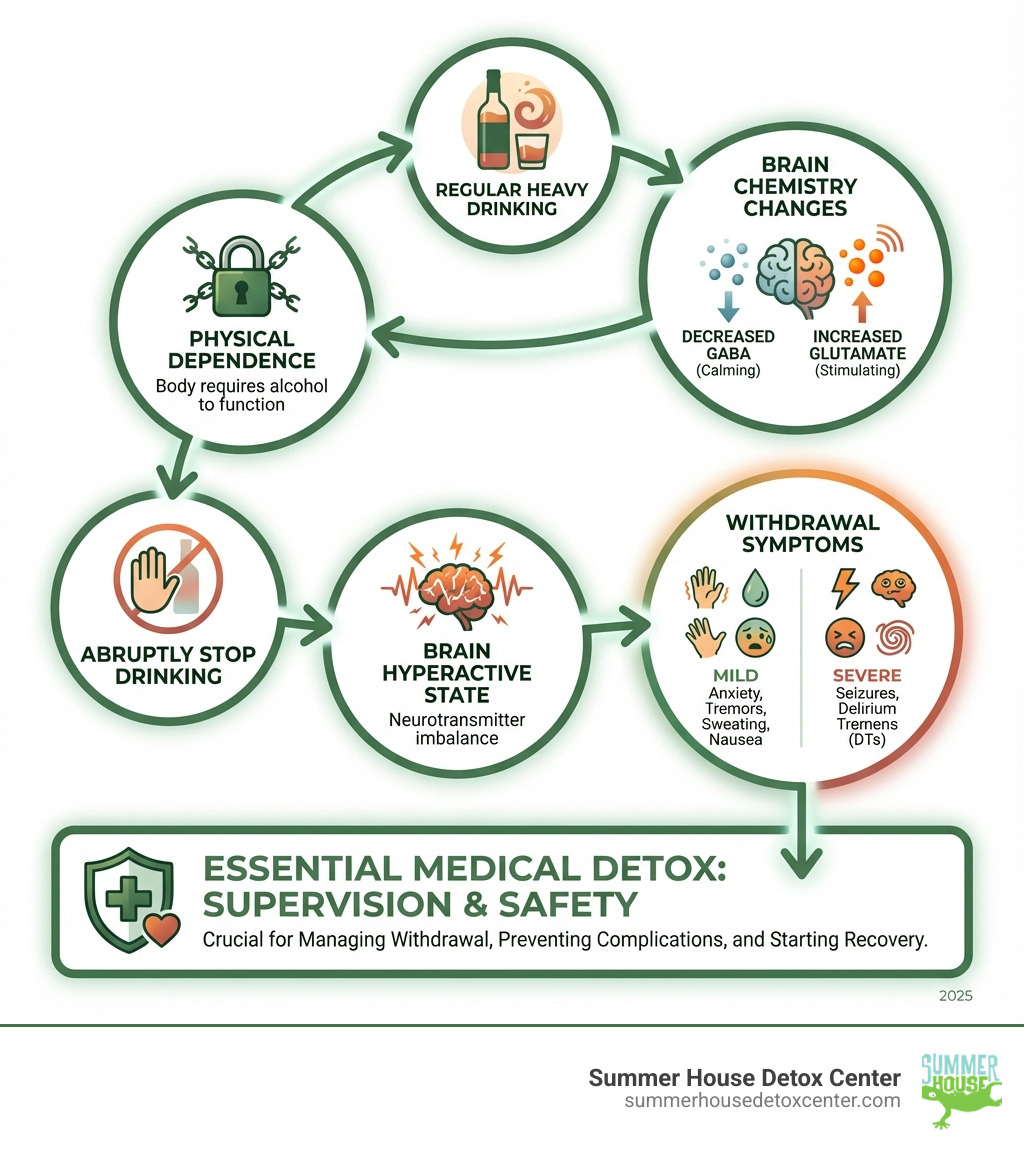
Alcohol Use Disorder is defined by the National Institute on Alcohol Abuse and Alcoholism (NIAAA) as consuming five or more drinks on any day or 15 or more per week for men, or four or more drinks on any day or eight or more per week for women. When drinking at these levels becomes regular, your brain’s chemistry changes. Alcohol depresses your Central Nervous System (CNS) by increasing the calming neurotransmitter GABA and decreasing the stimulating neurotransmitter glutamate. Over time, your brain compensates by producing less GABA and more glutamate. When you suddenly stop drinking, your brain is left in a hyperactive state—which causes withdrawal.
The good news? You don’t have to face this alone. In Miami and throughout South Florida, professional detox programs provide the medical supervision, comfort, and dignity you deserve during this critical first step toward sobriety.
Key terms for alcoholism and detox:
The Science and Symptoms of Alcohol Withdrawal Syndrome (AWS)
Understanding what happens inside your body when you stop drinking is crucial. Alcohol Withdrawal Syndrome (AWS) isn’t just a bad hangover; it’s a complex physiological response to the sudden absence of a substance your body has come to rely on.
What Causes Alcohol Withdrawal?
At its core, alcohol is a central nervous system (CNS) depressant. This means it slows down brain activity. When we drink heavily and consistently, our brains try to compensate for this constant “slowing down.” It does this by adjusting the balance of key neurotransmitters—the chemical messengers in our brain.
Specifically, alcohol improves the effects of gamma-aminobutyric acid (GABA), an inhibitory neurotransmitter that calms nerve activity, and suppresses glutamate, an excitatory neurotransmitter that increases nerve activity. Think of it like your brain constantly hitting the brakes while also easing off the gas.
When alcohol is suddenly removed, your brain is left in a state of neuroadaptation. It has adapted to the presence of alcohol, so without it, your CNS becomes overexcited. The brakes are suddenly released, and the gas pedal is floored! This brain hyperexcitability is what causes the wide range of uncomfortable and potentially dangerous withdrawal symptoms.
While the “kindling effect”—the idea that successive withdrawal episodes increase in severity—is a hypothesis, current clinical evidence doesn’t fully support it as a sole recommendation. However, we do know that certain factors significantly increase the risk of experiencing severe alcohol withdrawal:
- Heavy daily alcohol use: The more you drink, and the longer you’ve been drinking, the higher the risk.
- Age over 65: Older adults may have more fragile systems and comorbidities.
- History of delirium tremens or seizures: If you’ve had severe withdrawal before, you’re more likely to have it again.
- Coexisting physical or mental health conditions: Conditions like pancreatitis, cirrhosis, heart disease, or anxiety disorders can complicate withdrawal.
- Dehydration and electrolyte imbalances: Chronic alcohol use can lead to these, further exacerbating withdrawal symptoms.
- Brain lesions or abnormal liver function: These can impact how your body processes toxins and recovers.
- Use of other substances or medications: Polysubstance use can make detox more complex.
Alcohol Withdrawal Timeline and Symptoms
The timeline for alcohol withdrawal symptoms can vary greatly depending on individual factors, but there’s a general progression we often observe. These are averages, and your experience may differ.
-
6-12 Hours After Last Drink:
Mild symptoms typically begin, such as:- Anxiety and nervousness
- Headache
- Nausea and vomiting
- Insomnia
- Excessive sweating
- Tremors (shakiness)
- Heart palpitations
- Increased blood pressure and heart rate
-
12-24 Hours After Last Drink:
Some individuals may experience alcoholic hallucinosis. This involves visual, auditory, or tactile hallucinations (seeing, hearing, or feeling things that aren’t there) and paranoia, often without significant disorientation. These usually resolve within 72 hours. -
24-48 Hours After Last Drink:
This is often when symptoms peak, and the risk of more severe complications increases significantly.- Worsening of initial symptoms
- Increased agitation and confusion
- Seizure risk is highest during this window. These can be generalized tonic-clonic seizures, often referred to as “rum fits.”
-
48-72 Hours After Last Drink:
The most severe form of withdrawal, Delirium Tremens (DTs), may appear. DTs is a medical emergency characterized by:- Profound confusion and disorientation
- Severe agitation
- High fever
- Rapid heart rate (tachycardia)
- Hypertension (high blood pressure)
- Intense, often terrifying, hallucinations and delusions
For most people with mild to moderate withdrawal, symptoms typically begin to resolve between 24 to 72 hours. However, some individuals can experience protracted withdrawal, where symptoms like anxiety, insomnia, and mood disturbances can persist for weeks or even months.
At our facility in Miami, we use assessment tools like the Clinical Institute Withdrawal Assessment for Alcohol, Revised (CIWA-Ar) scale to objectively measure the severity of your withdrawal symptoms. This helps our medical team tailor your treatment plan and ensure your comfort and safety throughout the detox process.
The Risks of Detoxing at Home: Why Medical Supervision is Crucial
We cannot stress this enough: attempting to detox from alcohol at home, especially if you’re a heavy or long-term drinker, can be incredibly dangerous and potentially fatal. When your body is accustomed to significant alcohol intake, suddenly stopping can trigger a cascade of severe and life-threatening physiological responses that require immediate medical attention.

Unmanaged withdrawal can lead to a host of serious consequences:
- Seizures: As mentioned, the risk of seizures is highest 24-48 hours after your last drink. Without medication to stabilize your brain, these can be severe and lead to injury or other complications.
- Delirium Tremens (DTs): This is the most severe form of alcohol withdrawal and a true medical emergency. With a historical mortality rate as high as 20%, even with modern critical care, DTs still carries a mortality rate of 1% to 4%. Symptoms include extreme confusion, hallucinations, and severe autonomic instability, which can lead to cardiovascular collapse.
- Dehydration and Electrolyte Imbalance: Alcohol misuse often leads to chronic dehydration and imbalances in essential electrolytes like magnesium and phosphorus. During withdrawal, persistent vomiting and sweating can worsen these imbalances, leading to dangerous heart rhythms or refeeding syndrome if not properly managed.
- Wernicke Encephalopathy: Chronic alcohol use can deplete your body of vital nutrients, particularly Thiamine (Vitamin B1). Without proper supplementation, especially during detox, this can lead to Wernicke encephalopathy, a serious neurological disorder characterized by confusion, eye movement abnormalities, and ataxia (loss of coordination).
“Cold Turkey” and Unsupervised Detox: The Dangers of Going It Alone
The romanticized idea of going “cold turkey” from alcohol, as often depicted in media, is a perilous myth. For someone with physical dependence, abruptly stopping can throw the body into a state of shock, leading to the severe risks we’ve just discussed.
Even attempting to self-taper at home, without medical guidance, is fraught with challenges. It’s incredibly difficult to accurately reduce your alcohol intake in a safe, controlled manner, and the temptation to revert to previous drinking patterns is often overwhelming. The lack of medical monitoring means that if severe symptoms develop, there’s no immediate professional help. This can lead to inaccurate dose reduction, prolonged psychological distress, and a higher risk of complications.
Caring for someone going through alcohol withdrawal at home, even with mild symptoms, requires immense vigilance and a clear understanding of when professional help is needed. While creating a safe, calm, and supportive environment is important—removing all alcohol from the home, ensuring proper hydration and light meals, and having a trusted person present—it is crucial to recognize that home detox is simply unsafe for anyone with moderate to severe physical dependence.
When to Call 911: Recognizing a Medical Emergency in Florida
If you or a loved one in Miami or anywhere in Florida is experiencing any of the following symptoms during alcohol withdrawal, do not hesitate—call 911 immediately. These are signs of a medical emergency that requires urgent professional intervention:
- Severe confusion or disorientation
- Persistent or worsening hallucinations (seeing, hearing, or feeling things that aren’t there)
- Any type of seizure activity
- Chest pain or pressure
- Trouble breathing
- High fever (101°F or higher)
- Persistent or bloody vomiting
- Irregular or very rapid heartbeat
Our Florida emergency services are equipped to handle these critical situations. Immediate action can be the difference between a serious complication and a safe recovery.
Professional Alcoholism and Detox: Your Safest Path Forward
The safest and most effective way to steer the challenging initial phase of alcoholism and detox is through a professional, medically supervised program. At Summer House Detox Center in Miami, we provide a haven where medical intervention meets compassionate care, ensuring your journey to sobriety begins with safety, comfort, and dignity.

Our programs offer 24/7 monitoring by experienced medical staff, some of whom are in recovery themselves, understanding the courage it takes to begin this journey. We focus on stabilizing your physical and mental health while minimizing discomfort, allowing you to focus on healing. For more detailed information about our services, please visit our page on alcohol detox services.
Medically Supervised Alcohol Detox: The Gold Standard for Safety
A medically supervised detox is considered the gold standard because it prioritizes your well-being above all else. Here’s what makes it so critical:
- Evaluation and Monitoring: Upon admission, our team conducts a thorough evaluation to understand your medical history, drinking patterns, and any co-occurring conditions. Throughout your stay, your vital signs are continuously monitored, and our staff is trained to recognize and respond to any emerging symptoms, ensuring a safe withdrawal process.
- Nutritional Support and Hydration: Chronic alcohol use can lead to severe nutritional deficiencies, particularly of Thiamine (Vitamin B1), which is crucial for brain function. We provide essential vitamin supplements, including Thiamine and folate, and ensure adequate hydration to prevent complications like Wernicke encephalopathy and electrolyte imbalances.
- Preventing Complications: Our medical team is prepared to prevent and manage severe withdrawal complications like seizures and Delirium Tremens. This proactive approach significantly reduces risks that are present in unsupervised detox.
- Managing Co-occurring Disorders: Many individuals struggling with alcoholism and detox also experience co-occurring mental health conditions such as anxiety, depression, or PTSD. Our integrated approach allows us to manage these conditions alongside your detox, providing a more holistic and effective treatment experience.
- Individualized Treatment Plans: We believe in personalized care. Your detox plan is custom to your specific needs, considering factors like the severity of your dependence, your physical health, and your emotional state. This ensures you receive the most appropriate and effective care.
What to Expect from a Professional Detox Program
When you choose a professional detox program in Miami, you’re choosing a structured, supportive environment designed to ease your transition away from alcohol.
- 24/7 Care and Support: You’ll have round-the-clock access to medical professionals and support staff who are there to monitor your progress, administer medications, and provide comfort.
- Higher Completion Rates: Studies have shown that individuals in inpatient settings have significantly higher completion rates for detoxification compared to those attempting outpatient or unsupervised detox. This provides a strong foundation for long-term recovery.
- Flexibility for Individual Needs: While inpatient detox is often recommended for moderate to severe cases, outpatient options may be considered for those with mild withdrawal symptoms, a stable home environment, and strong social support. However, inpatient care is necessary for individuals at high risk for life-threatening complications, those with significant medical conditions, or those in unstable home situations. Our team in Florida can help assess the appropriate level of care for you.
- Custom Programs for Miami and Florida Residents: Our facility is specifically designed to cater to the needs of individuals in Miami and across Florida, offering a serene and healing environment close to home, allowing family involvement where appropriate.
Medications and Supportive Care in a Professional Setting
The use of medication is a cornerstone of safe, comfortable, and effective alcohol detox. Our medical team carefully administers medications to manage withdrawal symptoms and prevent complications.
- Benzodiazepines: These are the most commonly used medications for alcohol withdrawal. Drugs like diazepam (Valium) or lorazepam (Ativan) help to calm the overactive CNS, reducing anxiety, tremors, and the risk of seizures. They are administered in a controlled, tapering schedule to ensure safety.
- Phenobarbital: In some cases, especially for severe withdrawal or when benzodiazepines are insufficient, phenobarbital may be used. It can act as a rescue therapy for severe alcohol withdrawal, helping to manage symptoms effectively.
- Supportive Medications: Other medications, such as anticonvulsants, beta-blockers, and alpha-adrenergic agonists, may be used to target specific symptoms like seizures, high blood pressure, or rapid heart rate. We also ensure you receive essential vitamins and fluids to support your body’s recovery.
- Cognitive Behavioral Therapy (CBT): While the primary focus of detox is physical stabilization, we also begin to lay the groundwork for long-term recovery. This includes introducing therapeutic elements like CBT, which helps you identify and challenge unhelpful thoughts and behaviors related to alcohol.
- Holistic Therapies: Our comprehensive approach often includes holistic therapies to support your overall well-being.
- Relapse Prevention Planning: Even during detox, we begin discussions about what comes next, helping you understand the importance of ongoing treatment and starting to build a personalized relapse prevention plan.
Beyond Detox: Building a Foundation for Lasting Sobriety
Completing detox is a monumental achievement, but it’s just the first step on the path to lasting sobriety. Think of it as clearing the runway before takeoff. The real journey—learning to fly—happens in the stages that follow. Our goal at Summer House Detox Center in Miami is to not only guide you safely through withdrawal but also to empower you with the tools and motivation for long-term recovery.
The Primary Goals of an Alcohol Detox Program
While the immediate focus is on managing acute withdrawal, a comprehensive alcohol detox program has several overarching goals:
- Achieve a Substance-Free State: Safely and comfortably remove all alcohol from your body.
- Relieve Withdrawal Symptoms: Minimize discomfort and prevent severe complications through medical intervention.
- Treat Comorbid Conditions: Address any co-occurring physical or mental health issues that may complicate recovery.
- Prepare for Ongoing Treatment: Build motivation and readiness for the next steps in your recovery journey. Detox is a medical intervention for withdrawal, not a complete addiction treatment in itself.
- Patient Education: Equip you with knowledge about alcoholism and detox, the recovery process, and available resources.
Transitioning to Long-Term Recovery After Alcoholism and Detox
The period immediately following detox is critical for establishing a solid foundation for sobriety. Without continued treatment, about one-third to one-half of patients who complete detoxification return to alcohol abuse within 6 months. That’s why we emphasize the importance of transitioning into ongoing care.
- Referrals to Ongoing Treatment and Therapy: We work closely with trusted rehabilitation centers and therapists throughout Florida to ensure a seamless transition to the next phase of your recovery. This might include inpatient rehab, outpatient programs, or individual therapy custom to your needs.
- Support Groups in Florida: Connecting with others who understand your struggles is invaluable. We encourage participation in self-help groups like Alcoholics Anonymous (AA) and SMART Recovery, which have vibrant communities across Florida. For family members, Al-Anon offers crucial support.
- Family Therapy: Alcoholism impacts the entire family. Family therapy can help heal relationships, improve communication, and build a strong support system at home.
- Sober Living Options in Florida: For some, a structured environment after detox, such as a sober living home, can provide a supportive bridge before returning to independent living. We can help connect you with reputable options in the Miami area and beyond.
- Building a Support Network: Long-term recovery thrives on connection. We help you identify and cultivate a strong network of supportive friends, family, and peers who can encourage you on your path to sobriety.
Frequently Asked Questions About Alcohol Detox
We understand you likely have many questions about alcoholism and detox. Here are answers to some of the most common concerns we hear from individuals and their families in Miami and throughout Florida.
How long does alcohol detox take?
The acute phase of alcohol withdrawal, where symptoms are most intense, typically lasts 3 to 7 days. Mild symptoms can begin within 6-12 hours of the last drink, peak between 24-72 hours, and then gradually subside. However, some individuals may experience protracted withdrawal symptoms (like anxiety or insomnia) that can linger for weeks or even months. The exact duration depends on several factors, including the severity and length of alcohol use, individual body chemistry, and the presence of co-occurring health conditions.
Can you die from alcohol withdrawal?
Yes, absolutely. Alcohol withdrawal can be life-threatening, particularly due to the risk of Delirium Tremens (DTs) and severe seizures. While the mortality rate for DTs has significantly decreased with modern medical care, it still ranges from 1% to 4%. Unmanaged withdrawal can also lead to dangerous cardiovascular complications, severe dehydration, and electrolyte imbalances. This is why medical supervision during detox is not just recommended but often crucial for safety.
How much do you have to drink to get withdrawal symptoms?
There isn’t an exact amount of alcohol that guarantees withdrawal symptoms, as it varies greatly from person to person. Factors like the duration of drinking, frequency, and quantity consumed all play a role, as do individual body chemistry, age, and genetics. However, we know that more than 80% of those with an Alcohol Use Disorder (AUD) may experience withdrawal symptoms when they stop or reduce their drinking. This includes individuals who engage in heavy daily drinking as well as those who binge drink regularly. If you’ve been consuming alcohol at or above the NIAAA’s heavy drinking definitions (5+ drinks/day or 15+/week for men; 4+ drinks/day or 8+/week for women), you are at significant risk. It’s always best to consult with a medical professional if you’re concerned about alcohol dependence.
Start Your Recovery Journey in South Florida
Taking the first step toward sobriety is an act of immense courage, and you don’t have to face it alone. At Summer House Detox Center, we are dedicated to providing personalized, medically supervised detox with a focus on your comfort, dignity, and long-term recovery. Located in Miami, Florida, our facility offers a supportive and healing environment where our experienced staff, many of whom are in recovery themselves, understand your journey.
We believe that everyone deserves a chance at a healthy, sober life. Let us help you steer the complexities of alcoholism and detox safely and effectively.
Begin your path to recovery with our alcohol detox program today.
