
Understanding the Challenges of Alcohol Withdrawal
Alcohol withdrawal management is the medical process of safely guiding someone through the symptoms that occur when they stop or reduce drinking after prolonged, heavy use. This process requires professional supervision because withdrawal can range from uncomfortable to life-threatening.
Key Facts About Alcohol Withdrawal Management:
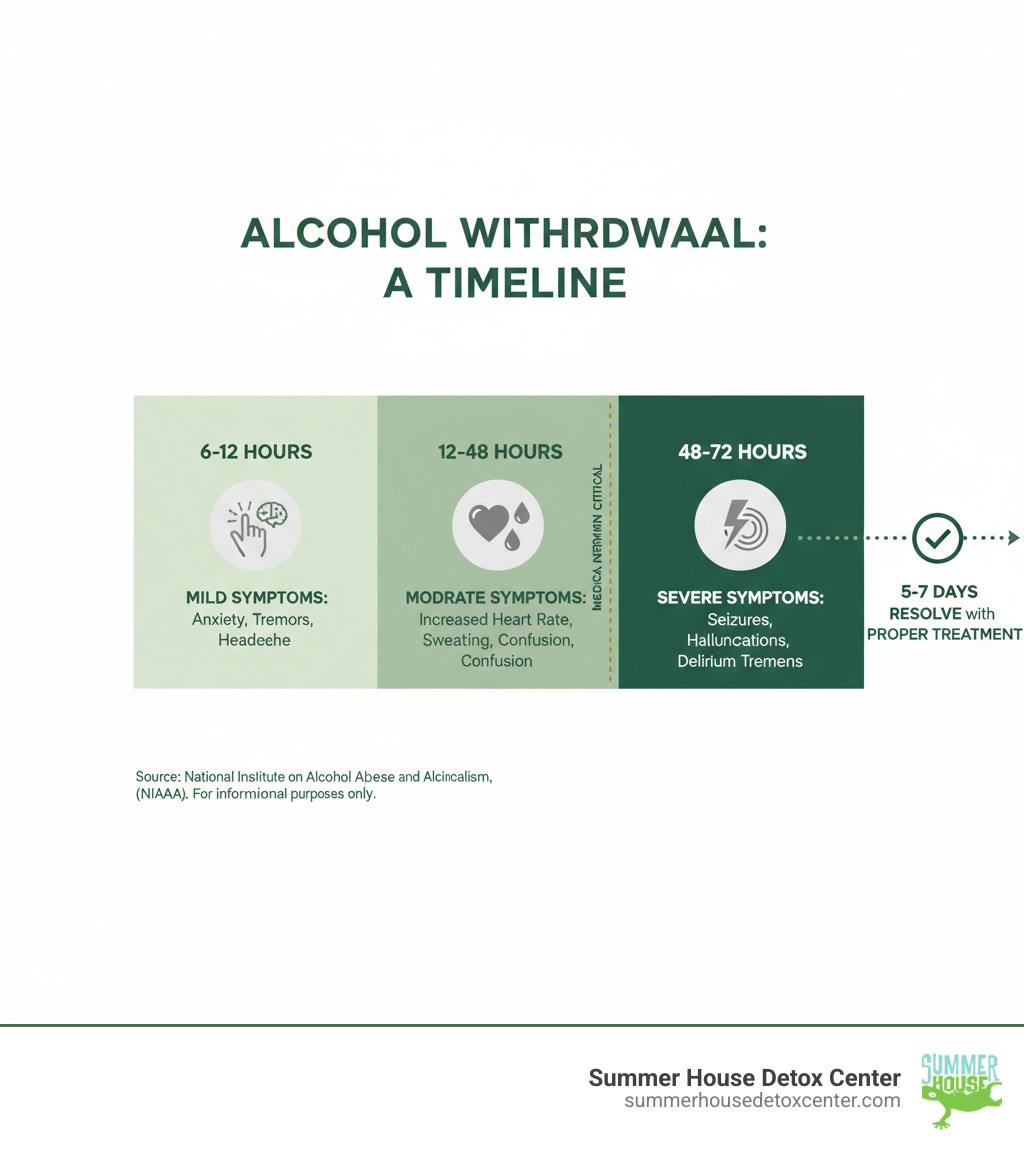
- Timeline: Symptoms typically begin 6-24 hours after the last drink and peak around 72 hours.
- Severity Levels: Mild (anxiety, tremors), Moderate (increased heart rate, sweating), Severe (seizures, delirium tremens).
- Treatment Setting: Moderate to severe cases require inpatient medical supervision with 24/7 monitoring.
- First-Line Treatment: Benzodiazepines are the preferred medication to prevent complications.
- Essential Supplements: Thiamine (Vitamin B1), folate, and multivitamins prevent serious complications.
- Success Factors: Medical supervision, proper medication, nutritional support, and continuing care planning.
When you drink heavily over time, your brain’s chemistry adapts. Alcohol is a depressant, so your brain increases its own excitatory signals to compensate. When you suddenly stop drinking, your brain is left in an overexcited state, causing the physical and psychological symptoms of withdrawal.
Approximately 50% of people with alcohol use disorder experience withdrawal symptoms. While only 3-5% progress to the most severe form, delirium tremens (DTs), this condition can be fatal without proper care. With modern medical management, the mortality rate for DTs has dropped from as high as 20% to around 1%—but only when people receive professional treatment.
In Florida, where Summer House Detox Center serves the Miami community, many individuals struggle with the fear of withdrawal. These fears are valid, but they’re also why professional help exists. The good news is that alcohol withdrawal is highly manageable with the right medical support. This guide will walk you through how we make this difficult first step as safe and dignified as possible.
Alcohol withdrawal management terms made easy:
Assessing Withdrawal Severity: From Mild to Severe
When you arrive at Summer House Detox Center in Miami, our first step is a comprehensive assessment. We talk about your drinking patterns, previous attempts to quit, and any medical conditions you have. This helps us create a personalized alcohol withdrawal management plan to keep you safe and comfortable.

To objectively measure your symptoms, we use the CIWA-Ar scale (Clinical Institute Withdrawal Assessment for Alcohol, Revised). This tool scores ten common symptoms, like tremors, sweating, and anxiety, to determine the severity of your withdrawal.
- Mild Withdrawal (CIWA-Ar < 10): You might feel anxious, have trouble sleeping, or experience shakiness and an upset stomach. It’s uncomfortable but not immediately dangerous.
- Moderate Withdrawal (CIWA-Ar 10-18): Symptoms intensify. Your heart may race, you might sweat profusely, and you could feel significant agitation or confusion.
- Severe Withdrawal (CIWA-Ar > 18): This is a medical emergency. You may become disoriented or experience hallucinations. The risk of seizures and delirium tremens is high, demanding intensive medical care.
Factors like being over 65, a history of withdrawal seizures, co-existing health problems, and dehydration increase your risk for severe withdrawal. Our team in Miami considers all these factors to provide proactive care.
Understanding the ‘Kindling’ Phenomenon
Repeated episodes of alcohol withdrawal can make each subsequent one more severe. This is called the “kindling” phenomenon. Each time you detox, your brain becomes more sensitive, causing symptoms to start faster and hit harder. This increases the risk of serious complications like seizures. Research on the kindling model highlights why getting comprehensive, medically supervised alcohol withdrawal management is so important, especially if you’ve tried to quit before.
Preventing and Managing Complications
Our primary goal is to prevent dangerous complications. Here’s what we watch for and how we prevent it:
- Withdrawal Seizures: These typically occur 8-48 hours after the last drink. We use medication to prevent them and are prepared to respond immediately if one occurs.
- Alcoholic Hallucinosis: This involves seeing or hearing things that aren’t there, usually 12-24 hours into withdrawal. While unsettling, it’s manageable with medical support.
- Delirium Tremens (DTs): The most feared complication, DTs can appear 48-72 hours after the last drink. It involves severe confusion, agitation, fever, and terrifying hallucinations. Before modern medicine, DTs were fatal in up to 20% of cases. With professional medical intervention, that rate drops to about 1%. This statistic alone shows why you should never attempt to detox alone.
- Wernicke’s Encephalopathy: A neurological emergency caused by a severe thiamine (Vitamin B1) deficiency. We prevent this with immediate and ongoing thiamine supplementation, which is a standard part of our protocol.
- Dehydration and Electrolyte Imbalances: Withdrawal can deplete your body of fluids and essential minerals like magnesium, increasing seizure risk and affecting heart rhythm. We monitor your levels and use IV fluids and supplements to maintain balance, which is especially critical in Miami’s warm climate.
A Closer Look at Alcohol Withdrawal Management
At Summer House Detox Center in Miami, our approach to alcohol withdrawal management is built on three core principles aligned with experts like the American Society of Addiction Medicine:
- Provide a Safe Withdrawal: Your physical safety is our top priority. Our medical team is on-site 24/7 to monitor you and manage symptoms before they become complications.
- Ensure Humane and Dignified Care: We treat you with compassion and respect in a private, comfortable setting. Our staff understands the fear and exhaustion of withdrawal, and some have been through it themselves.
- Prepare You for Long-Term Treatment: Detox is the first step. We stabilize you physically and emotionally so you are ready to engage in the deeper work of recovery.

The Role of Benzodiazepines in Alcohol Withdrawal Management
Benzodiazepines are the first-line treatment for alcohol withdrawal because they are proven to prevent the most dangerous complications, like seizures and delirium tremens. They work by calming the overexcited central nervous system. We typically use a symptom-triggered regimen, providing medication based on your assessed symptoms (using the CIWA-Ar scale). This personalized approach often means less total medication and a more comfortable experience.
We choose the specific medication based on your health. Long-acting benzodiazepines like Diazepam (Valium) provide smooth, sustained relief. For older patients or those with liver issues, short-acting agents like Lorazepam (Ativan) may be safer.
Adjunctive Medications and Supportive Care
While benzodiazepines are the cornerstone, we use other medications to manage specific symptoms:
- Beta-blockers and alpha-agonists (like Clonidine) can help calm a racing heart, high blood pressure, and sweating.
- Anticonvulsants like Gabapentin can also be used to manage withdrawal and may help reduce cravings long-term.
Supportive care is just as vital. We provide a quiet, calm environment where you can rest. Our compassionate staff is always available to offer support and encouragement.
The Critical Role of Nutrition and Supplementation
Chronic alcohol use depletes the body of essential nutrients, making withdrawal more dangerous. Nutritional support is a non-negotiable part of our alcohol withdrawal management protocol.
- Thiamine (Vitamin B1) is the most critical supplement. A deficiency can lead to Wernicke’s encephalopathy, a serious and potentially permanent form of brain damage. We administer thiamine to every patient to prevent this.
- Folate, multivitamins, and electrolytes (like magnesium) are also replenished to support your body’s healing process and reduce risks like seizures and heart problems.
- Hydration is essential, especially in Miami’s climate. We ensure you get enough fluids, often through IV therapy, to counteract dehydration from withdrawal symptoms.
Choosing the Right Level of Care: Inpatient Detox at Summer House Detox Center
Deciding where to detox is one of the most critical choices you’ll make. At Summer House Detox Center in Miami, we help you understand why the right setting for alcohol withdrawal management is so important for your safety and success.

For anyone with a moderate to severe alcohol use disorder, a history of withdrawal complications, or co-occurring health issues, inpatient detoxification is the safest and most effective option.
Why Inpatient Detoxification is Recommended
Inpatient detox is the gold standard for alcohol withdrawal management for several key reasons:
- 24/7 Medical Supervision: Alcohol withdrawal can become life-threatening in an instant. Our doctors and nurses in the Miami, FL area are with you around the clock to monitor your vitals, administer medication, and intervene immediately if complications arise. This constant care is something you cannot replicate at home.
- Managing Co-Occurring Issues: Many people also struggle with conditions like diabetes, high blood pressure, or mental health disorders like anxiety and depression. In an inpatient setting, our interdisciplinary team can manage all aspects of your health simultaneously.
- A Safe and Supportive Environment: Our Miami facility provides a calm, private, and dignified space where you can focus entirely on healing, away from the triggers of your daily life. You’ll be supported by a team of professionals, some of whom are in recovery themselves and understand your journey personally.
Outpatient Detoxification: Risks and Limitations
We must be clear: outpatient detox is not recommended for most people seeking help for alcohol withdrawal. The process is unpredictable, and what starts as mild anxiety can quickly escalate to a medical emergency like a seizure or delirium tremens.
Attempting to detox at home puts you and your loved ones in a dangerous position, trying to manage a crisis without medical training or equipment. The dramatic drop in mortality rates for severe withdrawal is due entirely to professional medical intervention. Choosing the benefits of inpatient care at Summer House Detox Center means choosing safety. We are here to ensure you get through this critical phase safely and with the best chance for long-term success.
Beyond Detox: The Path to Long-Term Recovery
Completing alcohol withdrawal management is a monumental achievement, but it’s the first step, not the finish line. Detox stabilizes your body and clears the fog, allowing you to begin the real work of recovery: addressing the underlying Alcohol Use Disorder (AUD).
At Summer House Detox Center in Miami, we don’t just get you through withdrawal; we prepare you for what comes next. We connect you with resources and help you create a solid plan for your recovery journey, whether in Florida or beyond.
Continuing Care and Relapse Prevention
After detox, a continuing care plan is essential for preventing relapse. Depending on your needs, this might include:
- Inpatient Rehabilitation: For intensive, structured support.
- Partial Hospitalization (PHP) or Intensive Outpatient (IOP): For significant support with more flexibility.
Therapy and counseling are crucial for identifying triggers and building healthy coping mechanisms. Equally vital is building a sober support network. Recovery happens in community, not isolation, and we help you connect with trusted local resources in Miami and throughout Florida.
Therapy and Support Systems
Many therapeutic approaches can support long-term sobriety. Cognitive Behavioral Therapy (CBT) helps you change negative thought patterns, while Motivational Interviewing strengthens your internal drive to change.
Support groups provide a community of peers who understand your struggle. Options include:
- Twelve-Step Programs: Alcoholics Anonymous (AA) offers a structured path and peer support. You can Find local AA meetings in Florida easily.
- Other Groups: SMART Recovery and Women for Sobriety offer different approaches.
Family therapy can help heal relationships and teach your loved ones how to best support you. Medication-Assisted Treatment (MAT), using FDA-approved medications like naltrexone or acamprosate, can also be a powerful tool to reduce cravings and support recovery after detox. Your path is unique, and we help you find the tools that work for you.
Frequently Asked Questions about Alcohol Withdrawal
It’s natural to have questions when considering recovery. At Summer House Detox Center, we believe in providing clear, honest answers about alcohol withdrawal management.
How long does alcohol withdrawal last?
The timeline varies, but symptoms typically begin 6-12 hours after the last drink and peak around 24-72 hours. The most intense, acute phase usually lasts about 5-7 days in a medically supervised setting. Some less severe symptoms, like anxiety or sleep disturbances (known as Post-Acute Withdrawal Syndrome or PAWS), can linger for weeks or months as your brain continues to heal. This is normal and why ongoing support after detox is so important.
Is it safe to detox from alcohol at home?
No. Detoxing from alcohol at home is extremely risky and can be fatal. Alcohol withdrawal is one of the few types of withdrawal that can kill you. Complications like seizures and delirium tremens (DTs) can occur suddenly and require immediate medical intervention. Without 24/7 monitoring, medication, and trained staff, you are putting your life at risk. The only safe method for alcohol withdrawal management is under professional medical supervision.
At Summer House Detox Center in Miami, we have seen the dangerous outcomes of attempted home detoxes. Your safety is not worth the risk. Please reach out for professional help.
What are the first signs of alcohol withdrawal?
Early warning signs typically appear within 6 to 12 hours of your last drink. Recognizing them is the first step toward getting help. Common initial symptoms include:
- Anxiety, restlessness, or irritability
- Insomnia or difficulty sleeping
- Persistent headaches
- Nausea and vomiting
- Hand tremors (the “shakes”)
- Excessive sweating
- Heart palpitations (racing or pounding heart)
These early signs are your body’s warning that your brain chemistry is dangerously out of balance. If you are in the Miami area and experience these symptoms after stopping drinking, contact us. Early intervention makes the detox process safer and more comfortable.
Conclusion: Taking the First Step Towards a Healthy Future
Understanding alcohol withdrawal management means recognizing that it’s a medical process that, with professional support, is safe and manageable. Modern medicine has transformed what was once a life-threatening ordeal into a dignified first step toward recovery. The difference in survival rates for severe complications with and without treatment says it all: professional care is essential.
Withdrawal is your beginning, not your destination. It’s the doorway to a new life—one where you can wake up clear-headed and free from the control of alcohol. Detox clears the path so you can begin the real journey of recovery.
We know asking for help is hard. You may be scared of the symptoms or worried about taking time away from your life. But you don’t have to suffer through withdrawal alone, risking your health and safety. At Summer House Detox Center, our entire program is designed to make this step as safe and comfortable as possible.
If you are in Miami, Fort Lauderdale, or anywhere in Florida, reaching out is the bravest decision you can make. Our team provides personalized, medically supervised detox in a comfortable environment where you are treated with dignity. Your new life is waiting.
